August 3, 2026
Fossil Fuel Import Shares Decline as Energy Tech Manufacturing Rebalances
Fossil fuel import dependence falls from 55% of total energy consumption in 2024 to 40% by 2035, coinciding with the rebalancing of energy technology...

Created by Lucas Hustick
Global, regional, and national data on energy, materials, emissions, population, food, and growth
Explore the latest content tracked by Macro Policy Insights
Fossil fuel import dependence falls from 55% of total energy consumption in 2024 to 40% by 2035, coinciding with the rebalancing of energy technology...
Global emissions reached 50,200 Mt CO2eq in 2024, up 26.1% from 2005 levels, driven largely by fossil fuel use.
An increase in energy prices leads to reduced consumption across both developed and developing nations. This finding supports price-based tools such as carbon pricing for demand-side management.
China targets a 17% CO2 intensity cut by 2030 from 2025 levels alongside 25% non-fossil energy share, yet global GHG emissions hit 53.2 Gt CO2eq in...
Eurostat's EW-MFA dataset delivers annual aggregates in thousand tonnes for material inputs, outputs, and stocks across the EU economy.
Key...
Global data center electricity consumption will more than double from 415 TWh in 2024 to 945 TWh by 2030, driven primarily by AI. This scale of growth in energy demand carries direct implications for infrastructure planning and policy.
China's structural shift toward domestic gas, pipelines, and renewables is cutting expected LNG demand and threatening multi-billion-dollar export...
Data centers are creating dual pressure on electricity systems and emissions goals. In Washington, projected demand by 2029 ranges from 1,800 to 6,500...
Despite record renewable energy growth and 80 carbon pricing mechanisms covering 28% of global GHG emissions, robust Scope 3 measurement underpins credible corporate and policy accountability.
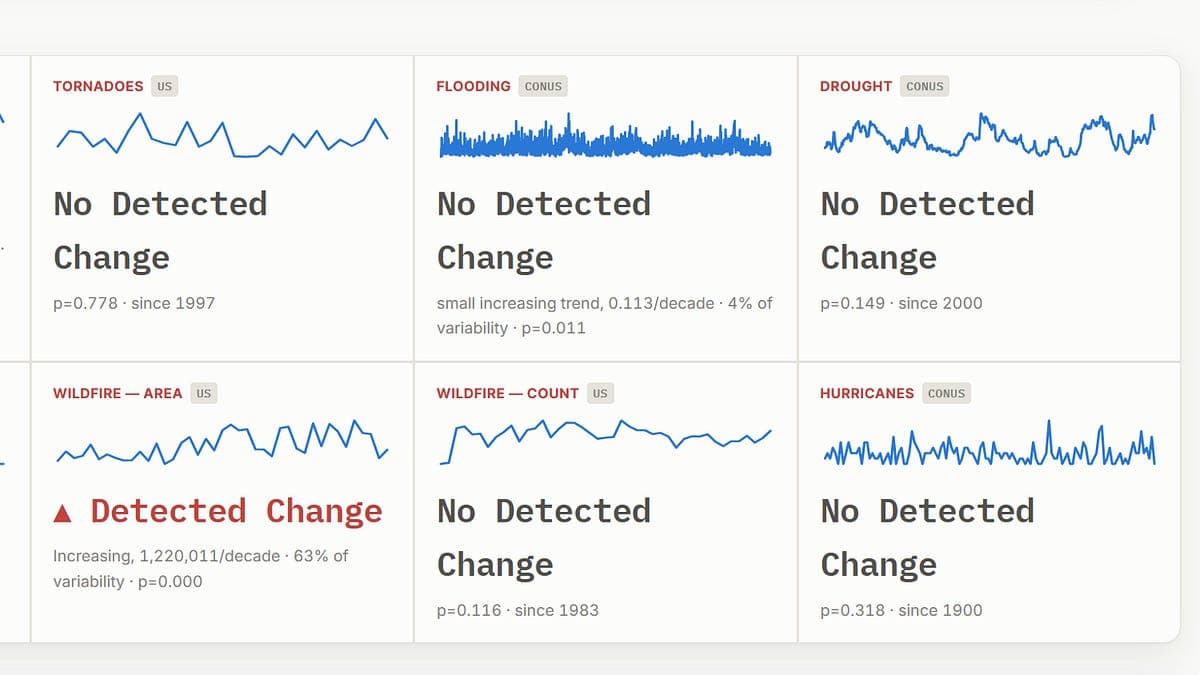
Roger Pielke Jr. has released the THB US Extreme Weather and Climate Change Dashboard, tracking 32 variables across heat waves, tornadoes, flooding,...
Data centers are accelerating global electricity demand, projected to grow 3.6% in 2026 and 3.8% in 2027, fueled by industry, EVs, and computing...
The Critical Minerals Data Explorer now offers interactive quantitative data and projections on these materials to the public and policymakers, directly supporting data-driven governance of supply chains.
AI-driven electricity demand could reach 1,500–2,000 TWh annually by 2030, rivaling India's current total consumption.
By setting a zero greenhouse gas emissions goal rather than selecting specific technologies, technology-neutral clean electricity tax credits...
A 10% increase in EV sales raises power plant emissions by 0.39%, revealing the rebound effect from added electricity demand. This quantitative result...
No significant updates today.