# U.S. Defense Recalibration: Homeland Security, Arctic Focus, and Global Alliances in a Changing Geopolitical Landscape
The United States is undertaking a significant transformation of its strategic posture amid a rapidly evolving global environment. Moving beyond its traditional global expeditionary approach, Washington now emphasizes regional resilience, homeland security, and reinforced alliances—particularly in the Arctic—while navigating legal, environmental, and geopolitical challenges. This recalibration aims to adapt to new realities where climate change, great-power competition, and domestic legal frameworks shape national security priorities.
---
## Strategic Shift: From Global Reach to Regional Resilience and Homeland Security
For decades, U.S. military doctrine prioritized maintaining an extensive network of overseas bases, projecting power across Asia, Europe, the Middle East, and beyond. This approach aimed to deter adversaries and sustain influence worldwide. However, recent developments reveal a paradigm shift:
- **Prioritization of regional hotspots**, especially the **Arctic**, where **climate change** has opened new navigable routes and resource opportunities.
- **Strengthening alliances** with **Canada**, **Denmark**, and **Greenland**, recognizing that **multipolar competition** with **Russia** and **China** requires closer regional cooperation.
- **Investments in military infrastructure**—including **airstrips**, **naval bases**, and **ISR (Intelligence, Surveillance, Reconnaissance)** capabilities—that enable rapid response to emerging threats in these vital zones.
This strategy underscores a recognition that **future security** depends less on distant expeditionary operations and more on **regional resilience**, **proactive defense**, and **alliance-building** that enhances collective security.
---
## Climate Change Accelerates Arctic Security and Infrastructure Expansion
The Arctic has become a **central arena** in this strategic realignment. The **accelerated melting of ice sheets**, driven by climate change, is transforming the region into a **geopolitical hotspot**, with implications for security, economic development, and environmental stability:
- **Infrastructure upgrades** are underway across Arctic bases, including **military airstrips**, **naval facilities**, and **resupply points**, supporting **persistent military presence**.
- The deployment of **advanced ISR systems**—such as **satellites**, **drones**, and **undersea sensors**—aims to **monitor activity** and counter efforts by **Russia** and **China** to establish **military bases** or expand economic influence.
- Diplomatic initiatives are intensifying around **Greenland’s autonomy**, a move viewed as strategic for **environmental monitoring** and **shipping lane control**. Discussions about **increasing Greenland’s autonomy** are seen as efforts to **streamline decision-making** and **strengthen regional influence**.
**Recent developments** include a **federal rollback** on a climate-related scientific finding—specifically, the decision to **repeal a key federal climate assessment** that identified planet-warming pollution as a **danger to humans**. Critics argue this may **slow urgent policy responses**, even as climate impacts in the Arctic accelerate.
**Quote:** *“The accelerated impacts of climate change are radically transforming Arctic security, demanding a proactive U.S. response in infrastructure and diplomacy,”* a senior Pentagon official emphasized.
---
## Infrastructure, Defense, and Domestic Resilience: Investments Amid Political Headwinds
To bolster homeland and regional security, the U.S. is making **massive investments**:
- Upgrading **military installations**, **airports**, and **naval facilities** in strategic locations.
- Enhancing **cybersecurity**, **maritime surveillance**, and **critical resource protection** to secure vital shipping lanes and Arctic resources.
- Expanding **ISR assets**, including **satellites** and **unmanned systems**, to achieve **comprehensive situational awareness**.
However, these efforts face **domestic political challenges**:
- The **Department of Homeland Security (DHS)** is **struggling with funding disputes**, risking a **partial government shutdown** which could impair **readiness**.
- Recent **fiscal debates** focus on **priorities** like **cyber defense**, **border security**, and **climate resilience**.
- Notably, a **high-profile incident** involved the **detention of a child and father in Minnesota** by **ICE**, which a **federal court** ordered to be **released** due to **due process violations**. Such cases have **fueled public outrage** and calls for **immigration enforcement reform**.
---
## Legal and Governance Developments: Impact on Trade and Civil Liberties
Recent legal shifts reflect ongoing debates over the balance of power and civil liberties:
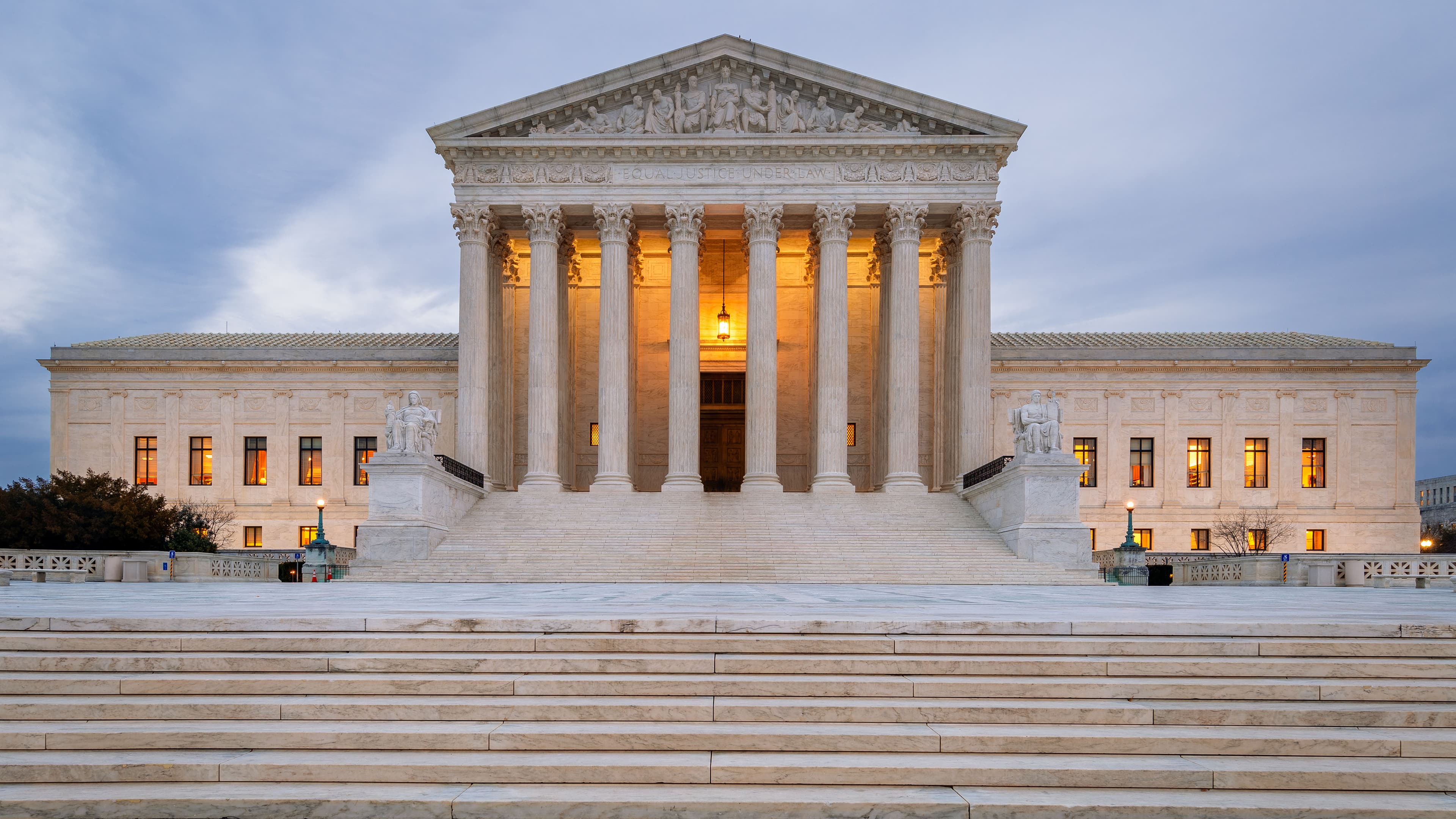
- The **U.S. Supreme Court** issued a **landmark ruling** limiting the **president’s authority to impose tariffs** without congressional approval. The decision emphasizes **greater legislative oversight** in trade matters, making **executive responses slower but more accountable**.
> *“The Supreme Court's ruling restricts the executive's ability to unilaterally impose tariffs, emphasizing the need for congressional oversight in trade matters,”* analysts note.
- **Trade policies** are in flux, with **tariffs rising** in some sectors—**up to around 15%**—and ongoing **trade probes** that could influence **economic sovereignty**.
- **Analysis** indicates that **Trump’s tariffs** backfired on **U.S. consumers and exporters**, raising costs and harming competitiveness—a cautionary tale amid current debates.
---
## Civil Liberties, Immigration, and Societal Tensions
Legal and societal tensions continue to shape domestic policy:
- A **Minnesota court** recently **rebuked ICE detention tactics**, ruling that **due process violations** occurred, leading to **the release of detainees**.
- Incidents involving the **deaths of poet Renee Good** and **ICU nurse Alex Pretti** at the hands of ICE officers have intensified **public outrage**.
- **Legislative efforts** are underway:
- **Congresswoman Chellie Pingree** (D-Maine) introduced **bills** aimed at **limiting ICE surveillance** and **protecting civil liberties**.
- Some states, like **Texas**, are **taking unilateral measures**, such as **banning Chinese e-commerce platforms** like **Shein** and **Alibaba**, citing **security vulnerabilities** and **foreign influence**—asserting **regional sovereignty**.
---
## Technology, AI Governance, and Ethical Challenges
The rise of **AI** and **automation** introduces both **opportunities** and **risks**:
- The **Pentagon** is **restructuring** its command architecture to **enhance regional resilience**, particularly in **vulnerable zones like the Arctic**.
- **AI tools** are increasingly used to **reduce polarization** and **improve social cohesion**; some reports suggest algorithms can **decrease divisiveness** on social media platforms.
- Conversely, **privacy concerns** grow as **AI surveillance** expands:
- **Massachusetts** is exploring **AI applications** in government services, including **ChatGPT**, raising **oversight questions**.
- The **European Parliament** has moved to **ban certain AI features** on government devices, prioritizing **civil liberties protections**.
**Quote:** *“Responsible governance of AI is critical to ensuring security without compromising civil liberties,”* states an AI ethics expert.
---
## Geopolitical Tensions and International Cooperation
At the **Munich Security Conference**, **Secretary of State Marco Rubio** reaffirmed the U.S. commitment to **multilateralism**:
- Emphasized **strengthening NATO** and **Arctic partnerships** to **counter Russian and Chinese influence**.
- Highlighted that **climate change**, **regional instability**, and **great-power rivalry** necessitate **international cooperation**.
Other notable developments include:
- The **U.N.** reports increasing **political violence** against lawmakers, signaling **fragile democratic institutions**.
- **Russia** continues **military activities** in the Arctic, including **drone strikes**, **missile tests**, and **submarine patrols**, raising risks of **miscalculation**.
- **China** seeks to expand its **shipping routes** and **military infrastructure** in the Arctic, aiming to **bolster influence**.
- The **Russia–Ukraine conflict** persists, with **Moscow deploying assets** near Arctic and Eastern European regions, heightening regional tensions.
- **Iran**’s **military buildup**, including **drone** and **missile tests**, remains a destabilizing factor with intelligence warnings of potential escalation.
---
## Recent Legal and Economic Developments: Supreme Court and Trade Policy
The **Supreme Court’s decision** to **limit presidential tariff authority** marks a significant shift in U.S. trade policy, emphasizing **congressional oversight**. This move **reduces executive flexibility** but aims to **balance power** and **prevent unilateral actions** that could destabilize markets.
**Trade policy debates** continue, with **tariffs** rising to **around 15%** in some sectors and **ongoing probes** into foreign influence and supply chain vulnerabilities. These measures reflect a push toward **economic sovereignty** and **stronger alliances**, even as they complicate **international negotiations**.
---
## Implications and Future Outlook
The United States' evolving security and diplomatic posture indicates a **deliberate shift** toward **regional resilience**, **technological governance**, and **multilateral diplomacy**:
- The **Arctic** has emerged as a **strategic frontier**, with **military upgrades** and **diplomatic initiatives** aimed at **countering Russian and Chinese influence**.
- **Domestic resilience efforts** are expanding but remain vulnerable to **political disagreements** and **budgetary uncertainties**.
- **Civil liberties** and **legal oversight** continue to influence **immigration enforcement** and **national security policies**.
- The **balance of great-power competition**, **climate change**, and **regional instability** underscores the need for **vigilant diplomacy** and **military readiness**.
The **Supreme Court’s recent ruling** on tariffs exemplifies a **more balanced governance approach**, fostering **legislative oversight** while complicating rapid policy responses. Simultaneously, **international alliances** are recalibrating to address new threats and opportunities.
**In summary**, the U.S. is navigating a complex landscape where **regional preparedness**, **global cooperation**, **civil liberties**, and **environmental concerns** intersect. Success will depend on maintaining this delicate balance amid ongoing geopolitical shifts, shaping the nation's role on the world stage for decades to come.