# Solid-State EV Battery Revolution Accelerates: Donut Lab’s Production-Ready Breakthrough and Industry Validation
The electric vehicle (EV) industry stands at a pivotal juncture as groundbreaking scientific advances and strategic investments converge to accelerate the adoption of solid-state battery technology. Building upon the excitement from CES 2024, where Finnish startup **Donut Lab** unveiled their **production-ready, scalable solid-state EV battery—the Donut Battery**, recent developments have propelled this innovation from promising prototype to credible contender for mainstream commercialization. These milestones not only demonstrate technical feasibility but also mark significant progress in validation, manufacturing, and industry collaboration, signaling a transformative shift in energy storage for EVs.
---
## Donut Lab’s Leap: From Prototype to Production-Ready Battery and Independent Validation
At CES 2024, Donut Lab showcased a **battery explicitly designed for mass manufacturing**, a critical step beyond earlier lab-scale prototypes. The **Donut Battery** features several compelling advantages:
- **Doubled energy density**, enabling **vehicle ranges exceeding 600 miles** in certain configurations—addressing the longstanding challenge of range anxiety.
- **Enhanced safety** through **solid electrolytes**, which **dramatically reduce fire risks** associated with traditional liquid electrolytes used in lithium-ion batteries.
- **Faster charging capabilities**, with projections indicating **charging times reduced by approximately 50%**, making EVs more convenient and infrastructure-friendly.
- **Versatility and scalability**, supporting a broad spectrum of vehicle types—from compact passenger cars to large commercial fleets.
Most notably, Donut Lab has taken a critical step toward industry validation by **commissioning VTT Technical Research Centre of Finland** to **independently test and verify** their battery claims. This move underscores the company's commitment to transparency and rigorous validation—an essential factor for gaining industry trust and regulatory approval.
**Industry analysts and insiders** are highly optimistic, emphasizing that **if manufacturing hurdles are addressed**, solid-state batteries like Donut’s could **reach commercial markets within 2 to 3 years**, potentially revolutionizing the EV landscape.
---
## Scientific Breakthroughs Powering the Solid-State Battery Evolution
The rapid advancement of Donut Lab’s battery technology is underpinned by **scientific and materials innovations** that have historically posed challenges to commercialization. Recent breakthroughs include:
### Electrolyte Innovations
- **Pressure-less, mechanically robust electrolytes** developed at the **Paul Scherrer Institute (PSI)** now enable **high ionic conductivity** **without external pressure**, simplifying manufacturing and **suppressing dendrite formation**—a primary cause of short circuits.
- **Superionic composite electrolytes** with **perpendicular-aligned ion transport pathways** facilitate **rapid, pressure-free ion conduction** at performance levels suitable for large-scale production.
### Material Strategies
- **Air-stable halide electrolytes**, such as **fluorides and chlorides**, created via the **"F-Li Donation Strategy"** (detailed in *ACS Nano*), provide **long-term stability** and are **cost-effective** for mass manufacturing.
- **Li–Mg alloy anodes** have been engineered as **dendrite-free, safer, and durable alternatives**, promising **extended cycle life**.
- **Interface engineering techniques**, including **ultra-stable solid electrolyte interphases (SEI)** and **ultrathin protective coatings**, significantly **improve cycling stability** and **interfacial resilience**.
### AI-Driven Material Discovery
- **Machine learning models** accelerate the **discovery and optimization of promising materials**, predicting **ionic conductivity** and **interface stability**, thereby streamlining pathways toward **reliable, high-performance components**.
---
## Mechanical Durability and Interface Engineering for Commercial Deployment
Beyond core materials science, **mechanical resilience** is vital for real-world application. Recent innovations include:
- **Elastic buffers and compliant coatings** that **absorb mechanical stresses** during repeated charge/discharge cycles.
- **Mechanically resilient electrolytes** capable of withstanding operational stresses.
- **Predictive mechanical modeling** helps **identify and mitigate failure modes** such as **void formation, cracking, and delamination**.
### Advanced Dendrite Suppression and Interface Coatings
A **notable recent innovation** involves **halogen-programmed Li3PO4 coatings** acting as **self-adaptive, durable interfaces** between cathodes and solid electrolytes. These coatings:
- **Mitigate interfacial degradation**, leading to **improved cycle life**.
- Are part of **comprehensive strategies** to **suppress dendrite growth**, addressing safety and longevity concerns.
Adding to this, **Sn-based gradient lithiophilic skeletons**—**3D structures** promoting **uniform lithium deposition**—are gaining traction for **long-term cycling stability** and **dendrite suppression**.
---
## Safety and Thermal Stability: Ensuring Reliability in Harsh Conditions
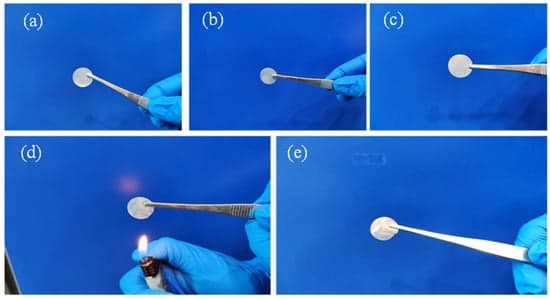
Safety remains paramount. Recent studies and studies have demonstrated that **thermal stability** can be significantly enhanced through **in-situ lithium modification techniques**. These methods involve:
- **Protective coatings** on lithium metal to **suppress thermal runaway**.
- Use of **quasi-solid electrolytes** and **interface engineering** to **improve thermal stability** and reduce the risk of catastrophic failures.
- **Comparative analyses** show that **solid-state batteries** like Donut’s **offer a superior safety profile** compared to traditional lithium-ion and sodium-ion batteries:
- **Lithium-ion batteries** pose risks of **thermal runaway** due to flammable liquid electrolytes and dendrite formation.
- **Sodium-ion batteries** are inherently safer but generally **offer lower energy density**.
- **Solid-state batteries**, with **non-flammable solid electrolytes** and **dendrite suppression**, are increasingly regarded as **the safest energy storage solution**.
---
## Industry Validation, Investment, and Manufacturing Scale-Up
While Donut Lab’s claims are promising, **independent validation and large-scale manufacturing** are crucial. The recent commissioning of **VTT** for battery testing represents a significant step toward **industry acceptance**.
Meanwhile, **global initiatives** and investments continue to accelerate:
- **Chinese firms** like **Svolt** are pushing toward **commercial high-performance solid-state cells**.
- The **Korea Research Institute of Standards and Science (KRISS)** and French R&D entities are developing **scalable, high-voltage solid electrolytes**.
- **Major industrial players** are investing heavily:
- **Idemitsu Kosan** announced **a final investment** in a **large-scale pilot plant** dedicated to **solid electrolyte production**, aiming for cost-effective manufacturing.
- Venture capital firms and automakers are pouring billions into startups and research programs focused on solid-state tech, reflecting **growing confidence in near-term market entry**.
### Manufacturing and Material Processing Innovations
Recent advancements include **scalable processing techniques** for amorphous LLZO electrolytes at **Stanford University**, led by researcher Gabriel Cr, which could **reduce costs and improve material uniformity**, critical for mass production.
---
## Remaining Challenges and the Outlook for Commercialization
Despite remarkable progress, several hurdles remain:
- Ensuring **long-term durability** over thousands of cycles under real-world conditions.
- Scaling **manufacturing processes** to produce **cost-effective, high-volume batteries**.
- Navigating **regulatory approvals** and **certifications** for consumer and industrial deployment.
However, with **scientific breakthroughs, strategic investments, and supportive policies**, the trajectory is favorable. If ongoing efforts succeed, **solid-state batteries like Donut’s** could **enter mainstream markets within 2 to 3 years**, dramatically transforming electric mobility.
---
## New Validation Step: Donut Lab’s Independent Testing
A **key recent development** is Donut Lab’s engagement with **VTT Finnish Research Centre** for **independent testing and verification** of their battery claims. This step is crucial for **building industry and consumer confidence** and could **serve as a pivotal milestone** in confirming the technology’s readiness for mass adoption.
---
## Broader Implications and Industry Trajectory
The rapid pace of innovations signals a **paradigm shift in electric mobility**:
- **Enhanced safety profiles** will bolster consumer trust.
- **Longer ranges and faster charging** will make EVs more practical.
- **Cost reductions through scalable manufacturing** could democratize EV ownership.
- **Environmental benefits** include **long-lasting batteries** and **reduced reliance on scarce or toxic materials**.
As **regional pilot projects and real-world tests** demonstrate viability, it’s clear that **solid-state batteries** are on track to **become the new industry standard within the next few years**, catalyzing the **global transition to sustainable transportation**.
---
## Conclusion
Donut Lab’s CES 2024 unveiling marked a **watershed moment** in energy storage, showcasing a **production-ready, scalable solid-state EV battery** that addresses key industry challenges—safety, performance, and manufacturability. Coupled with rapid scientific advances—from **pressure-less electrolytes to advanced interface coatings and AI-driven materials discovery**—the path toward commercialization is clearer than ever.
With **independent validation underway** and **significant investments and manufacturing initiatives**, **solid-state batteries like Donut’s** are poised to **revolutionize the EV industry within 2 to 3 years**, paving the way for a **safer, more reliable, and more accessible electric future**. This technological leap promises to **accelerate the global shift toward sustainable mobility**, fostering a cleaner, safer planet for generations to come.
---
## Additional Insight: Thermal Stability of Solid-State Batteries in Harsh Conditions
*Recent research* has also focused on **thermal stability in extreme environments**, such as renewable energy storage and harsh climates. Studies indicate that **ceramic electrolytes**, combined with **advanced interface engineering**, can **maintain structural integrity and safety** under high temperatures and mechanical stresses. These developments bolster confidence that **solid-state batteries** will perform reliably not only in consumer EVs but also in grid storage and industrial applications, broadening their impact across sectors.
---
**In summary**, as the industry moves closer to commercial reality, the combination of **scientific innovation, independent validation, and strategic investments** confirms that **solid-state EV batteries** like Donut Lab’s are on track to **transform transportation and energy storage** within the next few years, heralding a new era of safer, longer-lasting, and more efficient batteries.