
# Canada’s Multifamily Sector in 2026: Navigating Rising Costs, Policy Shifts, and Innovative Responses
Canada’s multifamily housing market in 2026 continues to be a landscape marked by resilience amid mounting challenges. As economic headwinds, regulatory delays, and escalating costs persist, industry stakeholders are demonstrating remarkable adaptability through innovative construction techniques, policy advocacy, and community-driven development. Recent developments reveal a sector that, while facing significant hurdles, is actively shaping a more sustainable and efficient future.
---
## Escalating Challenges and Their Impact
**Rising material costs** remain a primary concern. Over the past year, the price of key construction materials has surged approximately **20-25%**, driven by **global supply chain disruptions**, **labor shortages**, and **persistent inflation**. These increases significantly inflate project budgets and threaten timelines. Developers are responding by adopting **modular**, **prefabricated**, and **Building Information Modeling (BIM)** techniques, which have shown potential to **reduce construction times by up to 30%**—a critical advantage in controlling costs.
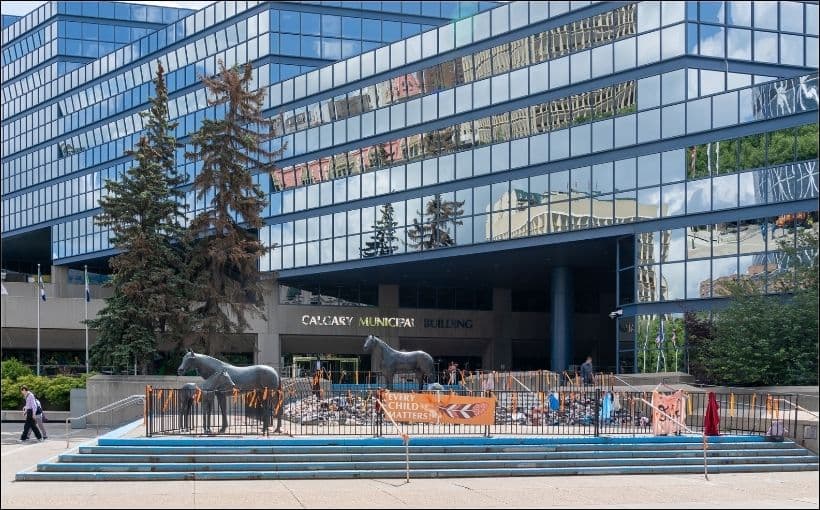
Municipalities are also contributing to the cost pressures. For instance, **Calgary** increased its **municipal development charges by around 15%**, adding complexity to project feasibility assessments. Moreover, **approval delays**—now extending **3 to 6 months**—compound carrying costs and threaten the timely delivery of projects. Edmonton is working to **streamline permitting processes** to mitigate these delays, recognizing their impact on affordability and supply.
**Financial markets** are experiencing volatility, with fluctuations in **interest rates** tightening financing options. Developers are increasingly seeking **additional equity**, **government subsidies**, and **alternative funding sources**—all of which heighten project risks, especially at a time when **housing affordability** remains a pressing concern.
Adding to the complexity, **provincial funding for affordable rental projects** has faced a **significant setback**: nearly **$1.4 billion** in allocations has been **paused temporarily**. Industry voices have described this as **"catastrophic,"** emphasizing the importance of **policy stability** to maintain momentum on affordable housing pipelines.
In response, **Alberta and the federal government** are negotiating a **landmark agreement** aimed at **streamlining project approvals** and **reducing red tape**. This deal aspires to **speed up project timelines**, **control costs**, and **restore confidence** in development pipelines.
---
## Policy Initiatives and Financial Supports: New Strategies Amid Uncertainty
Despite ongoing hurdles, government initiatives continue to support the sector:
- **CMHC’s MLI Select Program** has been enhanced to incentivize **sustainability** and **accessibility**. Projects that achieve standards like the **Rick Hansen Foundation Accessibility Certification (RHFAC)** benefit from **bonus points**, which translate into **lower interest rates** and **higher loan-to-value ratios**. This encourages early integration of **social** and **environmental** features.
- Municipal pilot programs, such as **Airdrie’s expedited permitting**, aim to **deliver at least 300 units over two years** by **streamlining approvals** and offering **targeted incentives** to promote **affordable housing**.
- **Calgary** announced **up to $15,000 per unit** in March to help offset **construction costs** and facilitate timely completion. Meanwhile, the **federal government** allocated **$34 million** in **low-interest loans** to support **infill rental housing** in Edmonton’s **Mill Woods** neighborhood, along with funding for **130 affordable homes** through partnerships with CMHC.
However, the **pause in provincial affordable rental funding** remains a critical concern. Industry stakeholders warn it could **delay or diminish** the pipeline of vital affordable housing projects, underscoring the need for **policy stability** to meet rising housing demand.
Adding momentum, **Alberta and the federal government** are negotiating a **prospective agreement** designed to **accelerate project approvals**. Announced by Prime Minister Mark Carney and Premier Danielle Smith, this **landmark deal** aims to **streamline regulatory processes**, **reduce red tape**, and **expedite project timelines**—a promising pathway to **mitigate delays and contain costs**.
---
## Regional Dynamics and Community Engagement
Regional disparities continue to shape development strategies:
- **Alberta’s** **over 50,000 new units initiated in 2025** reflect strong demographic growth and urban expansion. Nonetheless, **urban vacancy rates** such as **Spruce Grove’s 3.8% in early 2026** suggest a **softening demand**, whereas **rural Alberta** still faces **vacancy rates below 1%**, highlighting urgent needs in less urbanized areas.
- **Adaptive reuse** remains a crucial tactic to quickly expand rental stock. Calgary’s **Palliser One** project exemplifies this, transforming a **former office tower of approximately 400,000 square feet** into **424 apartments**—a cost-effective, rapid response to supply shortages. Similarly, the **Bluevale project** leverages city funding to convert underutilized commercial spaces into residential units, addressing high development costs associated with greenfield projects.
- Notable projects like **HAT @ NINTH** in Calgary demonstrate successful **office-to-residential conversions**, adding **108 rental suites** and showcasing sector ingenuity. These initiatives highlight **adaptive reuse** as a vital tool for swift supply increases.
- **Construction innovations**, including **modular**, **prefabricated**, and **BIM-based techniques**, are increasingly employed to **control costs** and **speed up delivery**. **Public-private partnerships (P3s)** are gaining traction, especially in **affordable** and **mixed-income housing**, sharing infrastructure risks and fostering **collaborative urban development**.
- Indigenous-led developments, such as those within **Edmonton’s Ice District**, exemplify **community-driven, culturally sensitive solutions** that promote **inclusive growth**.
---
## Market Strategies and Community Participation
Economic and regulatory pressures are prompting shifts in market strategies:
- Some developers are opting to **sell assets** or **reposition projects** rather than proceed with costly construction. For example, the heritage-listed **Camsell site** in Edmonton was sold for **$60.5 million** after navigating complex heritage and regulatory hurdles, illustrating how **cost escalation** and **compliance challenges** influence asset management.
- The **Inglewood Lofts** project, initially conceived as rental, has shifted toward **asset sale or repositioning** due to financial pressures—a testament to industry adaptability.
- The **build-to-rent (BTR)** model continues to expand, offering **long-term, stable income streams** and increasing rental affordability amid market uncertainties.
- Municipalities actively promote **secondary suites** and **infill housing** as cost-effective ways to expand rental options:
- **Calgary** supports **backyard or laneway suites** through **financial incentives** and **streamlined approval processes**, enabling homeowners to develop **additional dwelling units** quickly.
- **Edmonton**, however, faces **community pushback** and **regulatory challenges** related to **infill and secondary unit conversions**, raising concerns about **neighborhood character** and **social impacts**. These debates influence policy and project planning, emphasizing the importance of **community engagement**.
---
## The Bow Valley Centre (BVC) Concept Plan: A Model for Transit-Oriented Growth
A significant recent development is Alberta’s **Bow Valley Centre (BVC) Concept Plan**, which emphasizes **sensitive housing intensification** within a **transit-supportive, mixed-use development** framework. The plan envisions:
- **Transit-oriented development** that promotes **walkability** and **alternative transportation**, reducing dependence on private vehicles.
- **Mixed-use spaces** combining residential, commercial, and community amenities to foster **vibrant neighborhoods**.
- An **enhanced physical environment** featuring **public spaces**, **green infrastructure**, and **sustainable design**.
This approach aligns with ongoing **adaptive reuse** and **infill strategies**, offering a **sustainable urban growth model** that balances **density** with **community character**.
---
## Recent Policy Shifts and Municipal Initiatives
Municipalities are actively reforming policies to foster faster, higher-density development:
- **Calgary’s new 'business-friendly' construction policy** aims to **reduce permitting times** and **streamline processes**. This initiative is expected to **encourage more rapid project delivery**, helping to offset rising costs.
- The **reversal of blanket rezoning requirements** has led to a **spike in development applications**, removing bottlenecks and facilitating **higher-density, transit-supportive projects**.
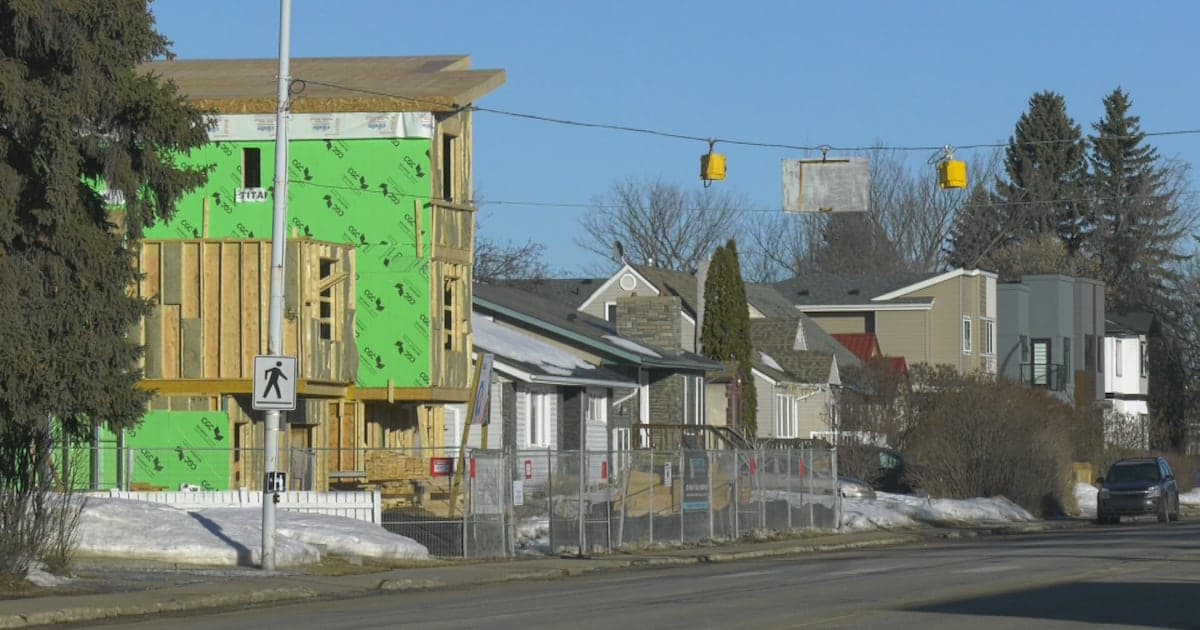
- **Community consultations**, such as those for the **Hillhurst development**, are integral to securing **social license**. These large projects may include **a dozen buildings**—townhomes, high-rises, commercial spaces, and village amenities—reflecting a **collaborative approach**.
- **Indigenous-led developments**—like the **Tsuut'ina Nation's** plans for over **6,500 residential units** across **three community villages**—embody **inclusive growth** respecting **Indigenous sovereignty** and cultural sensitivities.
---
## Current Status and Outlook
Canada’s multifamily sector in 2026 is demonstrating **remarkable resilience and ingenuity**. From transformative projects like **HAT @ NINTH** and **Palliser One** to large-scale Indigenous developments, the industry is leveraging **adaptive reuse**, **innovative construction**, and **community engagement** to overcome economic and regulatory headwinds.
Recent municipal policies—such as Calgary’s **permit reforms** and **rezoning reversals**—along with federal initiatives, signal a **more agile regulatory environment** aimed at **mitigating costs** and **expediting development**. The **BVC Concept Plan** exemplifies a **sustainable, transit-oriented growth strategy** that aligns development with climate and urban mobility goals.
While **funding uncertainties**, notably the provincial pause on **$1.4 billion** in affordable rental support, pose risks, the sector’s **adaptive strategies** and **collaborative efforts** are paving pathways to **sustain growth** and **expand affordable housing options**.
As the year unfolds, the **sector’s capacity to innovate, collaborate, and respond proactively** will be essential. The evolving landscape suggests that **higher-density, transit-supportive, and community-integrated developments** will be central to Canada’s multifamily housing resilience—addressing urgent needs amid economic challenges and positioning the nation for a more inclusive, sustainable urban future.
---
### **Additional Context: March 2026 Market Update — Calgary**
A recent **March 2026 market update** indicates that Calgary’s real estate environment remains dynamic. While some segments experience stabilization, local market sentiment underscores the importance of **continued policy support** and **cost control measures** to sustain momentum. The update highlights that **innovative approaches**, such as **adaptive reuse projects** and **public-private partnerships**, are becoming standard practices to counteract rising costs and regulatory delays.
---
**In summary,** Canada’s multifamily sector in 2026 exemplifies resilience through **innovative construction**, **community engagement**, and **policy adaptation**—offering a blueprint for sustainable urban growth amid economic and regulatory headwinds.