# Outdoor Skills Beyond Gear: The Enduring Value of Traditional Knowledge for Modern Hunters and Wilderness Enthusiasts
In a world increasingly dominated by digital tools, ultralight gear, and electronic aids, it's easy to assume that fundamental outdoor skills are becoming relics of the past. Yet, recent events and ongoing developments serve as stark reminders that no gadget—no matter how advanced—can replace the core competencies rooted in observation, experience, and a deep understanding of nature. These timeless skills—such as navigation without electronics, terrain reading, animal tracking, shelter construction, hazard recognition, and ethical hunting—are more vital than ever for safety, sustainability, and responsible wilderness engagement.
This article synthesizes recent tragedies, environmental warnings, policy shifts, and emerging resources to underscore why mastery of these skills remains crucial, especially as environmental conditions grow more unpredictable and land access becomes increasingly restricted.
---
## The Vulnerability of Technology in the Wilderness
Modern outdoor pursuits are often supported by GPS units, trail cameras, electronic optics, weather apps, and ultralight gear. While these tools provide undeniable convenience, **they also introduce vulnerabilities**:
- Batteries can fail in cold or wet conditions.
- Electronics are susceptible to moisture, impact, or software glitches.
- Overreliance fosters complacency, leading to a false sense of security when tech fails.
A seasoned hunter reflects:
> **“We used to teach kids how to read the land, interpret animal sign, and understand wind. Now, it’s all about gadgets, and I worry we’re losing the ability to hunt truly by feel and experience.”**
Recent incidents vividly illustrate these dangers. When devices malfunction—such as GPS signals dropping or smartphones dying—those lacking core skills face life-threatening challenges. In remote environments, **the inability to navigate without tech, interpret natural signs, or quickly build shelter can be deadly**.
---
## Recent Tragedies Reinforcing the Need for Traditional Skills
### Sierra Nevada Avalanche on Castle Peak
A sobering incident from the recent avalanche on Castle Peak, north of Lake Tahoe, claimed multiple lives among a group of 15 backcountry skiers. Investigations, including reports titled *“What we know Thursday about the deadly Sierra Nevada avalanche,”* highlight **terrain awareness and hazard assessment failures** as key factors.
Media coverage such as *“Lake Tahoe avalanche: What we know about the victims and survivors”* emphasizes that **avalanche danger remains high**, especially amid shifting climatic conditions. Heavy snowfall followed by temperature fluctuations destabilizes the snowpack, creating highly unpredictable hazards. **Skillful terrain reading, weather observation, and avalanche hazard recognition—abilities honed through experience—are now more critical than ever**.
### Scrutiny of Blackbird Mountain Guides
Further insights reveal that **safety protocols at Blackbird Mountain Guides**, a respected adventure training company based in Truckee, are under review following incidents linked to avalanche risks. An article, *“What we know about Blackbird Mountain Guides, company at center of deadly avalanche,”* underscores **the importance of mentorship, experiential learning, and traditional skills**. These methods are vital for imparting terrain assessment, hazard recognition, and safe backcountry travel—especially as environmental conditions grow more treacherous.
### Wilderness Accidents and Myths
Content from *“SURVIVAL Failures and Myths That Can Get You Killed”* on YouTube highlights that **many wilderness accidents stem from misconceptions**—underestimating hazards, overestimating the reliability of technology, or neglecting basics like shelter building, signaling, and first aid. The core message: **resilience and safety depend on mastering fundamental skills that do not rely on batteries or signals**.
---
## The Power of Experience and Traditional Skills
Veteran hunters and wilderness practitioners emphasize a **minimalist, skill-based approach**, focusing on abilities such as:
- **Understanding animal behavior**: Recognizing tracks, scat, bedding areas, and natural cues.
- **Environmental awareness**: Reading wind patterns, weather changes, snowpack stability, and terrain features through keen observation.
- **Practical fieldcraft**: Mastering stalking, concealment, shot estimation, and shelter building via intuition and experience.
- **Dependable gear**: Using traditional, durable equipment—fixed-power binoculars, reliable knives, non-electronic navigation tools—that perform reliably in all conditions.
A seasoned hunter notes:
> **“Technology is great, but if you don’t understand the land and the animal, you’re just guessing. True skill comes from patience, observation, and experience—not gadgets.”**
### Terrain Reading and Sign Interpretation
Understanding terrain—water sources, bedding areas, wind corridors—and recognizing signs like **tracks, rubs, scat, and feeding areas** can be more reliable than electronic trackers, especially in adverse weather or snow. These skills develop over years of experience and form the backbone of ethical, safe hunting and exploration.
### Tracking and Range Estimation
Expert trackers excel at following animal signs and estimating distances visually, often outperforming laser rangefinders in complex terrain. These abilities are vital for humane, effective shots and safe navigation.
### Winter Survival and Bushcraft
Recent content underscores the importance of **building insulated shelters, understanding snow and ice behavior, and recognizing hazards**—skills that **do not depend on electronics** but are **life-saving in cold, remote environments**.
- *“Building a Cozy Hidden Log Shelter in a Fallen Spruce by the Waterfall”* demonstrates shelter construction using natural terrain and materials.
- *“Building an Ice Shelter to Survive a Brutal Winter Storm”* illustrates snow and ice shelter techniques increasingly relevant due to climate change-driven weather unpredictability.
### Ethical and Effective Hunting
Mastering stalking, concealment, and shot placement ensures humane harvesting and aligns with **fair chase principles**. These refined skills—developed through patience and experience—are more dependable than electronic aids, which can fail or provide false confidence.
---
## The Role of Instinct and Traditional Judgment
A compelling resource, *“The Instinct That Separates Good Hunters From Great”*, emphasizes the importance of **instinct, intuition, and experiential judgment**. These qualities enable hunters and wilderness travelers to:
- Make informed decisions under uncertainty.
- Recognize subtle natural cues.
- Adapt quickly to changing conditions.
This innate “sixth sense” is cultivated over years and is **the hallmark of truly skilled outdoorspeople**.
---
## Environmental Context and Current Alerts
Recent avalanche warnings and environmental alerts underscore the increasing unpredictability of wilderness hazards due to climate change:
- The **Sierra Avalanche Center** continues issuing warnings as snowpack remains unstable.
- **Idaho Panhandle** faces heightened avalanche danger with recent heavy snowfall and temperature swings.
- **Northwest Montana** has just issued a **Backcountry Avalanche Warning**, reflecting the increased risks associated with recent winter storms.
**These alerts serve as urgent reminders that environmental conditions are evolving rapidly**, making terrain reading, weather observation, and hazard recognition more critical than ever.
---
## Land Access, Policy Changes, and Skill Transmission
Recent policy shifts threaten land access and the opportunities for experiential learning:
- In Montana, **shrinking private land access**, coupled with increased hunter participation, limits supervised, skill-building hunts.
- The **ending of mountain lion hunting in two Montana units** at sunset reduces opportunities for responsible game management and practical experience.
An ongoing trend involves **privatization and land use restrictions**—such as Montana’s efforts to privatize big game hunting—which **reduce public access for mentorship and wilderness immersion**. As reported in *“Montana Fish and Game Commission is full speed ahead on privatizing big game hunting,”* these policies threaten the transmission of vital skills like tracking, terrain assessment, and hazard awareness.
**These restrictions emphasize the need for organized training programs, mentorship initiatives, and conservation projects** that teach:
- Shelter construction from natural materials
- Sign interpretation and tracking
- Navigation without electronics
- Hazard assessment and avalanche safety
- Water sourcing and purification
**Preserving accessible land for responsible use and education is essential** to ensure future generations develop these skills.
---
## Mentorship and Human Factors in Skill Preservation
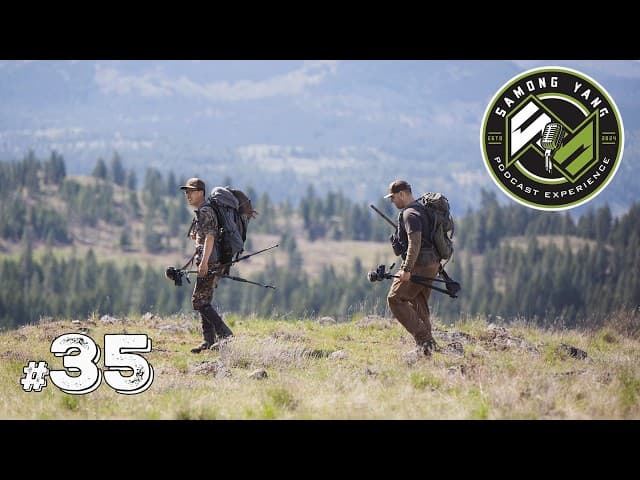
A key component of safeguarding traditional skills is **mentorship**. Resources like *“EP.35 | Characteristics of a Good Hunting Partner (& it starts with YOU!)”* highlight qualities such as patience, awareness, humility, and the ability to teach. A good hunting or wilderness partner:
- Shares knowledge without arrogance
- Prioritizes safety over ego
- Is dependable and attentive
- Values environmental stewardship
**Building communities of experienced mentors and learners ensures these skills are passed down effectively**, fostering resilience, safety, and respect for the land.
---
## Current Status and Implications
Recent tragedies like the Sierra Nevada avalanche, avalanche warnings in Idaho and Montana, and the scrutiny of adventure guiding companies underscore an urgent reality:
- **Hazards are becoming more unpredictable and severe** due to climate change.
- **Land access restrictions** hinder experiential learning opportunities.
- **Overreliance on electronics** without foundational knowledge can be deadly.
**Resilience and safety in the wilderness depend on mastering enduring skills—terrain reading, animal tracking, shelter building, hazard recognition, and ethical hunting**. While technology can support and enhance these pursuits, **it must serve as a complement, not a replacement, for experience and understanding**.
The outdoor community must:
- Promote **hands-on, practical training** emphasizing real-world skills.
- Expand **avalanche and hazard recognition courses**.
- Advocate for **public land access policies** that facilitate mentorship and wilderness education.
- Support **conservation efforts** that maintain opportunities for experiential learning.
---
## Supporting Resources and Gear
While mastery of core skills is paramount, **reliable gear remains an important aid**:
- **High-quality fixed-blade knives**, like the Koenig Helo (*reviewed in “Koenig Knives Helo Fixed Blade Knife 3.75\" CPM-MagnaCut”*), support shelter building, game processing, and emergency repairs.
- **Non-electronic navigation tools**: dependable compasses and topographical maps are essential when electronics fail.
- **Durable optics**: fixed-power binoculars provide reliable long-distance observation.
- **Medical supplies**: comprehensive first aid kits, such as the *“Mission Medic Bag,”* are critical in emergencies.
- **Water purification**: techniques like boiling, chemical treatments, and portable filters are fundamental.
Recent gear reviews emphasize lightweight, high-functionality equipment that **supports, rather than replaces, core skills**.
---
## Final Reflection
Despite technological advancements, **the foundational outdoor skills rooted in tradition—terrain reading, animal tracking, shelter construction, hazard recognition, and ethical hunting—remain the cornerstone of safe, sustainable wilderness pursuits**. As environmental conditions grow more unpredictable and land access becomes more restricted, **these skills are not optional—they are vital**.
By fostering mentorship, supporting experiential training, advocating for responsible land policies, and emphasizing practical, non-electronic proficiencies, the outdoor community can ensure that this vital knowledge endures. The wisdom of generations past, combined with modern commitment, can safeguard the future of responsible and resilient wilderness engagement.
**In the end, resilience in the wilderness hinges on mastering these enduring competencies—wisdom that no gadget can replicate.**