The aerospace industry’s challenges in 2026 have intensified as Boeing and its peers continue to wrestle with entrenched material shortages, regulatory hurdles, labor tensions, and escalating geopolitical complexities. Recent developments underscore how these multifaceted pressures—spanning rare earth constraints, supply chain fragility, certification delays, and geopolitical risks—are converging to weigh heavily on Boeing’s production capacity, financial outlook, and competitive positioning. Nonetheless, ongoing innovation in advanced materials, additive manufacturing, and AI-driven supply chain analytics offers cautious optimism for medium-term relief.
---
### Persistent Material and Supply Chain Constraints Remain Critical
Material scarcity, particularly in rare earth elements (REEs) and titanium, remains a fundamental bottleneck:
- **Rare earth shortages continue unabated** amid China’s near-monopoly on global REE mining and refining. Renewed U.S.–China dialogues, including high-level talks between the U.S. Treasury Secretary and China’s vice premier, have recently focused on boosting Boeing jetliner sales to China but also highlighted persistent jet supply and critical engine material challenges. Despite diplomatic efforts, stable rare earth supply is still elusive, with price volatility exacerbated by increasing aerospace, defense, and clean energy demand.
- Boeing has **urged its suppliers to assess impacts stemming from the ongoing Middle East conflict**, reflecting how geopolitical instability threatens to disrupt critical supply chains further. This effort underscores the fragile global network Boeing depends on for both raw materials and components, with suppliers facing heightened transportation and operational risks.
- **India’s aerospace materials sector is emerging as a strategic alternative supplier**, with Indian automotive companies expanding aggressively into aerospace-grade titanium components. Although these firms have amassed significant aerospace order backlogs (Rs 3,800 crore, or ~$460 million), certification and capacity scaling remain works in progress, placing meaningful supply diversification several years away.
- The **titanium supply crunch persists**, with innovative projects like Metalysis’s ESA-backed sustainable titanium powder production still navigating scale-up and FAA certification hurdles. Norsk Titanium’s additive manufacturing advances show promise but have yet to fully commercialize, as reflected in their slowed Q1 2026 revenues tied to aerospace order delays.
- Component suppliers such as **Ametek continue reporting rare earth input shortages**, directly contributing to Boeing’s lingering production delays.
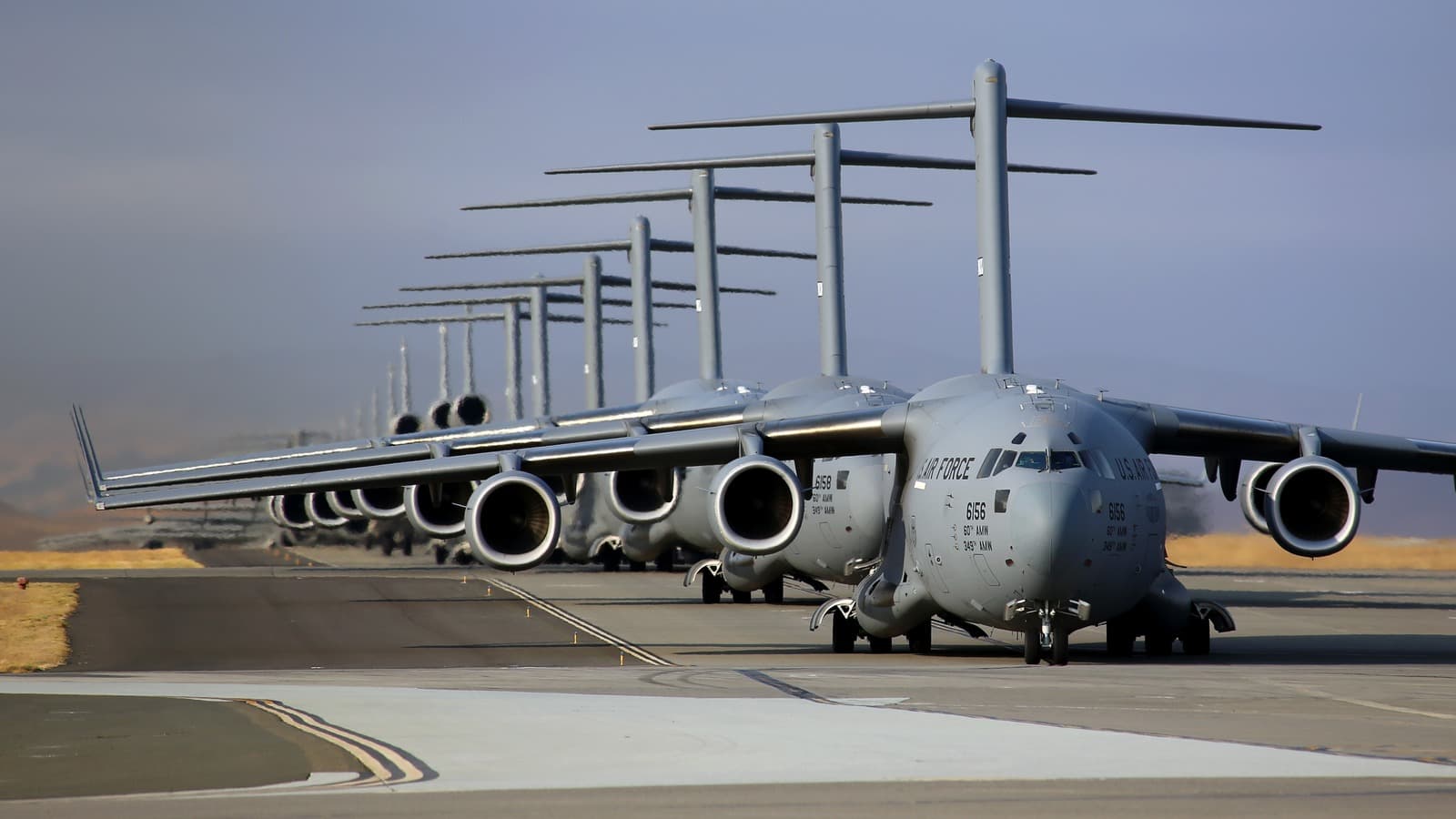
- Amid soaring defense demand, **supplier competition has intensified**. Curtiss-Wright’s stock has doubled over the past year following a contract win on the C-17 program, spotlighting constrained supplier capacity and the challenge Boeing faces in securing critical parts.
- A promising development is the advancement of **carbon nanotube-based conductor materials**, notably the Galvorn technology. Galvorn combines steel-like toughness, aluminum-like lightness, and copper-like conductivity, potentially revolutionizing aerospace wiring by reducing weight and complexity. This innovation could help alleviate FAA-mandated expanded wiring inspections on the 737 MAX fleet and improve aircraft efficiency, although it remains in early development and commercialization phases.
---
### Regulatory and Certification Hurdles Compound Execution Risks
Certification delays and regulatory scrutiny continue to dog Boeing’s crucial programs:
- The **FAA’s expanded wiring inspections across the 737 MAX fleet**, prompted by defect findings, are adding time and cost pressures on production schedules.
- The **July 2026 Air India Express 737 MAX 8 hard landing in Phuket** has intensified FAA investigations and public scrutiny, exacerbating certification timelines and amplifying concerns about Boeing’s safety culture and quality control processes.
- Certification for the **737 MAX 7 variant remains behind schedule**, enabling Airbus’s A220 to capture additional market share in the competitive regional jet segment.
- **New certification bottlenecks on the 777X program have emerged**, particularly regarding the complex composite wing structures and integration of the new GE9X engine. FAA safety assessments have prolonged certification, threatening delivery schedules and widening the competitive gap with Airbus’s A350, which benefits from smoother certification progress and more stable supply chains.
- Labor unrest adds another layer of risk. Over **3,200 unionized workers at Boeing’s St. Louis defense division recently rejected contract offers**, raising the prospect of strikes or slowdowns that could disrupt both defense and commercial production lines.
- Reflecting these cumulative challenges, Boeing revised down its **2026 earnings guidance by approximately 17%**, signaling the financial impact of ongoing regulatory, labor, and supply chain obstacles.
---
### Defense Contracts Provide Revenue Stability but Bring Operational Trade-Offs
While Boeing’s defense segment offers some financial cushion, it introduces capacity and operational constraints:
- Boeing secured a **$2.34 billion contract modification for the U.S. Air Force’s E-7A Wedgetail program**, adding to prior awards exceeding $2.7 billion for defense upgrades, including the P-8A Poseidon. These contracts provide steady revenue but increase pressure on manufacturing capacity.
- The U.S. Air Force has **mandated resolution of longstanding KC-46 tanker system issues before approving further tanker contracts**, effectively capping KC-46 production and creating near-term manufacturing bottlenecks that strain Boeing’s production resources.
- The newly launched **Torus Defence Supply Chain consortium**, involving Amentum, GXO, Accenture, and Maersk, aims to enhance logistics transparency and resilience across defense manufacturing. This initiative could help mitigate supply constraints over the medium term, though its operational impact remains to be seen.
---
### Geopolitical Dynamics Heighten Supply Chain and Order Risks
Geopolitical factors increasingly influence Boeing’s operational environment:
- High-level **U.S.–China dialogues on Boeing jetliner sales** have raised hopes for reviving stalled commercial aircraft orders, potentially involving up to 500 aircraft. However, entrenched geopolitical tensions and compliance complexities continue to impede progress, creating significant uncertainty over long-term order visibility.
- The **ongoing Middle East conflict has prompted Boeing to proactively ask suppliers to assess and report any disruptions**, highlighting the vulnerability of global supply chains to regional instability.
- These dynamics, coupled with U.S. defense priorities and export controls, add complexity to Boeing’s global supply chain management and commercial negotiations.
---
### Technology and Innovation Remain Bright Spots Amid Challenges
Despite near-term pressures, Boeing and its partners continue investing in innovation to build future resilience:
- Boeing’s **HorizonX Ventures increased investment in Morf3D**, a specialist in additive manufacturing of aerospace components. While 3D printing offers a path to reduce reliance on scarce raw materials, scaling to FAA-certified, high-volume production remains a significant hurdle.
- Collaborative ventures like the **Carnegie Mellon University-Boeing Aerospace Data Analytics Lab** are pioneering AI-driven supply chain optimization and quality control. Boeing CIO Ted Colbert described this partnership as “poised to transform capacity constraints into competitive advantages,” underscoring the strategic importance of digital tools in overcoming supply chain fragility.
- Engine technology advances, including **Pratt & Whitney’s adaptive cycle engine**, promise improved propulsion efficiency that could shift competitive dynamics in coming years.
- The **Metalysis sustainable titanium powder project** remains a key innovation to watch. If commercial scale-up and FAA certification can be achieved, it may substantially ease titanium alloy shortages.
- **Galvorn’s carbon nanotube conductor technology** is advancing toward potential aerospace wiring applications, promising to reduce wiring weight and complexity and address FAA inspection concerns.
- Passenger-to-freighter (P2F) conversion programs, especially by **Elbe Flugzeugwerke (EFW) and APAL for Airbus A330 freighters**, continue expanding, providing critical cargo capacity amidst new aircraft production constraints.
---
### Financial Impact and Market Sentiment: High Costs Tempered by Innovation and Defense Momentum
Boeing’s operational challenges are exacting heavy financial costs:
- Delivery delays are estimated to cost Boeing approximately **$715 million per month, or roughly $8.5 billion annually**, reflecting the economic toll of supply chain and regulatory disruptions.
- Despite these headwinds, Boeing’s stock (NYSE: BA) has shown tentative resilience, gaining nearly **5% over the past week and 1.74% month-to-date**, buoyed by investor optimism around defense contract growth and technological innovation.
- Market analysts remain divided. Some cite Boeing’s stretched balance sheet and modest operating margins (~5%) as valuation constraints, while others point to upside potential from innovation pipelines and defense segment momentum.
- Public and political scrutiny remains intense. Recent Senate hearings sharply criticized Boeing’s safety culture and profit prioritization, reinforcing reputational risks likely to influence future regulatory interactions and customer trust.
---
### Expanded Near-Term Watchlist: Key Developments to Monitor
- **FAA decisions on approving a fourth 737 MAX assembly line** and updates on wiring inspection scope and timelines.
- Outcomes and certification impacts from the **Air India Express 737 MAX 8 hard landing investigation**.
- Progress in resolving **777X certification bottlenecks**, critical for widebody backlog fulfillment.
- Efforts to **mitigate risks to Boeing’s widebody backlog**, including potential order deferrals or cancellations.
- Execution and operational impact of the **Torus Defence Supply Chain consortium** on defense manufacturing logistics.
- Commercial scaling and FAA certification milestones for **Metalysis’s titanium powder**, **Norsk Titanium’s additive manufacturing solutions**, and **carbon nanotube conductor technologies (Galvorn)**.
- Resolution of labor negotiations at Boeing’s **St. Louis defense division** to avoid disruptive strikes or slowdowns.
- U.S. Air Force directives on **KC-46 tanker system remediation** and implications for production schedules.
- Production ramp-up and delivery timelines associated with the **$2.34 billion E-7A Wedgetail contract modification**.
- Geopolitical and compliance developments surrounding stalled **multi-year commercial aircraft orders from China**.
- Continued certification progress on the **737 MAX 7** and its impact on regional jet market share.
- Expansion and market impact of **passenger-to-freighter (P2F) conversion programs** amid constrained new-build capacity.
---
### Conclusion
As Boeing moves through the second half of 2026, it confronts a complex interplay of material shortages, regulatory scrutiny, labor unrest, and geopolitical uncertainty that threaten to prolong production delays and erode customer confidence. While defense contracts provide some revenue stability, operational trade-offs and capacity constraints remain acute. Airbus’s steady progress on widebody and regional jets compounds commercial pressure.
Innovation in additive manufacturing, AI-driven supply chain analytics, and breakthrough materials like carbon nanotube conductors offer promising medium-term avenues to ease bottlenecks and improve competitiveness. However, scaling these technologies and navigating FAA certification remain formidable challenges.
Ultimately, Boeing’s ability to accelerate supply chain diversification—especially leveraging emerging Indian suppliers—streamline certification processes, and integrate cutting-edge materials and digital technologies will be pivotal to restoring production momentum, regaining market confidence, and securing sustainable growth in an increasingly competitive and volatile aerospace landscape.