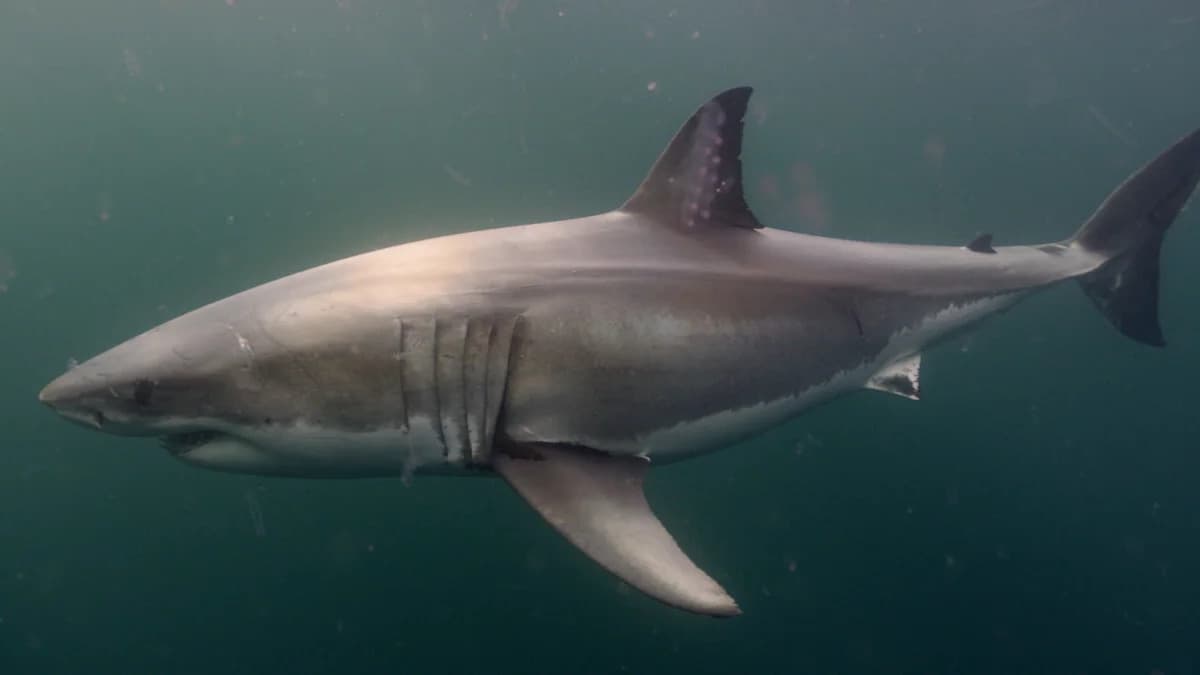
Unusual and intensified shark sightings worldwide continue to **reshape scientific understanding of some of the ocean’s most elusive and long-lived apex predators**, revealing intricate behavioral patterns, ecological linkages, and emerging conservation challenges. Recent developments—from fishermen’s firsthand confirmations of stress-induced rope-biting to landmark migrations, deep-sea discoveries, and unprecedented predator dynamics in rapidly changing Arctic waters—are broadening shark science horizons while reinforcing the urgency of integrated monitoring and public safety efforts globally.
---
### Confirming Rope-Biting as a Stress Response Following Orca Encounters: Practical Guidance for Fishermen
One of the clearest recent advances in shark behavioral ecology is the robust validation that **rope-biting is a displacement behavior triggered by stress, rather than aggression**. Multiple fishermen across diverse regions have reported witnessing great white sharks thrashing and biting anchor ropes immediately after orca pod sightings nearby.
A veteran fisherman shared:
> “Right after the orcas circled our boat, the sharks started thrashing at the anchor ropes like they were agitated or trying to get something off their minds. It wasn’t about food — it was a nervous reaction.”
Marine authorities have responded by issuing **practical guidance urging fishermen to inspect and securely manage anchor ropes following orca encounters**. This aims to reduce gear damage and enhance safety during these tense interspecies interactions. Recognizing rope-biting as a stress response enriches our understanding of apex predator dynamics and their cascading ecological effects in shared habitats.
---
### Expanded Habitat Use and Life Stage Observations Highlight Shark Ecological Diversity
Ongoing unusual sightings continue to illuminate the complex habitat preferences of sharks across life stages and environments, underscoring their ecological versatility and conservation needs:
- **Nearshore nurseries gaining attention:** Stunning drone footage recently captured a newborn great white shark close to shore, emphasizing vulnerable breeding habitats that require targeted protection.
- **Urban waterways feature increasing shark encounters:**
- A bull shark recently bumped a swimmer in Perth’s Canning River, highlighting their tolerance of freshwater and proximity to urban settings.
- Elevated sightings of bull and great white sharks at **Sentosa Beach (Singapore)** and **Pokai Bay (Hawaii)** have spurred enhanced lifeguard patrols and community alerts.
- A rare sighting of a **12-foot great white shark just 4 miles off Gulf Shores, Alabama**, has intensified local vigilance and public safety advisories.
- **Advanced drone surveillance off Montauk, New York** continues to provide high-resolution nearshore observations during peak seasons, supporting responsive beach safety protocols.
- **Deep-sea explorations using autonomous underwater vehicles (AUVs) and Stereo Baited Remote Underwater Video Systems (Stereo BRUVs)** have yielded rare footage of elusive species:
- Confirmation of **megamouth sharks’ nocturnal vertical migrations** reveals their role as filter feeders connecting mesopelagic and surface food webs.
- The unusual stranding of a **gray sixgill shark near Netanya, Israel**, provided biological samples advancing knowledge on deep-sea predator health and environmental stressors.
- **Repeated whale shark sightings near Visakhapatnam, India**, underscore critical migratory corridors and intensify calls for establishing Marine Protected Areas (MPAs) to safeguard these vulnerable giants.
Collectively, these findings highlight the necessity of protecting diverse shark habitats—from coastal nurseries and urban waterways to deep ocean zones—reflecting their complex life cycles and vital ecosystem functions.
---
### Landmark Migration: Great White Shark “Ernst” Completes 3,100-Mile Journey
A milestone in shark migration research was reached with the tracking of the great white shark **“Ernst,”** which completed an extraordinary **3,100-mile (approximately 5,000 kilometers)** journey from Nova Scotia, Canada, to the Gulf of Mexico. This unprecedented migration:
- **Demonstrates remarkable endurance and navigational ability**, expanding the known range and seasonal movement patterns of great whites.
- **Highlights population connectivity across vast oceanic regions**, stressing the importance of international cooperation in monitoring and conservation.
- Enables improved risk assessments and informs conservation zoning critical for managing migratory corridors.
Marine biologist Dr. Lillian Ward emphasized:
> “Tracking giants like Ernst not only enriches science but also bridges public safety, conservation, and community awareness by providing actionable, real-time information across borders.”
Additional tagged sharks such as **“Contender”** off the Florida-Georgia border, **“Knox”** near Hilton Head, and **“Cora”** further refine knowledge of migration timing, habitat use, and feeding ecology along the U.S. Atlantic coast. These efforts are enhanced by satellite-linked Pop-up Satellite Archival Tags (PSATs), acoustic receivers, and drone tagging technologies, unlocking unprecedented high-resolution movement and environmental datasets.
---
### Advanced Monitoring Technologies and Significant Investments Propel Shark Science and Safety
The integration of cutting-edge technologies alongside increased funding is revolutionizing shark research and public safety worldwide:
- **Stereo BRUVs continue providing stereoscopic, high-definition footage** of elusive deep-sea species such as megamouth and gray sixgill sharks, uncovering complex behaviors previously unobservable without disturbance.
- The **OCEARCH-tagged great white “Contender,”** a record-breaking individual off the Florida-Georgia border, remains a vital data source informing coastal ecosystem health and predator-prey dynamics.
- The **New South Wales Government’s $4.2 million shark safety expansion project** exemplifies a flagship initiative, increasing acoustic listening stations to 37, expanding tagging operations, and augmenting drone and deep-sea camera deployments targeting species like Greenland and megamouth sharks.
- Ongoing **drone surveillance off New South Wales** captures intricate predator-prey interactions—including shark-stingray encounters—while livestreams such as **“Great White Sharks LIVE 01-28-2026”** foster transparency and public engagement.
- The **SharkSmart platform** effectively operates in high-risk zones including Busselton (Western Australia) and Pokai Bay (Hawaii), delivering real-time shark alerts and safety guidance that bridge scientific data and public use.
- Research centers such as **Mote Marine Laboratory** are pioneering **non-lethal shark deterrent trials** aimed at reducing human-shark encounters while promoting humane coexistence.
Together, these coordinated programs embody a holistic approach blending technology, policy, and community participation to safeguard both sharks and coastal populations.
---
### Climate-Driven Shifts and Cascading Predator Dynamics: Orcas at Greenland’s Melting Ice Edge
A recent and urgent development has emerged from Greenland’s rapidly warming Arctic environment: **orcas are now being spotted dangerously close to the rapidly melting ice edge along Greenland’s west coast**, a region previously inaccessible to these apex predators. This phenomenon has prompted an emergency declaration by Greenlandic authorities.
- Orca presence at this “edge of a disappearing world” links directly to extensive ice melt driven by climate change, opening new marine corridors and altering predator-prey interactions.
- This shift has potentially cascading impacts on deep-water species such as the **Greenland shark**, which inhabits these frigid depths and is among the longest-lived vertebrates.
- Increased orca activity may provoke stress responses in Greenland sharks similar to the rope-biting behaviors observed in great whites after orca encounters, influencing interspecies dynamics and ecosystem balance.
- Researchers warn these predator shifts could disrupt established Arctic food webs, impacting marine biodiversity and fisheries.
This unprecedented ecological upheaval underscores the interconnectedness of climate change, apex predator behavior, and marine ecosystem resilience, demanding adaptive, forward-looking management strategies.
---
### Conservation Threats and Policy Needs: Bycatch, Habitat Pressures, and Calls for Cooperation
New evidence reveals alarming conservation threats to sharks, notably:
- **Bycatch in protected Irish waters** continues to imperil shark populations on the brink of extinction—including angel sharks, tope, and spiny dogfish—caught inadvertently in tangle nets alongside grey seals and dolphins. Casualties recorded over a four-year span highlight urgent needs for tighter enforcement and bycatch mitigation.
- Intensified calls for the establishment and expansion of **Marine Protected Areas (MPAs)** focus on regions critical for whale shark migratory corridors off India and nursery habitats worldwide.
- Cross-border cooperation is essential to manage highly migratory species such as great whites and whale sharks, as demonstrated by tracking projects spanning multiple countries and ocean basins.
These conservation challenges emphasize the need for integrated policy frameworks combining scientific research, enforcement, and community engagement.
---
### Biological and Ecological Discoveries Inform Targeted Conservation Strategies
Scientific advances continue to deepen understanding of shark physiology, longevity, and ecosystem roles:
- Studies on **great white shark tooth development** elucidate the gradual transition toward fully serrated, bone-cutting dentition, corresponding with dietary shifts from fish to larger marine mammals. This knowledge refines public safety messaging by differentiating risk profiles between juveniles and adults.
- Investigations into **Greenland sharks** confirm extraordinary lifespans exceeding 400 years, ranking them among the longest-lived vertebrates. Their metabolic adaptations and resilience to climate stressors carry critical implications for Arctic ecosystem stability amid rapid environmental change.
- Deep-sea observations of **megamouth sharks’ vertical migrations and filter-feeding** reaffirm their vital role in linking deep and surface ocean food webs and nutrient cycling.
- Persistent **whale shark sightings off the Indian coast** highlight the urgency of establishing MPAs to protect migratory corridors critical for these gentle giants.
Together, these biological insights form the foundation for strategic, evidence-based conservation policies prioritizing species protection and habitat preservation.
---
### Outreach, Seasonal Advisories, and Community Science Foster Informed Human-Shark Coexistence
Effective communication, education, and community engagement remain pivotal in dispelling myths and fostering realistic perceptions of sharks:
- The acclaimed **4K, one-hour documentary “Great White Sharks In New Zealand”** has boosted public understanding and empathy through immersive, scientifically accurate portrayals.
- Viral social media content such as **“Did a shark really just swim onto land? 🦈🤔”** combines humor with fact-based explanations, countering misinformation under hashtags like #SharkScience and #FactsOverFear.
- Scientific consensus emphasizes that apex predators like orcas and sharks rarely target humans due to lack of nutritional benefit and learned avoidance. Recognizing rope-biting as a stress response rather than aggression is pivotal in reshaping public risk perception.
- Seasonal advisories remain integral:
- Hawaii’s **“Sharktober” (October)** continues as a critical period with heightened shark activity and bite incidents linked to breeding and prey migration, prompting intensified education and surveillance.
- Australia’s east coast experiences seasonal shark surges correlated with water temperature and prey dynamics, triggering coordinated acoustic, drone, and underwater monitoring.
- South Africa maintains ongoing research and tourist safety programs focused on great whites near prolific seal colonies.
- Community science initiatives integrating drone footage, eyewitness reports, and video documentation increasingly supplement official monitoring, enhancing transparency and stewardship.
---
### Actionable Recommendations and Future Directions
In light of these developments, urgent and coordinated actions are recommended:
- **Integrate satellite-tracking advances** such as PSAT technology to enhance real-time monitoring of migratory sharks and enable rapid response during critical events.
- **Strengthen bycatch mitigation** measures, particularly in sensitive and protected waters, through gear modifications, seasonal closures, and rigorous enforcement.
- **Expand community science programs** to leverage public participation in monitoring and reporting unusual sightings, fostering stewardship and data richness.
- **Adapt management strategies** to address climate-driven range shifts and emerging predator dynamics, exemplified by orcas approaching Greenland’s melting ice edge and their ecological impacts.
- **Promote international cooperation** for the conservation of migratory species crossing jurisdictional boundaries, aligning science, policy, and enforcement.
---
### Conclusion: Toward Sustainable, Informed Human-Shark Coexistence in a Changing Ocean
The expanding corpus of unusual shark sightings, behavioral observations, and innovative technological deployments is profoundly transforming our understanding of sharks as **dynamic, adaptable, and indispensable components of marine ecosystems**. From stress-induced rope-biting behaviors following orca encounters to tracking record-breaking great whites like Contender, Knox, and Ernst, and from rare deep-sea insights into megamouth and Greenland sharks to repeated whale shark sightings driving conservation action, these developments underscore the complexity and resilience of ocean life.
Significant investments—such as the **NSW $4.2 million shark safety expansion**—combined with community livestreams, non-lethal deterrent research, and comprehensive monitoring networks establish a robust framework for responsible coexistence.
The recent emergence of orcas near Greenland’s melting ice edge highlights the accelerating influence of climate change on apex predator distributions and interspecies interactions, requiring adaptive management strategies.
By integrating scientific research, real-time monitoring, public safety protocols, and community engagement—especially during seasonal peaks like Hawaii’s Sharktober and Australia’s east coast activity surges—stakeholders are increasingly equipped to protect both humans and sharks. Continued interdisciplinary collaboration and expanded global monitoring remain essential to preserving these keystone species, ensuring resilient oceans and enriching safe, informed ocean experiences for generations to come.