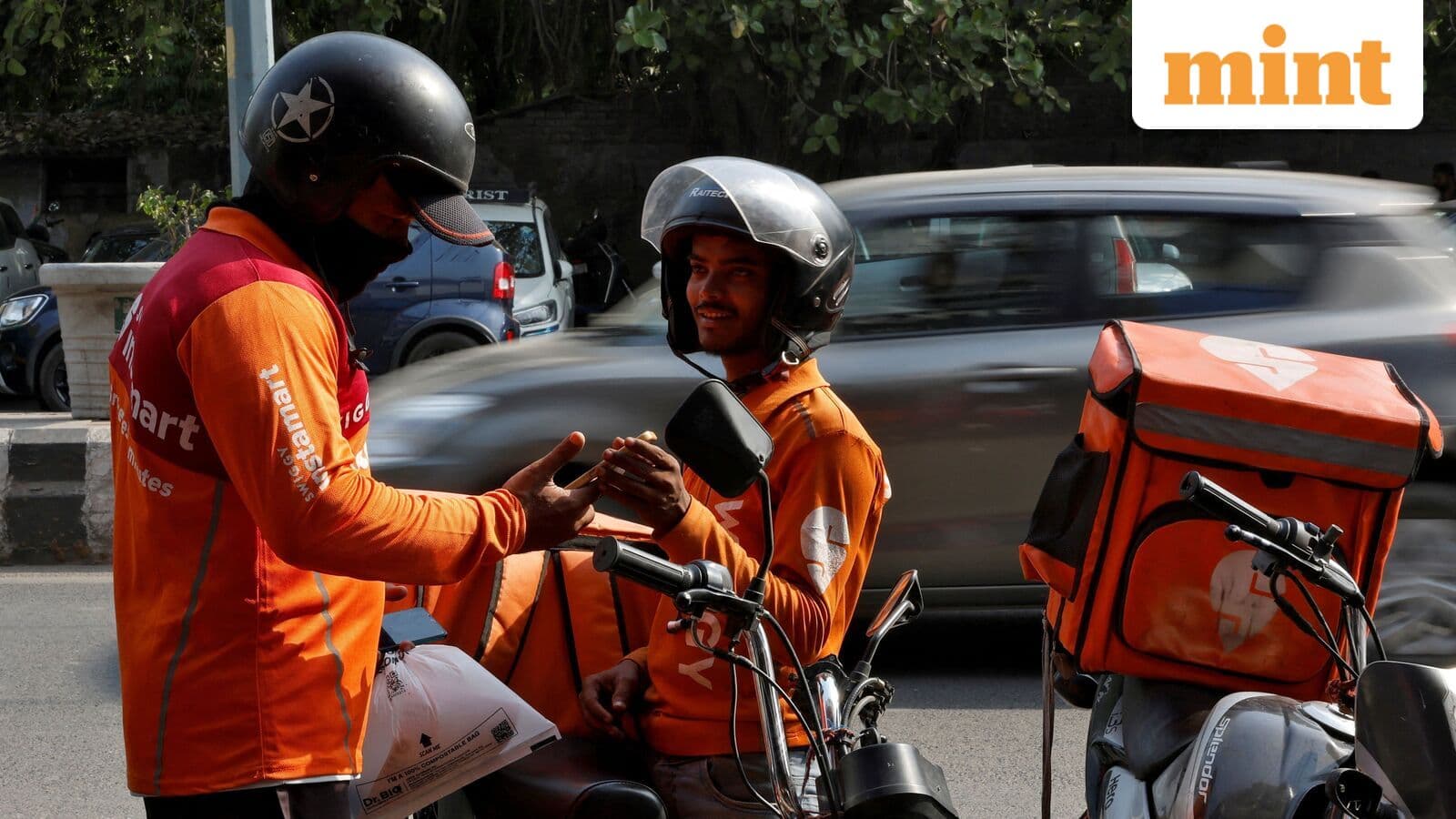

As 2026 progresses, the independent economy for side hustlers, freelancers, and creators continues to be shaped by accelerating platform power plays, intensified regulatory scrutiny, AI-driven efficiencies, and diversifying monetization strategies. Recent developments—most notably fresh revelations around DoorDash’s income suppressive algorithms, significant FTC settlements against Walmart Spark, Uber’s rollback of earnings transparency, and Freelancer Ltd.’s profitable trajectory—highlight the evolving complexity and opportunity in this space.
This update synthesizes these pivotal changes alongside emerging best practices, technological innovations, and strategic guidance, equipping independent workers to navigate the increasingly multifaceted platform and creator economies with agility and foresight.
---
## Platform Dynamics: Greater Algorithmic Control Meets Regulatory Pushback
The platform economy remains the bedrock of gig work, but recent events reveal growing tensions between platform opacity, worker protections, and earnings volatility.
### DoorDash’s Deepening Algorithmic Grip Exacerbates Driver Income Volatility
DoorDash’s market dominance in food delivery continues, but investigations have now firmly quantified the extent of driver income erosion linked to its undisclosed tipping algorithms:
- **Tip Suppression Losses Surpass $550 Million:** Independent probes confirm DoorDash’s opaque algorithmic changes have siphoned over half a billion dollars from drivers, disproportionately harming those dependent on tips. This finding validates long-standing driver claims of suppressed earnings masked behind complex platform metrics.
- **Opaque “Shadow Market” KPIs Compound Driver Uncertainty:** DoorDash’s algorithm uses hidden factors—such as acceptance rates, driver location history, and customer satisfaction metrics—to control order allocation and driver status, often without clear communication. Viral exposés like **“Thousands of DRIVERS BEING DEACTIVATED for THIS and DON'T EVEN REALIZE IT! SCARY STUFF!!!”** have spotlighted the precariousness of driver livelihood and the lack of transparent appeals processes.
- **Surge in Deactivations Amid Vague Enforcement:** Recent months have seen a notable rise in DoorDash driver suspensions triggered by subtle or algorithmic infractions. The lack of clear explanations or recourse pushes drivers to adopt **systematic KPI tracking, meticulous documentation, and stringent compliance** as vital survival tactics.
### Walmart’s Heavy FTC Penalties Signal Rising Regulatory Enforcement
Walmart’s delivery arm, Spark, has become a focal point for regulatory action, underscoring growing federal scrutiny over platform labor practices:
- **$100 Million FTC Settlement Over Deceptive Practices:** Walmart agreed to a record-setting $100 million settlement resolving allegations it engaged in deceptive and unfair practices toward Spark drivers, including misleading statements about pay and tipping mechanisms. This settlement marks one of the largest in gig economy enforcement history.
- **Additional $16 Million Paid to Spark Drivers:** Separately, Walmart settled claims with drivers for $16 million over misleading pay and tip disclosures, reflecting direct restitution for affected workers.
These enforcement actions reinforce a regulatory environment increasingly intolerant of platform opacity and underpayment, setting important precedents for gig worker protections.
### Uber’s Transparency Rollback Heightens Need for Third-Party Tools
Uber’s recent removal of the “Active Hour” earnings estimates—as explained in the video **“Uber says that Active Hour estimates no longer shown. Why?”**—reduces drivers’ ability to assess real-time income efficiency and optimize work hours. This rollback intensifies dependence on third-party profit and productivity tracking tools, fueling demand for apps like GigU’s net profit calculator and SideHustlr.ai.
### Multi-App Strategies and Real-Time Profit Tracking Gain Momentum
- Drivers who actively juggle orders across DoorDash, Uber Eats, and Walmart Spark report **15–30% higher net earnings**, leveraging platform variability to offset algorithmic slowdowns or penalties.
- However, Walmart Spark’s routing inefficiencies and ongoing regulatory scrutiny temper driver retention, emphasizing the importance of **multi-platform diversification** combined with **real-time profitability monitoring** tools.
- GigU’s net profit calculator is seeing growing adoption in key markets like Miami, empowering drivers with granular expense and earnings insights to optimize scheduling and reduce burnout.
---
## Regulatory & Enforcement Landscape: Expanding Protections and Heightened Compliance Risks
Government agencies are amplifying efforts to clarify gig worker rights and enforce tax compliance.
- **Department of Labor Advances Gig Worker Classification:** The DOL is actively pursuing expanded coverage of gig workers under the Fair Labor Standards Act (FLSA), aiming to strengthen minimum wage and overtime protections. This signals a future where platforms may face greater accountability for worker compensation.
- **FTC’s Expanded Consumer Advocacy:** Beyond Walmart Spark, the FTC is increasingly supporting gig workers in disputes related to pay, tipping, and deceptive platform practices, reflecting a broader federal push to enhance gig worker protections.
- **IRS Enforcement Tightens on Side Hustle Compliance:** The IRS warns that **missing tax deadlines can result in costly penalties**, regardless of income size, as highlighted in the recent video “The IRS Doesn’t Care If You Forgot — Missing Tax Dates Could Cost You Thousands.” This underscores the urgency for independent workers to maintain rigorous tax schedules and accurate reporting.
- **Continued Debunking of the $600 Income Reporting Myth:** The viral clarification **“The $600 Side Hustle Myth (and What the IRS Actually Sees)”** remains critical, emphasizing that *all* income must be reported, not just amounts on 1099 forms, to avoid audit risks.
---
## Financial Professionalism: AI-Augmented Guidance and Retirement Planning
Independent workers increasingly embrace technology and strategic discipline to manage finances prudently:
- **AI-Driven Tax Guidance Gains Traction:** Videos like **“I Asked ChatGPT Which Tax Steps Matter Most Before Filing”** demonstrate the growing role of AI in accessible, customizable tax advice, helping freelancers prioritize deductions, estimated payments, and record-keeping.
- **Tailored Tax Planning Over Simplistic Heuristics:** Content such as **“The 30% Tax Rule Is WRONG. Here's What Freelancers Actually Owe (2026)”** advocates for nuanced tax strategies based on individual income sources and business structures, moving beyond one-size-fits-all rules.
- **Retirement Vehicle Adoption Continues to Rise:** Solo 401(k)s and SEP IRAs are increasingly popular vehicles for freelancers seeking tax-advantaged savings, with best practices emphasizing documenting all income—including cash tips and off-platform earnings—to maximize contribution limits.
---
## Creator Economy: AI, Commerce Integration, and Monetization Stability
Creators leverage AI tools and commerce innovations to diversify and stabilize income amid platform shifts:
- **Niche CPM Arbitrage Expands:** Verticals like personal finance, health, and technology continue to command premium CPMs in the **$8–$20 range**, outperforming generic content.
- **Consistency Outperforms Virality:** The success story in **“7 Boring YouTube Channels Quietly Exploding in 2026”** highlights how steady, quality content production drives sustainable growth.
- **Subscription and Sponsorship Revenues Mature:** Platforms such as Snapchat and Patreon increasingly provide dependable recurring income, reducing creators’ reliance on volatile ad markets.
- **LinkedIn’s “LinkedInfluencers” Ecosystem Grows:** AI-powered monetization tools enable creators to tap lucrative B2B audiences, expanding creator revenue options.
- **AI Revolutionizes Production and Outreach:** The **2026 Influencer Marketing Factory report** documents how AI automates curation, repurposing, and targeted outreach, boosting efficiency and reducing burnout.
- **Email Monetization Breakthroughs:** The case study **“Make $500k/Year with One Email a Week”** illustrates how AI-assisted email marketing serves as a low-effort, high-return revenue stream.
- **Commerce Innovations Accelerate:**
- **TikTok Shop** integrates social content with frictionless product sales and affiliate marketing.
- **Perplexity’s in-chat shopping with PayPal** enables direct monetization within chat interfaces, bypassing traditional storefronts.
- **Amazon FBA Side Hustles Gain Spotlight:** The primer **“Building An Amazon FBA Side Hustle in 2026 | Part 1: Getting Started”** guides creators toward scalable product commerce.
- **Hybrid Income Models Thrive:** Creators blending content creation with client projects, exemplified by **“How He Built a $86,000 Videography Side Hustle Whilst Working a 9-5,”** illustrate effective diversification tactics.
- **New Monetization Insights:**
- The video **“3 Ways To Make Money With Canva That I use personally!”** adds practical avenues for creators to monetize design skills and templates.
- The episode **“EP-15 Diving into the New Creator Economy: Featuring Akarshan Jaiswal”** offers in-depth perspectives on creator economy trends and AI integration.
---
## Freelancer Landscape: Specialization, Pricing Discipline, and Platform Diversification
Freelancers continue to sharpen their strategic positioning to combat fee pressures and competition:
- Jyotishree’s **“3 Strategies That Will Actually Grow Your Freelance Business in 2026”** advocates:
- Deep niche specialization for premium rates.
- Personalized proposals and curated portfolios enhancing client retention.
- Continuous skill upgrading aligned with market demand.
- **Side Hustle Nation’s Roadmap to $250k+ Income:** Emphasizes value-based pricing and packaged agency services over hourly billing to scale earnings.
- **Platform Fee Pressures Spur Diversification:** Upwork’s steep fees (18.5–18.9%) motivate freelancers to pursue direct client relationships or migrate to lower-fee platforms like Jobbers.io.
- Educational content such as **“Are Fiverr & Upwork Really Worth It for Beginner Freelancers in 2026? (Honest Truth)”** helps freelancers make informed platform choices.
- Digital asset marketplaces like Flippa and Website Closers provide exit options for freelancers owning online businesses, though timing and valuation require caution.
- Billing and SEO tactics are evolving, with videos like **“Efficient Freelance Billing: Turn Hours into Hard Cash, No Sweat”** and **“Mastering Upwork SEO for High-Value Freelance Success #13.4”** offering actionable guidance.
- **New Addition:** The detailed video **“How To Grow As A Freelance Artist In 2026” (1h 14m)** addresses unique challenges and growth strategies for creative freelancers.
---
## Operational Excellence: KPI Governance, AI Tools, and Vigilance Against Scams
Effective operations underpin long-term success amid volatility:
- ZipRecruiter’s **$35.32 hourly wage benchmark** remains a practical ROI reference, factoring platform fees and unpaid administrative time.
- Independent workers must price services to **cover true costs and effort** to avoid undervaluation and burnout.
- AI-enabled lead generation and client management platforms like SideHustlr.ai report **65% of freelancers prefer steady monthly incomes (~$500)**, reflecting a shift toward sustainable growth.
- GigU’s real-time profitability tools enable drivers and freelancers to optimize scheduling, expenses, and avoid income disruptions.
- Meticulous KPI tracking—monitoring delivery times, ratings, and incentive usage—is critical to prevent suspensions or deactivations.
- Financial education on retirement vehicles, illustrated by resources like **“Got a Side Hustle or Business? Open a 401K for 1099 Workers (Solo 401K),”** promotes long-term planning.
- AI-integrated creator toolkits automate scheduling, analytics, and financial management, reducing burnout.
- Continuous scam vigilance remains essential as fraudulent schemes proliferate.
---
## Emerging Income Frontiers: Micro-Projects, Passive Assets, and Niche Gigs
Low-capital, scalable income streams continue to proliferate:
- Joshua Tiernan’s **“$1000 Side-Project” framework** offers a rapid, low-risk blueprint for side hustlers.
- Daisy Anne Mitchell’s creator consultancy success story demonstrates niche focus and client savvy starting from minimal capital.
- Home-based microgreens and artisan ventures showcase how small-scale projects can scale into full incomes.
- Low-stress business models emphasizing curation and content repurposing gain traction.
- Asset monetization examples include vending machine routes scaling to $600K/year and Oregon landlords earning $925/month renting parking spaces.
- Selective participation in incentive programs helps manage burnout and smooth income fluctuations.
- E-mobility rentals and flexible side hustles for single parents continue to expand urban micro-entrepreneurship, as highlighted in videos like **“Making $900 in 3 hrs with my SIDE HUSTLE...”** and **“Realistic Side Hustles for Single Mums (Low Start-Up Cost!)”**.
- Remote non-phone roles proliferate, broadening access for workers with diverse preferences.
---
## Tactical Takeaways for 2026 Independent Workers
- **Target hourly ROI of at least $35.32**, incorporating all direct and indirect costs.
- **Monitor platform transparency shifts** (e.g., Uber’s active hour estimate removal) and leverage third-party tools for earnings clarity.
- **Leverage regulatory advances and FTC support** to enhance worker protections.
- **Aggressively diversify income streams** across gig, freelance, creator, and passive ventures.
- **Adopt AI-powered tools** like SideHustlr.ai and GigU’s profitability calculators for lead generation, scheduling, and financial insight.
- **Implement tiered, transparent rate increases and value-based pricing** to counter inflation and platform fees.
- **Track critical KPIs meticulously** to avoid suspensions, deactivations, and income interruptions.
- **Engage with platforms offering transparent pay models** and participate selectively in incentive programs to reduce burnout.
- **Invest early in legal entity formation, tax planning, and retirement vehicles** to secure long-term financial health.
- **Launch validated micro-projects** to minimize risk and enable scalable growth.
- **Optimize creator monetization by blending AI efficiencies, niche CPM arbitrage, subscription models, and commerce innovations** (TikTok Shop, Perplexity chat commerce, Amazon FBA).
- **Refine freelance profiles, proposals, and pricing toward agency-style scalability.**
- **Explore passive income through asset monetization and low-overhead home businesses.**
- **Maintain constant vigilance against scams and predatory offers.**
- **Explore emerging niches** such as e-mobility rentals, single parent side hustles, and remote, non-phone roles.
---
## Conclusion
The independent work ecosystem in 2026 remains complex yet fertile, where opportunity and challenge coexist in equal measure. DoorDash’s tightening algorithmic controls exacerbate income volatility and risk, while Uber’s transparency setbacks amplify uncertainty. Meanwhile, landmark regulatory actions—most notably Walmart’s $116 million combined FTC and driver settlements—signal a growing federal commitment to platform accountability.
Creators are harnessing AI, subscription stability, and commerce innovations to build resilient, diversified incomes, while freelancers sharpen their niche specialization and pricing discipline to navigate fierce competition and platform fees. Across the board, disciplined KPI governance, AI-enhanced workflows, proactive tax compliance, and scam vigilance form the foundation of sustainable success.
Freelancer Ltd.’s profitable turnaround stands as a positive market beacon, reflecting growing demand and maturing platform dynamics in freelance marketplaces. Equipped with emerging insights, regulatory clarity, and practical tools, today’s independent workers are better positioned than ever to manage volatility, optimize earnings, and cultivate lasting resilience in an AI-driven, platform-dominated economy.
---
*This comprehensive update integrates the latest research, case studies, and tactical resources, empowering 2026’s side hustlers, freelancers, and creators to thrive amid rapid change and complexity.*