# Navigating the 2026 Financial Landscape: Critical Updates on IRS Policies, Social Security, International Risks, and Household Strategies
The year 2026 continues to be a watershed moment for American households, marked by sweeping policy reforms, international geopolitical shifts, and macroeconomic uncertainties. Building upon earlier insights, recent developments underscore that **proactive financial planning, meticulous recordkeeping, strategic diversification, and international risk mitigation** are more vital than ever. As systemic delays and regulatory changes ripple through the economy, resilience, agility, and disciplined management will determine households' ability to safeguard assets and seize emerging opportunities.
---
## Major Policy Developments in 2026
### Expanded IRS Digital Payment Reporting Thresholds and Enforcement
One of the most consequential changes this year is the **dramatic broadening of IRS reporting obligations** concerning digital transactions. Effective from the 2025 tax season, the **threshold for reporting digital payments has been lowered from $20,000 and 200 transactions to just $600 annually, regardless of transaction volume**. This initiative aims to **enhance income transparency** and **strengthen enforcement**, but it also introduces new compliance challenges:
- **Casual online sellers**—those selling personal items on eBay, Facebook Marketplace, or Craigslist—are now more visible to tax authorities.
- **Gig economy workers**—Uber, Lyft, DoorDash, freelance platforms—are more likely to have income reported directly to the IRS.
- **Gifts, reimbursements, or transfers**—which previously often went unnoticed—must now be documented and reported if they total $600 or more annually.
In tandem, the IRS has introduced **six new forms and reporting mechanisms** designed to **capture a broader array of income sources**. This has led to **heightened audit scrutiny**, especially for individuals managing multiple income streams or complex financial arrangements.
**Implications for households include:**
- The necessity for **meticulous recordkeeping**: screenshots, receipts, bank statements, and transaction logs.
- The importance of **early filing** and **organized documentation** to prevent refund delays, which have become more prevalent.
- The **benefit of engaging qualified tax professionals** familiar with these evolving rules to ensure compliance and optimize filings.
### Social Security Reforms: Benefits and Administrative Complexities
In 2026, **Social Security** introduced **new benefit options**, notably **lump-sum payments**, providing retirees with **greater flexibility** in managing their benefits. However, recent reports highlight **administrative complexities and emerging risks**:
- **Benefit repayment demands** are affecting some retirees, with **thousands of dollars being requested back**—often due to **administrative errors or misreported income**. An article titled **"Social Security Is Asking Some Retirees to Pay Back Thousands – Here’s Why"** emphasizes the importance of **careful benefit statement monitoring** and **prompt correction of discrepancies**.
- Despite **announced Cost-of-Living Adjustments (COLA)**, some recipients have experienced **smaller-than-expected monthly checks** after recalculations. As detailed in **"Why Some Social Security Recipients Could See a Smaller Check in the Coming Months, Even After the 2026 Cost-of-Living Increase,"** beneficiaries should **regularly review their statements** and **verify benefit calculations** to avoid surprises.
**Strategic considerations for retirees include:**
- **Timing of withdrawals and Roth conversions** to optimize tax efficiency amid fluctuating benefits.
- **Updating estate plans** to account for **current benefit thresholds** and **audit risks**.
- **Diversifying income sources**—through dividends, annuities, or alternative investments—to **offset rising property taxes and mortgage costs**.
### Recent Developments: March Social Security Payment Delays and Audit Risks
A notable recent event concerns **March’s Social Security payments**, which **did not arrive as usual**. A new article titled **"March’s Social Security Payments Won't Arrive as Usual - Here's Why"** explains that **administrative delays, system upgrades, and heightened audit activity** have disrupted disbursement timelines. Retirees are advised to:
- **Monitor benefit statements closely**
- **Plan for potential cash flow gaps**
- **Maintain larger liquidity buffers** to cover unforeseen delays or disruptions.
---
## Market Volatility and Investment Strategies
Amid ongoing global uncertainties, **market volatility has resurged**, prompting a reassessment of household investment strategies:
- Building **sufficient cash reserves** remains crucial to **absorb refund delays** and **benefit disbursement disruptions**.
- **Diversification across income-generating assets**—such as dividends, rental income, and alternative investments—reduces reliance on a single income source.
- **Employing options strategies** like **covered calls** and **protective puts** can **generate income** and **hedge against downside risks**.
- **Rebalancing portfolios regularly** ensures alignment with **shifting market conditions**, especially as **interest rates fluctuate** and **geopolitical tensions escalate**.
Recent analysis, including **"Inside BlackRock’s 2026 Recession Portfolio,"**, emphasizes **income-focused assets** and **diversification** as essential to weather turbulence. Maintaining **adequate liquidity** is also vital for unexpected expenses or systemic delays.
### Incorporating Expert Insights
JPMorgan Chase CEO Jamie Dimon recently highlighted the importance of **holding diversified asset classes**, including **cash, commodities, and inflation hedges**, to prepare for potential downturns. His insights reinforce the need for **tailored, resilient portfolios**—with **flexibility and diversification** as core principles.
---
## International and Systemic Risks: Geopolitical and Currency Dynamics
The international landscape presents ongoing complexities:
- **Asset management firms** are experiencing **redemption freezes**, limiting investor access during turbulent periods and **trapping assets**. This underscores the importance of **liquidity management** and **jurisdictional diversification**.
- **China’s explicit push for dedollarization**, through **reductions in US Treasury holdings** and **gold reserve accumulation**, signals a **possible shift away from dollar dominance**. As **Xi Jinping** emphasizes **China’s currency ambitions**, markets are watching for **potential currency volatility** and **inflationary pressures**.
- The **yuan’s appreciation** and **international monetary policy shifts** likely increase **market volatility**, prompting households to **diversify further** and **hedge currency risks**.
- Recent geopolitical developments include **proposed tariff increases** (from 10% to 15%), which could **disrupt supply chains**, **fuel inflation**, and **raise consumer prices**.
### AI and Cryptocurrencies: Emerging Systemic Risks
A recent survey highlighted **AI-driven market risks**, with **nearly 23% of respondents** flagging **AI overvaluation** as a top concern, potentially forming **bubbles**. The **"美银调查:AI泡沫成为信贷投资者最担忧的问题"** (Bank of America survey) underscores this point.
Additionally, **cryptocurrency markets**, especially **stablecoins like USDC**, are increasingly integral to international transactions. Circle’s **Q4 2025 revenue growth** and **USDC circulation expansion** reflect **crypto’s growing role** in payments, but also **heighten systemic risks** if regulatory or technological disruptions occur.
The **Federal Reserve** has indicated that **AI-driven investment surges could temporarily elevate neutral interest rates**, influencing borrowing costs and inflation trajectories.
---
## Portfolio Response: Tactical vs. Static Allocations
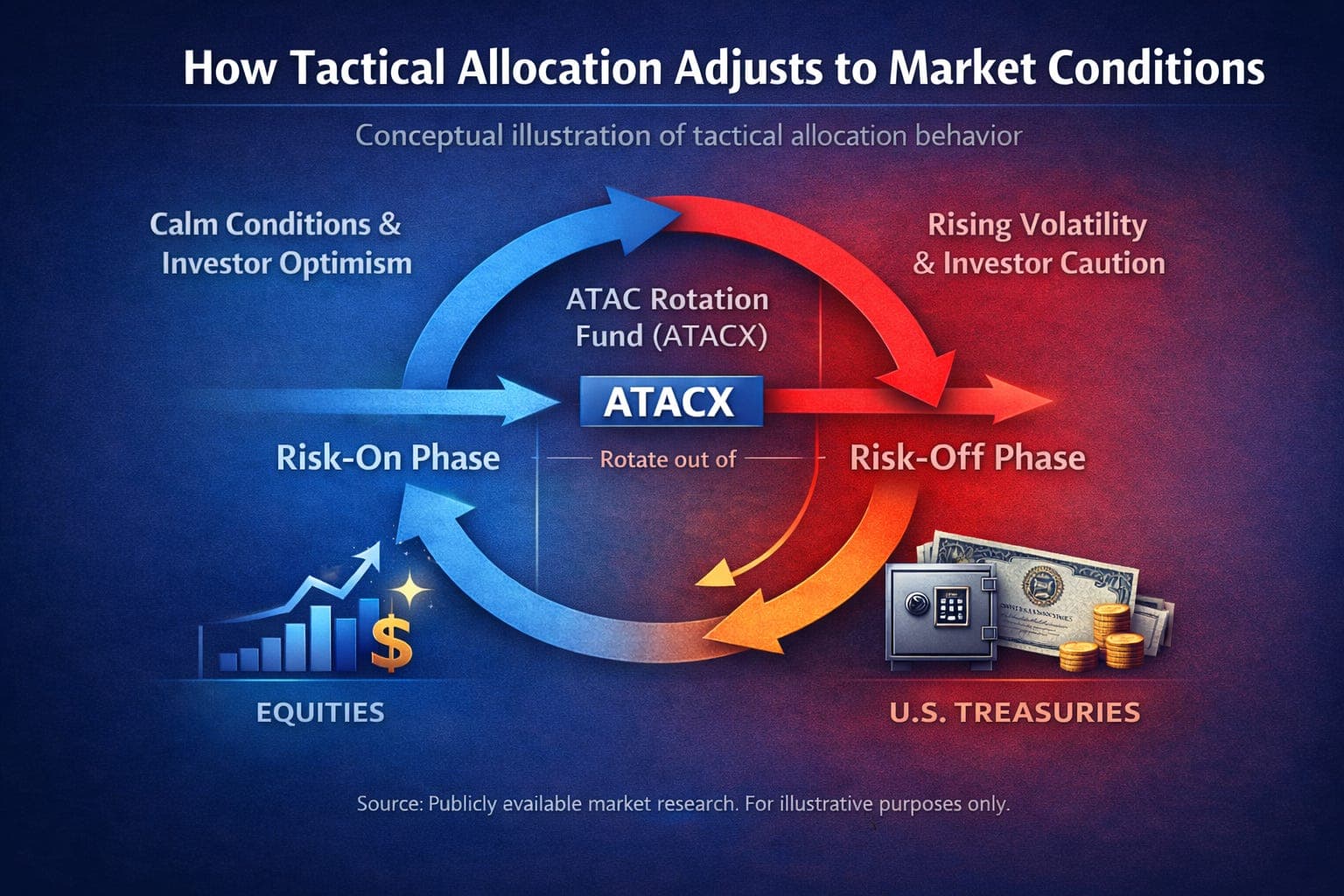
Given these uncertainties, households should consider **dynamic, tactical allocations** rather than static portfolios:
- **Diversify across asset classes**: equities, bonds, commodities, and alternative investments.
- **Utilize options overlays**, such as **covered calls** and **protective puts**, to **generate income** and **limit downside**.
- **Incorporate managed futures and hedge funds** that offer **non-correlated returns** and **risk mitigation**.
A recent article titled **"$ATACX: What Rising Volatility Means for Tactical Funds vs. Static Portfolios"** explores how **tactical funds** are better positioned to **adjust exposures rapidly** in volatile environments, whereas static portfolios may face larger drawdowns.
---
## High-Net-Worth and Cross-Border Strategies
Ultra-high-net-worth families face **complex tax and international diversification challenges**:
- Employ **trusts, family limited partnerships**, and **donor-advised funds** for **tax efficiency**.
- Use **offshore holdings** and **jurisdictional diversification** to **mitigate geopolitical risks**.
- Engage **cross-border financial advisors** to ensure **compliance** and **optimize global wealth management**.
Recent insights, such as **"10M+? 3 Strategies Ultra-High Net Worth Investors Need To Know,"**, emphasize **tailored, proactive plans** to **preserve and grow wealth** amid evolving international risks.
---
## Household Behavioral Risks and Recommendations
A recurring concern involves **household investing behaviors**:
> **"My adult son quit his job to ‘trade crypto full time,’ asked to borrow $2,000 ‘just to float,’ and then told me I’m ‘sabotaging his future’ when I offered a formal loan agreement."**
This scenario illustrates **risky speculative behaviors**, especially in **cryptocurrencies and AI assets**. Risks include:
- **Full-time crypto trading**, which remains **highly volatile and speculative**.
- **Informal intra-family loans** that could **lead to conflicts or liquidity issues** if not formalized.
- **Limited financial literacy**, leading to **overconfidence** in high-risk assets.
**Recommendations:**
- Formalize intra-family loans with **clear repayment terms**.
- **Stress-test household liquidity** regularly.
- **Promote financial literacy** and **discourage risky speculation**.
---
## Practical Action Checklist for 2026 Households
- Stay current on **IRS and Social Security policies**, including **new forms, thresholds, and benefit adjustments**.
- Maintain **meticulous digital records**—screenshots, receipts, transaction logs.
- **Reassess regional tax strategies**, considering high-tax states like **New Jersey, Illinois, Connecticut**, and explore options in **lower-tax states** such as **Florida or Texas**.
- **Update estate and cross-border tax plans** proactively.
- **Diversify investments** with **hedging strategies**, including **covered calls** and **protective puts**.
- **Build and maintain liquidity buffers** for delays and unforeseen expenses.
- Monitor **international developments**—currency policies, geopolitical tensions—and **adjust asset allocations** accordingly.
- Regularly **consult with tax and financial advisors** for tailored strategies.
- Address **household behavioral risks**: formalize intra-family loans, stress-test liquidity, and enhance financial literacy.
---
## Current Outlook and Implications
As 2026 progresses, the **financial environment remains unpredictable**, with systemic delays, geopolitical tensions, and regulatory reforms demanding **second-order thinking**—anticipating ripple effects from current decisions.
**Key takeaways:**
- **Proactive, flexible planning** is essential to adapt swiftly.
- **Diversification and liquidity preservation** are critical to resilience.
- **Continuous review and strategic adjustment** of financial, estate, and international plans will position households to **protect assets** and **capitalize on opportunities**.
Ultimately, households that **think ahead**, **act strategically**, and **remain adaptable** will be better equipped to **navigate systemic changes** and **thrive in this evolving landscape**.
---
## Final Thoughts
The convergence of **expanded IRS reporting**, **Social Security reforms**, **international currency shifts**, and **market volatility** underscores the need for **comprehensive, vigilant financial management**. Maintaining **organized records**, **diversifying portfolios**, and **staying informed about international risks** are essential.
**Well-informed households** employing **diversification**, **policy awareness**, and **proactive adjustments** will be best positioned to **protect wealth** and **capitalize on opportunities** amid the uncertainties of 2026 and beyond.
---
## Current Status and Forward Look
As we delve deeper into 2026, the landscape underscores the **importance of vigilance and adaptability**. Systemic delays, geopolitical developments, and regulatory shifts reinforce that **liquidity management**, **international diversification**, and **policy monitoring** are now **imperative**.
**The overarching message:** **Preparedness, diversification, and proactive planning** are not optional but essential for **wealth preservation and growth**. Those who **anticipate ripple effects**, **stay flexible**, and **adjust strategies promptly** will be most successful in navigating the complexities of this transformative year.