# The Evolving Landscape of Enterprise AI Infrastructure in 2026: Capacity, Autonomy, and Sovereignty Reinforced
The enterprise AI ecosystem in 2026 is reaching unprecedented heights, driven by colossal hardware investments, autonomous operational paradigms, and regional sovereignty initiatives. As organizations push toward exascale capabilities, the integration of innovative hardware, sophisticated orchestration, and geopolitical resilience is transforming how enterprises build, manage, and secure AI infrastructure—setting the stage for a future where AI systems are more scalable, self-healing, and regionally autonomous than ever before.
---
## Major Capacity Expansions and Multi-Vendor Hardware Alliances
At the core of this transformation are **massive capacity upgrades** and strategic hardware partnerships aimed at unlocking exascale AI workloads. Notably:
- **AMD’s $60 billion partnership with Meta** announced early 2026 exemplifies this scale-up. This multi-year initiative focuses on deploying **custom Instinct MI450 GPUs**, **6th Gen EPYC 'Venice' processors**, and **Helios racks** capable of supporting **hundreds of kilowatts per rack**, with plans for **1MW configurations**. These infrastructures are designed to handle the most demanding training and inference tasks, pushing AI towards **exascale performance**.
- Complementing hardware investments, **AMD’s recent partnership with Nutanix** aims to develop an **open, scalable platform** that simplifies deployment, management, and orchestration across multi-vendor environments. This collaboration ensures that **heterogeneous hardware ecosystems** remain resilient amid supply chain constraints and geopolitical uncertainties.
- Innovative **rack architectures** now target **100kW per rack**, with some ambitious plans for **1MW configurations**. These configurations necessitate **advanced power and cooling solutions** and **autonomous orchestration systems** capable of fault detection and self-healing to ensure uninterrupted operation at scale.
- Hardware breakthroughs such as **Samsung’s HBM4 memory** deliver **higher data throughput** and **lower energy consumption**, essential for training large language models. Meanwhile, **photonic interconnects** are enabling **ultra-low latency, high-bandwidth intra-data-center communication**, facilitating **massive parallelism** across hardware units.
These developments collectively foster a **multi-vendor ecosystem** resilient to geopolitical disruptions, with diverse hardware options supporting the growing demands of **enterprise AI workloads**.
---
## Autonomous, Self-Healing Operations and AI-Driven Orchestration
A defining trend of 2026 is the **shift toward autonomous, self-healing AI systems**. These systems leverage **integrated hardware-software orchestration** to automate **fault detection**, **resource reallocation**, and **preventive maintenance**—drastically reducing manual intervention.
- The **AMD Helios supercomputer**, developed in collaboration with **SoftBank** and **TCS**, exemplifies this approach by **orchestrating regional, multi-cloud, and hybrid environments**. It embeds **security**, **scalability**, and **fault tolerance** into its core operation, enabling continuous AI training and inference at a large scale.
- **AIOps platforms** such as **Flyte** and **Union.ai** are increasingly embedded into **cloud-native environments**, providing **automated monitoring**, **predictive analytics**, and **self-remediation** capabilities. These platforms are now central to **enterprise AI workflows**, reducing downtime and optimizing resource utilization.
- Notably, **AWS** announced plans to replace traditional manual cloud consulting with **AI-driven automation** for complex workflows, signaling a **paradigm shift** toward **auto-managed AI pipelines**. Tools like **SageMaker HyperPod EKS** demonstrate how **automated resource orchestration**, **security enforcement**, and **cost management** are becoming standard.
- **Security and governance** are integral to these autonomous systems. Embedding **least-privilege gateways** like **Managed Control Plane (MCP)**, **Open Policy Agent (OPA)**, and **ephemeral runners** ensures **regulatory compliance**, **trust**, and **operational transparency**—crucial as AI workloads span multiple regions and jurisdictions.
---
## Cloud Platforms, Enterprise Architectures, and Market Dynamics
The landscape of **enterprise AI SaaS platforms** continues to evolve rapidly:
- **ElevenLabs** partnered with **Google Cloud** to utilize **Blackwell GPUs**, NVIDIA’s latest architecture, enabling **high-performance AI services** at scale with optimized throughput and energy efficiency.
- **Builds on GCP** such as **Gemini Enterprise Architecture** illustrate how **scalable, secure, multi-tenant AI SaaS platforms** are designed to support **large enterprise workloads**, emphasizing **resilience** and **cost efficiency**.
- The **"AI Factories"** concept, championed by **Siemens**, envisions **automated, industrial-grade AI infrastructure** capable of **producing, training, and deploying models** at industrial scale—integrating **powerful hardware**, **autonomous workflows**, and **thermal management** to sustain continuous AI production.
Simultaneously, **regional and sovereign cloud initiatives** are gaining prominence:
- **India’s "Make in India"** campaign has propelled **Neysa**, a **domestic AI cloud platform** that secured **$1.2 billion** in funding. It supports **local hardware manufacturing**, **large-scale AI model development**, and **regional startups**, ensuring **data sovereignty** and **local innovation**.
- The **$7.7 billion hyperscale AI data center** in Uttar Pradesh exemplifies India’s strategic push to **host AI workloads domestically**, reducing dependency on foreign infrastructure.
- In Europe, **MARA’s acquisition of a 64% stake in Exaion** and expansion of **Sovereign Cloud platforms** from **AWS** and **Equinix** are strengthening **digital sovereignty**, ensuring **regional compliance**, **low-latency access**, and **security**.
These regional initiatives are critical in **building resilient, compliant AI ecosystems** that mitigate geopolitical risks and foster **local innovation**.
---
## Hardware Innovation and Market Dynamics
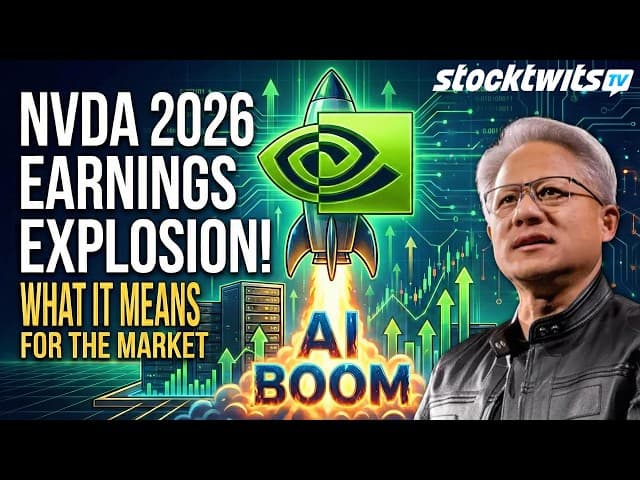
The hardware supply chain remains under pressure due to soaring demand, especially from **GPU giants like NVIDIA**. Its **GPU sales** are described as **"off the charts,"** creating **capacity bottlenecks** that challenge **orchestration systems** and **capacity planning** efforts.
- To address this, **multi-vendor strategies** are increasingly adopted, with organizations diversifying hardware sources to mitigate supply risks.
- **Emerging innovations** such as **photonic chips** and **next-generation accelerators** from startups and established vendors are poised to **transform intra-data-center communication** and **model training capabilities**, enabling **scalable, energy-efficient AI** at exascale levels.
---
## Operational Imperatives: Security, Observability, and FinOps
As AI systems become more distributed and complex, **security**, **observability**, and **cost management** are now **top operational priorities**:
- Enterprises are deploying **security-first orchestration platforms** that embed **audit trails**, **access controls**, and **policy enforcement** into every workflow.
- **FinOps** practices are evolving, providing **resource transparency** and **cost optimization**. Automated resource allocation based on workload demands ensures **predictable performance** and **cost efficiency**, especially in **autonomous, geo-resilient infrastructures**.
- **Predictive maintenance** driven by **AI analytics** minimizes downtime and prolongs hardware lifespan, further optimizing operational costs.
---
## Current Status and Future Outlook
The enterprise AI infrastructure landscape in 2026 is characterized by **unprecedented scale**, **autonomy**, and **regional resilience**. Major players like AMD, Meta, Siemens, and cloud providers are investing heavily in **self-managing, secure, and geographically distributed systems**.
The **demand surge for NVIDIA GPUs** continues to challenge supply chains, pushing organizations toward **hardware diversification** and **multi-vendor ecosystems**. **Regional initiatives** such as **India’s Neysa** and **Europe’s Sovereign Clouds** underscore the importance of **data sovereignty**, **local innovation**, and **geopolitical resilience**.
**Looking forward**, enterprises are increasingly adopting **autonomous, security-aware, and geo-resilient AI infrastructure**, empowered by **hardware breakthroughs**, **cloud-native orchestration**, and **regional ecosystems**. This convergence will enable **self-healing, scalable, and secure AI systems**—driving industries into a new epoch of **industrialized AI excellence** where **autonomy, resilience, and sovereignty** are foundational pillars.
In summary, **2026 marks a pivotal point**: the enterprise AI infrastructure landscape is no longer just about hardware or cloud services but about **integrated, autonomous ecosystems** capable of **scaling, adapting, and securing** in an increasingly complex geopolitical and operational environment.