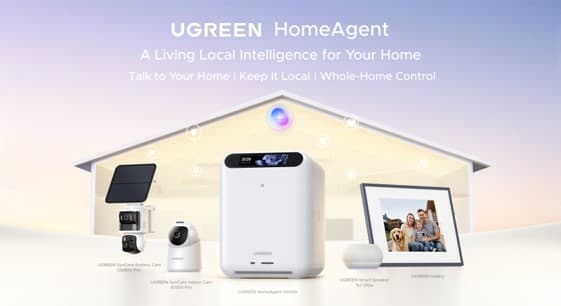
The relentless integration of artificial intelligence into consumer technology continues to accelerate in 2026, driving transformative shifts across homes, gadgets, and daily routines. Building on last year’s momentum toward conversational, visually aware, and privacy-conscious AI, recent innovations now push the envelope further—melding ultra-low-power analog AI hardware, seamless smart home automation, and expanded satellite connectivity to create more immersive, responsive, and secure experiences. This evolution underscores an industry-wide commitment to balancing cutting-edge AI capabilities with user empowerment, privacy, and real-world utility.
---
### Ultra-Low-Power Analog AI and Incremental Wearable Advances Boost On-Device Intelligence
One of the most exciting hardware breakthroughs is **Blumind’s AMPL analog AI chip**, which operates at an astonishingly low 60 microwatts, making always-on audio and vision processing on edge wearables and devices viable without heavy battery drain. This analog approach enables continuous context awareness and sound or image recognition while preserving user privacy through minimal cloud dependence.
Blumind AMPL’s efficiency paves the way for truly ambient AI experiences in wearables—such as smart glasses, pendants, or earbuds—that can monitor environmental cues, health signals, or user intent without constant recharging or data transmission. This development aligns perfectly with the trend toward **on-device AI prioritizing privacy and contextual responsiveness**, especially in personal gadgets.
Complementing this, Apple’s recent release of the **Apple Watch Ultra 4** delivers the most significant smartwatch upgrade in years, focusing on enhanced processing power, improved sensors, and extended battery life. These incremental yet impactful improvements augment real-time health monitoring, environmental sensing, and AI-driven assistance—all while maintaining strict user data privacy through on-device computation. Together, these hardware advances highlight a maturing market where **privacy-preserving, always-on AI wearables are becoming mainstream**.
---
### Practical Smart Home AI Adoption Gains Traction with Beginner-Friendly Automation and Robust Connectivity
Smart home AI is shedding its image as an expert-only domain, thanks to accessible automation ideas and improving interoperability. The article **“10 AI Smart Home Automation Ideas for Beginners in 2026”** showcases practical, easy-to-implement strategies that transform ordinary homes into intelligent living spaces. Examples include:
- AI-driven adaptive lighting and climate control that learn daily routines
- Voice-activated appliance scheduling tailored to household patterns
- Predictive maintenance alerts for HVAC and plumbing systems
These innovations empower users with tangible benefits without requiring technical expertise, marking a significant step toward widespread smart home adoption.
Central to this progress is the **Thread protocol**, which continues to dominate as the backbone for low-latency, mesh-network communication among heterogeneous AI devices. Thread-enabled devices—from smart shades to hubs—now interoperate more seamlessly, creating cohesive ecosystems that respond fluidly to user commands and environmental changes.
Expanding the connectivity frontier, **Starlink’s mobile satellite internet service** introduces a game-changing option for consumers in rural or underserved areas. Remarkably, this service requires no additional hardware or phone swaps; it leverages existing smartphones to deliver stable, high-speed internet virtually anywhere. This breakthrough ensures that hybrid AI architectures relying on cloud connectivity can function reliably beyond urban centers, democratizing access to AI-enhanced smart home experiences.
---
### Hybrid AI Architectures Remain the Optimal Paradigm Balancing Performance, Privacy, and Scalability
The AI industry continues to endorse **hybrid on-device/cloud architectures** as the practical standard. On-device AI handles latency-sensitive, privacy-critical tasks locally, while cloud systems provide heavy-duty processing, model updates, and cross-device synchronization.
This balanced approach is validated by ongoing experiments and consumer feedback. For instance, users engaging with standalone on-device AI apps report impressive responsiveness but note limitations in complex reasoning and data breadth, reinforcing the necessity of cloud augmentation for a full-featured experience.
Moreover, the thriving DIY AI community’s efforts to deploy ChatGPT-style models on microcontrollers demonstrate the potential of offline AI, but also expose scalability and functionality gaps compared to hybrid solutions. These insights collectively affirm that a **hybrid architecture maximizes user experience without compromising privacy or performance**.
---
### Rising Privacy, Security, and Social Concerns Demand Transparent Data Practices and Local-Only Alternatives
The proliferation of **camera-equipped, always-listening devices** in homes and wearables has amplified privacy and social challenges. Emerging studies reveal nuanced impacts on family dynamics, such as fragmented attention spans and altered parent-child interactions, due to persistent AI presence and surveillance.
In this context, calls for **stringent privacy guidelines, transparent data handling policies, and robust user controls** have intensified. Consumers increasingly recognize the value of **local-only smart home products** that operate entirely offline, eliminating cloud dependencies and recurring subscription costs. For example, while a $20 Wi-Fi security camera may seem affordable upfront, its $120 annual cloud storage fee significantly raises long-term expenses and data exposure risks. Local-only alternatives thus offer a compelling proposition for privacy-conscious users seeking both cost-effectiveness and data sovereignty.
Cybersecurity remains a double-edged sword in the AI era. On one hand, AI-driven cyberattacks—such as sophisticated phishing and social engineering—pose unprecedented risks. On the other, AI-powered defense mechanisms provide adaptive, real-time threat detection and mitigation, empowering consumers with stronger protections. This dynamic landscape demands **ongoing vigilance, education, and innovation** to safeguard digital and physical environments.
---
### Growing AI Literacy and Evolving Consumer Gadget Waves Foster Trust and Practicality
Public understanding of AI is maturing beyond simplistic metaphors, thanks to educational efforts like **“Is AI Just Predictive Text on Steroids? | Beyond the Books”**, which clarify AI’s true capabilities and limitations. This nuanced literacy is critical for shaping realistic expectations, fostering consumer trust, and informing balanced regulatory approaches.
The latest wave of AI-powered gadgets, featured in compilations such as **“The Best AI Gadgets of 2026: Gear That Actually Makes You Smarter,”** emphasizes **practicality combined with innovative AI features**. Highlights include:
- The **INSANE Chat GPT Magic Note AI Voice Recorder Umevo**, which integrates intelligent voice transcription and note-taking into a sleek portable device, enhancing productivity on the go
- Refined setup workflows like **“How I’d Setup A New iPad in 2026 (+ iPad Air M4 Vs Pro)”**, illustrating evolving preferences for seamless AI-enabled device configuration and personalized use
Success in this segment hinges on embedding **transparent data policies, intuitive user controls, and comprehensive education** to ensure AI technologies enhance everyday life responsibly.
---
### Key Takeaways
- **Blumind AMPL’s ultra-low-power analog AI chip** enables always-on, privacy-preserving audio and vision processing in wearables and edge devices.
- **Apple Watch Ultra 4’s upgrades** further solidify on-device AI capabilities for health and environmental sensing with strong privacy protections.
- **Smart home adoption grows through beginner-friendly AI automation and Thread’s robust interoperability**, while **Starlink’s mobile satellite internet extends AI connectivity beyond urban areas**.
- **Hybrid AI architectures combining local and cloud processing** remain the pragmatic standard for balancing privacy, performance, and scalability.
- **Privacy and social concerns around camera-equipped, always-listening devices drive demand for local-only solutions and clearer data practices**.
- **AI’s cybersecurity impact is dual-faceted**, necessitating continuous improvements in user education and defense technologies.
- **Rising AI literacy and practical gadget innovations** foster trust and promote responsible, effective AI adoption.
---
### Conclusion
Consumer AI’s embedding into homes, gadgets, and daily life has entered a new phase characterized by ultra-efficient hardware, practical automation, and expanded connectivity. The convergence of **analog AI chips like Blumind AMPL, incremental wearable upgrades, and mobile satellite internet** exemplify how AI is becoming more ambient, responsive, and accessible—without sacrificing privacy or control.
Nevertheless, the increased presence of camera-equipped devices and AI’s evolving cybersecurity role underscore the critical importance of transparent data policies, local-only AI alternatives, and ongoing user education. As hybrid AI architectures mature and interoperability deepens, the consumer AI ecosystem is poised for robust growth—provided innovation is balanced with trust, security, and user empowerment.
Ultimately, the future of consumer AI hinges on collaborative efforts among manufacturers, policymakers, and consumers to ensure AI technologies enrich daily life while safeguarding fundamental privacy and security principles.