# Celebrating Over 25 Years of Continuous Human Presence in Orbit: A New Era of Exploration and Innovation
As humanity marks over a quarter-century of uninterrupted presence aboard the International Space Station (ISS), the milestone underscores a transformative chapter in space exploration. Since its first crewed mission in 1998, the ISS has evolved from a marvel of engineering into an international symbol of cooperation, scientific progress, and technological innovation. Today, it continues to serve as a vital platform—not only as a laboratory for groundbreaking research but also as a springboard propelling us toward future deep-space missions, including lunar bases and Mars exploration.
This anniversary prompts reflection on our achievements, ongoing challenges, and the rapidly advancing technological landscape shaping humanity’s interplanetary ambitions.
---
## The ISS: An Unparalleled International Laboratory and Catalyst for Scientific Breakthroughs
Over its 25+ years of operation, the ISS has established itself as the premier orbital laboratory, fostering collaboration among nations, scientists, and engineers. Its contributions span multiple scientific disciplines, often translating space-derived insights into tangible benefits on Earth.
### Major Scientific Domains and Recent Achievements
- **Human Health and Medicine**
Extended missions have provided invaluable insights into microgravity’s effects on human physiology. Research continues to inform countermeasures against osteoporosis, muscle atrophy, cardiovascular issues, and aging—vital for future missions to distant planets. Notably, recent studies have advanced therapies to combat long-term health risks like bone density loss, efforts that also benefit aging populations globally. Experimental treatments developed on the ISS are now influencing healthcare practices worldwide.
- **Materials Science and Manufacturing**
Microgravity conditions facilitate the creation of novel materials—such as ultra-strong, lightweight alloys and precisely controlled crystal structures—that are challenging to produce on Earth. Recent experiments in crystal growth and alloy development have yielded promising results, with innovations now transitioning into commercial sectors. These advances underpin next-generation spacecraft components, medical devices, and advanced composites, potentially revolutionizing multiple industries.
- **Earth and Space Observation**
Positioned at a strategic vantage point, the ISS continues to monitor climate phenomena, natural disasters, and planetary changes. In 2025, NASA released revised global temperature data indicating a slight warming trend compared to 2023. Enhanced remote sensing instruments—like the **EDGE satellite**—have expanded Earth observation capabilities, providing high-resolution data critical for climate science and disaster response. Moreover, NASA’s deployment of advanced imaging technology—such as an **award-winning high-resolution camera**—has revolutionized visualization of atmospheric phenomena, airflow patterns, and environmental shifts, enabling more precise environmental monitoring.
- **Quantum Sensors**
Cutting-edge quantum sensors aboard the ISS are now delivering unprecedented measurements of gravity anomalies and environmental variables. These sensors open new scientific frontiers in deep-space navigation, gravitational research, and environmental monitoring.
- **Technology Transfer and Commercialization**
Innovations in microgravity manufacturing, medical research, and sensor technology are increasingly transferred to commercial sectors, fueling economic growth and technological progress on Earth.
---
## Recent Operations: A Snapshot of Ongoing Human Presence
The station’s vibrant activity persists through crew rotations, resupply missions, and technological innovations:
- **Making an Entrance**
On February 14, 2026, NASA astronaut Jack Hathaway was photographed smiling as he entered the station after docking aboard a SpaceX Dragon spacecraft. His arrival exemplifies the seamless collaboration with commercial spaceflight providers like SpaceX, reinforcing the station’s role as a hub of international cooperation.
- **Crew-11 and Crew-12 Missions**
After a 167-day stay, Crew-11 astronauts completed their mission with a splashdown on January 15, 2026. Their post-splashdown briefing garnered over 15,000 viewers worldwide, emphasizing global interest in space exploration. Meanwhile, Crew-12 launched aboard a SpaceX Falcon 9 on February 2, 2026, and despite weather-related delays, successfully docked on February 13. The multinational crew continues active experiments, maintenance, and technology testing—vital for the station’s long-term sustainability. NASA’s live coverage, titled **"NASA Sets Coverage for SpaceX Crew-12 Launch, Docking,"**, exemplifies transparency and international cooperation.
- **Personal Technology and Crew Morale**
Recognizing the importance of crew well-being, NASA now permits astronauts to carry personal smartphones, including iPhones, during missions. This initiative enhances morale, facilitates real-time communication with loved ones, and allows crew members to share their experiences more openly. A popular YouTube video, **"How Everyday Technology Is Used In Spaceflight,"** with over 43,000 views, demonstrates how smartphones are integrated into daily operations, making astronauts more connected and relatable.
- **Logistics and Research Activities**
Resupply missions continue to deliver critical scientific samples and hardware; notably, the recent departure of the **33rd SpaceX cargo mission** carried essential experiments. Ongoing activities include cargo packing, microbiology research, and system maintenance—ensuring operational readiness.
---
## Programmatic Challenges and Recent Incidents
Despite remarkable progress, recent events highlight ongoing risks:
- **Chinese Shenzhou 20 Debris Incident**
An uncontrolled re-entry of China’s **Shenzhou 20** capsule, damaged by space debris, resulted in debris impacting during re-entry. A vivid 5-minute, 41-second YouTube clip captured the event, emphasizing the growing density of space debris in low Earth orbit (LEO). This incident underscores the urgent need for enhanced debris tracking, collision avoidance protocols, and international cooperation to safeguard crewed and uncrewed assets.
- **NASA’s Criticism of Boeing Over Starliner OFT-1 Failure**
Following the 2024 **Starliner OFT-1** mission failure—marked by software malfunctions and system failures—NASA Administrator Jared Isaacman publicly criticized Boeing. The spacecraft's unplanned re-entry highlighted safety concerns, prompting discussions about rigorous testing. An analysis titled **"Starliner’s 311-Page Failure: What Actually Broke?"** underscores the importance of thorough validation before crewed flights.
- **Increasing Space Traffic and Debris Concerns**
The proliferation of satellites and debris continues to pose collision risks. International efforts are underway to improve space traffic management and develop debris removal initiatives, ensuring the sustainability of orbital operations amid congestion.
---
## Advancing Humanity’s Reach: The Artemis Program and Deep-Space Innovations
The ISS remains a critical testing ground for technologies vital to lunar and Mars exploration. Recent developments have accelerated NASA’s Artemis ambitions:
### NASA’s Expanding Lunar Missions
- **Increased Lunar Mission Cadence**
NASA now aims for **at least two lunar missions annually**, accelerating efforts to establish a sustainable lunar presence. This schedule supports deploying scientific instruments, building infrastructure, and scientific research—laying the groundwork for **permanent lunar bases** with habitats powered by nuclear reactors and solar energy.
### Progress in Nuclear Power and Propulsion
- **Lunar Nuclear Reactors**
Collaboration with the U.S. Department of Energy has yielded significant progress toward deploying a **lunar surface nuclear reactor by 2030**. Hardware tests, including a **RS-25 engine hot fire** at NASA’s Stennis Space Center—demonstrating over 51 minutes of continuous operation—showcase reliability. This reactor is critical for powering lunar habitats through long lunar nights and supporting resource extraction.
- **Advanced Propulsion Technologies**
Partnerships with MIT have advanced **nuclear thermal rocket engines**, aiming to cut Mars transit times from about nine months to 4–6 months. A recent YouTube feature, **"NASA & MIT’s NEW Nuclear Rocket Could Get Humans to Mars in Half the Time,"**, highlights how these innovations could revolutionize interplanetary travel.
- **Emerging Propulsion Concepts**
Solar sail technology, exemplified by the **LightSail 3** mission, employs radiation pressure from sunlight to propel spacecraft without fuel, promising sustainable deep-space journeys. A new video, **"NASA's Building a Solar Sail to Propel Space Exploration,"**, illustrates ongoing development efforts.
### Artemis Milestones and Schedule Adjustments
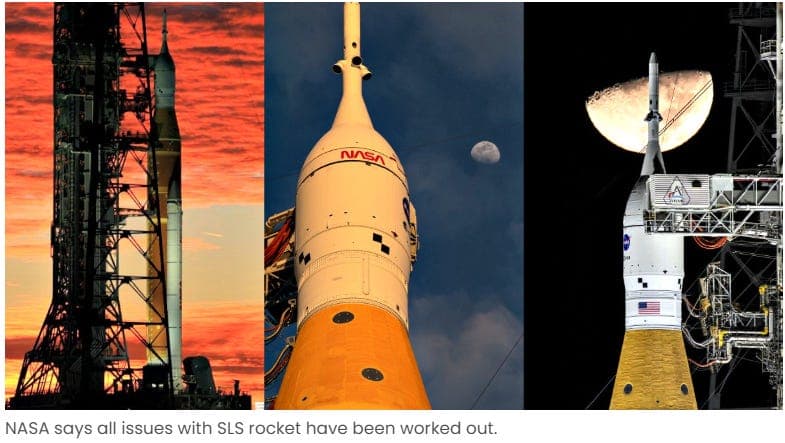
- The **Artemis II** mission successfully completed the **Wet Dress Rehearsal (WDR)** at Kennedy Space Center on February 3, 2026, with over 58,000 viewers. This critical step advances toward crewed lunar missions.
- The spacecraft is scheduled for **rollout on February 25**, progressing toward lunar flybys and landing preparations.
- The development of next-generation lunar spacesuits—designed for mobility and durability—has cleared key design reviews.
- However, recent delays in **SpaceX’s Starship** development threaten to push lunar landing schedules beyond 2028. A NASA–SpaceX disagreement over **HLS (Human Landing System)** risk-reduction requirements has surfaced, complicating the schedule. **"NASA And SpaceX Disagree on Approach To Critical Starship HLS Risk Reduction Requirements"** details these tensions and their implications.
---
## Transitioning to a New Space Ecosystem
As the ISS approaches its planned retirement around 2030, NASA and partners are actively fostering a broader space infrastructure:
- **Commercial Orbital Platforms**
Initiatives like **Vast’s N1 platform** aim to support research, tourism, and commercial activity beyond the ISS’s lifespan, ensuring continued orbital presence.
- **Lunar Infrastructure**
Efforts include deploying nuclear reactors, solar energy farms, and resource extraction facilities, establishing resilient lunar habitats capable of supporting scientific and commercial operations.
### Supporting Technologies and New Ventures
- **Earth Observation**
The recent deployment of the **N3 laser Earth-mapping satellite** enhances our ability to monitor climate change, disasters, and environmental shifts with unprecedented detail, informing global policy.
- **Quantum Sensors**
Collaboration with Monarch Quantum has led to **advanced quantum sensors** capable of highly precise gravity and environmental measurements, supporting scientific research and navigation in deep space.
- **Space Transportation**
The development of **Starship V3 Ship 39** by SpaceX is progressing through structural assessments and engine tests. Recent updates show its readiness for future lunar and Martian missions. A video titled **"Starship V3 Begins Testing — Artemis III Just Changed"** captures this progress, hinting at a new era of heavy-lift capabilities and rapid deployment.
---
## Could NASA Use Expandable Habitats for Its Artemis Moon Bases?
**Title: Could NASA use expandable habitats for its Artemis moon bases? These two companies are betting millions**
Commercial firms are investing heavily into **expandable habitats**—structures that are compact when launched and then expanded on the lunar surface. These habitats offer:
- **Cost efficiency** through lighter, less expensive launch requirements
- **Flexibility** for rapid deployment and scaling
- **Resilience** designed to withstand lunar conditions, including temperature extremes and micrometeorites
Two companies are channeling millions into these technologies, envisioning habitats that can host laboratories, crew quarters, and greenhouses—crucial for a sustainable lunar presence and resource utilization.
---
## Workforce Development and the Future of Human Spaceflight
NASA’s **'NASA Force'** initiative seeks to recruit top talent, ensuring the agency’s leadership in lunar habitat development, commercial orbital stations, and beyond. This strategic workforce expansion aims to support the growing scope of space activities.
---
## Securing Humanity’s Scientific Heritage: The Moon Rocks
NASA continues to safeguard lunar samples with meticulous security and advanced laboratories. An exposé titled **"NASA’s Secret Lab Exposed | Why Million-Dollar Moon Rocks Are Locked Inside"** highlights the importance of these samples for ongoing lunar science and resource exploration, offering insights into the Moon’s history and potential.
---
## Recent Technological and Operational Highlights
- **NASA’s Reusable Space Plane**
An upgraded heat shield, showcased in a YouTube video **"NASA's New Space Plane Upgraded Heat Shield SOLVED What Musk Called 'Impossible'!"**, exemplifies advances that will enable safer, reusable deep-space vehicles. Over 8,000 viewers have seen how this breakthrough enhances re-entry safety and sustainability.
- **SpaceX Booster 19 Testing**
The third test of **Booster 19** on February 20, 2026, involved rigorous evaluation, streamed live with over 71,000 viewers. This progress in heavy-lift and reusable rocket technology is vital for lunar and Mars missions. A video titled **"SpaceX conducts third Booster 19 test on Pad 2 - Day 3"** captures these developments.
---
## The Road Ahead: Opportunities and Challenges
While the future of space exploration is promising, obstacles remain:
- **Schedule Delays** in projects like **Starship** threaten to push lunar landing timelines beyond 2028.
- **Space Debris and Traffic Management** require international cooperation to prevent collisions and ensure safety.
- **Technological Innovations**—including nuclear propulsion, solar sails, and expandable habitats—continue to push the boundaries of possibility.
The recent deployment of advanced sensors, progress on nuclear reactors, and the maturation of commercial habitats all point toward a new era—one where human presence in space becomes more sustainable, expansive, and integrated with technological ingenuity.
---
## Final Thoughts: A New Chapter in Humanity’s Space Odyssey
Celebrating over 25 years of continuous human presence in orbit, we see a foundation built on international cooperation, scientific discovery, and technological innovation. The ongoing progress in lunar exploration, deep-space propulsion, and commercial infrastructure signals an exciting future where humanity's reach extends beyond Earth’s orbit with increasing confidence.
Despite challenges like debris, technical delays, and schedule uncertainties, the momentum driven by scientific curiosity, commercial enterprise, and global partnerships ensures that our journey into space is just beginning. The next decades promise unprecedented exploration, resource utilization, and perhaps even the establishment of human habitats beyond Earth—making this era truly transformative.
**Indeed, we are at the dawn of a new chapter—defined by exploration, innovation, and the relentless human spirit striving to reach farther than ever before. The future of space exploration is brighter than ever, and the best is yet to come.**