# Edge AI Revolution Accelerates: Powering Multimodal and Autonomous Models Directly on Local Hardware
The landscape of artificial intelligence (AI) is undergoing a seismic shift. No longer confined to sprawling cloud data centers, **powerful multimodal and autonomous AI models** are now increasingly capable of **running efficiently and reliably on local devices**—ranging from personal computers and smartphones to embedded robots and Internet of Things (IoT) gadgets. This transformation is driven by rapid hardware advancements, innovative model optimization techniques, and a vibrant open-source ecosystem, collectively heralding an era where **privacy, low latency, and democratized access** are central to AI deployment.
---
## From Cloud Dependency to On-Device Autonomy: A Paradigm Shift
Historically, deploying large language models (LLMs) and multimodal systems required reliance on **cloud infrastructure** due to their significant computational and memory demands. This dependency introduced several challenges:
- **High operational costs** associated with cloud services
- **Latency issues** that hinder real-time responsiveness
- **Data privacy concerns**, especially in sectors like healthcare, finance, and personal devices
These barriers limited widespread on-device AI adoption. However, recent breakthroughs are **dismantling these limitations**, enabling **sophisticated AI to operate entirely locally**. This shift facilitates **privacy-preserving, low-latency, and accessible AI applications** across diverse domains—from autonomous robots to personal assistants.
---
## Key Drivers Accelerating On-Device Multimodal AI
### 1. Advanced Model Compression and Optimization Techniques
To deploy large models on resource-constrained hardware, researchers have developed several strategies:
- **Quantization**: Converting weights from FP32 to lower-bit formats (e.g., int8), significantly reducing model size and inference latency with minimal accuracy loss.
- **Pruning**: Removing redundant or less impactful weights to streamline models.
- **Knowledge Distillation**: Training smaller, efficient models to emulate larger ones, preserving performance while reducing resource requirements.
### 2. Specialized Hardware Accelerators
Edge devices now incorporate **dedicated AI accelerators** that facilitate **high-performance, energy-efficient inference**:
- NVIDIA Jetson modules
- Google Edge TPU
- Intel Movidius Myriad chips
- Mobile System-on-Chips (SoCs) like **Apple Silicon** and **Qualcomm Snapdragon**
These accelerators enable **real-time multimodal processing**, including visual understanding, speech recognition, and autonomous decision-making, **all on device**.
### 3. Optimized Frameworks and Runtime Environments
Frameworks such as **TensorFlow Lite**, **TensorRT**, **ONNX Runtime**, and **vLLM** provide **model conversion, optimization, and deployment pipelines** tailored for edge hardware. They ensure **robust, low-latency AI applications** even on limited-resource devices.
### 4. Growing Open-Source Ecosystem
Open-source projects and community initiatives have accelerated development:
- **LM Studio** offers environments for **offline large model deployment**, fine-tuning, and customization.
- Open models like **Llama 2**, **Vicuna**, and **GPT-J** empower developers with flexible resources.
- Practical resources—such as **"Visual Language Perspectives"** and **local multimodal retrieval-augmented generation (RAG)** pipelines—provide frameworks for building **comprehensive edge AI systems**.
---
## State-of-the-Art Multimodal and Autonomous AI Models for Edge Deployment
Recent advances have made **high-capacity multimodal and agentic models** feasible on local hardware:
### Multimodal Foundation Models
- **CLIP**: Continues to serve as a backbone for **visual question answering**, **image captioning**, and **visual search**, optimized for deployment on resource-limited devices.
- **SAM 3 (Segment Anything Model 3)**: Offers **advanced scene segmentation**, crucial for robotic perception and augmented reality.
- **Qwen-Image-2512**: An **80-billion-parameter open-source multimodal model** capable of **detailed image comprehension and visual generation**, enabling **real-time visual reasoning** directly on edge hardware.
- **Youtu-VL-4B-Instruct**: A 4-billion-parameter model designed for **visual reasoning** and **instruction following** within constrained environments.
### Robotic and VLA Innovations
- **Orthogonal Composite Tokens**: Improve **modality alignment** and **reasoning robustness**.
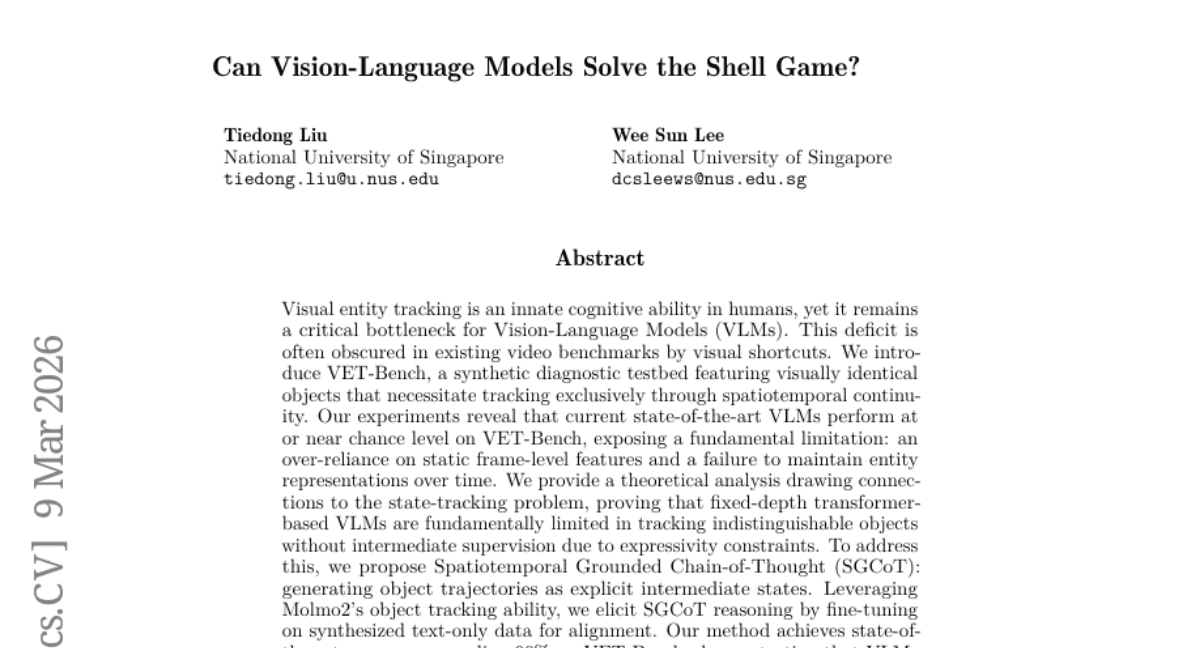
- **Green-VLA**: Integrates **vision, language, and action**, creating a **generalist robotic architecture** capable of **autonomous perception, reasoning, and manipulation** entirely on device. By **February 2026**, this system demonstrated **edge-powered autonomous robots** operating **without cloud reliance**.
### Agentic Multimodal AI
- **Kimi K2.5** exemplifies a **paradigm shift**: a **multimodal, agentic model** that enables **autonomous decision-making** and **task execution** on limited hardware, empowering **offline robots, vehicles, and embedded systems** to **perceive, think, and act locally**.
### Large Multimodal Releases
- **Alibaba’s Qwen3.5 MoE** (Mixture of Experts): A **milestone in scalable, high-capacity multimodal AI**, utilizing **dynamic routing** across multiple experts. It **outperforms benchmarks like GPT-5.2 and Claude**, emphasizing **edge deployability** and **scalability**.
---
## Building and Fine-Tuning Multimodal Models on the Edge
Innovative methods are transforming model development:
- **From scratch**: Approaches inspired by DeepMind’s **Flamingo** leverage **frozen vision encoders** with **lightly adapted language modules** to cut training costs.
- **Efficient fine-tuning**: Techniques like **ViT-LoRA (Low-Rank Adaptation for Vision Transformers)** support **resource-light domain adaptation**, **personalization**, and **continual learning** directly on edge hardware.
- **Video-to-data pipelines**: Tools such as **WAT.ai** enable **real-time video preprocessing** for structured data generation, facilitating **edge inference** and **training**.
### Practical Deployment Resources
- **GutenOCR**: A **grounded OCR frontend** capable of **local deployment** to ensure **robust text recognition** without reliance on cloud services. Models like **GutenOCR-7B** integrate **vision and language**.
- **PaddleOCR-VL-1.5**: Baidu’s **multimodal document parser** offers **state-of-the-art performance** in **multimodal document understanding**, optimized for **efficient inference on edge devices**.
---
## Advances in Perception, Robustness, and Fusion
Research continues to enhance **perception robustness**, **grounding**, and **trustworthiness**:
- **Benchmarking spatial reasoning**: The paper **"Benchmarking Spatial Reasoning Capabilities of Multimodal LLMs"** evaluates models such as **Gemini 2.5 Pro**, showing **significant progress** in **scene understanding** and **spatial reasoning**—crucial for **autonomous robotics** and **AR**.
- **Region-to-Image Distillation**: The method **"Zooming without Zooming"** improves **localized perception** without added complexity, supporting **more precise visual understanding** on limited hardware.
- **Bias and fairness**: Studies like **"Understanding Human-Like Biases in VLMs via Subjective Face Analytics"** highlight **biases** in vision-language models, prompting ongoing **mitigation efforts**.
- **Test-time robustness**: The **"WACV 2026: Test-Time Consistency in Vision Language Models"** paper proposes strategies for **robust, consistent performance** across diverse real-world scenarios.
### Perception Fusion Breakthroughs
- **RoboFlamingo-Plus** exemplifies **fusion of depth and RGB perception**, significantly enhancing **scene understanding** for **robot navigation and manipulation**.
---
## Building VLA Systems: Recipes, Best Practices, and Deployment Guides
**VLANeXt** and similar initiatives offer **comprehensive recipes** for developing **robust VLA (Vision-Language-Action)** systems:
- Designing **multi-modal architectures** optimized for edge hardware
- Implementing **resource-efficient training and fine-tuning workflows**
- Seamlessly integrating **perception, reasoning, and action modules**
Recent practical guides—such as **"Deploying Open Source Vision Language Models (VLM) on Jetson"**—demonstrate **feasibility and performance** of high-capacity models **on NVIDIA Jetson platforms**.
---
## New Development Spotlight: LLM-Driven 3D Action Reasoning for Robotics
A groundbreaking addition is the emergence of **LLM-driven 3D action reasoning systems** tailored for **robotic manipulation tasks**, such as **brick stacking**:
- These frameworks **explicitly model 3D spatial reasoning**, enabling robots to **plan and execute complex physical actions**.
- They utilize **large language models** to **generate, evaluate, and refine** action sequences **in real-time**.
- **Perception modules** provide **up-to-date environment understanding**, creating **closed-loop control** for **autonomous, low-latency robots**.
This approach **significantly enhances on-device agentic planning**, allowing robots to **perform intricate manipulation tasks confidently** **without cloud reliance**—a major step toward **privacy-preserving autonomous systems**.
---
## Challenges and Future Directions
Despite remarkable progress, several challenges remain:
- **Robustness and generalization**: Ensuring models perform reliably across unpredictable, real-world environments.
- **On-device personalization and continual learning**: Developing **resource-efficient methods** for **adapting AI systems** over time.
- **Hardware-model co-design**: Innovating hardware specifically tailored for **multimodal, agentic models** to optimize **performance and energy efficiency**.
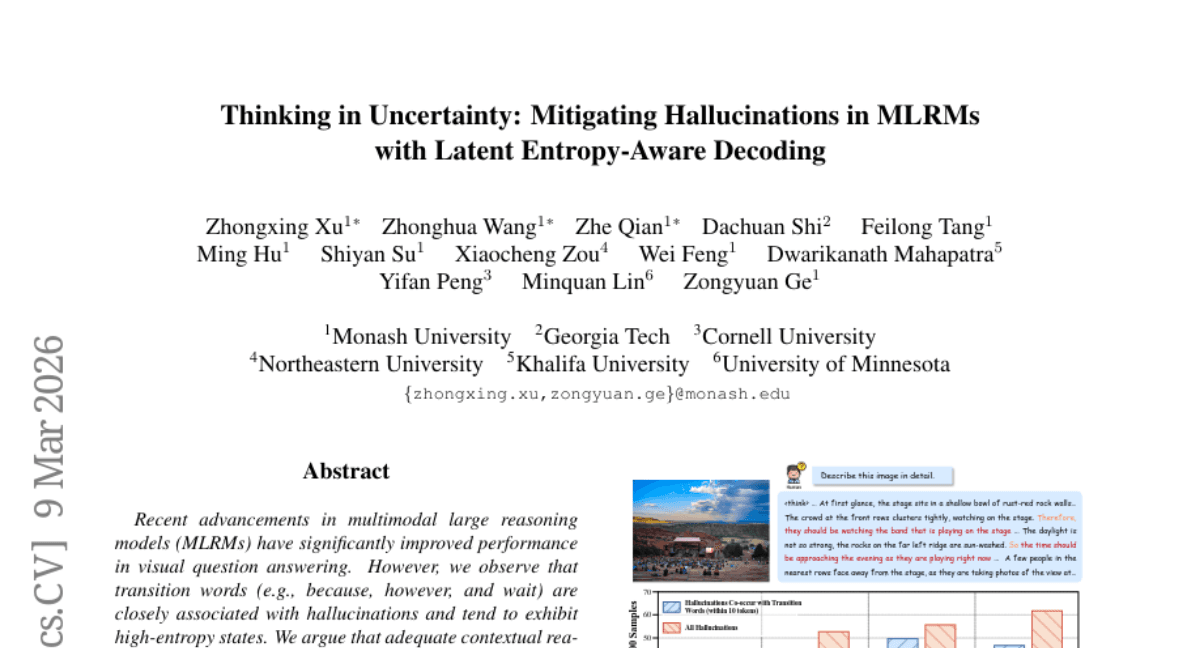
- **Transparency and safety**: Enhancing **interpretability**, **bias mitigation**, and **hallucination reduction**—especially critical in safety-sensitive applications.
---
## Current Status and Broader Implications
The convergence of **hardware innovations**, **model breakthroughs**, and a **thriving open-source community** confirms that **powerful, multimodal, autonomous AI models** are **rapidly moving from cloud to edge**. They are becoming **integral components** in devices and systems—delivering **privacy-preserving**, **instantaneous**, and **democratized** AI capabilities.
Models such as **Kimi K2.5**, **Youtu-VL-4B-Instruct**, **Qwen3.5 MoE**, and **GutenOCR** exemplify **state-of-the-art functionalities** optimized for local deployment, empowering **personal assistants, autonomous vehicles, robotic systems**, and more.
---
## Implications and the Road Ahead
This **edge AI revolution** is poised to **transform human-AI interactions profoundly**. As research continues to address **robustness**, **personalization**, and **safety**, we can expect **more capable, reliable, and accessible** intelligent systems operating **entirely locally**.
The benefits include:
- **Enhanced privacy**—data remains on-device, reducing security risks
- **Instant responsiveness**—eliminating latency bottlenecks
- **Broader democratization**—enabling individuals, small teams, and organizations to deploy advanced AI
Looking forward, the integration of **native GUI agents** trained for reasoning and action—such as **GUI-Libra**—and **dynamic object hallucination mitigation techniques** like **NoLan** will further improve **local agentic interfaces** and **model reliability**.
---
## Final Outlook
The edge AI landscape is more vibrant than ever. With continuous advancements in **hardware co-design**, **model architecture**, and **training methodologies**, **powerful multimodal and autonomous AI systems** are increasingly **embeddable, efficient, and trustworthy**. They are transforming industries—robotics, healthcare, autonomous vehicles, and personal AI—bringing us closer to a future where **intelligent, privacy-preserving, and low-latency systems** are seamlessly integrated into our daily lives.