# Apple Licenses Google’s Gemini Models to Power Next-Generation On-Device AI: A Landmark Industry Collaboration
In a groundbreaking shift in the AI landscape, **Apple has officially licensed Google's advanced Gemini language models—including the latest Gemini 3.1 Pro—to embed sophisticated, privacy-preserving AI functionalities directly into its devices**. This unprecedented partnership between two industry giants—traditionally fierce rivals—signals a new era of **cooperation, shared innovation, and industry-wide standards** that could fundamentally reshape how AI is developed, deployed, and experienced by users worldwide.
## From Competition to Collaboration: A Historic Industry Turning Point
For over a decade, **Apple and Google** have been locked in intense competition—most prominently in the voice assistant domain with **Siri** versus **Google Assistant**. Despite this rivalry, the remarkable capabilities of **Google’s Gemini models**, especially their **multi-modal, context-aware understanding, reasoning proficiency, and multi-turn dialogue skills**, have prompted reconsideration of their relationship.
**Apple’s decision to license Gemini models** marks a significant departure from traditional competitive boundaries, emphasizing **strategic collaboration** aimed at **accelerating innovation, establishing industry standards, and ensuring ethical AI deployment**. This move not only promises **faster deployment of advanced AI features** but also underscores a **shared industry commitment to privacy, safety, and responsible AI development**.
### Gemini’s Technological Edge
Google’s Gemini models, particularly **Gemini 3.1 Pro**, boast a suite of **cutting-edge features**:
- **Natural, multi-turn conversations** that emulate human dialogue for seamless interaction
- **Complex reasoning capabilities** across diverse inputs, enabling nuanced problem-solving
- **Multi-modal integration** that combines images, text, and media for richer, more contextual interactions
- **Context-awareness** that adapts responses based on evolving user inputs
- **Optimized on-device inference** ensuring **privacy**, **real-time responsiveness**, and **energy efficiency**
This alliance exemplifies a **shift toward shared progress**, aligning with broader trends such as:
- **Accelerated innovation cycles** for AI features
- Development of **industry standards** emphasizing **ethical, transparent, and responsible AI use**
- A **renewed focus on user privacy and data security** in AI deployment
By licensing Gemini, Apple and Google are **pioneering a new collaborative model**—balancing **market leadership** with **collective technological advancement** in AI.
## Strategic Motivations Behind Apple’s AI Initiative
Apple’s licensing of Gemini models reflects a **multi-layered strategic approach**:
- **Speed to Market:**
Gemini’s **state-of-the-art NLP, reasoning, and multimodal capabilities** enable Apple to **embed advanced AI features rapidly**, bypassing lengthy internal R&D timelines. This ensures **timely delivery of innovative functionalities** across Apple devices.
- **Enhanced User Experience:**
Devices like the **iPhone, iPad, MacBook, and Apple Watch** will soon feature **more natural, human-like dialogues**, transforming **user interactions into seamless, intuitive conversations**—a **significant upgrade over current AI assistants**. This fosters **deeper user engagement** and **brand differentiation**.
- **Privacy-Centric On-Device Inference:**
Leveraging **Gemini models optimized for on-device processing**, Apple reaffirms its **core privacy principles**. Techniques such as **federated learning, differential privacy**, and **edge inference** guarantee **user data remains local**, strengthening **trust and security**.
- **Hardware & Infrastructure Synergies:**
The collaboration aligns with **recent advances in AI inference hardware**, including **power-efficient chips** from startups like **Positron** and **MatX**, designed specifically for **running large language models directly on devices**. These innovations support **robust, real-time AI functionalities** while maintaining **energy efficiency**.
- **Industry Leadership & Ethical Standards:**
Licensing Gemini allows Apple to **set benchmarks** for **interoperability, transparency, and responsible AI deployment**, which are increasingly vital amid societal and regulatory concerns about **AI ethics and safety**.
## Recent Developments and Technical Challenges
While **this licensing agreement** marks a **milestone**, several **technical and deployment challenges** are actively being addressed:
- **Integration Complexities:**
Embedding **Gemini’s large-scale models** into **Siri’s infrastructure** involves overcoming hurdles related to **performance optimization, reliability**, and **hardware constraints**. Achieving **smooth, low-latency inference** on consumer devices remains a primary focus.
- **Timeline and Deployment Delays:**
The **full Siri overhaul**, initially expected in upcoming iOS updates, has experienced **delays**. Industry insiders now anticipate the **reimagined Siri** to **debut in late 2024 or early 2025**, following a **phased, meticulous development process**.
- **Model Optimization for Edge Devices:**
Incorporating **large models like Gemini** requires **significant hardware and software optimization**—including **pruning, quantization**, and **knowledge distillation**—to ensure **speed, efficiency**, and **privacy preservation**.
- **Hardware Support for Inference:**
Apple continues to **refine its hardware**, integrating **latest inference chips** from startups like **Positron** and **MatX**, which are crucial for **real-time, energy-efficient on-device AI**.
- **Phased Testing & Rollouts:**
The integration involves **iterative testing, fine-tuning**, and **gradual feature releases** to guarantee **robust user experiences** and **strict adherence to privacy standards**.
## Latest Model Release and Industry Impact
Adding momentum, **Google recently launched Gemini 3.1 Pro**, an **upgraded version** of its flagship model, which **demonstrates significant improvements** in **reasoning, multimodal understanding**, and **multilingual support**.
### Gemini 3.1 Pro: Capabilities and Benchmark Performance
**Google describes Gemini 3.1 Pro as:**
> *"Gemini 3.1 Pro was evaluated across reasoning, multimodal tasks, multilingual understanding, and agentic tool use. Its performance surpasses previous iterations, demonstrating superior multi-turn reasoning, nuanced multimodal interpretation, and flexible integration."*
**Performance highlights include:**
- **Record-breaking reasoning scores** across multiple benchmark tests
- **Enhanced multimodal comprehension**, seamlessly integrating text, images, and media
- **Broader multilingual support** with high accuracy across languages
- **Improved agentic capabilities** that enable models to interact with external APIs and tools more effectively
Industry experts emphasize:
*"Gemini 3.1 Pro’s advancements in reasoning and multimodal understanding make it an ideal foundation for Apple’s upcoming AI features."*
### Google’s Ecosystem Enhancements: Nano Banana 2 & Enterprise Deployment
In tandem, **Google has advanced its AI ecosystem** with:
- **Nano Banana 2:**
As detailed on the Google Cloud Blog and tech news outlets, **Nano Banana 2** is a **high-fidelity, fast image generation model** designed for **enterprise applications** such as **augmented reality, digital content creation, and visual understanding**.
> *"Pro-level image generation gets faster and more accessible."*
Its integration underscores Google’s **multimodal AI push**, complementing Gemini’s reasoning prowess.
- **Enterprise Deployment & AI Ecosystem Growth:**
Google is actively deploying these models in enterprise contexts, emphasizing **scalability, security**, and **speed**, which could influence Apple’s enterprise AI strategies as well.
## Broader Industry Context and Geopolitical Dynamics
While Apple advances its AI capabilities via Gemini licensing, other major players are making strategic moves:
- **OpenAI:**
Continues rapid development of **realtime speech models**, like **gpt-realtime-1.5**, aiming for **more natural, human-like voice interactions** and **instruction adherence**.
- **Google:**
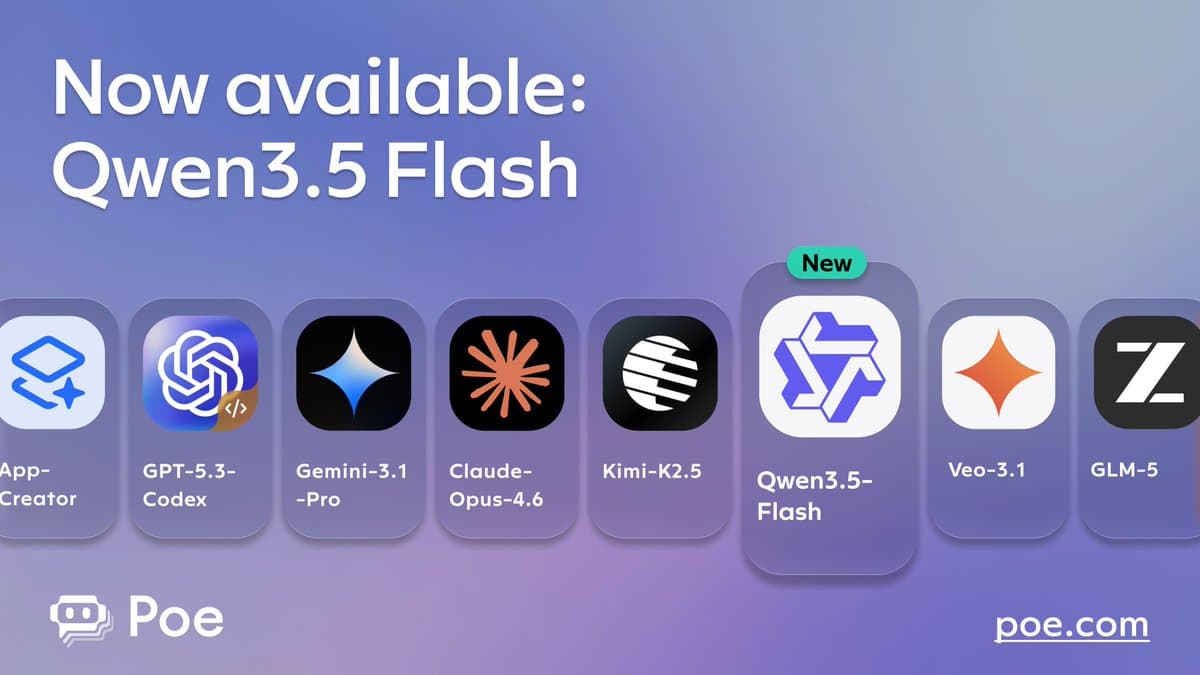
Further expanding its AI ecosystem with **Nano Banana 2** and **Qwen3.5 Flash**, a **multimodal model** capable of processing text and images **faster and more efficiently**—launched on platforms like **Poe**.
- **Nvidia’s Financial Strength:**
Nvidia reports **Q4 revenue surging 73% to $68 billion**, reflecting **strong demand** for high-performance AI chips amid global hardware shortages and export restrictions, especially concerning **US-imposed export controls** on **Nvidia’s H200 chips** to China. This has spurred **regional sourcing efforts**—Chinese firms like **DeepSeek** are developing models using **locally sourced chips such as Blackwell**—highlighting **resilience amid geopolitical tensions**.
- **AI Ethics & Safety Debates:**
The industry faces ongoing scrutiny. **Anthropic**, for example, has **dropped its safety pledges**, raising concerns about **industry standards**. Meanwhile, the **US Department of Defense** has engaged **Anthropic** for military AI applications, intensifying discussions about **acceptable AI use** and **industry responsibility**.
- **Worker Activism & Ethical Concerns:**
Google employees have recently called for **"red lines" on military and surveillance AI**, echoing broader industry debates on **ethics and societal impact**.
## Current Status & Future Outlook
Apple’s **internal teams** are actively **testing Gemini’s integration** into **core OS components**, with **full Siri redesigns** anticipated to **roll out gradually in late 2024 or early 2025**. The focus remains on **privacy-preserving, on-device inference**, **responsible deployment**, and **building user trust**.
### Future Priorities
- Achieving **robust, energy-efficient on-device AI** through **hardware-software co-design** (e.g., model pruning, quantization, distillation)
- Ensuring **phased, reliable feature rollouts** that prioritize **privacy and safety**
- Upholding **industry standards** for **ethical AI**, especially in light of evolving global regulations and geopolitical tensions
- Continuing **hardware innovation** to support **large-scale, low-latency inference** on consumer devices
## Implications and Broader Industry Impact
The licensing of Gemini models by Apple **sets a transformative precedent**—highlighting that **industry rivals** can **collaborate effectively** to **advance responsible AI** at scale. Such partnerships **encourage other major players** to **adopt similar strategies**, fostering **industry-wide standards** that emphasize **trust, ethics, and interoperability**.
The **hardware ecosystem**, with advances from startups like **Positron** and **MatX**, will be vital in **supporting on-device AI**, especially as **model sizes grow** and **privacy demands intensify**.
**Regulatory developments**, geopolitical considerations, and **public discourse on AI safety** will continue to shape the landscape, emphasizing the need for **collaborative, transparent, and responsible AI innovation**.
## Conclusion: A New Era of Industry Collaboration
The partnership between **Apple and Google**, centered on **licensing Gemini models**, **embodies a new paradigm**—where **competitors cooperate** to **push the boundaries of AI** while **upholding societal values**. This alliance **accelerates technological progress**, **sets ethical benchmarks**, and **reinforces user trust**.
As **hardware capabilities advance**, **regulatory frameworks evolve**, and **AI models become more sophisticated**, this collaborative approach **may become the industry standard**, fostering a future where **trustworthy, responsible AI benefits society at large**.
**In sum**, Apple’s licensing of Google’s Gemini models **not only advances AI capabilities** but also **illustrates the power of strategic cooperation**—signaling a **more unified, innovative, and ethical AI future** for the industry.