The strategic environment surrounding a potential People’s Liberation Army (PLA) assault on Taiwan continues to evolve rapidly, shaped by intensified multidomain tactics, persistent gray-zone operations, and complex regional and global dynamics. Recent developments through early March 2026 reveal a nuanced picture of China’s military modernization, regional security recalibrations, and the resilience measures undertaken by Taiwan and its partners to deter coercion and maintain stability in the Taiwan Strait and the broader Indo-Pacific.
---
### PLA Multidomain Assault Capabilities: Refinements and Gray-Zone Persistence
China’s PLA is steadily enhancing its multidomain operational framework, blending cyber, electronic warfare (EW), maritime, and air tactics to incrementally wear down Taiwan’s defenses without triggering full-scale conflict. Key evolutions include:
- **Gray-Zone Cyber and EW Operations:** The PLA’s cyber campaigns have intensified, targeting Taiwan’s command-and-control networks, logistics chains, and sensor arrays with persistent intrusions and disruptions. These cyberattacks are closely integrated with EW efforts, including electronic jamming and spoofing, often executed via sophisticated drone swarms designed to overwhelm Taiwan’s situational awareness and degrade decision-making during escalation phases.
- **Disguised Drones in Civil Aviation Corridors:** A particularly concerning PLA tactic involves drones camouflaged to mimic civilian aircraft within Taiwan’s air traffic corridors. This approach exploits gaps in civil-military coordination and complicates timely threat attribution and response, effectively increasing Taiwan’s operational challenges and blurring the legal and operational boundaries between civilian and military airspace.
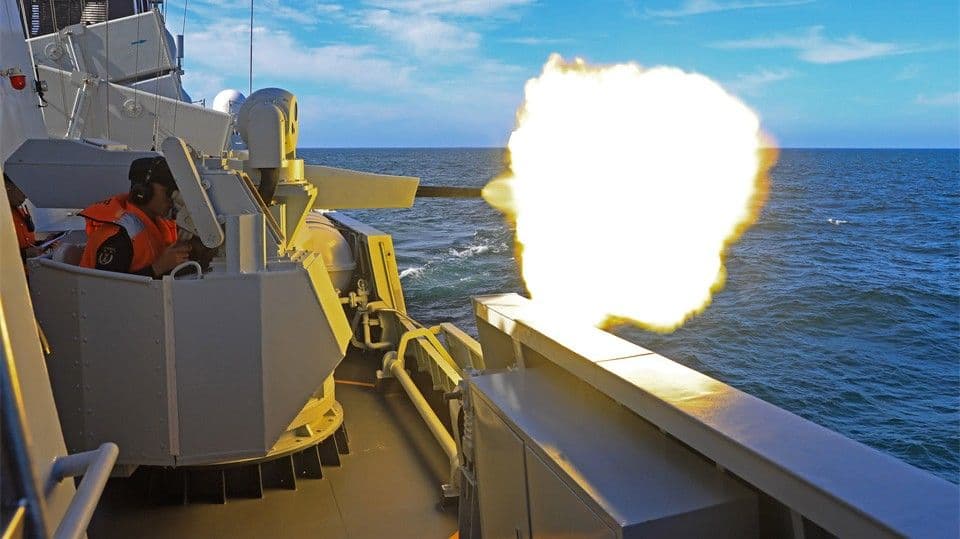
- **Maritime Gray-Zone Probes:** The PLA sustains a steady maritime presence near Taiwan’s waters, exemplified by the detection of five PLA surface vessels and a government service ship between March 3–4, 2026. These operations serve as continuous tests of Taiwan’s surveillance capabilities, endurance, and response protocols, aiming to erode vigilance and probe allied resolve without crossing thresholds that would provoke overt conflict.
These multidomain tactics collectively stress Taiwan’s defensive cohesion, complicate allied intervention calculations, and exploit ambiguity inherent in gray-zone scenarios.
---
### Operational Tempo Shifts: PLA Air Activity Lull and Gray-Zone Continuity
Since February 27, 2026, Taiwan’s Ministry of National Defense (MND) has reported a marked reduction in PLA air incursions near Taiwan’s airspace. This lull coincides temporally with escalating violence in the Middle East—specifically Israeli ground operations against Hezbollah in Lebanon—which may have commanded Beijing’s attention or influenced its strategic posture.
- **Taiwan MND Caution:** Officials urge caution in interpreting this lull as a sign of diminished PLA intent, noting that while the Middle East crisis may partially explain reduced air activity, gray-zone pressure—especially maritime probes and cyber operations—remains unabated.
- **Strategic Implication:** This multi-theater distraction creates a complex strategic environment. Beijing may be moderating overt military pressure as it gauges allied responses, yet maintains persistent coercion through non-kinetic means. Taiwan and its partners must remain vigilant for sudden shifts in PLA operational tempo that could signal opportunistic aggression.
---
### Japan’s Expanding Regional Security Posture and Integration Efforts
Japan continues to significantly bolster its security posture in response to China’s assertive actions around Taiwan, combining forward military deployments, infrastructure expansion, and economic-security policy reforms:
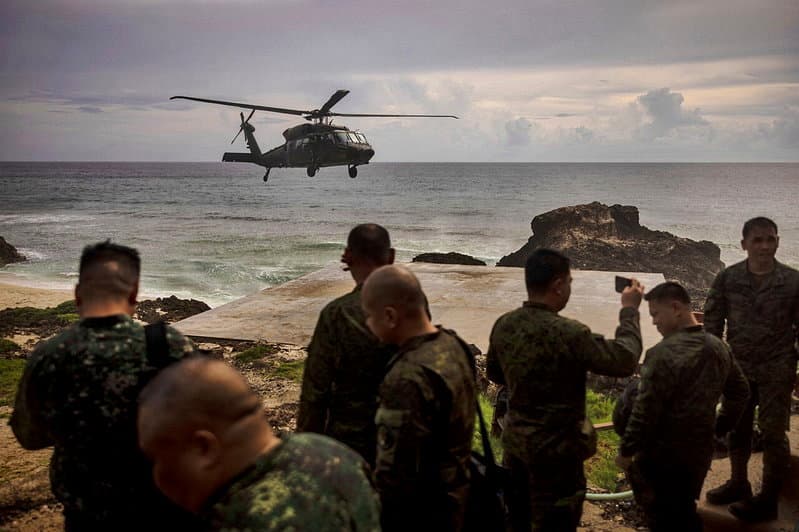
- **Yonaguni Island Deployment:** Approximately 160 Japan Self-Defense Forces (JSDF) personnel are now stationed on Yonaguni Island, serving as a frontline early warning and rapid reaction outpost near Taiwan’s southwestern approaches. This deployment enhances Japan’s monitoring capacity and supports rapid response capabilities.
- **Sulphur Island (Iwo Jima) Base Expansion:** Confirmed plans to expand JSDF facilities on Sulphur Island include runway extensions and improved logistics infrastructure, aimed at sustaining air operations and enhancing rapid force projection in the region.
- **Air Defense Identification Zone (ADIZ) Expansion Study:** Japan is actively studying the possibility of extending its ADIZ to include the Ogasawara island chain, which would deepen early detection coverage and improve airspace control over a wider Pacific expanse.
- **Defense Transformation and Embedded Logistics:** A recent analysis highlights Japan’s broader defense transformation efforts focusing on embedded logistics and trilateral industrial integration with the U.S. and Australia. These efforts aim to streamline supply chains, enhance force sustainability, and improve interoperability across key allies.
- **Economic-Security Law Amendments:** Enacted in February 2026, these reforms tighten semiconductor export controls, establish a dedicated economic-security think tank, and enhance government-industry coordination, reinforcing Japan’s strategic approach to economic resilience in the Free and Open Indo-Pacific framework.
- **Japan-U.S. Synthetic Fleet Training (FST-J 26-71):** Conducted on March 4, this high-level joint naval training exercise improved interoperability, command coordination, and readiness, signaling a robust deterrence posture.
Japan’s comprehensive and integrated approach reflects a strategic fusion of military readiness, economic resilience, and multilateral cooperation to counterbalance PLA coercion.
---
### China’s Largest Defense Budget and Accelerating Undersea Military Expansion
On March 5, 2026, China announced its largest-ever defense budget, signaling continued prioritization of military modernization and expansion with implications for Taiwan-area security:
- **Submarine Fleet Growth:** The PLA Navy’s undersea warfare capabilities are rapidly expanding, featuring more and increasingly sophisticated submarines equipped with enhanced stealth, endurance, and advanced weaponry. This growth complicates allied anti-submarine warfare (ASW) efforts and threatens critical maritime supply lines essential to Taiwan’s defense and regional commerce.
- **ASW and Maritime Domain Awareness Challenges:** U.S. defense testimony underscores the urgency of advancing undersea sensors, unmanned underwater vehicles (UUVs), and integrated intelligence systems to counterbalance China’s growing undersea threat and maintain allied maritime dominance.
China’s defense budget surge reflects a strategic intent to leverage technological innovation and force expansion across all domains, including the contested undersea battlespace.
---
### U.S. Deterrence Signaling and Alliance Management Complexities
The United States is actively reinforcing its commitment to regional security, while grappling with alliance management challenges:
- **B-52 Strategic Bomber Overflights:** On March 3, four U.S. B-52 bombers flew coordinated missions over the East China Sea alongside Japanese and South Korean aircraft. This operation serves as a clear deterrence message to Beijing, while enhancing multinational interoperability and signaling unified resolve.
- **Okinawa/Futenma Basing Disputes:** Persistent tensions over the relocation and handover of Marine Corps Air Station Futenma remain unresolved. Reports indicate the U.S. Department of Defense may delay or withhold the base transfer pending Japan’s fulfillment of specific conditions. These frictions risk undermining the credibility of forward basing arrangements and rapid response capabilities.
- **Alliance “Temperature Gap”:** The ongoing Okinawa basing impasse highlights a “temperature gap” in U.S.-Japan relations, threatening deterrence cohesion and underscoring the critical importance of pragmatic, sustained alliance management.
---
### Taiwan’s Intensified Resilience and Self-Help Measures
Amid persistent PLA gray-zone probing and the potential distraction of allied partners by global crises, Taiwan is doubling down on internal resilience and defense readiness:
- **Expanded Army Training Regimen:** Taiwan’s military has launched a more intensive 10-day continuous army training cycle aimed at improving troop cohesion, combat readiness, and operational endurance to better withstand protracted multidomain challenges.
- **Civil Defense and Public Resilience:** Efforts to enhance civil defense include expanded public education campaigns, misinformation verification mechanisms, and psychological operations countermeasures to blunt PLA influence and maintain societal cohesion.
- **Cyber and Electronic Defense Hardening:** Taiwan is investing heavily in cyber defenses and EW countermeasures to safeguard critical infrastructure and maintain command-and-control integrity under persistent cyberattacks and jamming attempts.
- **Enhanced Intelligence and Situational Awareness:** Advanced detection technologies and rapid response frameworks are being prioritized to improve real-time threat identification and coordinated responses to PLA gray-zone activities.
These self-help measures are vital to sustaining Taiwan’s autonomy and defense posture during periods of intensified gray-zone coercion and potential allied distraction.
---
### Strategic and Policy Priorities: Navigating a Complex Security Landscape
Given the evolving security environment, Taiwan and its partners must focus on several critical priorities:
- **Countering Disguised Drone Threats:** Develop and deploy specialized detection and neutralization technologies to close PLA exploitation gaps in civil aviation corridors and prevent ambiguity exploitation.
- **Strengthening Cyber and EW Defenses:** Continue enhancing resilience against multifaceted cyber intrusions and electronic warfare attacks to preserve command integrity and operational effectiveness.
- **Robust Real-Time Intelligence Sharing:** Institutionalize rapid, secure intelligence-sharing mechanisms among Taiwan, Japan, the U.S., and regional partners to maintain situational advantage and facilitate coordinated responses.
- **Economic-Security Integration:** Deepen government-industry collaboration to secure critical supply chains, especially semiconductor production, emulating Japan’s recent reforms to build economic resilience underpinning national security.
- **Accelerated ASW and Maritime Domain Awareness Investments:** Expand sensor networks, unmanned platforms, and integrated maritime surveillance to counter China’s expanding undersea threat and maintain freedom of navigation.
- **Pragmatic Alliance Management:** Resolve U.S.-Japan basing disputes to ensure credibility of forward presence and rapid deployment, while supporting Japan’s forward deployments on Yonaguni and Sulphur Island as integral components of a regional security architecture.
---
### Conclusion
The PLA’s multidomain assault strategy against Taiwan is increasingly sophisticated, leveraging cyber/EW advances, disguised drone operations, persistent maritime probes, and expanding undersea capabilities. The recent PLA air activity lull since late February—likely influenced by concurrent Middle East crises—illustrates the complex, multi-theater pressures shaping Beijing’s operational tempo and strategic signaling.
Japan’s comprehensive defense transformation, including forward deployments, base expansions, economic-security reforms, and joint U.S. training, exemplifies a holistic approach to regional deterrence. Meanwhile, China’s record defense budget underscores its commitment to military modernization and undersea warfare expansion, heightening challenges for allied maritime security.
U.S. deterrence efforts remain robust but face alliance management hurdles, particularly over Okinawa basing disputes, which risk undermining rapid response capabilities. Taiwan’s intensified training, civil defense, and cyber hardening initiatives reflect a pragmatic self-help approach amid persistent gray-zone pressures.
In this fluid security environment, sustained multidomain preparedness, technological innovation, economic-security integration, and seamless multilateral cooperation are indispensable to deterring aggression, preserving stability, and managing escalation risks in the Taiwan Strait and the broader Indo-Pacific region.