# Building a Strong Investment Foundation in 2026: An Updated and Expanded Guide for Beginners
The investment landscape in 2026 continues to evolve at an unprecedented pace, driven by technological breakthroughs, regulatory reforms, and an increasingly democratized financial ecosystem. Small investors—whether just starting out or seeking to refine their approach—are now empowered with tools, resources, and opportunities that once belonged solely to institutional players. This convergence of innovation and accessibility offers remarkable potential but also underscores the importance of establishing a solid, informed foundation to navigate the markets confidently.
In this comprehensive guide, we synthesize the latest developments, emerging trends, and proven strategies to help beginners start small, develop disciplined habits, and grow their wealth effectively. Let’s explore how core investment principles remain relevant, what new innovations are shaping smarter investing in 2026, and how to prioritize your wealth-building journey.
---
## Reinforcing Core Principles: How Do Markets and Investing Work in 2026?
Despite rapid technological advancements, **fundamental investing principles** remain the bedrock of wealth accumulation. Grasping how markets operate today is crucial for making informed decisions and avoiding common pitfalls.
### How Markets Function Today
In 2026, **financial markets** are more intricate than ever, involving a diverse spectrum of participants: retail investors, institutional funds, AI-driven trading algorithms, decentralized finance (DeFi) platforms, and even emerging quantum computing startups. These entities interact across a global network of exchanges, with **supply and demand** still serving as the primary determinants of prices.
Recent technological advancements have **democratized access** through **digital trading platforms**—such as **Robinhood**, **Freetrade**, **eToro**, **Trading212**, and **Public.com**—supporting **fractional share** purchases. This innovation allows investments starting from **$20 or £20**, enabling investors to own slices of high-priced stocks like **Apple (AAPL)**, **Tesla (TSLA)**, or **Nvidia**, fostering instant diversification even with modest capital.
Additionally, **AI-powered analysis tools** and **robo-advisors**—including **Snowball Analytics**, **Portfolio Visualizer**, **InvestEngine**, and newer entrants—have become commonplace, providing real-time forecasts, personalized recommendations, and automated portfolio management. These tools significantly reduce barriers to sophisticated market insights for beginners.
**Geopolitical shifts, regulatory reforms emphasizing transparency and investor protection**, and a global push toward **sustainable investing** continue to influence market dynamics, offering new opportunities while introducing fresh risks that require vigilance.
### Updated Key Investing Concepts for 2026
- **Growth versus Value Investing**
- **Growth investing** remains especially appealing in sectors like **artificial intelligence**, **renewable energy**, **biotech**, and **quantum computing**—areas promising rapid expansion. Recent IPOs such as **Honeywell’s Quantum Division** exemplify this trend, albeit with increased volatility.
- **Value investing** focuses on undervalued companies with strong fundamentals—favored during economic uncertainties and aligned with Warren Buffett’s disciplined approach.
- **The Power of Compounding and a Long-Term Perspective**
- Modern tools like **dividend reinvestment plans (DRIPs)**, **automatic contributions**, and **AI-driven insights** amplify the effects of compounding, enabling exponential growth over decades.
- **Diversification and Risk Management**
- Spreading investments across asset classes, sectors, and geographies remains essential.
- For beginners, **broad-market ETFs** such as **Vanguard VTI**, **Vanguard S&P 500 ETF (VOO)**, and **iShares IVV** provide instant diversification—even with small sums.
- **Understanding and Managing Risk Tolerance**
- Recognizing personal risk appetite and maintaining discipline—especially amidst volatility—is critical. Strategies like **dollar-cost averaging** help mitigate timing risks and foster resilience.
---
## How to Start Small and Cultivate Good Habits in 2026
Thanks to technological progress and supportive policies, **2026 is arguably the best year yet for small investors** to begin their journey. Starting with modest amounts and cultivating disciplined habits can establish a solid foundation for long-term wealth.
### Fractional Shares: Unlocking Access to High-Value Stocks
Platforms such as **Freetrade**, **eToro**, **Robinhood**, **Trading212**, and **Public.com** now support **fractional share** trading, permitting investments from as low as **£20 or $20**.
**This means** you can own slices of giants like **Apple**, **Tesla**, or **Nvidia**, facilitating **instant diversification** and lowering entry barriers. For example, instead of needing hundreds or thousands of dollars, you could buy a fraction of Tesla for just a few dollars, spreading your capital across multiple stocks effortlessly.
### Automate and Systematize Your Investing
Set up **automatic recurring contributions**—say, **£50 or $50 per month**—to ensure consistent investing and prevent emotional reactions during market fluctuations.
Platforms like **InvestEngine**, **M1 Finance**, **Vanguard**, **Freetrade**, and **eToro** support **auto-deposits** and **dividend reinvestment**, making disciplined wealth accumulation straightforward.
### Dividend Reinvestment Plans (DRIPs): Accelerating Growth
Many **dividend-paying stocks** and **ETFs** now offer **automatic dividend reinvestment**, allowing dividends to buy additional shares—further fueling **compound growth**.
**Examples include:**
- **Legal & General**, **Vanguard Dividend ETFs**, and **BlackRock’s iShares**.
- The ongoing series **"💸 The DRIP Difference"** emphasizes how reinvesting dividends accelerates wealth over time.
### Low-Cost, Diversified Funds for Beginners
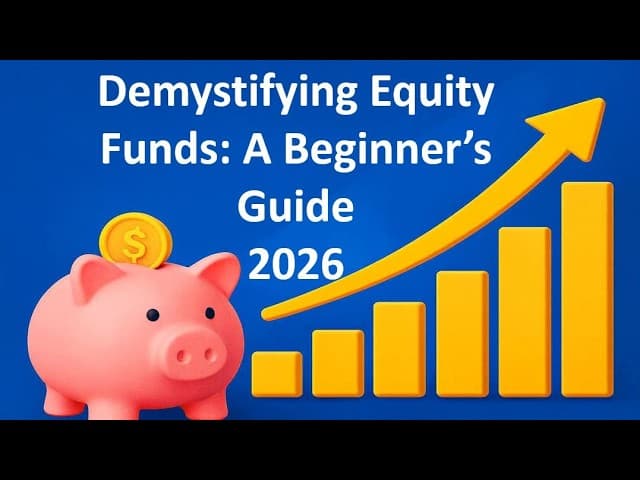
**ETFs** like **Vanguard VTI**, **Vanguard VOO**, and **iShares IVV** remain top choices due to their **low expense ratios** and **wide market exposure**.
New opportunities include **investment trusts** trading at **discounts to NAV**, which can provide diversified holdings at potentially undervalued prices.
### Educational Resources and Cutting-Edge Tools
In 2026, **AI-powered analysis platforms** and **comprehensive beginner guides**—such as **"Investing 101: How to start investing in stocks as a beginner"**, **"How to INVEST for beginners | How to be successful with investing, investing guide 2026"**, and the newly added **"Investment Basics: Types, Strategies & Wealth Creation Guide - RMoney"**—are essential for demystifying complex concepts.
These, combined with **educational videos** and **interactive courses**, make learning accessible and engaging.
### The Seven Apps That Will Help You Invest
Recent developments have seen the rise of **seven key investment apps** that are revolutionizing accessibility and user experience:
- **Robinhood**: Known for zero-commission trades and fractional investing, ideal for beginners wanting simplicity and low costs.
- **Freetrade**: Popular in the UK, supports fractional shares, auto-invest, and offers a user-friendly interface.
- **eToro**: Combines social trading features, allowing copying of successful investors, plus fractional shares.
- **Trading212**: Offers commission-free trading with fractional shares and a straightforward platform.
- **Public.com**: Emphasizes community and learning, with fractional shares and thematic investing.
- **Merrill Edge** and **Charles Schwab**: Provide comprehensive services, including robo-advisors, research, and educational content.
These platforms are increasingly integrating **AI analysis**, **fee comparison tools**, and **educational content**—making investing more accessible and informed than ever before.
---
## Practical Strategies: Building Your Portfolio in 2026
### Investing in an S&P 500 ETF: Step-by-Step
1. **Open an Investment Account**
Choose trusted platforms such as **Vanguard**, **Fidelity**, **Freetrade**, **eToro**, or one of the seven apps.
2. **Start Small with Recurring Deposits**
Commit to **£50 or $50 per month**, setting up **automatic contributions**.
3. **Select Your Core ETF**
Search for **Vanguard VOO**, **iShares IVV**, or **Vanguard VTI**.
4. **Place a Purchase Order**
Use **fractional shares** if full shares are expensive. Confirm and execute the order.
5. **Activate Dividend Reinvestment and Schedule Reviews**
Enable **DRIPs** and review your holdings **every 6-12 months** to ensure alignment with your goals.
### How to Invest in ETFs Effectively
- Focus on **broad market ETFs** for core holdings, then consider **sector-specific ETFs** (like **clean energy** or **AI**) for targeted exposure.
- Automate contributions and **reinvest dividends** to maximize the power of compounding.
- **Rebalance** your portfolio periodically—perhaps annually—to maintain your desired risk profile.
- **Avoid market timing**—stick to **dollar-cost averaging** to smooth out volatility.
### Trading Tips and Fee Awareness
- Learn about **order types** such as **market** and **limit orders**; **limit orders** can help **avoid unexpected costs** during volatile periods.
- Be aware of **platform fees**, transaction costs, and hidden charges—especially on newer platforms.
- Use **fee comparison tools** and platform disclosures to stay informed.
- Consider **tax-advantaged accounts** like **ISAs** (UK) or **Roth IRAs** (US) to optimize long-term growth.
---
## The Simplest 3-Fund Portfolio for Beginners
A highly recommended, beginner-friendly approach is the **3-fund portfolio**, which offers broad diversification with minimal complexity. Based on a popular YouTube strategy titled **"The Simplest 3-Fund Portfolio That Covers the Entire Market"**, this involves:
- **Total US Market ETF** (e.g., **Vanguard VTI**) — roughly **50-60%** of your portfolio, covering US equities.
- **International Stock ETF** (e.g., **Vanguard VXUS** or **Vanguard VEU**) — **20-30%**, for global exposure outside the US.
- **Bond ETF** (e.g., **Vanguard BND** or **iShares Core U.S. Aggregate Bond ETF**) — **10-20%**, providing stability.
**Example Allocation:**
- 50% in **Vanguard VTI**
- 30% in **Vanguard VXUS**
- 20% in **Vanguard BND**
This straightforward mix offers extensive diversification, reduces individual stock risk, and is easy to implement via fractional shares and automated contributions.
---
## Emerging Opportunities and Market Signals in 2026
The current environment presents numerous high-growth sectors and innovative opportunities:
- **AI and Digital Infrastructure**: Breakthroughs in **quantum computing** and **AI chips** are powering explosive growth. Companies like **Nvidia** are expanding into **metaverse** and **autonomous vehicle** tech, with recent products like **DGX H100** revolutionizing AI processing capabilities.
- **Climate Tech and ESG Funds**: Investor focus on **environmental, social, and governance (ESG)** factors continues to grow, with ETFs such as **iShares ESG Aware MSCI USA ETF** gaining traction. Companies like **NextEra Energy** and **Tesla** are at the forefront of renewable energy and sustainable transportation.
- **Retail Participation in IPOs**: Platforms like **eToro** and **Robinhood** are further democratizing IPO access. Recent IPOs, such as **Shadowfax Technologies**, saw **63% subscription on Day 2**, indicating robust retail enthusiasm.
- **Share Buybacks and Dividends**: Many corporations are increasing dividends and executing **share repurchase programs**, offering passive income streams and stock price support.
### New Developments Supporting Investors
- **Mainstream Fractional Share Adoption**: Fractional investing has become standard across platforms, making high-priced stocks accessible to small investors.
- **Enhanced Tax-Advantaged Accounts**: Simplified **tax-efficient vehicles** like **ISAs** and **Roth IRAs** promote disciplined, long-term investing.
- **AI-Driven Education and Analysis**: Robo-advisors and analysis platforms have become more sophisticated, reducing emotional reactions and enhancing portfolio management.
- **Sustainability Focus**: Societal emphasis on **renewable energy** and **climate solutions** continues to influence market trends.
---
## Correct Investing Sequence and Prioritization: Building Wealth Strategically
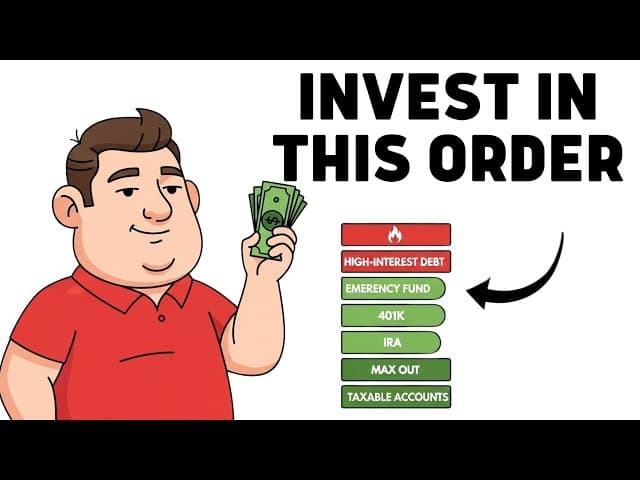
A crucial insight for beginners is understanding **the optimal order to invest your resources**. A recent popular video titled **"🔥 STOP Investing in the Wrong Order! The Wealth-Building Sequence 99% Get WRONG"** emphasizes that **sequencing your investments wisely** can significantly impact your long-term wealth.
### Recommended Wealth-Building Sequence:
1. **Build an Emergency Fund**
- Cover **3–6 months** of essential expenses in a liquid, accessible account.
2. **Pay Off High-Interest Debt**
- Eliminate credit card balances or high-interest loans to reduce financial drag.
3. **Contribute to Tax-Advantaged Retirement Accounts**
- Maximize contributions to **ISAs** (UK) or **Roth IRAs** (US) to harness tax benefits and compound growth.
4. **Start Investing in Broad Market ETFs and Low-Cost Funds**
- Use **dollar-cost averaging** to build diversified holdings steadily.
5. **Reinvest Dividends and Set Up Automated Contributions**
- Accelerate growth through disciplined, consistent investing.
6. **Incorporate Sector-Specific or Thematic Investments**
- As knowledge grows, add exposure to AI, climate tech, or emerging markets.
**Avoid** jumping directly into individual stocks or speculative assets without establishing a solid base—this common mistake can hinder long-term success.
---
## Current Status and Broader Implications
The environment in 2026 is **more favorable than ever** for small investors willing to learn, leverage new tools, and adopt disciplined habits. The proliferation of fractional shares, AI-powered analysis platforms, and tax-efficient accounts has **lowered barriers** and **expanded opportunities** for wealth creation.
While markets will always entail risks, **a strategic, knowledge-based approach**—centered on core principles, proper sequencing, and utilizing cutting-edge resources—remains the most reliable path to financial independence.
---
## Final Thoughts
The landscape of investing in 2026 is **more inclusive, innovative, and empowering** than ever before. By mastering fundamental principles, harnessing advanced tools like fractional shares and AI analysis, and maintaining a long-term perspective, beginners can confidently navigate the complex markets.
**Remember:** The best time to start was yesterday; the next best is today.
**Equip yourself** with knowledge, leverage the latest resources, and develop consistent, disciplined habits. Your future self will thank you.
---
## Additional Resources
- **"Understanding Asset Classes and Types of Assets | New York Life"** — Clarifies asset types and allocation strategies.
- **"The Newbie Investor's Guide to Fees - SmartAsset"** — Explains platform fees and how to avoid unnecessary costs.
- **"How to Invest in the Stock Market for Beginners (USA 2026 Guide)"** — YouTube walkthrough emphasizing transparency.
- **"I Invested $5 A Day into VOO for 536 Days (Here's What Happened)"** — Inspirational example of disciplined small investments.
- **"Only $100? Here’s How to Start Investing Today"** — Practical advice for initial capital constraints.
- **"Types of Investments Explained for Beginners"** — Updated, comprehensive overview.
---
**In conclusion**, 2026 presents an exceptional environment for small investors committed to learning, discipline, and strategic planning. By understanding core principles, utilizing cutting-edge tools, and prioritizing long-term growth, you can build a resilient, prosperous financial future.
**Start today.** The journey toward wealth begins now, and with the resources available, success is more accessible than ever.
---
## New Insights on Trading Time Frames and Long-Term Strategies
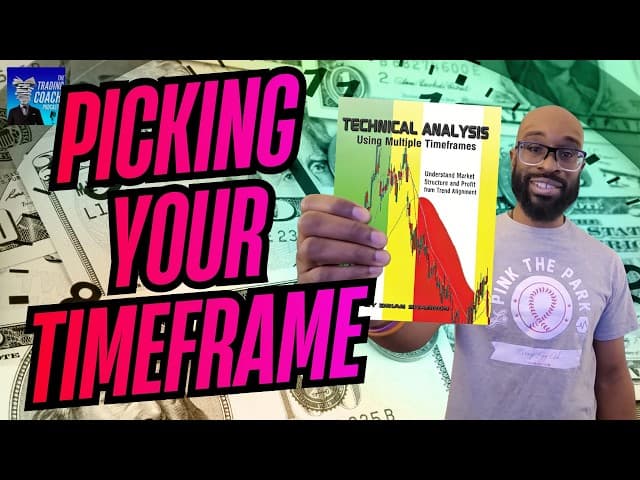
A recent episode of the **"Trading Coach Podcast 1284"** titled **"Best Trading Time Frame for Beginners & Investing vs. Trading Explained"** sheds light on a critical distinction for newcomers: **the difference between trading and investing, and selecting appropriate time horizons**.
**Key takeaways include:**
- **Trading** involves short-term positions—days or weeks—and requires active management, technical analysis, and quick decision-making. It can be highly profitable but also riskier and more demanding.
- **Investing**, especially for beginners, should focus on **long-term horizons**—years or decades—emphasizing **buy-and-hold strategies** in diversified assets like ETFs, with less attention to short-term price fluctuations.
- **Choosing the right approach** depends on your personality, goals, and available time. **Most beginners** are better served by **long-term investing**, which aligns with the foundational principles discussed earlier.
- **Time frames matter**: shorter periods increase volatility and risk, while longer periods harness **compound growth** and **market trends**.
**Practical advice:**
- **Avoid frequent trading** if you lack experience; instead, **focus on systematic investing** with automated contributions.
- Use **long-term charts and fundamental analysis** rather than day-to-day price movements to inform your decisions.
**Implication:**
Understanding **the appropriate time frame** helps avoid unnecessary stress, reduces costly mistakes, and aligns your actions with your ultimate goal—building wealth over time.
---
# Final Summary
In 2026, thanks to technological advancements, regulatory reforms, and innovative platforms, **small investors are better equipped than ever** to establish a strong, disciplined, and strategic approach to wealth building. By reinforcing core principles—such as diversification, patience, and dollar-cost averaging—leveraging cutting-edge tools like fractional shares and AI analysis, and understanding the importance of **long-term horizons**, beginners can confidently navigate the complex markets.
**Remember:** Start small, stay consistent, educate yourself continuously, and prioritize long-term growth. Your financial future is within reach—it's time to take the first step.