**How AI-Driven Credit Expansion and Macro Liquidity Dynamics Reinforce Bitcoin’s Role as a Fiat Hedge**
In recent months, a confluence of macroeconomic pressures, technological innovations, and institutional strategies have intensified the narrative of Bitcoin as a **“fiat escape”** — a decentralized store of value immune to systemic vulnerabilities. Central to this discussion is Arthur Hayes’s thesis that **AI-enabled credit expansion**, combined with banking sector stress and macro liquidity shifts, is reinforcing Bitcoin’s role as a safeguard amid ongoing economic turbulence.
### Macro Environment: AI-Driven Credit Expansion and Banking Sector Fragility
Hayes highlights that **the exponential growth of credit facilitated by AI algorithms** has inflated traditional markets to unsustainable levels. AI-powered trading, lending, and risk modeling accelerate systemic vulnerabilities, with banks facing mounting losses from overleveraged positions and risky exposures. This environment creates **heightened systemic fragility**, prompting cautious behavior from institutional investors.
Recent macro data reveal:
- **Persistent outflows from ETFs and traditional assets**, signaling a **flight to safety**.
- Elevated geopolitical tensions—such as ongoing conflicts and sanctions—further amplify macro uncertainty.
- Investors increasingly seek assets that are **uncorrelated, finite in supply, and resistant to fiat devaluation**. Bitcoin fits this profile, strengthening its narrative as a **“crisis hedge.”**
### Short-Term Market Dynamics: Flows, Sentiment, and Risk Indicators
#### ETF Flows and Institutional Rebalancing
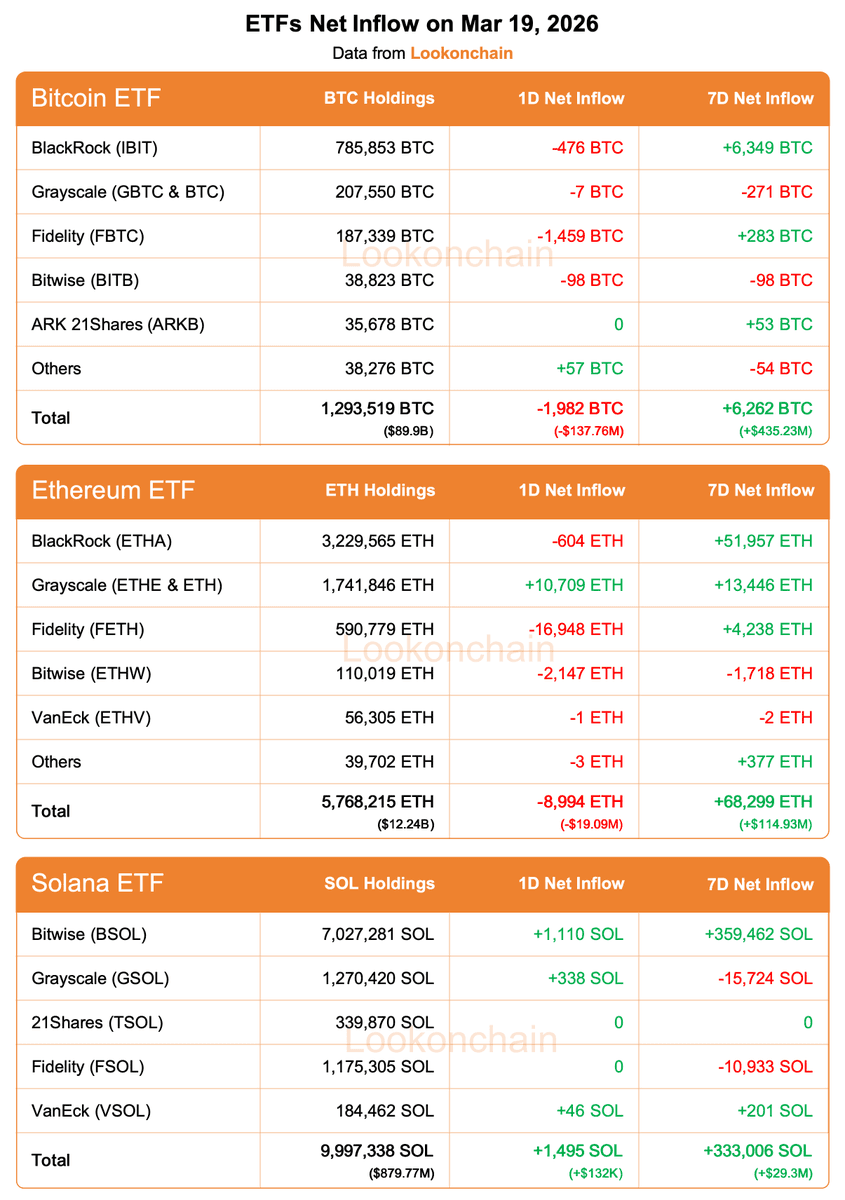
Despite recent net outflows in Bitcoin ETFs (e.g., a **7-day net outflow nearing -7,895 BTC (~$497 million)**), long-term institutional confidence remains resilient:
- Cumulative net inflows into Bitcoin ETFs surpass **$53 billion**, reflecting ongoing institutional belief in Bitcoin’s macro hedge potential.
- Recent data from sources like Lookonchain show some **short-term caution**, with **net outflows and redemptions** indicating risk-off sentiment.
#### Sentiment Signals and Price Movements
- The **Coinbase premium streak**, which has persisted for **39 consecutive days**, signals **risk-off sentiment** among institutional and offshore traders.
- Search interest for “Bitcoin going to zero” surged to levels last seen in 2022, reflecting **widespread fears amid macro turbulence**.
- Nevertheless, Bitcoin recently **surged past $68,000**, a **6.2% increase within 24 hours**, indicating **renewed confidence and institutional interest** amid turbulent macro conditions.
### On-Chain Activity & Supply-Side Movements
#### Whale Transfers and Large Deposits
On-chain data reveal active whale movements:
- **Garett Jin** transferred approximately **11,000 BTC (~$760 million)** to Binance, often interpreted as **long-term confidence** or strategic positioning.
- An **anonymous whale deposited 1,000 BTC (~$69 million)** into Bitfinex, suggesting **renewed accumulation**.
- Conversely, a wallet withdrew **500 BTC (~$32.8 million)** from Bitfinex, indicating active supply redistribution.
#### Miner and Large Holder Activity
- **Miner sales** remain noteworthy; **Bitdeer** recently **sold all its Bitcoin holdings (189.8 BTC)** to fund AI infrastructure and land acquisitions, illustrating **strategic asset reallocation**.
- Despite some miner selling, **mining difficulty has increased by approximately 15%**, reaching **144.4 trillion**, indicating **robust network participation and infrastructural growth**, especially in regions like the UAE.
### Liquidity Risks and Supply Dynamics
Bitcoin’s price has recently dipped below **$63,000**, testing key support levels around **$60,000** amid macro headwinds. The **Network Distribution Factor (NDF)** shows active redistribution of Bitcoin across wallets, often a precursor to increased liquidity and volatility.
**Liquidation risks** are heightened:
- **$61 million** in Bitcoin was liquidated on HTX as sentiment turned “extreme fear”.
- If Bitcoin falls below **$62,000**, estimates suggest **liquidation volumes could reach $665 million** in derivatives markets, potentially triggering cascade liquidations in futures and options.
### Emerging Risks and Strategic Opportunities
#### Risks:
- **Liquidity strains**, especially in stablecoins like USDT, could exacerbate downward moves.
- **Breaks below key levels** such as **$65K, $62K, or $60K** could amplify liquidations.
- **Derivatives market volatility** remains elevated, with open interest and liquidation volumes signaling heightened turbulence.
#### Opportunities:
- **Market dips** and volatility present strategic entry points for long-term investors.
- Institutions like **MicroStrategy** and **BlackRock** continue **buying during dips**, reinforcing confidence.
- The emergence of **Bitcoin-backed credit facilities**, such as Coinbase’s recent **$30 million credit line to Smarter Web**, exemplifies **growing leverage and credit demand**, which could **amplify gains or risks** depending on macro conditions.
### Broader Macro Liquidity Flows and Policy Signals
The macro landscape continues to be shaped by **Treasury issuance and Fed liquidity measures**:
- **Increased Treasury bill issuance** tends to absorb excess liquidity, putting downward pressure on risk assets like Bitcoin.
- Conversely, periods of **liquidity injections**—notably recent **$16 billion** Fed support—sometimes signal risk-off behavior, driving capital into safe havens such as gold and Bitcoin.
- **Stablecoin market caps** have contracted significantly, indicating a **risk-averse environment** with reduced risk-on flows.
Recent activity includes:
- **Large withdrawals** of **687.72 BTC (~$4.57 million)** from Binance, indicative of long-term accumulation or strategic repositioning.
- **GDC**, a US-listed company, announced it will **sell 7,500 BTC** to fund stock buybacks, adding a material supply event that could influence market dynamics depending on execution timing.
### Regulatory and Institutional Developments
- **Legislative progress** in regions like Indiana’s HB1042 signals a more **favorable regulatory climate** for Bitcoin, potentially enabling broader institutional participation.
- Major firms like **Jane Street** increased their holdings, and **MicroStrategy** continues **strategic purchases**, signaling **deepening institutional conviction**.
### Conclusion: Reinforcing Bitcoin’s Role as a Fiat Hedge
Despite short-term volatility and macro uncertainties, the overarching narrative remains compelling:
- **AI-enabled credit expansion** and **banking sector stress** are intensifying systemic fragility.
- **Liquidity dynamics**, both through **Treasury issuance** and **Fed support**, continue to influence risk assets, often favoring **scarce, decentralized assets like Bitcoin**.
- **On-chain activity**—large whale movements, miner sales, and redistribution—highlight active management and strategic positioning amid macro risks.
**Bitcoin’s resilience** is underpinned by its **network strength**, infrastructural growth, and **institutional interest**, which persist even as markets face turbulence. The recent **surge past $68,000** and ongoing credit and leverage activities reinforce its role as a **systemic hedge**.
In this evolving macro landscape, **monitoring liquidity flows, large holder movements, and macro policy signals** will be crucial. While risks remain, the macro environment—dominated by **AI-driven credit expansion and liquidity dynamics**—continues to underscore Bitcoin’s position as a **digital fiat hedge** in an uncertain world.