# The 2026 Geopolitical Landscape: A Year of Multipolar Shifts, Middle Power Maneuvers, and Technological Contestation
As 2026 unfolds, the global geopolitical arena is experiencing unprecedented transformation. The traditional dominance of superpowers is waning amidst internal vulnerabilities, while assertive middle powers are increasingly shaping regional and global orders. Coupled with rising regional flashpoints, technological militarization, and contested electoral processes, the world finds itself at a pivotal crossroads—moving toward a more **multipolar, complex, and technologically driven era**.
---
## The Rise and Reconfiguration of Middle Powers
A hallmark of 2026 is the **accelerated ascent of middle powers**, nations leveraging diplomacy, innovation, and regional leadership to carve out influential roles on the world stage.
- The **United Arab Emirates (UAE)** continues to cement its status as a **regional hub for innovation, finance, and climate resilience**. Its expansive investments across Africa, Asia, and the Middle East are aimed at diversifying energy sources, upgrading infrastructure, and fostering sustainable development, positioning it as **a stabilizing force amid global transitions**.
- **Türkiye** maintains its pursuit of **autonomous foreign policy**, deftly balancing NATO commitments with regional ambitions. Its military interventions in Syria, strategic partnerships in the Black Sea, and cyber diplomacy efforts exemplify Ankara’s strategy to exert influence **beyond traditional alliances**.
- **Indonesia** advances its role as Southeast Asia’s regional leader through **ASEAN-led initiatives** and the **Indo-Pacific strategy**. Heavy investments in resilient infrastructure, maritime security, and regional diplomacy serve to **counterbalance China’s regional sway** and reinforce Jakarta as **a regional stabilizer**.
- **India** expands its diplomatic influence by co-chairing forums with the UAE and Arab League, fostering security and economic ties across the Indo-Pacific. These moves aim to **counter China’s influence** and bolster India’s leadership in **regional governance**.
- The **European Union (EU), United Kingdom, and Japan** are actively pursuing **strategic autonomy**. The EU has reallocated **up to €500 billion** from crisis funds into defense, digital sovereignty, and regional partnerships, signaling a decisive shift toward **security independence**. Meanwhile, Japan, under Prime Minister Sanae Takaichi, has secured a **supermajority** that enables an assertive foreign policy and expanded defense capabilities, especially in cyber and maritime domains.
**Implication:** These middle powers are **not merely reacting to global trends** but **actively shaping** the geopolitical landscape through technological innovation, regional leadership, and strategic diplomacy—contributing to a **more interconnected and multipolar world**.
---
## Major Power Dynamics: Constraints, Strategic Shifts, and Technological Militarization
While middle powers rise, **major powers like Russia and the United States** are facing **internal constraints** that diminish their traditional influence.
### Russia: Digital Sovereignty and Domestic Challenges
Russia’s influence persists through regional diplomacy but is hampered by **economic stagnation**, **sanctions**, and **domestic dissent**.
- Moscow’s **energy diplomacy** remains active, especially in Africa and the Middle East, yet **economic hardships**—notably declining energy exports—and **internal protests** limit ambitions.
- A groundbreaking development is Russia’s **Digital Profile System**, which aggregates biometric, behavioral, and location data of foreign nationals. Officially framed as a **security measure**, critics warn it represents a **new frontier in influence warfare**, raising **serious concerns about privacy, sovereignty, and surveillance**.
- Sergey Lavrov emphasizes Russia’s focus on **digital sovereignty** and **data independence**, signaling a **strategic pivot toward technological self-sufficiency**. However, experts caution that this system exemplifies **technological influence and control**, with potential misuse both domestically and internationally.
### The United States: Domestic Turmoil and Waning Credibility
The U.S. faces **deepening internal crises** that threaten its **global leadership**.
- **Political instability** is intensifying. Investigations into election interference, including FBI raids in Fulton County, deepen partisan divides. A recent **Supreme Court decision** permits states to **redraw electoral districts**, risking **erosion of democratic legitimacy**. Experts warn, *“this decision could significantly weaken democratic legitimacy, both domestically and internationally.”*
- The polarization is exemplified by ongoing debates over influence campaigns, with outlets like *"Democracy Docket"* exposing **Trump-era influence efforts** and **MAGA-related legislative initiatives**. These developments **undermine U.S. credibility** on the world stage.
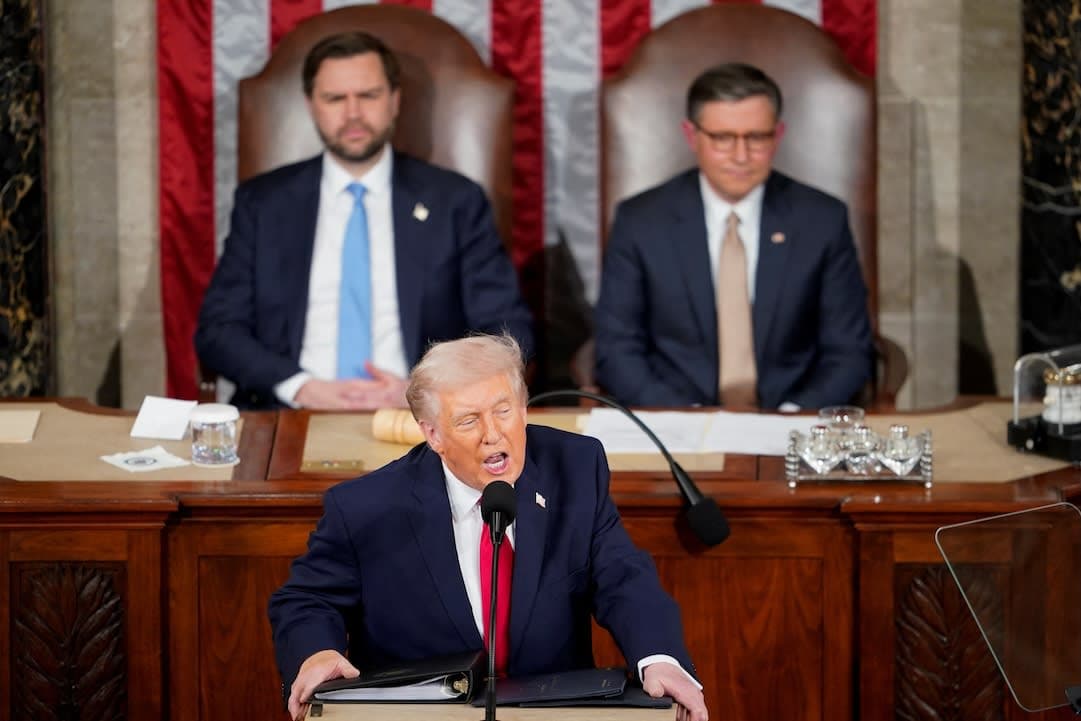
- **Policy challenges** persist despite significant spending—over **$6.5 billion** on military aid, sanctions, and tariffs—highlighting internal disagreements over immigration, security, and governance. President Trump’s recent praise of governors as “essential partners” at White House events underscores ongoing political maneuvering amid fragmentation.
### Technological and Military Innovations
- The **U.S. trade policy** is shifting toward **protectionism**, with the trade chief doubling tariffs even as Canada seeks new partners, risking further **fragmentation of global supply chains**.
- The Pentagon’s **recent demand** for **unrestricted AI weapons use** marks a **rapid militarization of artificial intelligence**, raising alarms over escalation risks, governance gaps, and autonomous decision-making in warfare. This move signifies a **paradigm shift**, where **technological influence** becomes central to military strategy.
**Implication:** The **internal fragility** of superpowers—particularly the U.S. and Russia—**weakens their influence as regional actors**, as technological and regional shifts **redistribute global power**.
---
## Regional Flashpoints and Escalation Risks
2026 remains fraught with **conflicts and diplomatic uncertainties** that threaten broader instability:
- **Ukraine:** Despite a **fragile ceasefire**, mutual mistrust and unresolved territorial disputes persist. Recent analyses, including a YouTube feature *"Ukraine’s sudden move toward potential elections,"* highlight that **peace remains fragile** and **dependent on external mediators and internal political stability**.
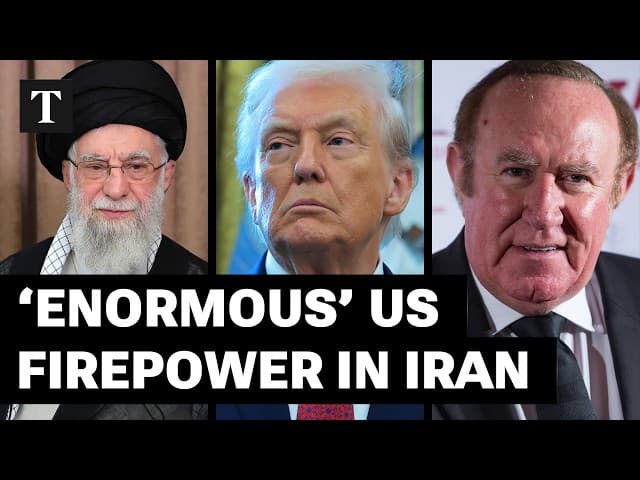
- **Middle East:** Iran’s **military drills** in the **Strait of Hormuz** escalate tensions, risking miscalculations that could ignite broader conflicts involving the UAE, Saudi Arabia, and U.S. forces. Israel’s **West Bank land policy reforms**—which facilitate easier land purchases for settlers—spark international condemnation and threaten renewed violence, further destabilizing the region.
- **East Asia:** Disputes over the **Senkaku Islands**, increased Chinese military assertiveness over **Taiwan**, cyber confrontations, and frequent military patrols heighten the risk of miscalculation.
- **Latin America:** The U.S. supports **Venezuelan oil exports** to India as part of efforts to counter Russian influence. Meanwhile, Venezuela’s government, led by **Delcy Rodríguez**, pursues reforms aimed at internal stability and re-engagement with regional and global markets.
---
## Democratic Resilience, Electoral Reforms, and Influence Operations
Despite mounting pressures, efforts to **safeguard electoral integrity** continue, though challenges abound:
- **Nigeria**’s Senate approved legislation permitting **live electronic transmission of election results**, aiming to **reduce electoral fraud and violence**. Opposition figures, such as **Amaechi and his son**, argue ruling parties fear transparency, igniting parliamentary debate. A recent YouTube series, *"Electoral Act: House in Rowdy Session Over ‘Real Time’ Clause,"* vividly captures these tensions.
- **Other African democracies** like Kenya, Ghana, and South Africa are enacting reforms to **strengthen voting processes**, but the **UN warns** that **contested results or manipulation** could trigger unrest, especially in fragile contexts.
- **Digital influence campaigns** increasingly target electoral processes. In Bangladesh, **bot account purchases** by political parties are used to sway public opinion. The victory of **Tarique Rahman’s BNP** exemplifies how **digital influence tactics**—including **“purchase of bot accounts”**—are reshaping legitimacy debates.
- The **“real-time” clause** controversy in Nigeria highlights ongoing tensions between **technological transparency** and **political resistance**.
- Societal unrest driven by economic hardship persists, with **protests in Iran** reflecting **deep societal tensions** that threaten stability despite repression.
---
## Emerging Influence Mechanisms and Governance Challenges
The influence landscape is **rapidly evolving**, with countries deploying **digital architectures**, **surveillance systems**, and **autonomous weapons**.
- Countries like **Turkey, Indonesia, and the UAE** employ **Digital Profile Systems** and influence operations—**a new frontier in influence warfare**—merging technological sophistication with covert influence campaigns.
- **Surveillance architectures**, such as Russia’s **Digital Profile System**, project power through **biometric databases, behavioral analytics**, and extensive **surveillance infrastructure**, impacting domestic control and international influence.
- **Energy and climate diplomacy** are also instrumental. Gulf Cooperation Council (GCC) states are heavily investing in **renewable energy** and **climate resilience projects** to **expand regional influence**.
- Scholars like **Alexander Cooley** warn of an **authoritarian resurgence**, driven by **digital sovereignty**, repression, and influence campaigns that undermine democratic norms and foster instability.
### Recent Developments: Strategic Spending and Military AI
- The **EU’s** reallocation of **€500 billion** into defense, digital sovereignty, and regional partnerships underscores a **strategic pivot** toward **security resilience**.
- Germany’s **landslide reelection of Friedrich Merz** with **91% of votes** reflects a commitment to **military modernization** and **European resilience**.
- Japan’s focus on **cybersecurity, maritime security**, and **regional diplomacy** under Prime Minister Sanae Takaichi highlights a broader shift toward **strategic autonomy**.
- The **Pentagon’s recent push** for **unrestricted AI weapons use** signals an **accelerated militarization of AI**, raising **escalation risks**, **governance challenges**, and concerns over autonomous systems operating **beyond human oversight**.
---
## Outlook: A World at a Crossroads
2026 is characterized by **fragility and dynamism**. The **rise of middle powers**, **internal challenges of superpowers**, and **regional flashpoints** create an environment fraught with risks of escalation, miscalculation, and instability.
**Key implications include:**
- The **multipolar influence** fostered by middle powers **challenges the hegemony** of traditional superpowers, fostering a **more diverse and contested global order**.
- **Internal political fragility** in the U.S. and Russia **weakens their regional influence**, even as **technological and regional shifts** reshape power dynamics.
- **Technological militarization**, particularly **AI-driven weapons systems** and **surveillance architectures**, demands **new governance frameworks** to prevent escalation and protect international norms.
- **Regional conflicts**, from Ukraine to the Middle East and East Asia, pose **significant risks of escalation**, with the potential for wider crises if diplomatic and conflict management efforts falter.
- **Electoral reforms and digital influence campaigns** threaten **democratic legitimacy**, especially in fragile states, with **domestic unrest** posing additional challenges.
As 2026 continues, the **choices made around electoral integrity, technological governance, and conflict resolution** will determine whether the year heralds a **renewed era of multilateral cooperation** or accelerates **fragmentation and instability**. The geopolitical landscape remains **uncertain but malleable**, with **technology, regional leadership, and internal resilience** shaping the trajectory of global stability for years to come.