# The 2024–2026 Revolution in End-User AI Tools and Workflows: An Unprecedented Acceleration
The rapid evolution of AI from experimental research into an omnipresent force shaping daily life has reached new heights between 2024 and 2026. Building on foundational advances in large language models, multimodal systems, safety governance, and decentralized architectures, recent breakthroughs are ushering in an era characterized by **more autonomous, privacy-preserving, and embedded AI ecosystems**. These developments are transforming personal productivity, content creation, device ecosystems, and enterprise strategies—bringing AI tools into our routines with unprecedented seamlessness, sophistication, and immediacy.
---
## Hardware and Infrastructure: Foundations for an Embedded AI Future
A pivotal development in 2025 was **OpenAI’s strategic move to take control of its hardware infrastructure**, signaling a significant shift from reliance on external cloud providers. This move aims to **enhance scalability, reduce costs, and improve latency**, fostering **more robust, autonomous workflows** that operate directly on devices.
### Key Hardware Innovations:
- **OpenAI’s in-house chip designs** have gained momentum, narrowing the performance gap with industry giants like Google and Amazon. These custom chips are optimized for large language models and multimodal AI, enabling **faster, more efficient local processing**.
- **@svpino’s new chips** have demonstrated **performance improvements up to five times faster** than previous alternatives, **reducing operational costs by up to 60%** and **supporting agentic applications to run three times more cheaply**.
- These advancements **cut latency**, **support privacy-preserving processing**, and **enable AI to operate directly on smartphones, vehicles, and smart home devices**—effectively embedding intelligence closer to the user.
This hardware evolution **fosters a decentralized AI ecosystem**, where **powerful models and autonomous agents can be embedded locally**, **respond instantly**, and **operate offline**—a crucial step toward **privacy assurance and system resilience**. Devices such as **Samsung Galaxy smartphones**, **Tesla vehicles**, and **home automation hubs** now host **advanced AI functionalities**, transforming them into **personal AI hubs** capable of seamless, offline operation.
The shift toward **embedded, on-device AI** is accelerating, with **multimodal capabilities** enabling devices to **answer nuanced questions, manage tasks, and control IoT environments** without relying on external servers. This trend **ensures instant, private, and reliable interactions**, especially vital in contexts demanding high responsiveness and privacy.
---
## Explosion of End-User Agents and Marketplaces
The AI landscape has experienced an **explosive rise in practical, user-centric agents**, accessible through **marketplaces and integrated ecosystems**. These agents **manage complex workflows**, **execute multi-step tasks**, and **interoperate across platforms**, transforming AI from niche tools into **everyday personal assistants**.
### Notable Marketplaces and Platforms:
- **Agent marketplaces such as Pokee** have become **vibrant hubs for discovery, deployment, and monetization** of AI agents. According to **@Scobleizer**, **Pokee now hosts thousands of agents**, fostering **collaborative innovation and user customization**.
- **Remote management tools** like **Claude Code** allow users to **manage, modify, and extend agents remotely**, increasing **flexibility and control** over AI behaviors.
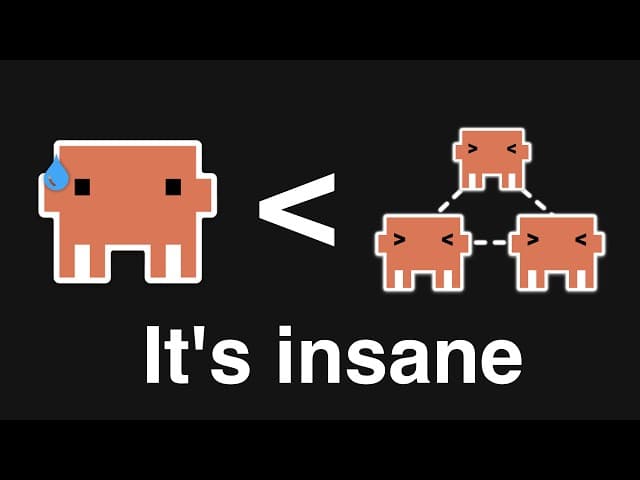
- **Multi-agent orchestration platforms such as SkillOrchestra** facilitate **hierarchical coordination**, enabling **long-horizon planning** and **collaborative problem-solving** among multiple AI agents.
### Market Impact:
These ecosystems **democratize access to sophisticated AI**, transforming **personal workflows** and **enterprise operations** into **multi-agent systems** that **operate with minimal human oversight**. The rise of **agent-as-a-service models** and **developer monetization**—via marketplaces and APIs—is **fueling innovation and adoption** at an unprecedented scale.
---
## Developer Tools and Workflow Innovation
The ecosystem continues its rapid expansion with **advanced developer and no-code tools** that **streamline content creation, coding, automation, and design**. These tools **lower technical barriers**, fostering **rapid customization and deployment**.
### Recent Innovations:
- **Anima**, an **AI-powered UX design agent**, exemplifies the **shift toward automating code generation from sketches or prototypes**, **transforming rough ideas into production-ready frontend code**—**eliminating manual repetitive tasks**.
- **Context management systems** like **context-moat** ensure **agents retain relevance over extended interactions**, critical for **long-term engagement and complex workflows**.
- **Design-to-code and visual workflow tools** empower **non-technical users** to **craft and modify AI-driven workflows quickly**, **reducing development time from days to hours**.
### Notable Developments:
- **Claude Code**, now supporting **auto-memory**, marks a significant leap. As **@omarsar0** highlights, “Claude Code now supports auto-memory. This is huge!” This feature **enables AI agents to remember past interactions seamlessly**, **improving context retention and task continuity**—crucial for **long-term projects and complex workflows**.
- **Claude’s agent teams** have become **more sophisticated**, capable of **building extensive AI workforces**. As shown in **@Claude’s build-your-AI-workforce demo**, **multi-agent collaboration** is now **more scalable and efficient**, **transforming how organizations deploy AI at scale**.
### Broader Significance:
This **rapid tooling expansion** **empowers a broad spectrum of users**—from **professional designers** to **everyday individuals**—to **personalize and optimize AI workflows**, fostering **more intuitive, efficient, and adaptive interactions**.
---
## On-Device, Embedded, and Autonomous AI: Accelerating Privacy and Responsiveness
The convergence of **hardware breakthroughs**, **marketplace proliferation**, and **developer tooling** is accelerating **AI deployment directly on devices**. This decentralization offers **multiple advantages**:
- **Enhanced privacy**, as **data remains local**, significantly reducing reliance on cloud transmission.
- **Reduced latency**, enabling **instantaneous responses** for time-sensitive tasks.
- **Greater resilience and safety**, since **devices can operate offline** and **limit external dependencies**.
### Practical Examples:
- **Samsung Galaxy S26** now features **built-in multimodal AI agents** capable of **answering nuanced questions**, **managing tasks**, and **controlling IoT devices**—all **offline**.
- **Automotive systems**, including **iOS 26.4’s CarPlay**, support **on-device content generation and multi-step planning**, **enhancing safety and responsiveness**.
- **Home AI hubs**, such as **OpenAI’s upcoming smart speakers**, will embed **multimodal AI** directly into **living spaces**, enabling **seamless, private interactions** without external servers.
This embedded AI **paves the way for a future where interactions are faster, more private, and highly context-aware**, transforming daily human-technology engagement.
---
## Autonomous Multi-Agent Systems: From Concept to Reality
Progress in **autonomous AI** culminates in **multi-agent systems capable of long-horizon reasoning, planning, and collaboration**. These systems **coordinate workflows**, **generate creative content**, and **learn from interactions** with minimal human oversight.
### Recent Breakthroughs:
- **Safety and performance metrics**, such as **Anthropic’s AI Fluency Index**, are being used to **measure agents’ effectiveness and safety**.
- **Hierarchical orchestration platforms** like **SkillOrchestra** **route tasks among multiple agents**, enabling **collaborative problem-solving** and **long-term planning**.
- **Long-term planning tools** such as **KLong** support **multi-step reasoning**, **adaptive planning**, and **dynamic goal setting**.
- Protocols like **Symplex** facilitate **semantics-based negotiation and coordination** across **distributed agents**, scaling autonomous ecosystems.
- **Cost reductions** exemplified by **AgentReady proxies** have **lowered token costs by 40–60%**, making **large-scale autonomous agent deployment** more **affordable and feasible**.
### Implication:
These advances **transform autonomous systems from experimental prototypes into routine tools** that **manage complex workflows**, **content creation**, and **adaptive learning**, **redefining sectors** such as research, creative industries, and personal productivity.
---
## Safety, Governance, and Building Public Trust
As **autonomous AI agents** become **more capable and embedded**, **safety**, **identity verification**, and **trust frameworks** are critical.
### Recent Initiatives:
- The **Agent Passport** introduces a **digital identity standard** similar to OAuth, **verifying agent origins** and **controlling permissions**.
- Industry leaders like **Google** have adopted **OAuth-based restrictions** (e.g., **OpenClaw**) to **limit unsafe tool invocation**.
- **Content safeguards**, **content ownership policies**, and **privacy controls** are being integrated into agent architectures.
- **Detection tools** are advancing to **identify model distillation, adversarial manipulation**, and **content tampering**, ensuring **system integrity**.
These **governance frameworks** **build user confidence**, **mitigate risks**, and **set industry standards**, especially as **AI becomes more embedded in societal functions**.
---
## Industry Dynamics: Competition, Monetization, and Regulation
The AI industry remains **highly competitive**, with **strategic alliances**, **new monetization models**, and **regulatory scrutiny** shaping its trajectory.
### Key Trends:
- **Device ecosystems**—notably **Apple**, **Samsung**, and **OpenAI**—are **deeply embedding AI into hardware**, transforming devices into **personal AI hubs**.
- **OpenAI’s investments** in **hardware** and **marketplaces like Pokee** seek to **capture user engagement** and **monetize autonomous agents**, despite **market skepticism about smart speaker profitability**.
- **Approaches diverge**, with **OpenAI’s rapid deployment** contrasting **Anthropic’s safety-first focus**, influencing **public perception** and **regulatory engagement**.
- **New revenue streams** are emerging from **agent billing**, **payment integrations**, and **insurance models**—highlighted by **Stripe’s "Payment Required" API responses**.
- **Legal and ethical concerns** surrounding **content licensing**, **copyright**, and **model distillation** are under active review by **governments and industry bodies**.
### Outlook:
Despite uncertainties, **industry momentum** favors **deep hardware integration**, **scaling autonomous agent markets**, and **developing responsible monetization strategies**—driving **further innovation** and **market evolution** across sectors.
---
## Recent Events and Developments
### 1. **Cybersecurity Incidents**
In early 2026, **hackers exploited Claude** to **steal 150GB of Mexican government data**. As **@minchoi** reports, this breach **underscores vulnerabilities** inherent in powerful AI tools. It **raises urgent questions** about **security protocols**, **access controls**, and **trust frameworks** necessary for **safe AI deployment**. The incident has prompted **industry-wide introspection** and accelerated efforts to **strengthen safety measures**.
### 2. **Enterprise Adoption and Investment**
**Trace**, a startup focusing on **AI agent adoption in enterprises**, raised **$3 million** to **accelerate deployment** of autonomous agents within organizational workflows. This investment **signals growing confidence** in AI’s capacity to **transform business operations**, emphasizing **scalability, integration, and user control**.
### 3. **Design and Content Platform Integration**
Figma, a leader in design tools, **partnered with OpenAI** to **integrate Codex support**, enabling users to **generate code directly from design files**. This collaboration **streamlines the transition** from **visual design to implementation**, **reducing development cycles** and **empowering non-technical users** to **participate actively in AI-driven workflows**.
### 4. **Creative Industries**
Major players like **ProducerAI** and **Google Labs** have advanced multimodal AI applications in **music production**, **visual arts**, and **literature**. These innovations **expand creative possibilities**, **enhance workflows**, and **drive AI’s role in artistic expression**.
### 5. **Hardware Ecosystem Consolidation**
Nvidia’s acquisition of **illumex** aims to **strengthen integrated hardware ecosystems**, ensuring **more powerful, efficient AI infrastructure**. This move **accelerates large-scale autonomous system deployment** and **further consolidates AI hardware leadership**.
---
## Current Status and Future Implications
The **2024–2026 period** marks a **transformative era** where **embedded, autonomous, multi-agent AI ecosystems** are **becoming integral to daily life**. The convergence of **hardware breakthroughs**, **marketplaces**, **developer tools**, and **safety frameworks** is **empowering individuals and organizations** to **reach new heights in productivity and creativity**.
However, with this rapid progress, **responsible development remains paramount**. The recent **Claude breach** exemplifies the **necessity of security, governance, and safety protocols** as AI systems become **more autonomous and embedded**.
Looking forward, **industry standards** like the **Agent Passport** and evolving **regulatory frameworks** will be **key in building public trust**, **ensuring accountability**, and **guiding sustainable growth**. The ongoing innovations in **multi-agent orchestration**, **on-device multimodal AI**, and **next-generation hardware** promise a future where **AI seamlessly integrates into our daily routines**, augmenting human potential while safeguarding societal interests.
In essence, **the AI revolution of 2024–2026** is **not solely technological** but **societal**, steering us toward **trustworthy, embedded intelligence** that **serves humanity with responsibility and foresight**.