# Enterprise-Grade Autonomous Agents Reach New Heights in 2026: The Latest Developments in AI Ecosystems
The landscape of enterprise AI in 2026 has evolved into a sophisticated ecosystem driven by **autonomous agents** that seamlessly integrate multi-model orchestration, hardware innovations, and security frameworks. These advancements are fundamentally transforming how organizations approach analytics, finance, compliance, and creative media — enabling unprecedented levels of efficiency, security, and creativity. Building upon previous breakthroughs, recent developments highlight a surge in model performance, innovative multimodal models, advanced generative capabilities, and democratized tools that empower non-coders to harness AI’s potential.
---
## The Maturation of Autonomous Agents in Enterprise Operations
**Autonomous, domain-specific agents** are now integral to core workflows, acting as **digital workforce engines** capable of executing complex, multi-step tasks with minimal human intervention. This evolution is fueled by:
- **Multi-model orchestration** that enables diverse AI models—language, vision, structured data—to collaborate dynamically.
- **Hardware innovations** that allow large models to operate efficiently at scale, including deployment on consumer hardware.
- **Security and provenance frameworks** that uphold trust, authenticity, and compliance in sensitive applications.
### Key Use Cases and Sector Transformations
**1. Advanced Analytics and Business Intelligence:**
Platforms like **Pi** and **Data River** now leverage **agentic analytics** that interpret natural language prompts to generate detailed dashboards and insights automatically. Enterprises reduce time-to-insight and manual errors while gaining **real-time, predictive analytics**. Integration with CRM tools like **Pipedrive** enhances **predictive customer insights** and **proactive engagement strategies**.
**2. Predictive Analytics and Root Cause Analysis:**
Tools such as **Whyze** utilize autonomous agents to **detect granular patterns** and **predict outcomes**, supporting proactive decision-making across finance, operations, and marketing.
**3. Compliance and Regulatory Monitoring:**
Frameworks like **Dagster** and **Compass** automate continuous monitoring, anomaly detection, and content verification—crucial for sectors like finance and healthcare—ensuring adherence to evolving regulations and safeguarding audit trails.
**4. Creative Media & Generative Content:**
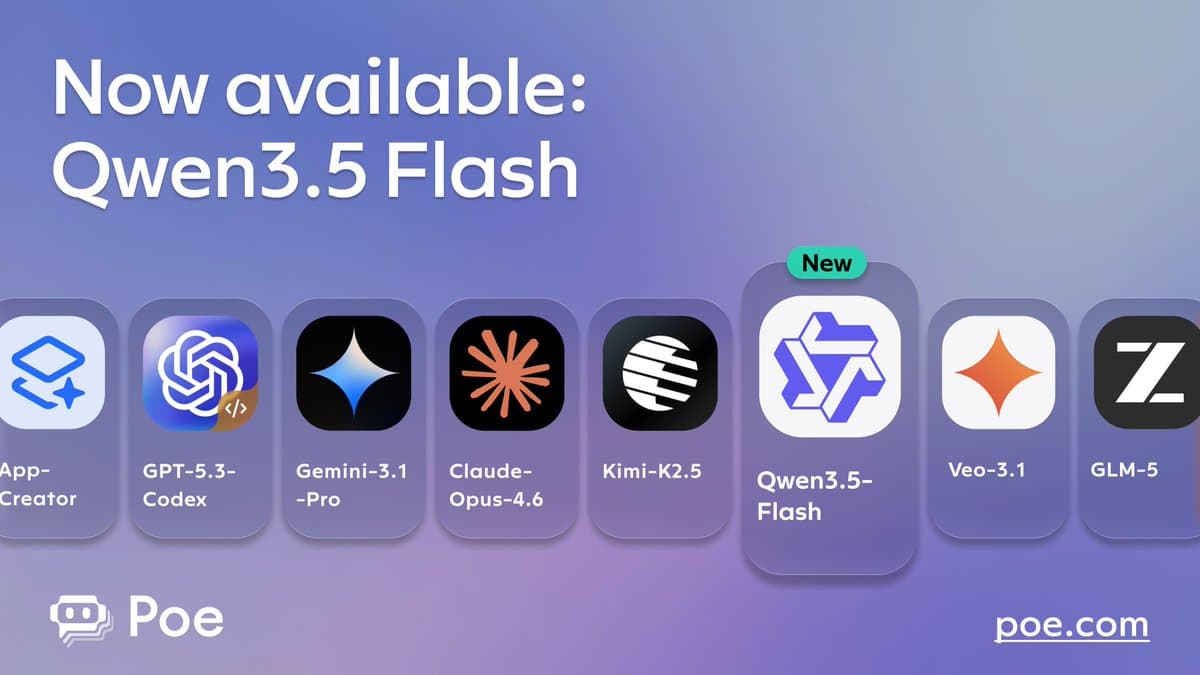
Generative models such as **Seedance-2**, **Bazaar V4**, **Qwen Image**, and **Lyria 3** are producing **hyper-realistic images, videos, and audio content** at scale. For example, **Qwen3.5 Flash**, a new multimodal model, processes both text and images with remarkable speed, enabling rapid creative workflows and real-time media generation.
**5. Content Provenance and Trust:**
Tools like **NanoClaw** and **Weaviate** provide **robust content provenance verification**, helping brands and consumers **detect deepfakes**, **verify media origins**, and **counter misinformation**, thereby reinforcing trust and authenticity in digital media.
---
## Hardware & Model Optimization: Breaking Barriers
Recent innovations have made **powerful AI models more accessible and deployable**:
- **Perplexity’s "Computer" AI Agent:**
Launched at **$200/month**, it **coordinates 19 AI models simultaneously**, supporting **multi-modal reasoning** and **collaborative intelligence**. Greg Iseberg emphasizes its ability to **transform $30,000 financial terminals into AI-powered assets**, democratizing enterprise AI capabilities.
- **Rapid Deployment & Edge AI:**
Platforms like **KiloClaw** now enable **deployment of autonomous agents in under 60 seconds**, facilitating rapid scaling. Local RAG systems such as **L88** demonstrate **powerful retrieval and generation on just 8GB VRAM**, supporting sensitive enterprise environments that prioritize **privacy and on-premises operation**.
- **Model Compression & Efficiency:**
Innovations like **NTransformer** enable **large models such as Llama 3.1 (70B parameters)** to run efficiently on consumer GPUs via **PCIe streaming** and **NVMe direct I/O**, vastly reducing hardware barriers and enabling **democratized high-performance AI**.
### Breakthrough Models and Use-Case Specifics
Recent model rankings and enhancements include:
- **Codex 5.3:** Excelling in **long coding tasks**, enabling developers and automated systems to handle complex programming challenges.
- **Opus 4.6:** Leading in **automation**, supporting enterprise workflows that demand robust, scalable automation.
- **Nano Banana 2:** Google's latest image generator, offering **high-fidelity image synthesis** suitable for creative and commercial applications.
- **Qwen3.5 Flash:** A **fast, multimodal model** that processes both text and images efficiently, powering real-time multimedia applications.
---
## Autonomous Ecosystems & Orchestration Tools
Managing these complex AI environments requires advanced orchestration:
- **Magai v3 Beta:** A **comprehensive platform** for deploying, monitoring, and managing AI agents at scale, simplifying enterprise workflows.
- **Mato:** A **tmux-like terminal workspace** that allows **visual orchestration of multiple agents**, promoting transparency and collaboration.
- **CodeWords UI:** A **no-code automation interface** enabling **non-technical users** to **build, deploy, and manage agentic workflows** swiftly, expanding AI adoption across departments.
---
## Security, Privacy, and Trust: The Foundation for Widespread Adoption
As autonomous agents increasingly handle sensitive data, **security** and **privacy-preserving technologies** are paramount:
- **Offline & Privacy-Preserving AI:**
**HermitClaw** enables **offline autonomous operation**, critical for industries like healthcare, finance, and government. **Tiny Aya**, supporting **over 70 languages**, ensures **multilingual offline processing** without data exposure.
- **Content Authenticity & Provenance:**
Tools such as **NanoClaw** help **detect synthetic media**, **verify origins**, and **counter misinformation**, which is vital for maintaining **brand integrity** and **public trust**.
- **Secure Development Pipelines:**
Frameworks like **StepSecurity** **protect code integrity**, **mitigate exploits**, and **safeguard AI development pipelines** against malicious threats, fostering secure enterprise AI ecosystems.
---
## Strategic Partnerships & Market Dynamics
Major collaborations continue to shape the industry:
- **Disney’s $1 Billion Investment in OpenAI:**
This partnership aims to **integrate AI into storytelling and entertainment**, exemplified by projects like **Sora**, which enables **personalized, dynamic experiences** at scale, blurring the lines between media creation and AI-driven personalization.
- **CRM & Analytics Integration:**
Embedding **agentic analytics** into platforms like **Pipedrive** transforms **customer engagement**, enabling **automated insights and proactive strategies** in sales and marketing.
- **AI-Driven Marketing & Advertising:**
Affordable AI marketing stacks (~$79/month) and platforms like **Manus AI** facilitate **personalized, scalable advertising campaigns**, reducing costs and expanding reach.
---
## The Road Ahead: A Future of Autonomous, Secure, and Creative Enterprise AI
The latest developments underscore a trajectory toward **more autonomous, secure, and versatile AI ecosystems**:
- **Multi-model collaboration** will continue to **drive reasoning, creativity, and automation**.
- **Edge deployment** and **local RAG systems** will **enhance privacy**, **reduce reliance on cloud infrastructure**, and **enable real-time processing**.
- **Provenance, security, and trust frameworks** will underpin **widespread enterprise adoption**, especially in regulated industries.
Organizations that **embrace these advanced autonomous agent ecosystems** will secure **competitive advantages**, transforming their operations, compliance, and creative outputs in the fast-evolving digital economy.
---
## Conclusion
In 2026, enterprise AI is characterized by **robust autonomy, security, and multi-model integration**. From **predictive analytics and compliance automation** to **creative media generation** and **democratized app building**, autonomous agents are **accelerating innovation and operational resilience**. As hardware and software continue to evolve, **embedding these intelligent, secure, and flexible systems into daily workflows** is no longer optional but essential for organizations aiming to thrive in the digital future.