# Election Workforce Pressures and Efforts to Inform Voters and Maintain Trust: The Crucial Path to 2026
As the United States hurtles toward the pivotal 2026 midterm elections, the resilience of its electoral system is under unprecedented strain. From mounting workforce shortages and hostile environments for election officials to sophisticated disinformation tactics and emerging technological threats, safeguarding democracy requires a comprehensive and adaptive response. Recent developments reveal a concerted effort at the federal, state, and local levels—spanning legislative reforms, community outreach, technological safeguards, and judicial actions—to bolster transparency, trust, and fairness in the electoral process.
## The Ongoing Election Workforce Crisis: Turnover, Threats, and Operational Risks
A central challenge threatening election integrity is **extraordinary turnover among election workers**, fueled by threats, harassment, burnout, and escalating political hostility. The hostile climate has profound consequences:
- **Loss of Institutional Knowledge:** Experienced officials are resigning at alarming rates, creating critical gaps in expertise vital for secure and accurate elections. This erosion hampers **procedural integrity**, increases the risk of **errors in vote counting**, and undermines **public confidence**, especially during vote certification phases.
- **Cybersecurity and Operational Vulnerabilities:** Staffing shortages weaken defenses against **cyberattacks** and misinformation campaigns. With fewer trained personnel, authorities face heightened risks of **malicious infiltration**, which could lead to **result inaccuracies** and erode trust in electoral outcomes.
- **Delays and Disinformation Exploitation:** Reduced staffing has already caused **delays in vote tallying and certification**. Malicious actors exploit these delays to spread conspiracy theories and false narratives. In Utah, officials have openly cited **threats and harassment** as primary reasons for resignations, illustrating how a hostile environment hampers **election efficiency** and **public confidence**.
- **Deterrence of Qualified Professionals:** The hostile environment discourages capable professionals from volunteering or working in election roles, further weakening electoral resilience during a critical period.
### Recent Local Examples
- **Arizona** has experienced a wave of resignations among top election officials since the 2020 election, linked to **organized intimidation campaigns**. This instability hampers **cybersecurity efforts**, delays vote tabulations, and diminishes **public trust**.
- **Bexar County, Texas**, is under investigation for election management practices, highlighting ongoing challenges related to **transparency and accountability** at the local level.
- The **Moore County** incident, involving procedural confusion during vote certification, underscored the importance of **clear communication** and **robust oversight** to prevent procedural ambiguities from undermining legitimacy.
- The **special election in Lehigh County, Pennsylvania**, with high stakes for state politics, demonstrated how **trustworthy electoral processes** are vital amid ongoing pressures. The outcome could influence the state legislature’s balance of power, emphasizing the need for **maintained confidence** in the process.
These examples underscore the **interconnectedness** of staffing environments, procedural clarity, cybersecurity, and public trust, making **robust safeguards** and **motivated personnel** more essential than ever as the countdown to 2026 continues.
## Disinformation and Technological Threats: Deepfakes, AI, and Hostile Narratives
Disinformation remains a formidable obstacle, with malicious actors employing increasingly sophisticated tactics:
- **AI and Deepfakes:** The proliferation of **deepfake videos**—fabricated media falsely depicting election misconduct—poses a significant challenge. Recently, a deepfake falsely claimed widespread fraud, spreading rapidly online and sowing confusion among voters. Such manipulations can distort perceptions of election legitimacy in real time, making **fact-checking** and **media literacy** critical.
- **Influencer-Driven False Claims:** Prominent figures, such as **South Dakota Governor Kristi Noem**, have circulated misleading videos alleging **"disaster"** in election management, fueling polarization and eroding trust in official results.
- **Organized Denial Campaigns:** Groups dedicated to **amplifying false claims of voter fraud** organize protests and harassment campaigns targeting election officials, creating a **hostile environment** that discourages participation and fosters mistrust.
### Recent Responses and Developments
- The **Cybersecurity and Election Integrity Review (CEIR)** recently **assessed claims** regarding noncitizen voting, concluding most were false or attributable to **system errors**. This reinforces the importance of **rigorous verification** and **public education** to combat misinformation.
- **Legislative initiatives** are gaining momentum:
- The **“Deepfake and Election Security Act”** recently passed in the House aims to **criminalize malicious AI use** in election contexts, signaling a federal effort to curb emerging technological threats.
- **Meta**, the social media giant, announced a **$65 million investment** toward **bolstering election security** and **AI governance**, recognizing the private sector’s critical role in defending electoral integrity.
- **Technical glitches** in **voter verification tools** have caused **disenfranchisement** for some voters, highlighting the need for **system testing**, **robust safeguards**, and **clear communication** about system limitations.
## State and Federal Responses: Protecting Democracy and Enhancing Transparency
In response to mounting threats, authorities at multiple levels are deploying targeted initiatives:
### Voter Education and Outreach
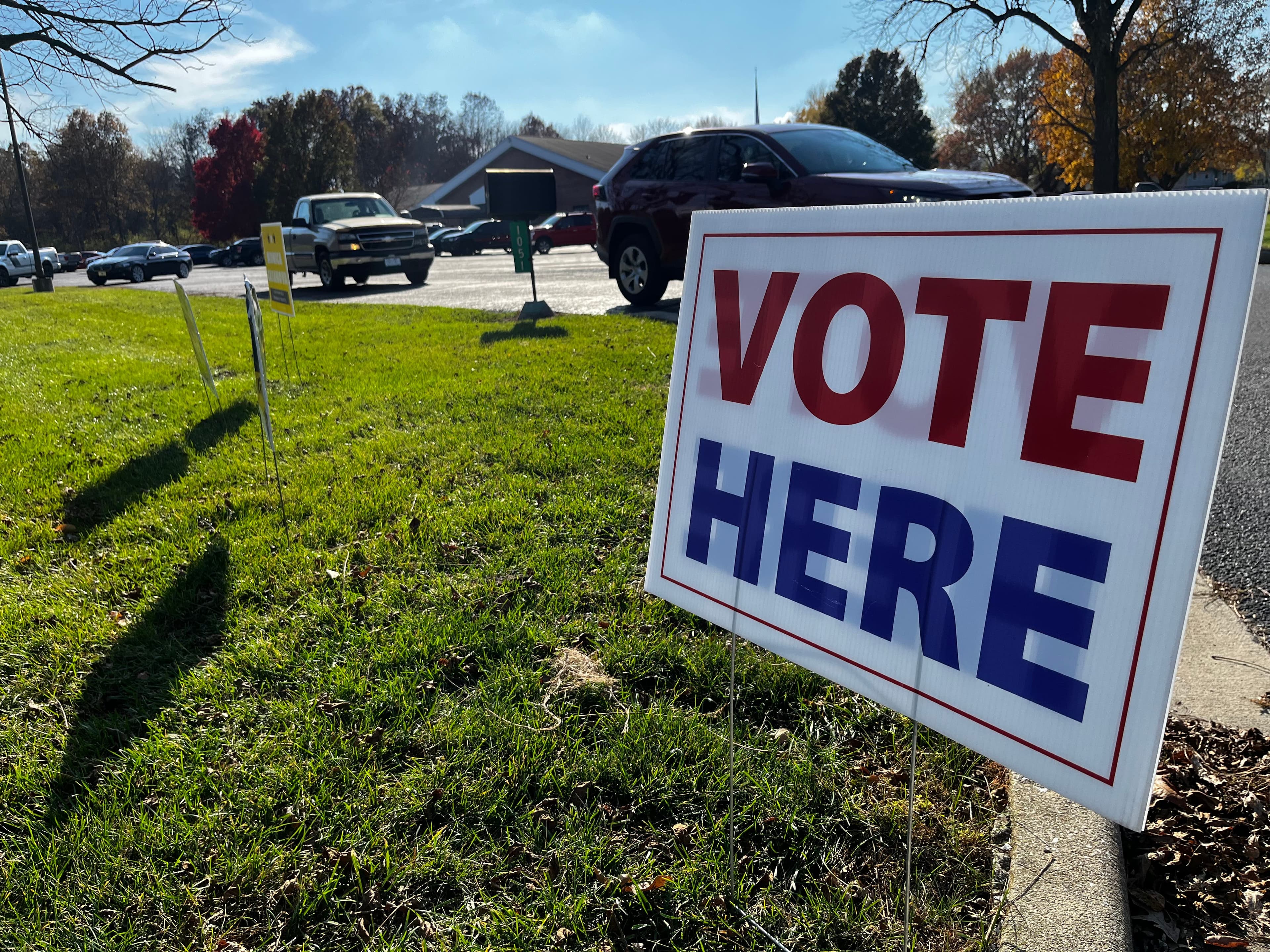
- **Illinois** has launched **comprehensive voter education campaigns**, including detailed voting guides, early voting outreach, and efforts tailored to marginalized communities to **reduce confusion** and **foster confidence**.
- **Ohio** is working to **address disparities** in information access through **equitable communication strategies**, ensuring **all eligible voters** receive **accurate**, **accessible information**.
- The **Hispanic Caucus** recently launched an initiative to **engage influencers** and **boost Latino voter turnout**, recognizing the importance of **trusted messengers**. Their efforts involve engaging prominent influencers via platforms like YouTube to **amplify voting rights messages**.
### Legislative and Policy Reforms
- **Arizona** enacted **House Bill 2022 (HB2022)** on **February 6, 2026**, signed by **Governor Katie Hobbs**, which **strengthens oversight**, **tightens security protocols**, and mandates **public reporting standards** and **audits**. Governor Hobbs emphasized, "**Arizona’s democracy depends on trust, transparency, and security. This legislation is a crucial step toward ensuring every voter’s voice is protected and counted accurately.**"
- Other states, such as **California**, are advancing **protections for election officials** against threats and harassment, acknowledging the dangerous environment faced by those administering elections.
### Federal and Judicial Actions
- The **Election Assistance Commission (EAC)** and **FBI** are **enhancing cybersecurity efforts**, including establishing **national standards** for **cyber defense**, **incident response**, and **misinformation mitigation**.
- Courts continue to **uphold voting rights**:
- In **Pennsylvania** and **Michigan**, courts have **blocked restrictive voting laws**, citing **voter suppression concerns**.
- **Wisconsin** and **North Carolina** are making progress with **redistricting reforms** aimed at **electoral fairness**.
- **States like Nevada and California** are expanding **early voting** and **mail-in ballot options** to **increase participation** and **foster trust** through **greater access**.
### Procedural Safeguards and Technical Reforms
- **Risk-limiting audits** are increasingly adopted to **verify election outcomes**, serving as a **trust-building mechanism**.
- States are modernizing **voter list maintenance** and **verification systems** to **prevent errors** and **disenfranchisement**, especially among vulnerable populations.
- Efforts are underway to **improve incident response protocols** for cyber threats and misinformation, ensuring **rapid action** when threats arise.
## Recent Legislative and Administrative Developments
Adding to the legislative landscape are recent notable events:
- The **Virginia Senate Privileges & Elections Committee** held a comprehensive hearing on **February 24, 2026**, focusing on **election security**, **voter access**, and **trust-building measures**. The session, documented via a **1 hour and 22-minute video**, underscored bipartisan acknowledgment of the importance of **strengthening electoral processes**.
- In the **Border Belt region**, **school board elections** have transitioned to **partisan contests**—a significant shift from previous nonpartisan approaches. **Jason Clark**, elected to the Scotland County school board in 2022, expressed concern over **partisan influences** but acknowledged the evolving political landscape. This trend exemplifies how **partisanization of local elections** can impact community trust and governance.
- **Legislatures in several states**, including Wyoming, are advancing **bills on hand recounts** and other election measures. Wyoming’s **crossover day** marks the deadline for bills to clear legislative chambers, indicating ongoing efforts to **refine election transparency and accountability**.
- In **Hawaii**, allegations of **big money influence**, including a recent **$35,000 bribe**, have sparked calls for **election reform**. Critics argue that **foreign and special interest money** threaten **fairness** and **public confidence**, prompting legislative hearings and reforms.
- **President Donald Trump** has moved to **rewrite election rules unilaterally**, directing his White House Counsel’s office to explore the feasibility of an **executive order** requiring changes to election procedures. This move underscores ongoing efforts to influence electoral processes at the highest levels, adding a layer of complexity to the already evolving landscape.
## Persistent Challenges and the Road Ahead
While significant progress has been made, **substantial hurdles remain**:
- **Ensuring accurate, fair voter verification** systems without disenfranchising eligible voters.
- **Accelerating vote counting** to **reduce delays** and **counter disinformation**.
- Addressing the **hostile environment** faced by election workers, which threatens **future electoral stability**.
- **Combating AI-driven disinformation**, including **deepfakes**, which can rapidly erode public trust if left unchecked.
### Critical Next Steps
- **Bipartisan cooperation** remains vital to **enact meaningful reforms**, **protect election officials**, and **restore confidence**.
- Increasing **cybersecurity investments** and **public education campaigns** will be crucial in **countering disinformation**.
- Implementing **robust protections** for election workers against threats and harassment.
- Promoting **transparent communication** and **community engagement** to **build trust** in the electoral process.
- Standardizing **audit procedures** and expanding **risk-limiting audits** to **verify results** and **enhance public confidence**.
## Current Status and Implications
As **2026** approaches, the nation stands at a crossroads. The convergence of **workforce shortages**, **technological threats**, and **disinformation campaigns** underscores the urgent need for **coordinated, bipartisan action**. The resilience of American democracy depends on **swift reforms**, **adequate resource allocation**, and **public engagement**.
Recent legislative measures—such as California’s **protections for election officials**, Arizona’s **HB2022**, and federal initiatives establishing **cybersecurity standards**—highlight a **determined push** toward **electoral integrity**. Private sector investments, judicial protections, and community outreach are forming a **multi-layered defense** against emerging threats and are vital to **restoring public trust**.
**The coming months** will be decisive. Effective implementation of reforms, protections for election workers, and transparent communication will determine whether the U.S. can navigate these turbulent times and uphold its democratic principles into the future. Building a **resilient electoral system** capable of withstanding external and internal pressures remains both a formidable challenge and an essential opportunity to reaffirm the nation's commitment to democracy.