# Techniques for Assembling and Refining Datasets in 2024: The New Frontier Continues to Evolve
The landscape of dataset assembly and refinement in 2024 has reached unprecedented levels of sophistication, driven by rapid technological innovations, expanding infrastructure, increasingly stringent ethical standards, and domain-specific methodologies. As artificial intelligence (AI) continues to embed itself into sectors such as healthcare, autonomous systems, scientific research, cybersecurity, and finance, the demand for **high-quality, trustworthy, and scalable datasets** has become more critical than ever. Building upon foundational principles, 2024 marks a transformative era where datasets transcend mere repositories of volume to become **meticulously curated, ethically sound, transparent, and operationally robust resources** that underpin responsible AI development.
---
## Reinforced Core Principles: Foundations Strengthened in 2024
While automation tools and advanced data pipelines continue to revolutionize data processing, the core principles guiding dataset assembly have been **fortified and expanded** to meet the needs of cutting-edge AI models:
- **Data Cleaning and Deduplication:** Modern, scalable automation employs high-precision systems capable of swiftly identifying and eliminating redundancies and conflicts across massive datasets. This process enhances relevance, reduces biases, and is crucial for high-stakes applications such as medical diagnostics and autonomous navigation.
- **Data Augmentation with Domain Awareness:** Augmentation techniques have achieved new heights of sophistication:
- *Medical Imaging:* Synthetic artifacts, anatomical variations, and diverse imaging conditions are simulated to bolster diagnostic robustness.
- *Environmental and Climate Data:* Artificial variations—like lighting changes, weather patterns, and seasonal cycles—are introduced to prepare models for real-world unpredictability.
- *Multimodal Transformations:* Integration of images, text, and audio enrich datasets, supporting multi-sensory learning and enabling AI systems to interpret complex, multisource information holistically.
- **Balanced Sampling and Fairness:** Automated, dynamic sampling strategies actively correct class imbalances, ensuring datasets more accurately reflect real-world distributions. This approach mitigates biases and fosters fairness during training.
- **Data Validation and Consistency Checks:** Machine learning-driven anomaly detection frameworks facilitate early error identification, preventing biases and inconsistencies from propagating downstream. These safeguards are vital for maintaining data integrity at scale.
- **Efficient Data Merging and Cross-Modal Alignment:** Advanced techniques now seamlessly integrate heterogeneous sources—linking images with textual descriptions or sensor data—supporting the development of context-rich, multi-sensor perception models.
- **Automated End-to-End Pipelines:** Platforms like the **Grain Dataset API** exemplify comprehensive workflows that streamline data collection, annotation, validation, and deployment. These pipelines significantly reduce manual effort, accelerate research cycles, and provide a crucial advantage in today’s fiercely competitive AI ecosystem.
**Collectively, these reinforced principles underpin the creation of reproducible, scalable data pipelines** across sectors including healthcare, autonomous systems, scientific exploration, and industrial automation. They enhance data quality, operational efficiency, and societal trust—cornerstones of responsible AI development.
---
## Breakthroughs in Automated Labeling and Human-in-the-Loop Workflows
2024 has also witnessed a **rapid evolution in automated labeling techniques**, transforming dataset creation and refinement processes:
### Practical Innovations and Resources
A standout example is the tutorial **"How to automatically label image datasets with 🤗 Hugging Face Transformers in CVAT,"** which demonstrates how domain-adapted, pretrained NLP models are fine-tuned for computer vision annotation tasks. This approach is revolutionizing annotation workflows through:
- **Leveraging Hugging Face Transformers:** Large, domain-specific models trained on specialized datasets—such as medical images, industrial visuals, or scientific imagery—generate high-quality batch predictions, drastically reducing manual annotation efforts.
- **Integration with Annotation Platforms:** Tools like CVAT now support semi-automated workflows where automated labels are reviewed and refined by domain experts. Many organizations report reducing annotation turnaround from weeks to days while maintaining high accuracy.
- **Human-in-the-Loop Review:** Combining automation with expert oversight ensures nuanced, context-aware labeling—particularly vital for sensitive applications like diagnostics, robotics, and multimedia understanding. This hybrid approach results in **more accurate, high-quality datasets faster**, accelerating AI research and deployment.
Embedding automation within human review processes not only expedites data generation but also enhances **trustworthiness and reliability**, especially in safety-critical domains. As a result, semi-automated annotation workflows are becoming industry standards, supporting scalable, high-caliber data creation.
---
## Infrastructure for Multimodal and Domain-Specific Data
The increasing complexity of datasets—spanning images, text, audio, video, and high-dimensional signals—necessitates **robust, scalable infrastructure** in 2024:
### Key Infrastructure Components
- **Scalable Cloud Storage:** Distributed, cloud-native solutions facilitate access, updates, and collaboration on vast, diverse datasets.
- **Metadata and Provenance Tracking:** Transparent documentation of data sources, processing steps, versions, and lineages ensures reproducibility, regulatory compliance, and ethical accountability.
- **Multimodal Alignment:** Synchronization of different data types—such as linking video frames with transcripts or sensor signals—is critical for models capable of complex scene understanding and reasoning.
- **Specialized Annotation Pipelines:** Automating intricate annotations—like medical segmentation or neurophysiological signals—supports high-fidelity labeling while respecting privacy and regulatory constraints.
### Notable Datasets and Projects in 2024
- **MMFineReason:** An expansive vision-language reasoning dataset with **1.8 million samples**, exemplifying progress toward comprehensive multimodal environments. Its associated video, **"MMFineReason: Closing the Multimodal Reasoning Gap via Open Data-Centric Methods,"** demonstrates how open datasets foster models capable of advanced cross-modal reasoning.
- **DriveScene Dataset:** A detailed video corpus tailored for autonomous driving, enriched with scene annotations supporting scene understanding, generation, and explanation.
- **Domain-Specific Corpora:**
- **Medical SAM3** and the **Universal Medical Segmentation Model** provide high-quality, privacy-preserving healthcare datasets.
- **Industrial Network Traffic Data:** The *Scientific Data*-published “Real-world industrial control systems network attack detection” dataset captures network traffic and control signals, supporting cybersecurity research.
- **Audio and Acoustic Datasets:** Initiatives like **"A Semantically Consistent Dataset for Data-Efficient Query-Based Universal Sound Separation"** advance acoustic scene understanding.
- **High-Dimensional Biomedical Data:** Projects such as **256-Benchmarking Spatial Transcriptomics Platforms** exemplify infrastructure supporting complex multi-omic datasets, fueling biomedical breakthroughs.
### Recent Breakthrough: Nvidia’s **DreamDojo**
A standout development in 2024 is Nvidia’s **DreamDojo**, an advanced robot ‘world model’ trained on **44,000 hours of human video footage**. Paired with sophisticated simulation environments, DreamDojo enables robots to learn from extensive real-world interactions. Nvidia emphasizes that **"DreamDojo leverages extensive multimodal data to create adaptable, context-aware robot models,"** demonstrating how high-quality, diverse datasets underpin progress in robotics and autonomous systems.
Additionally, tutorials like **"How to Store & Version AI Training Data using Amazon S3 | AWS AI/ML Series"** have become industry standards, ensuring scalable, reliable, and transparent data management. The integration of **Hugging Face Community Evals** further promotes transparency and progress tracking, with **"Hugging Face Introduces Community Evals for Transparent Model Benchmarking"** fostering accountability.
---
## Operational Best Practices for Sustainable Dataset Management
As datasets grow in size and complexity, **operational discipline** becomes essential:
- **Automated Validation:** Routine checks and anomaly detection routines prevent errors, biases, and inconsistencies from entering pipelines.
- **Deduplication and Merging Automation:** Automating dataset updates maintains data integrity and reduces manual effort.
- **Comprehensive Documentation:** Maintaining detailed records of data sources, processing steps, and versions supports reproducibility and accountability.
- **Regular Data Refreshes:** Periodic updates counteract concept drift, ensuring models remain aligned with evolving phenomena.
- **Version Control and Provenance Tracking:** Tools like **DVC**, **MLflow**, and cloud versioning on **Amazon S3** underpin transparent change management, paralleling software engineering standards, and fostering trust and collaborative development.
The emerging concept of **"Version Control for AI"** underscores systematic tracking of datasets, models, and code—enhancing transparency, reproducibility, and collective innovation.
---
## Recent Resources and Datasets: New Additions in 2024
### Synthetic Data Pipelines
The tutorial **"A Practical Pipeline for Synthetic Data with Nano Banana Pro + FiftyOne"** (YouTube, 33:58) illustrates hardware-software integration for generating diverse synthetic datasets suitable for training, validation, and testing across multiple domains.
### Medical and Domain-Specific Datasets
- **"Detailed 3D Scans of over 6,000 Patients"** improve diagnostic accuracy for abdominal lesions.
- **"Darwin-Science: New 900B Scientific Token Corpus"** (3:59 min YouTube) introduces a vast scientific language corpus supporting large-scale research language models.
- **"AA-WER v2.0: Speech to Text Accuracy Benchmark"** advances speech recognition systems.
- **"Marine Alloy Dataset of Thermo-Mechanical Properties"** supports innovations in material science.
### New Datasets for Biomedical and Autonomous Driving Applications
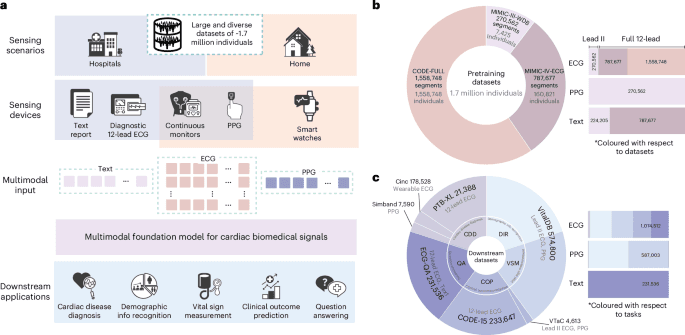
- **MEETI:** A **multimodal ECG dataset** from the MIMIC-IV-ECG database, integrating signals, images, features, and interpretations, provides a comprehensive resource for cardiovascular research and AI diagnostics. The dataset emphasizes multimodal integration, fostering advances in predictive modeling and interpretability in healthcare.
- **Multi-Perspective Traffic Video Analysis Dataset:** Featuring multi-angle recordings of traffic scenes, this dataset enables research in autonomous driving perception, scene understanding, and multi-view analysis, reflecting the complexity of real-world environments.
### New Benchmarks and Domain-Specific Evaluations
- **PANORAMA Study:** An ambitious project investigating whether AI can outperform radiologists in early detection of pancreatic ductal adenocarcinoma (PDAC). Given PDAC’s status as one of the deadliest cancers, this large-scale effort aims to improve early diagnosis, with profound implications for patient outcomes.
- **Harvey AI’s BigLaw Bench (Global):** Extends its scope across legal systems in the UK, Australia, and Spain, assessing AI’s legal reasoning, document analysis, and compliance capabilities—driving progress in legal AI applications.
- **StarEmbed:** A recent benchmark for time series foundation models, supporting applications in finance, healthcare, and industrial monitoring. Its publication **"StarEmbed: Benchmarking Time Series Foundation Models on ..."** underscores the importance of high-quality, domain-specific datasets for real-time decision-making.
---
## Current Status, Implications, and Future Outlook
The advancements of 2024 reaffirm that **techniques for assembling and refining datasets are central to the responsible and impactful evolution of AI**. The integration of automation, resilient infrastructure, and domain-specific customization results in datasets that are **more diverse, accurate, and ethically managed**.
### Key Implications
- **Handling Massive, Multimodal Data:** Support for complex, high-dimensional datasets enables AI systems capable of multi-sensory perception, reasoning, and contextual understanding.
- **Enhancing Data Quality and Trustworthiness:** Rigorous validation, provenance tracking, and fairness considerations foster societal trust and comply with increasingly stringent regulations.
- **Accelerating Innovation Cycles:** Streamlined workflows shorten the journey from data collection to deployment, fostering rapid research and iteration.
- **Addressing Societal Challenges:** High-quality, domain-specific datasets empower AI solutions in healthcare, cybersecurity, legal analysis, education, and social initiatives.
- **Promoting Democratization:** Open standards, tools like Hugging Face Community Evals, and cloud-based data management democratize access, enabling institutions worldwide to participate in AI development.
### Outlook for 2024 and Beyond
The trajectory indicates that **integrating automation with ethical oversight, resilient infrastructure, and collaborative openness** will continue to shape the future of dataset assembly. As datasets become more comprehensive, diverse, and responsibly managed, AI systems will be better equipped to address complex, real-world problems with transparency and societal benefit.
**In essence**, 2024 underscores that the techniques for assembling and refining datasets are not merely technical processes but are foundational to building trustworthy, scalable, and impactful AI. These innovations will guide AI toward responsible deployment, fostering societal trust and enabling AI to contribute meaningfully to global challenges.