# Detroit Fire Achieves Historic Paramedic Graduation and Continues to Advance Emergency Systems Amid Ongoing Challenges
Detroit’s relentless commitment to strengthening its emergency response capabilities is exemplified by recent groundbreaking milestones, innovative clinical reforms, and strategic technological investments. Building on the historic graduation of the city’s first internally developed, department-led paramedic class, Detroit is actively shaping a more resilient, equitable, and effective emergency services landscape despite facing severe operational hurdles and systemic issues.
---
## A Landmark Milestone: Department-Developed Paramedic Training and Future Growth
In a historic event, **28 Detroit firefighters** successfully completed the **city’s first internally designed paramedic training program**, a vital step toward **self-sufficiency**. This initiative reduces reliance on external agencies and fosters **local workforce development**, positioning Detroit as a regional leader in emergency medical services.
### Strategic Goals and Community Impact
- **Response Capacity Enhancement:**
The new paramedics are expected to **speed response times** and **expand coverage** particularly in underserved neighborhoods like West Side, Downtown, and other densely populated districts, where emergency response has traditionally lagged.
- **Community Trust and Cultural Competence:**
Locally trained responders who understand community nuances are better equipped to **build trust**, especially in neighborhoods with longstanding health disparities and systemic neglect.
- **Operational Resilience and Workforce Sustainability:**
The program aims to **manage rising call volumes** and **complex emergencies** in the face of staffing shortages and financial constraints, ensuring EMS sustainability for the future.
Mayor Mike Duggan emphasized:
> “This demonstrates Detroit’s dedication to investing in our own people to provide faster, better care.”
Chief James White added:
> “Our new paramedics will ensure quick, high-quality medical interventions reach every neighborhood, reducing response times and improving patient outcomes.”
Building on this success, city officials plan to **scale training efforts**, creating a **pipeline of internal talent** to meet future demand and **further strengthen community relationships** through culturally competent care.
---
## Innovation in Clinical Protocols and Policy Reforms
Detroit EMS continues to set regional standards through **clinical advancements** and **policy reforms**, elevating the quality and safety of emergency care.
### Enhanced RSI Protocols
Recent updates focus on **reducing peri-intubation hypotension**, a dangerous complication during airway management:
- Introduction of **enhanced real-time monitoring**
- Use of **proactive vasopressor administration**
- Implementation of **simulation-based training modules**
These measures align with **current clinical guidelines**, ensuring **safer airway procedures**, especially in **high-risk populations**.
### Pediatric Readiness and Community-Centered Care
- Investments in **specialized pediatric training** and outfitting EMS units with **pediatric-specific tools** have contributed to a **76% reduction in pediatric mortality rates**, reflecting **improved responsiveness** and **tailored emergency interventions** for children.
### Financial and Policy Initiatives
- The city is exploring **innovative reimbursement models**, including **treatment-in-place protocols** and **Medicare reimbursement frameworks**, to **sustain EMS operations** amidst ongoing financial pressures.
- Policy analyst Steve Tafoya notes:
> “This bill could revolutionize how EMS services are reimbursed, allowing for more sustainable operations and better patient-centered care.”
### School Emergency Preparedness Gap
While legislative efforts at the state level have advanced, **lack of dedicated funding** hampers deployment of AEDs, staff training, and comprehensive emergency plans in schools. This leaves students and staff vulnerable during cardiac emergencies, highlighting a critical area for targeted investment.
---
## Operational Challenges: Winter Weather and Infrastructure Failures
Detroit faces persistent operational difficulties as **severe winter weather** and **aging infrastructure** continue to disrupt emergency responses:
- **Harsh Weather Conditions:**
Michigan experienced **1 to 3 inches of snow** with record low temperatures, complicating EMS operations. Crews responded with **cold-weather gear**, **snow chains**, and **route optimization strategies** to navigate **icy streets** safely.
- **Major Infrastructure Failures:**
- A **water main break near Fuqua and McGraw avenues** caused street flooding, disrupting response routes.
- A **burst water pipe at Franklin Wright community services** impaired local resources.
- **Power outages** and **road hazards** further hampered emergency operations.
- **Significant Incidents:**
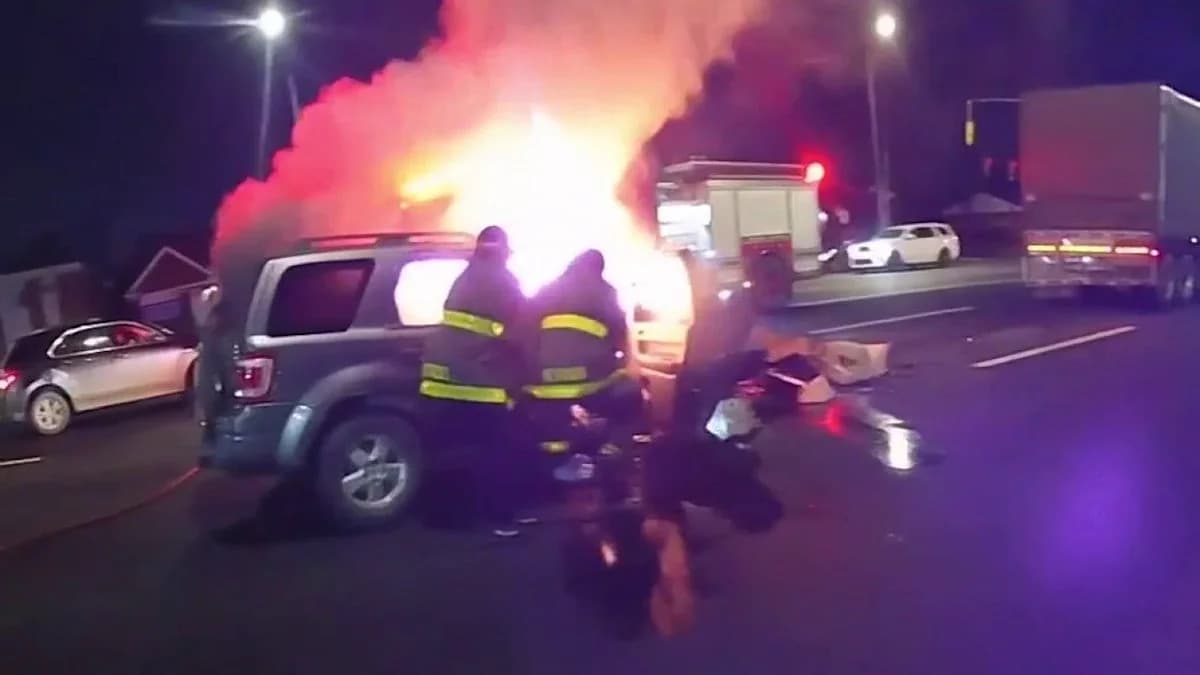
- Rescues of individuals buried in snow, fires on Detroit’s West Side—including a **tragic house fire** resulting in an elderly woman’s death—are under investigation.
- A **large house fire in Southfield** caused one fatality.
- An **airport crash** injured six.
- Multiple emergency responses to incidents such as a **pedestrian strike in Dearborn** and a **partial parking garage collapse**.
- The **evacuation of the Leland House apartment complex** due to structural issues displaced residents.
**Recent Incident:**
A **fatal warehouse crash** occurred when a vehicle plowed into a Detroit warehouse, causing **two deaths**. The driver, suspected of excessive speed, was detained; investigations continue, emphasizing **traffic safety** and **infrastructure resilience**.
---
## Systemic Concerns and Strategic Responses
Despite progress, systemic issues threaten the sustainability of Detroit’s emergency services:
- **Financial Strains:**
Many Michigan providers are owed **$6 million** in unpaid reimbursements related to prisoner transport, risking operational continuity.
- **Emergency Preparedness Gaps:**
Assessments reveal **deficiencies in mass casualty incident (MCI) preparedness**. Detroit is working to **standardize triage protocols**, **enhance multi-agency communication**, and **conduct regular drills**.
- **Workforce Wellbeing and Burnout:**
Paramedic **Sophie Fuller** (Paramedic Sophi) shared:
> “We love this job — and it’s hurting us.”
Her candor has spurred efforts to **strengthen peer support networks**, **provide counseling**, and **offer stress management training** to combat burnout and improve retention.
- **Fleet Expansion and Technological Innovation:**
Building on models from cities like Anderson, Indiana—where deploying a **fourth ambulance** improved response times—Detroit is expanding its fleet.
The city is also exploring **drone technology** for **scene assessment** and hazard detection, providing **immediate situational awareness** before EMS teams arrive.
- **Dynamic Routing Amid Infrastructure Projects:**
With ongoing projects such as **I-94 ‘Restore 94’**, **I-96**, **Southfield Freeway**, and **I-75/I-696 ramp closures**, Detroit is developing **adaptive routing systems** to maintain response efficiency during disruptions.
---
## Community and Healthcare System Initiatives
Complementary efforts aim to address broader social determinants of health and systemic issues:
- **Fall Prevention and Home Safety:**
Home assessments and modifications, like **installing grab bars**, aim to reduce fall-related injuries among seniors.
- **Behavioral Health Partnerships:**
Collaborations with mental health centers such as **Oak Park’s urgent mental health care center** seek to divert non-emergency cases from EMS and hospitals.
- **Shelter and Recovery Programs:**
New initiatives provide **safe spaces** and **treatment options** to reduce overdose deaths and **alleviate emergency system pressures**.
- **Hospital Capacity Expansion:**
The **Henry Ford Health’s Madison Heights hospital** is converting into a **75-bed adult mental health center**, opening this spring to **expand mental health crisis response capacity**.
- **Housing Safety and Tenant Advocacy:**
Investigations have uncovered **$105,000 worth of drugs and guns** in senior apartments. Tenant groups are urging the **City Council to seize the Leland House** via eminent domain and convert it into **affordable housing**.
- **Opioid Crisis Response:**
Detroit’s new **shelter and recovery programs** aim to **reduce overdose deaths** and **support EMS behavioral health responses**.
---
## Latest Developments: Weather Challenges and Municipal Tech Initiatives
### Regional Storm Impact
A **winter storm warning** now covers four states, with **up to 3 feet of snow**, **70 mph winds**, and avalanche risks according to the National Weather Service. Detroit’s EMS crews are actively managing response complications amidst **blizzard conditions** and **extreme cold**, employing **specialized gear** and **adaptive routing** to maintain service.
### Municipal Moves Toward Drone Capabilities
In a strategic move to bolster **scene assessment and hazard detection**, **Southfield City Council** recently **authorized the purchase of a drone system** for its Police Department. The **Fotokite tet** drone will support both law enforcement and EMS operations, providing **real-time aerial imagery** during complex incidents, especially under adverse weather or infrastructure hazards.
Detroit itself is exploring **integrating drone technology** into its emergency response system, aiming to **enhance situational awareness**, **reduce response times**, and **improve safety** during emergencies.
---
## Conclusion: A City Resilient and Innovating Amid Adversity
Detroit’s recent milestones—most notably, the graduation of its **first department-led paramedic class**—alongside ongoing **clinical innovations**, **technological investments**, and **systemic reforms**—highlight a city dedicated to **transforming its emergency response landscape**. While operational challenges such as **winter storms**, **infrastructure failures**, and **resource gaps** persist, Detroit’s proactive strategies underscore a long-term vision: to **save lives, foster community trust, and build a resilient, equitable emergency system**.
As the city continues to **expand its capacity**, **embrace new technologies**, and **address systemic issues**, Detroit sets an inspiring example of urban emergency response excellence—unbowed by adversity and focused on **sustainable, community-centered care**. The ongoing developments signal a future where Detroit’s emergency services are not only more effective but also more responsive to the needs of every resident.