# 2026: The Year AI Transcended Expectations — Core Models, Ecosystems, and Societal Frontiers Expanded
The artificial intelligence landscape of 2026 is witnessing an unprecedented acceleration in capabilities, diversification, and societal integration. Building upon the breakthroughs of previous years, this pivotal period is characterized by the dominance of advanced core models, the rise of autonomous multi-agent ecosystems, groundbreaking infrastructure, and a rapid expansion of AI applications across industries and daily life. As these technological strides unfold, they are accompanied by intensified societal, ethical, and regulatory debates, emphasizing the importance of responsible innovation in shaping a sustainable AI future.
## Continued Dominance and Diversification of Core Models
At the heart of AI's transformative power remains the relentless evolution of **core models** that now exhibit **multi-modal, multi-task, and highly adaptive capabilities**:
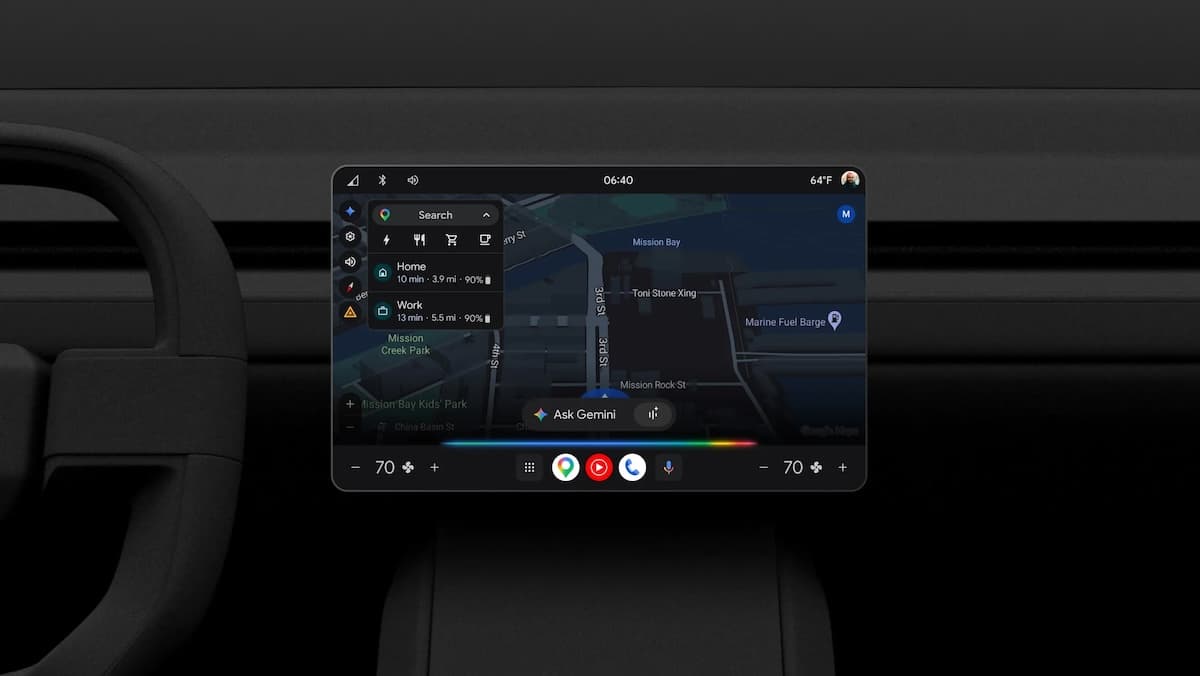
- **Google’s Gemini Series** has solidified its leadership, with **Gemini 3 Deep Think** setting **state-of-the-art benchmarks** across complex datasets such as **ARC-AGI-2**, **MMMU-Pro**, and **HLE**. Its **multi-modal understanding**—integrating vision, language, and reasoning—now rivals or exceeds human performance in scientific research, strategic planning, and interdisciplinary problem-solving. The model's **multi-task reasoning** allows it to switch seamlessly between tasks without losing context, enabling it to handle intricate, layered challenges with remarkable finesse.
- The **Gemini Pro** variant exemplifies a shift toward **AI as a versatile generalist tool**, excelling across creative arts, scientific exploration, and enterprise workflows. This **broad-spectrum adaptability** signals a new paradigm where AI systems are **multi-purpose, autonomous assistants** capable of supporting complex, multi-domain operations.
- In the coding and automation domain, **OpenAI’s GPT-5.3-Codex-Spark** achieved a **15-fold increase in coding speed**, revolutionizing **software development**. Its capabilities in **real-time code generation, debugging, and deployment automation** have significantly accelerated **software engineering pipelines**, reducing project timelines and costs while empowering developers with **autonomous coding assistants**.
- A notable innovation comes from **Claude AI**: the introduction of **auto-memory support in Claude Code**—a feature that **enables models to maintain long-term contextual awareness**. As @omarsar0 highlighted, “Claude Code now supports auto-memory. This is huge!” This enhancement greatly improves performance in **complex multi-step workflows**, **sustained reasoning**, and **autonomous agent operations**.
- The open-source community continues to thrive with models like **MiniMax M2.5**, now available via **Hugging Face**. These **smaller, community-driven models** support **specialized domains** and **autonomous agents**, fostering **transparency**, **customization**, and **broader democratization** of AI technology, particularly for resource-limited sectors.
### Major Industry Investments and Strategic Shifts
Recent investments underscore the growing confidence in AI’s transformative potential:
- Reports suggest that **Amazon’s potential $50 billion investment in OpenAI** could be pivotal, especially if aligned with OpenAI’s **IPO** or **AGI milestones**. This move signals a **consolidation of market leadership** and aims to **accelerate AI-driven innovation** across **retail, logistics, and enterprise sectors**.
## Rise of Autonomous Multi-Agent Ecosystems and Orchestration Platforms
2026 marks a turning point where **autonomous decision-making systems** are central to **business, research, and everyday life**, driven by **multi-agent architectures** and **orchestration platforms**:
- **Grok 4.2** exemplifies this evolution with its **multi-agent architecture**, featuring **four specialized reasoning heads** collaborating within a shared context. This internal debate mechanism yields **more accurate and robust responses**, especially in **legal analysis**, **scientific research**, and **strategic planning**.
- Platforms like **Kimi K.** and **MiniMax M2.5** empower developers to deploy **autonomous agents** capable of **multi-step reasoning** and **adaptive decision-making** in real-world scenarios, transforming **logistics**, **supply chains**, and **personalized service**.
- The startup **Cernel**, based in Aarhus, secured **€4 million in just four weeks** to develop **agentic infrastructure for autonomous commerce**. Their vision involves **domain-specific economic agents** operating independently within digital marketplaces, heralding **agent-driven ecosystems** that could revolutionize **finance**, **retail**, and **services**.
- **Platforms such as Perplexity Computer** have become **general-purpose AI workspaces**, capable of **integrating multiple models and workflows**. Recently, **Perplexity launched "Computer"**, an AI orchestrator managing **19 models at a cost of just $200/month**, making **multi-model orchestration** accessible to enterprises and advanced users. This innovation streamlines **complex project management** and **multi-step automation** within unified AI environments.
## Generative Media, Edge AI, and Creative Disruption
AI’s creative and consumer-facing applications have seen explosive growth, fueled by **powerful hardware advances** and **innovative models**:
- **Seedance 2.0**, a Chinese AI for video generation, has been dubbed by critic Ram Gopal Varma as a **“murderer of the film industry”** due to its ability to produce **high-quality, realistic synthetic videos** en masse. This proliferation raises urgent concerns about **deepfake misuse**, **media authenticity**, and **disinformation**, prompting calls for **regulation**, **watermarking**, and **content verification techniques**.
- **Music AI startups Suno and Udio**, initially criticized for disrupting traditional music industry models, are now actively integrating into existing ecosystems. Recent **legal disputes** with major record labels over **copyright issues** highlight tensions between **AI-generated content** and **industry protections**. Both companies are working toward **collaborative tools** and **licensing frameworks** to foster **industry acceptance** and **legal compliance**.
- **Hardware advances** empower **powerful, energy-efficient AI inference and training** directly on consumer devices. Nvidia’s latest AI-optimized laptops enable **on-device image generation** such as **Stable Diffusion models integrated into Android smartphones**, revolutionizing workflows for **content creators** and **designers**.
- These developments promote **privacy-preserving AI**, as models can process data locally, reducing reliance on cloud infrastructure and addressing **user data security** concerns.
### Infrastructure and Platform Integration
Progress in **runtime optimization**, **hardware acceleration**, and **model compression** ensures **minimal latency** and **energy efficiency**:
- **Samsung’s Galaxy AI platform** features **Perplexity**, a **multi-agent conversational AI** capable of **multi-modal interactions** directly on smartphones, enhancing **productivity** and **personalization**.
- **Apple’s iOS 26.4** introduces **environment-aware AI helpers** that process visual and contextual data for **more natural interactions**, creating **more intuitive user experiences**.
- Content creation tools like **WordPress’s AI-powered editing features** now streamline workflows for **small businesses** and **creatives**.
- **Spotify’s AI-powered Prompted Playlists** are expanding into markets like the UK, exemplifying AI’s increasing role in **personalized entertainment**.
## Sector-Specific Innovations: Finance and Healthcare
AI’s influence is deepening in **financial services** and **healthcare**:
- **Ant Group’s AI-powered payment and health apps**, **AI Pay** and **AI Health App AQ**, have collectively surpassed **100 million users during Chinese New Year**, demonstrating **mass adoption** and **trust**.
- **Legal and social support chatbots**, such as **renters’ rights assistants**, are democratizing access to **legal aid** and **social services**, reducing barriers for vulnerable populations and fostering **societal equity**.
- **Oura’s specialized AI model** focused on **women’s health** now provides **personalized insights** into **menstrual cycles**, **fertility**, and **wellness**, empowering individuals with **data-driven health management**.
## Heightened Ethical, Regulatory, and Safety Challenges
Despite extraordinary progress, **ethical and safety concerns** are more urgent than ever:
- The **UK privacy watchdog** issued a **joint warning** about **AI-generated images**, citing risks like **privacy violations**, **misinformation**, and **deepfake proliferation**, emphasizing the need for **regulatory frameworks** and **technological safeguards**.
- The debate over **watermarking AI-generated media** persists. Major tech companies are exploring **invisible watermarking techniques** to **trace synthetic content**, though technical hurdles remain.
- Legislative efforts, such as the **Oregon bill**, are gaining bipartisan support to **protect chatbot users** through **transparency**, **deception prevention**, and **mental health safeguards**.
- The **AI safety landscape** faces internal tensions; for example, **Anthropic**, known for its safety commitments, has reportedly **scaled back some safety initiatives** due to **market pressures**, raising concerns about industry standards and public safety responsibilities.
## Platform and Privacy Innovations in End-User Software
As AI becomes more embedded in daily digital interactions, **privacy-preserving AI experiences** are gaining prominence:
- The recently launched **Neo AI Browser**, featured in a detailed review titled *"I Tested Neo AI Browser — The AI Browser Built Around Privacy"*, exemplifies this trend. Designed to prioritize **user privacy**, it offers **AI-powered browsing**, **content filtering**, and **personalized assistant features** without compromising user data. The browser’s architecture enables **local data processing** and **invisible watermarking** to deter misuse, aligning with broader regulatory and safety efforts.
- Other privacy-focused tools, such as **AI-enhanced clients like Neo AI Browser**, reflect a growing demand for **secure, transparent AI applications** that respect user data and foster **trust** in AI-driven services.
## Current Status and Future Outlook
The developments of 2026 underscore an **extraordinarily progressive era** where:
- **Core models** like **Gemini 3 Deep Think** and **GPT-5.3-Codex-Spark** are **powerful, multi-modal, and increasingly accessible**, unlocking **new applications** across sectors.
- **Edge AI hardware**—from **consumer devices** to **professional tools**—is enabling **powerful, private AI** to be **ubiquitous**, facilitating **real-time, on-device inference** and **personalized experiences**.
- **Multi-agent ecosystems** and **autonomous agents** are now central to **digital commerce**, **scientific research**, and **everyday life**, offering **unprecedented capabilities**.
- **Societal challenges**—including **misinformation**, **privacy breaches**, and **safety concerns**—are actively addressed through **regulation**, **watermarking**, and **sandbox testing environments** like **OpenClaw**.
### Implications and Reflection
The year 2026 exemplifies a **transformative epoch** where **AI’s potential** is **being realized across virtually every facet of society**. While technological capabilities reach new heights, **responsible stewardship** remains vital. The collective efforts of **technologists**, **regulators**, and **society at large** will determine whether AI’s future is one of **trustworthy innovation**, maximizing societal benefits while **mitigating risks**.
The recent launch and evaluation of tools like **Neo AI Browser** highlight a crucial trend: **privacy-centric AI experiences** are becoming mainstream, ensuring that **personal data security** and **user trust** keep pace with technological advances.
In sum, the innovations of 2026 have laid a **robust foundation** for a future where AI is **more capable, ethically aligned**, and **seamlessly integrated** into human life—heralding a new age of **trustworthy intelligence** that balances **power with responsibility**.