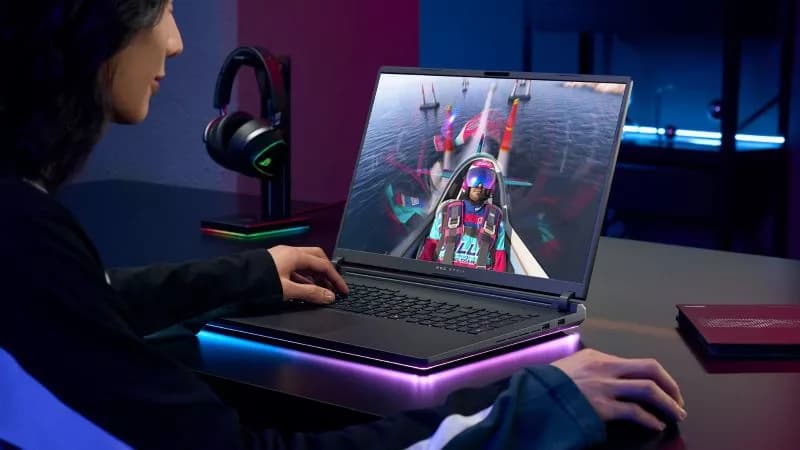
The mobile AI+AR computing landscape continues to accelerate through 2026, as foldable AI workstations and AR/VR wearables not only establish their dominance but also expand in capability, accessibility, and ecosystem integration. Following the momentum from CES 2026, new developments this year have further solidified these form factors as the definitive platforms for next-generation productivity and immersive experiences—transforming how users interact with AI-powered workflows on the go.
---
### Foldables and AR Wearables: Cementing the Mobile AI+AR Workstation Paradigm
Foldables and AR smart glasses have moved decisively beyond early adoption phases, emerging as **core pillars of mobile AI+AR workstations capable of desktop-class performance**. The integration of advanced silicon, modular compute, and versatile accessories empowers users to seamlessly blend physical and digital workspaces.
- **Foldable devices powered by Qualcomm Snapdragon 8 Gen 3/8 Elite and Apple M5 series chips** continue to deliver exceptional AI compute capabilities with efficient thermal profiles, enabling professional workloads such as 4K+ video editing, complex AI inference, and real-time emulation of PC applications in pocket-sized formats.
- The **addition of Intel’s Panther Lake processors** brings a new dimension to the silicon landscape. While not a definitive “return of the king,” Panther Lake offers significant jumps in CPU and AI performance, particularly in hybrid and modular compute setups, intensifying the competitive environment alongside Qualcomm, Apple, NVIDIA, and AMD. Early benchmarks show Panther Lake’s enhanced AI acceleration improving foldable and hybrid workstation responsiveness, especially in multi-threaded and AI inference tasks.
- **Thunderbolt 5 and USB4 connectivity remain critical enablers**, offering up to 80Gbps throughput to connect foldables with external GPUs, ultra-high-resolution displays, and fast NVMe storage. This connectivity anchors foldables as true desktop workstation replacements when docked.
- Multi-screen and spatial workflows have become standard among professionals, with foldables’ flexible displays supporting fluid task switching and virtual workspace expansion.
- Apple’s **Vision Pro AR headset and complementary foldable devices** demonstrate the power of hybrid spatial computing, turning any environment into an immersive AI-augmented productivity zone.
These developments confirm that foldables and AR wearables are no longer optional accessories but essential tools that redefine mobile computing boundaries.
---
### Silicon and Modular Compute: The Expanding Arsenal for AI-Driven Performance
The silicon arms race has intensified with the inclusion of Intel’s Panther Lake as a strong contender complementing Qualcomm, Apple, NVIDIA, and AMD offerings.
- **Intel Panther Lake processors** bring renewed vigor, particularly in AI workloads and power efficiency for foldables and modular devices. Early tests reveal Panther Lake’s hybrid core architecture combining high-performance and efficiency cores optimizes battery life while delivering competitive AI compute throughput. This positions Intel as a viable alternative in the foldable and portable AI workstation markets, especially in partnerships with OEMs focusing on modular compute.
- **Qualcomm Snapdragon 8 Gen 3/8 Elite** remains a staple for foldables, balancing power and efficiency for sustained AI tasks without thermal throttling.
- **Apple M5 series chips** continue to deliver industry-leading CPU and AI performance, tightly integrated into Apple’s foldables and AR wearables ecosystems.
- **NVIDIA’s AI SoC reentry, coupled with AMD’s Ryzen AI MAX 395+ processors**, powers flagship configurations such as the Lenovo Legion Pro 7i Gen 10, delivering peak GPU and AI performance for creators and professionals.
- Modular compute innovations advance with devices like ASUS’s **ProArt PX13 and ROG Flow Z13-KJP editions** and Lenovo’s Legion Pro emphasizing scalable performance in portable form factors.
- **Pico’s Project Swan modular compute puck** underscores sustainability trends by enabling upgradeable compute modules, reducing waste while keeping pace with rapid AI hardware evolution.
This silicon diversity fuels innovation, offering users a spectrum of choices tailored to their performance, portability, and power requirements.
---
### AR Wearables Broaden Reach: From Productivity to Gaming and Immersive Experiences
AR smart glasses have expanded their appeal far beyond enterprise and productivity use cases, capturing consumer and prosumer attention with new devices and interaction modalities.
- The **XREAL One Pro’s $200 price cut** has democratized access to immersive 57-degree FOV virtual screens, enhancing the device’s value proposition for work and entertainment.
- The **XREAL Air 2 and Air 2 Pro**, priced between $399–$449, provide virtual displays up to 500 inches and support multiple viewing modes, increasing versatility for diverse user needs.
- Fashion-conscious AR wearables like **Ray-Ban Meta Gen2 and RayNeo** continue to blend style with intelligent features including AI assistants, real-time voice interaction, and multilingual subtitles—boosting usability and accessibility during mobile workflows.
- MEMS microphone advancements have improved voice command reliability in noisy environments, enabling better local audio processing and gesture recognition.
- Notably, the **ROG Xreal R1** has emerged as a standout in gaming-focused AR wearables, delivering immersive virtual screen experiences optimized for latency-sensitive gameplay. Reviews highlight its crisp displays, low latency, and seamless integration with gaming ecosystems, marking a significant step for AR glasses as mainstream gaming peripherals. This device exemplifies the broader trend where AR wearables cater to both productivity and entertainment markets, enhancing user engagement across contexts.
- Beyond glasses, new ambient interaction devices like the **Luna Ring 2.0 smart ring** expand the ecosystem, offering discreet, voice-enabled AI assistant access for hands-free interaction, further embedding AI into everyday workflows.
These developments signal AR wearables’ transformation into versatile, mainstream tools that blend immersive performance with affordability and privacy.
---
### Accessory and Ambient Integration Ecosystem: Building the Backbone for Mobile AI+AR Workflows
The accessory landscape and ambient smart home integration continue to mature, underpinning the usability and productivity of foldables and AR wearables.
- **Thunderbolt 5 docks and cables**, such as OWC’s 1M2 series, deliver ultra-fast data transfer and external GPU support essential for desktop-class workflows.
- **Portable 4K touch displays** like Luckfox’s 16-inch 120Hz panels offer professional-grade visuals in lightweight, mobile-friendly packages.
- **Ergonomic mechanical keyboard cases and docking stations**, exemplified by the OnePlus Pad 3’s keyboard case, enhance typing comfort and workflow efficiency on the go.
- **High-capacity USB-C power banks** (e.g., VISIONHMD’s 5000mAh adapters) extend untethered AR/VR headset usage, addressing battery life constraints.
- **Color-accurate USB-C/Thunderbolt monitors** (e.g., Dell Pro 27 Plus P2725DE) integrate seamlessly into foldable docking setups, supporting multi-screen productivity.
- On the ambient front, **Matter protocol and Ultra-Wideband (UWB) positioning** have matured, enabling XR devices to interact fluidly with smart home components for presence detection, lighting control, and spatial interactions.
- The **Home Assistant 2026.3 update** brings enhanced Zigbee and Matter support, making XR-smart home integration more accessible.
- Enthusiasts benefit from resources like the **AmpVortex Matter integration tutorial**, facilitating robust XR-smart home environments.
- Energy-harvesting mmWave sensors (e.g., Dracula Technologies’ LAYER® V2.0) and advanced mesh networking solutions reduce maintenance and latency, crucial for immersive AR experiences.
- Recent smart home launches by IKEA, Blink, and Philips Hue enrich interoperable device options, complementing AI+AR ecosystems.
- Subscription-free home security cameras further address privacy and cost concerns, an increasingly important consideration for ambient environments.
This burgeoning ecosystem enhances the practicality and appeal of AI+AR devices, enabling users to transition effortlessly between mobile and ambient contexts.
---
### Privacy-by-Design and Edge AI: The Foundations of User Trust
Privacy and security remain paramount as AI+AR devices proliferate in personal and professional spaces.
- Devices increasingly adopt **privacy-by-design principles**, including visible sensor indicators, physical camera shutters, and default local edge AI processing to minimize cloud data exposure.
- The **EU Cyber Resilience Act (CRA)** and similar global regulations enforce stringent hardware security standards like secure enclaves and encrypted data handling, raising the security baseline industry-wide.
- Emerging **ambient privacy etiquette** and **intent-driven privacy models** leverage AI to intelligently control sensor activation, balancing usability with user privacy without imposing burdensome controls.
- Recent security incidents, such as the **Spanish robot vacuum breach**, highlight ongoing IoT vulnerabilities, underscoring the need for robust security frameworks in XR-smart home ecosystems.
- Privacy-conscious product launches, including subscription-free security cameras, reinforce user control and confidence in ambient AI+AR environments.
These privacy-first advances are essential to sustaining user trust and supporting mainstream adoption.
---
### Practical Challenges and Innovation: Battery, Thermals, and Latency
Despite significant progress, practical constraints continue to influence design and adoption.
- **Battery life remains a bottleneck**; devices like Meta Quest 3 and 3S improve power efficiency but often rely on external power banks for extended sessions.
- **Thermal management innovations** from Lenovo, ASUS, and others enable longer continuous AI compute without discomfort, critical for professional-grade XR workloads.
- **Latency and gesture recognition improvements** are active focus areas, as fluid, responsive interaction is vital for immersive productivity.
- Users still navigate **trade-offs among GPU performance, heat generation, noise, and portability**, influencing preferences between desktop-equivalent hosts and lightweight wearables.
- The accessory ecosystem remains crucial, enabling flexible, high-performance workflows that maintain mobility without sacrificing capability.
- Modular and upgradeable designs, like Pico’s Project Swan, reflect sustainability trends, allowing performance scaling without full device replacement.
These challenges are being met with continuous innovation, ensuring devices evolve in alignment with user needs and environmental considerations.
---
### Outlook: Defining the Future of Mobile AI+AR Workstations
The convergence of foldables, AR smart glasses, modular compute, and ambient integration is reshaping mobile computing paradigms in 2026 and beyond:
- **Foldables equipped with laptop-grade ARM and AI SoCs deliver powerhouse performance in portable formats**, bridging the gap between smartphones, tablets, and laptops with AI-accelerated workflows.
- **AR smart glasses—including XREAL One Pro, Ray-Ban Meta Gen2, RayNeo, and upcoming Apple models—extend workspace boundaries**, creating immersive AI-augmented environments that redefine productivity and creativity.
- **Thunderbolt 5 and USB4 accessories facilitate seamless transitions from mobile to desktop-class environments**, supporting multi-device, multi-screen workflows essential for modern professionals.
- **Modular compute solutions empower users to scale performance sustainably**, while advancements in microdisplays, spatial audio, and interaction modalities elevate immersive experience quality.
- **Privacy-first design, edge AI processing, and matured Matter/UWB smart home integration ensure trusted, practical usability**, embedding these devices naturally into daily life and work.
Wu Fei, CEO of LLVision, encapsulates this trajectory:
> “AI-powered AR glasses will soon enable users to transform any environment into an immersive multi-screen workstation.”
As ecosystem expansions, device launches, and technology refinements continue apace, foldables combined with AR smart glasses are poised to become the defining form factors for next-generation mobile AI+AR workstations—delivering desktop-class capabilities in truly mobile, immersive, and connected packages.
---
### In Summary
2026 has crystallized a new AI+AR mobile computing paradigm where foldables and AR wearables transcend niche gadgetry to become essential productivity and immersive tools. Supported by a diverse and rapidly maturing ecosystem of silicon, modular compute, accessories, privacy innovations, and ambient intelligence integration, these devices are fundamentally redefining how users work, create, and interact with digital content—anytime, anywhere. The ongoing evolution of smart home interoperability and privacy-conscious design further cements their role as trusted, indispensable companions in the rapidly evolving digital landscape.