# How Trump-Era Media Power Continues to Shape Narratives and Public Perception: Recent Developments and Implications
The enduring influence of Donald Trump’s presidency on the media landscape remains a defining force in shaping both domestic and international narratives. His strategic manipulation of information—through consolidating sympathetic outlets, leveraging provocative visuals, and issuing direct messaging—has fostered a highly polarized environment where perception often outweighs nuanced understanding. Recent developments highlight that these tactics are not only persistent but actively evolving, profoundly impacting international conflicts, domestic policy debates, and the integrity of press freedom.
## Continued Consolidation of Media and Regulatory Influence
A key trend emerging in the post-Trump era is the ongoing consolidation of media power within outlets and regulatory agencies aligned with pro-Trump narratives. Figures such as FCC Commissioner Brendan Carr have openly praised Trump’s role in “reshaping” the media terrain, supporting efforts aimed at weakening traditional, legacy outlets. On Saturday, March 14, Carr posted on X that broadcasters who have been “running hoaxes”—a veiled critique of mainstream outlets—are “not serving the public interest,” signaling a willingness to endorse regulatory measures that favor curated, partisan messaging.
**This consolidation is more than a commercial strategy; it’s a deliberate political maneuver.** By aligning regulatory support with sympathetic media outlets, the environment marginalizes dissenting voices, creating echo chambers that reinforce specific narratives—particularly those supporting hawkish foreign policy and skepticism of established institutions. Such a landscape encourages misinformation, blurring lines between fact and propaganda, and influences public perception on critical issues like international conflicts and domestic governance.
## Narrative Shaping Through Visuals and Headlines
The strategic use of provocative visuals and sensational headlines remains central to shaping public perception. Recent coverage of international crises such as Venezuela, Iran, and Ukraine exemplifies this approach. Emotionally charged images—chaotic protests, military displays, urban unrest—are carefully selected to evoke fear, support, or outrage, often simplifying complex realities into emotionally resonant but misleading visuals.
For instance, coverage of Venezuela's political turmoil frequently features images of violent protests and military interventions, framing the situation as a foreign threat requiring urgent U.S. intervention. Similarly, headlines about Iran and its regional activities are crafted to elicit alarm; recent videos depict Trump discussing escalating tensions in Iran, emphasizing threats and military readiness rather than providing comprehensive context.
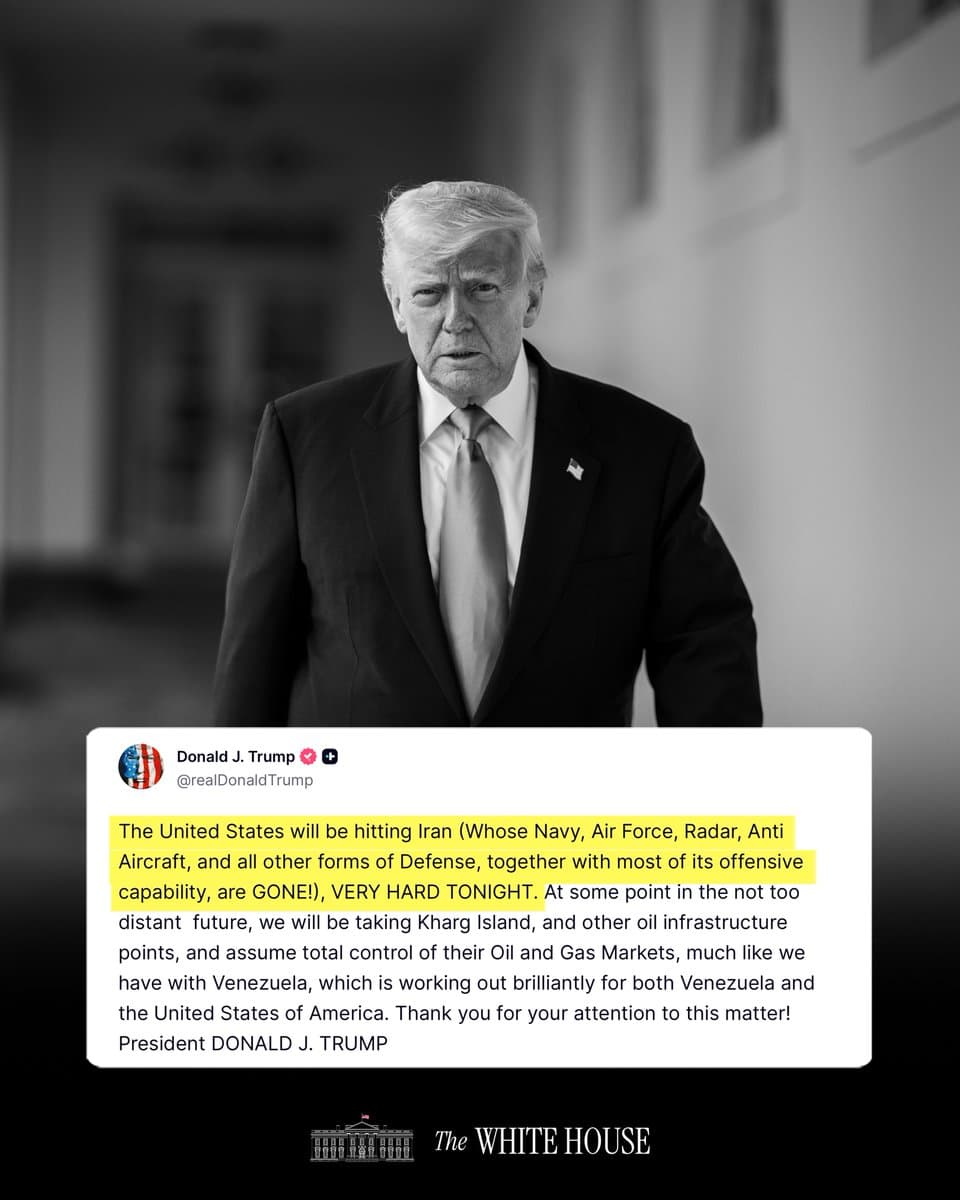
**Trump’s recent statements, such as those regarding the Strait of Hormuz and his “Operation Epic Fury,” exemplify this trend.** In a video titled *"FULL REMARKS: Trump Says U.S. Looking ‘Strongly at the Straits’ as Iran War Escalates,"* he underscores the strategic importance of the Strait while signaling willingness for military action. Another clip, *"Full Remarks: Trump Details ‘Operation Epic Fury,’* claims U.S. military superiority—suggesting Iran’s air force would be "finished in 3 hours"—aimed at deterring Iranian aggression through displays of overwhelming force.
This combination of provocative visuals and sensational headlines prioritizes perception over accuracy, further polarizing the public and deepening distrust in traditional media sources.
## Trump’s Ongoing Engagement in Foreign Conflicts and Crisis Messaging
Recent developments show Trump’s continued influence through direct messaging on international conflicts, especially regarding Iran:
- **Warnings to Russia about Iran:** The White House has publicly claimed that Trump warned Vladimir Putin against clandestinely assisting Iran amidst rising conflicts. A YouTube video captures these exchanges, emphasizing Trump's stance against Iran’s regional ambitions and efforts to involve Russia as a counterbalance.
- **Calls for Uprising in Iran:** Jeremy Bowen reports that Trump has called for internal uprisings within Iran, echoing previous strategies aimed at regime change. Bowen cautions that lessons from Iraq in 1991 remain relevant, warning against overestimating the success of such interventions and highlighting the risk of unintended consequences.
- **Warnings Against Iranian Leadership:** Coverage from outlets like NewsX features Trump warning about Mojtaba Khamenei, son of Iran’s Supreme Leader. These messages aim to reinforce narratives portraying Iran as a destabilizing force, justifying increased international pressure and potential military action.
- **Strategic Remarks on Iran and Regional Tensions:** Trump’s recent comments about the Strait of Hormuz and the hypothetical “Operation Epic Fury” exemplify his active engagement in escalating tensions. In the video *"FULL REMARKS: Trump Says U.S. Looking ‘Strongly at the Straits’ as Iran War Escalates,"* he emphasizes the strategic importance of the waterway while signaling readiness for action. Similarly, *"Full Remarks: Trump Details ‘Operation Epic Fury,’* claims U.S. military dominance over Iran’s air force—suggesting Iran’s air capabilities could be neutralized swiftly—aiming to deter Iranian aggression through displays of overwhelming force.
- **Contradictions and Internal Tensions:** A recent video titled *"No more wars? Why is Trump's MAGA supporting this war on Iran?"* questions the apparent contradiction between MAGA’s anti-intervention rhetoric and the hawkish stance Trump promotes. This highlights how media framing influences perceptions among supporters and the broader public.
## Recent Analytical Highlights and Emerging Narratives
In addition to direct messaging, recent analyses shed light on the complexities and ambiguities of Trump’s foreign strategy:
- A YouTube video titled *"Not clear what Trump’s Iran strategy is when he's only following his feelings"* underscores skepticism among journalists that Trump’s approach lacks a cohesive strategic foundation. The 12-minute clip, viewed over 44,000 times, reflects ongoing doubts about the consistency and effectiveness of his Iran policy.
- The UAE’s statement suggesting that Trump might deliver a diplomatic solution to Iran indicates that regional actors are observing his approach with cautious optimism or strategic anticipation—even as tensions escalate.
- A report titled *"RUSSIA MAY BE…: Trump Drops Bombshell on Putin’s 'SECRET SUPPORT' To Iran’s War Machine"* hints that Trump has suggested or hinted at Russian support for Iran’s military efforts. This feeds into fears of a broader alliance and reinforces narratives of Iran being a proxy battleground involving multiple major powers.
## Policy and Tech Messaging: The Ukraine Drone Decision and Misinformation Risks
Another recent development involves the U.S. decision to refuse Ukrainian requests for drone technology assistance. A detailed analysis titled *"Trump’s refusal of Ukrainian help with drone technology is ‘a scandal’ | Mark Toth"* discusses how this decision is framed within media narratives emphasizing U.S. sovereignty, caution, or a desire to avoid escalation. The accompanying 10-minute YouTube video with over 360 views highlights how such choices influence international perceptions and domestic debates.
This decision—perceived as a restraint—also raises concerns about misinformation and distortions in war coverage. The selective use of visuals, headlines, and framing in media reports can distort realities, leading to public misperceptions about U.S. commitments, effectiveness, and intentions.
## New Critical Perspectives: The FCC Chair and International Postures
Adding to the landscape, recent critiques focus on the role of regulatory figures in amplifying pro-Trump narratives. In *"The FCC Chair Is Not the Minister of Propaganda,"* published on March 14, the author condemns Brendan Carr’s recent social media posts where he criticizes mainstream media outlets for “running hoaxes” and claims they are not serving the public interest. The article argues that such rhetoric effectively positions Carr as a political actor rather than a neutral regulator, contributing to the distortion of the media environment and undermining press independence.
Simultaneously, *"Trump and the Wider World"* underscores how Trump’s international posture—particularly his stance on Venezuela—continues to influence global narratives. The piece condemns the unilateral military intervention in Venezuela as a breach of international law, emphasizing that regional actors and global institutions remain cautious and critical of U.S. actions that are often framed within a narrative of defending democracy but are perceived as interventionist or imperialist.
## Broader Implications: Erosion of Press Freedom and the Rise of Propaganda
The convergence of media consolidation, emotionally charged visuals, and strategic messaging has serious implications:
- **Marginalization of traditional media:** As alternative media channels and social platforms become primary sources, legacy outlets face increasing marginalization, risking the creation of echo chambers that reinforce curated narratives.
- **Proliferation of misinformation:** The strategic use of emotionally charged visuals and headlines amplifies risks of misinformation, distorting public understanding of conflicts, crises, and international developments.
- **Distorted war coverage:** Selective imagery—such as photos from Venezuela or Syria—can skew perceptions and influence policy debates based on sensationalized or incomplete information.
These trends underscore the **urgent need for media literacy** and support for independent journalism to navigate an environment where perception is manipulated to serve political and geopolitical agendas.
## Current Status and Future Outlook
The landscape remains highly dynamic. Trump’s messaging, combined with media tactics, continues to influence geopolitical narratives, especially regarding Iran, Russia, and broader Middle Eastern conflicts. Curated visuals, headlines, and direct statements—often designed to evoke emotional reactions—still dominate public discourse.
**Implications for democracy and international stability include:**
- The erosion of trust in traditional journalism and institutions.
- Increased risk of misinformation fueling conflict escalation.
- The potential for regional and global tensions to be driven more by narrative manipulation than by nuanced diplomacy.
**In conclusion**, understanding and critically evaluating these narratives is essential. As Trump-era media strategies evolve, fostering media literacy, supporting independent journalism, and scrutinizing regulatory rhetoric are crucial steps to mitigate misinformation and promote informed public discourse. The continued influence of these tactics will likely shape the future of U.S. foreign policy and global stability for years to come.