Tesla’s robotaxi and Full Self-Driving (FSD) ambitions continue to navigate a labyrinth of technological breakthroughs, regulatory hurdles, safety concerns, and strategic recalibrations as mid-2026 unfolds. Recent developments reflect both incremental progress and persistent challenges that will decisively shape Tesla’s autonomous urban mobility vision over the next 18–24 months. This updated analysis synthesizes the latest milestones, controversies, and competitive dynamics to provide a comprehensive view of Tesla’s evolving robotaxi trajectory.
---
### Tactical Milestone: Internal Employee-Only Robotaxi Service Advances Real-World Validation
Tesla’s discreet rollout of an **internal employee-only robotaxi service** around its Austin and Fremont campuses marks a significant tactical step beyond controlled pilot programs. This initiative enables Tesla to:
- **Gather high-fidelity operational data** in real-world traffic without public exposure or regulatory scrutiny, accelerating software and hardware refinement.
- **Test system robustness** across diverse, dynamic urban scenarios, enhancing AI decision-making, mapping accuracy, and safety algorithms.
- **Demonstrate internal confidence** and incremental progress amid external skepticism.
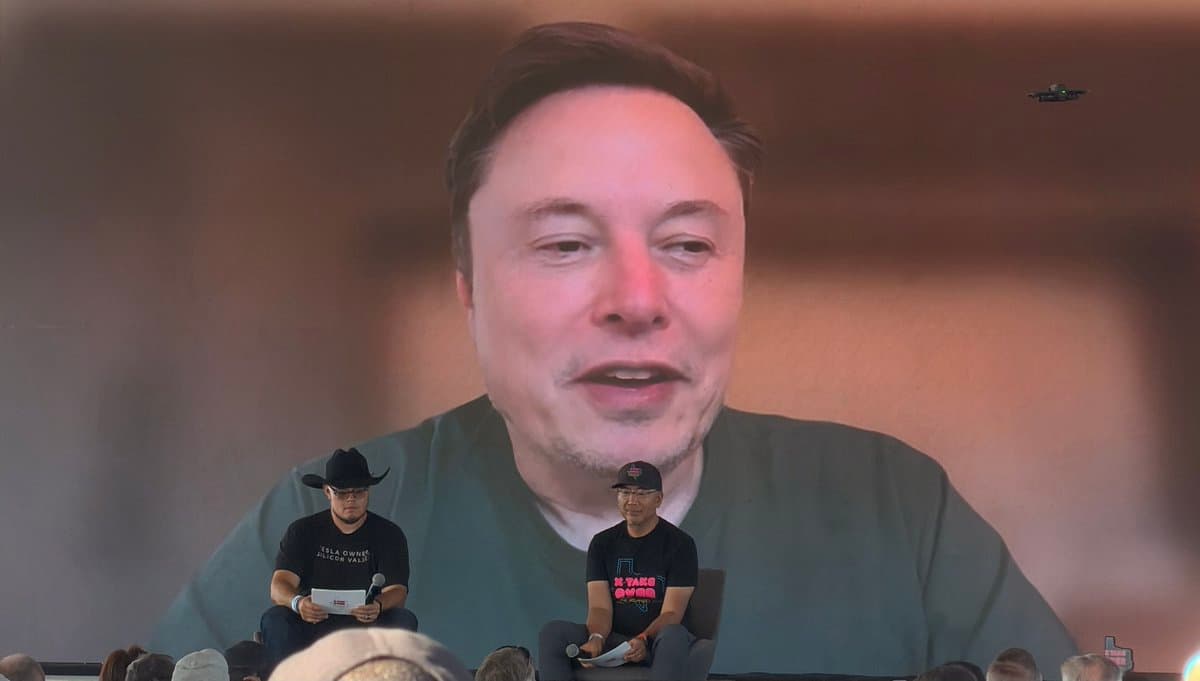
Elon Musk has emphasized this phased approach as a deliberate strategy to validate Full Self-Driving capabilities gradually before a public launch. This more measured tone contrasts with his earlier aggressive timelines, indicating Tesla’s growing acknowledgment of the technical complexity and regulatory realities surrounding driverless deployment.
---
### Safety: Contrasting Signals and the Critical Need for Independent Validation
Safety remains the fulcrum on which Tesla’s robotaxi ambitions balance, with recent data and footage offering a mixed narrative:
- **Incident rates in the Austin pilot continue to outpace average human driving—up to four times higher—raising alarms among regulators, insurers, and safety advocates.**
- Conversely, viral video evidence of Tesla’s FSD system **successfully predicting and avoiding a high-speed (70 mph) collision** highlights measurable improvements in AI situational awareness and responsiveness.
- The **latest FSD software update (v14.2.2.5)** introduces transparency and responsiveness enhancements aimed at addressing user feedback and operational reliability.
- However, **Tesla has yet to submit to independent third-party safety audits**, a glaring omission that undermines broader regulatory and insurer confidence.
This juxtaposition underscores the urgent imperative for comprehensive, transparent safety validation as a prerequisite for scaled robotaxi operations.
---
### Regulatory Deadlock Persists Amid Heightened Federal and Legal Scrutiny
Tesla’s efforts to commercialize a fully driverless robotaxi fleet in California remain mired in a prolonged regulatory stalemate:
- The **California DMV continues to withhold approvals**, citing insufficient safety validation and elevated incident rates from Tesla’s Austin pilot.
- Legal disputes around Tesla’s **“Full Self-Driving” branding** persist, with consumer groups and regulators alleging misleading advertising that could jeopardize public safety.
- At the federal level, Tesla faces **increasing scrutiny from the U.S. Department of Commerce’s robotics governance division**, signaling a move toward more rigorous, centralized oversight.
- Musk has publicly recognized the “complex and fragmented regulatory landscape,” signaling a strategic pivot toward incremental validation and more cautious public messaging.
- Meanwhile, Tesla is actively **exploring international regulatory environments** as alternative pathways to robotaxi deployment.
The regulatory impasse in Tesla’s home market highlights the broader challenges of deploying cutting-edge autonomy within fragmented and risk-averse governance frameworks.
---
### Geographic Expansion: Strategic Trials in Abu Dhabi and Supervised Pilots Across Europe
Tesla continues to diversify its geographic robotaxi strategy, adapting to different regulatory environments with tailored approaches:
- In the **United Arab Emirates**, Tesla launched **FSD trials on Abu Dhabi’s roads**, focusing on adapting the software to local traffic patterns and regulations, marking a strategic push into the Middle East.
- Europe remains a cautiously optimistic testing ground:
- Expanded supervised FSD pilots in **Jönköping, Sweden**, leverage formal agreements for controlled urban trials.
- Tesla targets a **public FSD service launch in the Netherlands by February 2026**, capitalizing on regulatory exemptions for supervised autonomous driving.
- Cities like **The Hague** serve as dynamic proving grounds for Tesla’s **HD mapping and AI adaptability** in complex European urban environments.
- Tesla’s introduction of an **“FSD Supervised” driving menu in North America** reflects a tactical compromise allowing partial autonomy under human oversight, balancing compliance with feature rollout.
This geographically differentiated rollout strategy aims to accumulate diverse datasets, regulatory goodwill, and operational experience ahead of full-scale commercial deployment.
---
### Hardware 5.0 and the Vision-Only Sensor Debate: Pivotal Technology Leap
Tesla’s forthcoming **Hardware 5.0 platform**—expected to enter production within 12 to 18 months—is a critical enabler of the robotaxi vision:
- Promises include **higher-resolution cameras, advanced sensor fusion, and a vastly more powerful onboard AI compute system**, designed to meet stringent real-time processing demands.
- Tesla maintains its controversial commitment to a **vision-only sensor suite**, eschewing lidar and radar, a stance heavily debated by safety experts and regulators regarding sufficiency for driverless reliability.
- Internal reports suggest tension between Musk’s aggressive timelines and engineering teams advocating for sensor diversification to satisfy regulatory safety standards.
- The successful rollout and validation of Hardware 5.0 will be essential to **reducing incident rates, gaining insurer trust, and scaling profitable robotaxi fleets**.
This hardware evolution will likely define Tesla’s ability to bridge the gap from advanced driver assistance to fully autonomous, driverless service.
---
### AI and User Experience: Grok LLM and Dynamic HD Maps Enhance Engagement
Tesla is extending its robotaxi value proposition beyond autonomous driving capabilities by enriching passenger experience and system intelligence:
- The rollout of **Grok, Tesla’s proprietary large language model (LLM)**, in Australia and New Zealand enhances **natural, conversational interaction** between passengers and the vehicle, positioning Tesla to differentiate its robotaxi UX.
- Tesla’s **fleet-powered dynamic HD maps** provide real-time navigation updates, critical for complex urban maneuvering and rapid international scaling.
- The **“FSD Supervised” menu** introduced in North America enables an operational mode balancing autonomy with human oversight, reflecting Tesla’s flexible deployment strategy.
- Despite these UX advances, the absence of independent safety validation tempers enthusiasm among regulators and insurers.
Tesla’s AI-driven user experience innovations aim to build brand loyalty and passenger comfort, key to mass adoption.
---
### Legal, Insurance, and Financial Pressures: Elevated Risks and Revenue Growth
Tesla’s robotaxi growth faces significant headwinds in the form of safety liabilities and insurance challenges, even as subscription revenues climb:
- The **Austin pilot’s elevated crash rates** highlight continuing operational risks that complicate risk management and insurance underwriting.
- Tesla recently confronted a **$243 million wrongful death verdict in Florida related to FSD use**, a stark reminder of legal and financial exposure.
- Insurance providers remain cautious due to Tesla’s **limited data transparency and unresolved liability frameworks**, hindering premium reductions.
- To address this, Tesla launched a **“Share” data feature** enabling insurers to access richer operational insights, aiming to build trust and lower costs.
- On the revenue front, Tesla’s **FSD subscription base surpasses 1.1 million users**, generating roughly **$1 billion in annual recurring revenue**, validating its subscription monetization model.
- This dynamic creates a delicate balance between growing top-line subscription revenue and rising operational costs linked to safety and legal risks.
Tesla’s financial success in robotaxi directly depends on mitigating safety and liability concerns to maintain investor confidence.
---
### Strategic Infrastructure Investments Strengthen Tesla’s Competitive Moat
Tesla’s robotaxi ambitions are increasingly underpinned by expansive investments in energy, charging, and AI infrastructure, creating synergies across its ecosystem:
- A new **lithium-iron-phosphate (LFP) battery supply agreement with LG Energy Solution** enhances domestic battery production critical for cost-effective fleet scaling.
- The ongoing **V4 Supercharger network expansion**, integrating solar power and Powerwall systems, boosts operational sustainability and reduces energy expenses.
- The **Megacharger rollout across Europe** supports heavy-duty EV and robotaxi infrastructure.
- Pilot programs incorporating **Starlink satellite connectivity** aim to ensure reliable, low-latency communication for fleet telemetry and over-the-air updates.
- Tesla’s **Megapack battery systems were selected for a $1.1 billion AI data center in Uberlândia, Brazil**, linking energy storage with AI compute essential for robotaxi operations.
- The development of **N1 energy storage technology** promises further operational cost reductions pending commercialization.
- Tesla’s **2026 capital expenditures are projected near $20 billion**, supporting robotics (Optimus), robotaxi scale-up, AI infrastructure, and battery production expansions.
This deeply integrated infrastructure ecosystem is a critical competitive advantage, creating high entry barriers for rivals.
---
### Intensifying Competition and Robotics Rivalry: Waymo, Wayve, and Hyundai’s Atlas
Tesla’s robotaxi business model faces mounting competitive pressures on multiple fronts:
- The **FSD subscription base’s growth to over 1.1 million users** provides a robust foundation, but elevated insurance costs and legal risks threaten profitability.
- Institutional investor interest remains cautiously optimistic:
- **K.J. Harrison & Partners Inc.** recently increased Tesla holdings.
- **Cathie Wood’s ARK Invest** continues backing Tesla’s AI and autonomous ecosystem amidst volatility.
- Competition intensifies as:
- **Waymo expands operations into four new U.S. cities**, leveraging its mature autonomous driving tech.
- UK startup **Wayve secured $1.2 billion in funding**, ramping European competitive pressure.
- European automakers, notably **Volkswagen**, aggressively pursue robotaxi leadership.
- Beyond vehicle autonomy, Tesla faces a new frontier rivalry with Hyundai’s **Atlas humanoid robot**, positioning itself against Tesla’s **Optimus humanoid robot**, signaling a broader contest in robotics that may intersect with Tesla’s mobility ecosystem.
- Elon Musk’s recent remarks reaffirm **Optimus and the Cybercab robotaxi as complementary pillars** in Tesla’s future mobility strategy, with Cybercab production targeted for April 2027 at a $30,000 price point.
Tesla’s ability to maintain leadership hinges on leveraging its unmatched data scale, vertical integration, and expanding robotics ecosystem amid rising competition.
---
### Elon Musk’s Recent Commentary and Manufacturing Insights
In recent interviews and presentations, Musk provided updated insights on Tesla’s robotics and robotaxi roadmap:
- He reaffirmed the **long-term vision for Optimus humanoid robots and Cybercab robotaxis** as dual pillars of Tesla’s future.
- Musk reiterated the goal of **launching Cybercab production by April 2027** at a disruptive $30,000 price point, while acknowledging timelines remain contingent on technical and regulatory progress.
- Tesla plans its **“biggest manufacturing update yet,”** focusing on flexible, AI-driven factory automation to scale robotaxi and Optimus lines efficiently.
- Emphasizing safety, Musk stated, “**robotaxi safety is paramount to unlocking the full market potential,**” signaling a cautious but determined approach.
These remarks highlight Tesla’s dual focus on rapid innovation and rigorous quality control.
---
### Near-Term Outlook: Critical Inflection for Robotaxi Viability
The next 18–24 months will be decisive for Tesla’s robotaxi program, with key priorities including:
- Securing **independent, third-party safety validation** to satisfy regulators, insurers, and the public.
- Successfully **rolling out Hardware 5.0**, expected to materially reduce incident rates and improve system robustness.
- Resolving or circumventing the **California regulatory deadlock** through regionalized deployment or international expansion.
- Managing **insurance costs and legal liabilities** via enhanced data transparency, improved technology, and clear liability frameworks.
- Executing large-scale **capital investments in energy infrastructure, battery production, and AI compute capacity** amid global economic uncertainties.
- Maintaining a **safety-first philosophy** amid mounting competition and investor pressures.
Tesla’s ability to navigate these complex factors will determine whether its robotaxi vision transitions from aspirational to transformative.
---
### Conclusion
Tesla’s robotaxi and Full Self-Driving programs stand at a pivotal crossroads in mid-2026. The internal employee-only robotaxi service and incremental software upgrades provide encouraging operational milestones. Yet, persistent **regulatory stalemates, safety concerns, and insurance challenges** temper the path toward mass-market commercialization. Strategic geographic trials in Abu Dhabi and Europe diversify Tesla’s approach, while rising competition and the emerging humanoid robotics rivalry with Hyundai’s Atlas add new strategic dimensions.
Ultimately, Tesla’s success hinges on **demonstrating unequivocal safety through independent validation, delivering the promised Hardware 5.0 technological leap, and skillfully navigating a fragmented global regulatory landscape**. If achieved, Tesla’s scalable, affordable robotaxi service could revolutionize urban mobility worldwide, reshaping the future of transportation and robotics ecosystems alike.
---
**Sources:** Reuters; Associated Press; Tesla FY26 filings; California DMV legal filings; Florida wrongful death verdict; Tesla app updates; Elon Musk interviews; The Driven; Jefferies Austin robotaxi report; Wayve $1.2 billion funding announcement; US Department of Commerce robotics policy; Tesla European FSD launch plans; Tesla supervised testing in Sweden; Institutional investor filings; ARK Invest; Automotive World; Independent insurance analyses; TESMAG; Hyundai Atlas vs Tesla Optimus robotics coverage; TIKR.com Tesla share analysis.