# Building Autonomous Agents in Copilot Studio with Enterprise Backends: The 2026 Evolution and Strategic Outlook
The enterprise automation landscape of 2026 is witnessing a revolutionary transformation driven by the rapid maturation of **Copilot Studio**—an enterprise-grade platform that now empowers organizations to **design, deploy, and manage persistent, multi-agent autonomous workflows at scale**. This progression signifies a pivotal shift from isolated, manual automation efforts to **self-driving, secure, and deeply integrated autonomous ecosystems**, fundamentally redefining enterprise software development, operational management, and business process optimization.
As enterprises increasingly seek **AI-driven automation solutions** that are **resilient, scalable, and intelligent**, Copilot Studio has expanded its capabilities to facilitate **deep connectivity with critical enterprise backends** such as **MCP servers**, **Snowflake**, **ServiceNow**, **SharePoint**, and cloud-native large language models like **Amazon Bedrock**. These enhancements are unlocking **advanced functionalities** including **self-healing SDLC pipelines**, **enhanced operational intelligence**, and **organizational agility**, ushering in a new era of enterprise automation.
---
## The Rise of Persistent, Multi-Agent Autonomous Workflows
### From Visual Orchestration to Long-Term, Intelligent Collaboration
Initially celebrated for its **intuitive visual environment**, which enabled users to **drag-and-drop workflows** covering **architecture design**, **automated coding**, **testing**, **deployment**, and **monitoring**, Copilot Studio has undergone a profound evolution. Today, it **supports autonomous agents endowed with persistent memory**, facilitating **long-term management and evolution** of large-scale, multi-team projects with **continuity**, **coherence**, and **deep collaboration**.
This transformation is powered by **deep integration with MCP (Model Context Protocol) servers**, which enable **persistent state management**, **shared memory**, and **cohesive collaboration among dispersed agents**. As a result, these agents can **recall previous interactions**, **share insights**, and **coordinate tasks seamlessly over extended periods**, creating **resilient, adaptive workflows** that evolve dynamically to meet enterprise needs.
### Recent Enhancements and Ecosystem Tools
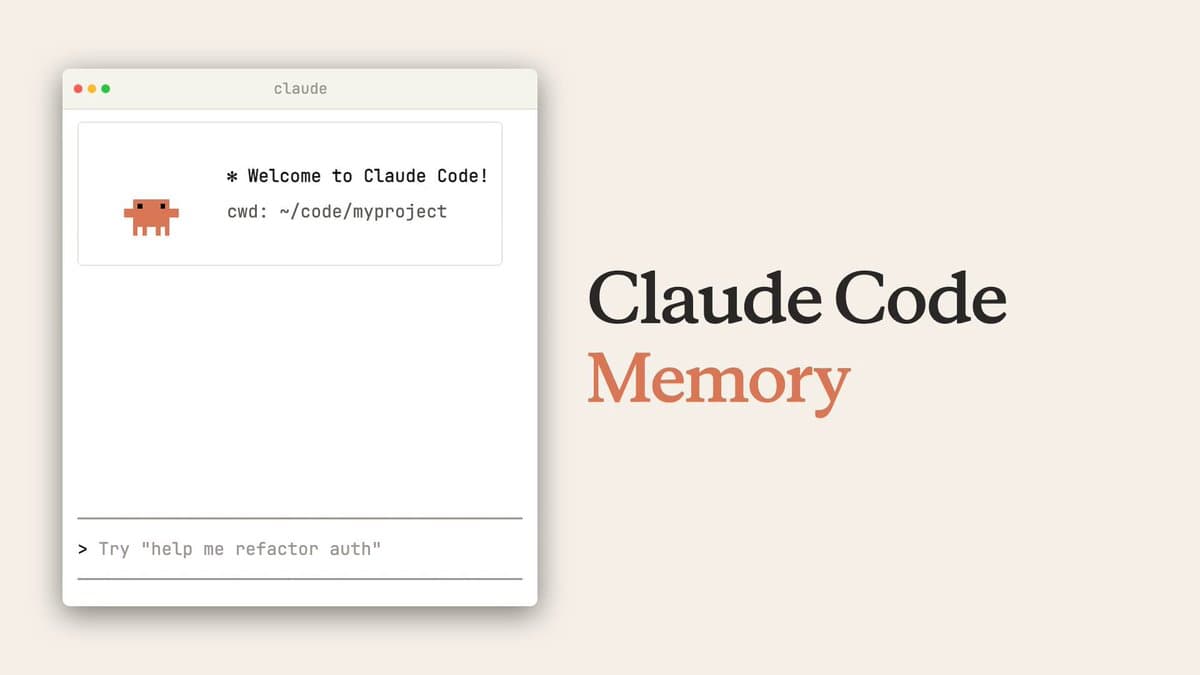
- **Claude Code supports auto-memory**: This groundbreaking feature allows autonomous agents to **maintain persistent memory**, significantly **enhancing long-term reasoning**, **context retention**, and **agent collaboration**. As @omarsar0 enthusiastically notes, “Claude Code now supports auto-memory. This is huge!”
- **Extended SDK and marketplace integrations**: The **GitHub Copilot SDK Claude Code Skill**, now accessible via the **MCP Market**, empowers developers to **build sophisticated AI agents** using **TypeScript**, enabling enterprises to **customize behaviors** and **extend functionalities** effectively.
- **Agent orchestration frameworks**: The **bobmatnyc/claude-mpm: Claude Multi-Agent Project Manager** transforms AI coding assistants into **comprehensive project orchestration engines**, supporting **task prioritization**, **multi-agent coordination**, and **dynamic project tracking**—streamlining complex enterprise workflows.
- **Practical tutorials and tools**: Resources such as **"Create Your First Autonomous Agent in Copilot Studio"**, **"Set Up GitHub Copilot in Visual Studio 2026"**, and **"Agentic DevOps with GitHub Copilot Hooks"** illustrate how users can **rapidly design**, **manage**, and **optimize autonomous agents**. For example, the **"Auto-Remediation Demo"** showcases agents **monitoring system health**, **detecting anomalies**, and **self-healing**, moving closer to **self-sustaining DevOps pipelines**.
---
## Expanding the Ecosystem: Practical Applications, Tutorials, and Generative Orchestration
The ecosystem is now enriched with **interactive tutorials** and **deep dives**, demonstrating **real-world use cases**:
- **"Create Your First Autonomous Agent in Copilot Studio"**: A step-by-step guide to **designing architectures**, **generating code**, **automating testing**, and **deployment**, dramatically **reducing project timelines**.
- **"Set Up GitHub Copilot in Visual Studio 2026"**: Illustrates **integrated management, debugging, and refinement** within the IDE, **streamlining developer workflows**.
- **"Agentic DevOps with GitHub Copilot Hooks"**: Features **autonomous agents** **monitoring**, **detecting anomalies**, and **auto-remediating issues**, exemplifying **self-healing operational pipelines**.
- **"Master Generative Orchestration in Copilot Studio"**: Explores strategies like **coordinating workflows across cloud, on-premise, and edge environments** using **generative AI** and **hybrid patterns**, emphasizing **resilience** and **scalability**.
Adding to these resources, a new guide titled **"Setup Openclaw on Existing Server Using Claude Code"** provides **step-by-step instructions** for deploying **Openclaw runtime agents** on legacy enterprise servers, ensuring **scalable, secure integration** with existing infrastructure.
---
## Strengthening Connectivity with Enterprise Backends
### Advanced Integration Points
Robust automation hinges on **comprehensive connectivity** with critical systems:
- **MCP servers** facilitate **shared, persistent context**, enabling **coherent workflows** across dispersed teams.
- **Snowflake connectors** enable **direct data querying**, **analysis**, and **manipulation**, supporting **automated reporting**, **validation**, and **analytics pipelines**.
- **ServiceNow integration** (exemplified in tutorials like **"Video22"**) empowers **AI-powered chatbots** embedded within **ticketing systems** to **automate incident management** and **streamline service workflows**, resulting in **significant operational efficiencies**.
- A **groundbreaking new feature** allows enterprises to **publish Copilot Studio agents directly to SharePoint sites**, embedding **autonomous workflows within collaboration platforms**. The **"How to Publish Copilot Studio Agent to SharePoint"** guide demystifies deployment, making automation accessible to **non-technical users** and **business units**.
### SharePoint-Native Agents and Deep Search
Recent innovations include **integrating SharePoint with Azure AI Search**, which enables **deep reasoning and insight generation** within collaboration portals. Autonomous agents can **perform complex searches**, **reason over content**, and **generate contextual insights**, empowering users with **advanced decision-making tools**.
An illustrative article, **"SharePoint with Azure AI Search and Copilot Studio"**, discusses how organizations embed **intelligent agents** within SharePoint, enabling **automated content analysis**, **knowledge extraction**, and **dynamic responses**—all within familiar enterprise portals.
### Offline and Local LLM Support
Addressing **security**, **privacy**, and **scalability**, enterprises are increasingly leveraging **offline runtimes** and **local deployment options**:
- Tools like **Foundry Local**, **Ollama**, and **SERA** facilitate **deterministic, self-contained AI workflows** operating entirely within enterprise networks—crucial for **regulated industries** and **sensitive data environments**.
- The recent **"How to Run Local LLMs with Foundry Local and GitHub Copilot SDK"** guide offers **detailed deployment steps**, emphasizing **secure**, **high-performance AI environments** that **eliminate reliance on external cloud services**.
---
## Addressing Security and Governance Challenges
As autonomous agents become central to enterprise operations, **security vulnerabilities** and **governance issues** remain paramount:
- The **CVE disclosures**—**CVE-2025-59536** and **CVE-2026-21852**—highlight **RCE (Remote Code Execution)** vulnerabilities and **API token exfiltration risks** associated with certain Claude Code project files. These underscore the **urgent need for rigorous security audits**, **sandboxed runtime environments**, and **secure code management**.
- **Claude Code’s remote control capabilities** introduced by Simon Willison's weblog pose **powerful but potentially risky** functionalities that necessitate **strict access controls**.
- The **"How to use MCP in Claude Code"** tutorial emphasizes **secure implementation** of **authentication**, **authorization**, and **encryption** to mitigate vulnerabilities.
- **Developers** are guided to **follow security best practices** when **building custom agents**, including **code review**, **role-based access**, and **regular vulnerability assessments**.
- **Operational tools** such as **n8n** and **TestMu** are employed to **maintain audit trails**, **trace agent activities**, and support **compliance**.
**Enterprises must prioritize**:
- **Maintaining comprehensive audit logs** to **monitor agent activity**.
- Utilizing **sandboxed or offline environments** (e.g., **Foundry Local**, **SERA**) for **secure, restricted execution**.
- Implementing **retrieval-augmented generation (RAG)** with **secure knowledge bases** to **improve accuracy** while **protecting sensitive data**.
- Ensuring **software patches** are applied promptly following CVE disclosures to **mitigate vulnerabilities**.
---
## Strategic Outlook and Future Directions
Looking ahead, several innovative concepts are shaping the future of enterprise autonomous systems:
- **Meta-agents**: Higher-level orchestrators **manage subordinate agents**, **optimize workflows**, **resolve issues**, and **allocate resources**, ensuring **maximum efficiency**.
- **Multimodal AI**: Integrating **text**, **images**, **audio**, and other data types** will enable **more comprehensive understanding** and **adaptive automation**.
- **Self-configuration, self-repair, and dynamic scaling**: These capabilities are transitioning from prototypes to operational norms, fostering **fully autonomous enterprise ecosystems** capable of **proactive adaptation**, **self-healing**, and **risk mitigation**.
Supporting innovations include **Retrieval-Augmented Generation (RAG)**—which enhances **knowledge fidelity and security**—and **hybrid deployment patterns** that span **cloud**, **on-premise**, and **edge environments**, creating **resilient, scalable, and compliant enterprise systems**.
---
## Current Status and Implications
As of 2026, **Copilot Studio** remains the **cornerstone** of enterprise automation, offering a **secure, scalable, and versatile platform** for **building, deploying**, and **managing autonomous agents**. Its ecosystem now includes **off-the-shelf templates**, **comprehensive deployment guides**, and **advanced orchestration tools**, transforming **software engineering into an autonomous domain**.
Recent milestones include:
- The **release of TestMu**, a **dedicated testing framework** optimized for **agent workflows**.
- Publications like **"Complete Beginner's Guide to Agentic Workflows on Antigravity"** supporting **smooth onboarding**.
- Deployment of **enterprise procurement automation** leveraging **Amazon Bedrock** and the **Strands SDK**.
- The rollout of **secure AI assistant usage guidelines**, emphasizing **security best practices** and **regulatory compliance**.
---
## Implications for Enterprises: Adoption, Risks, and Best Practices
Despite rapid advancements, **adoption challenges** persist. The **MIT report** underscores that:
> "Good morning. Companies are betting on AI—yet nearly all enterprise pilots are stuck at the starting line. The GenAI deployment success rate remains critically low, with 95% of pilots failing."
To improve success rates, organizations should:
- Invest in **comprehensive testing and validation frameworks** like **TestMu** and **TestSprite MCP**.
- Enforce **security best practices**: sandboxed execution, role-based access, and vulnerability management.
- Maintain **audit trails** for **AI activities** and **workflow changes**.
- Adopt **secure deployment patterns**, including **local/offline LLMs** with **Foundry Local** or **SERA**, especially in regulated sectors.
- Incorporate **retrieval-augmented generation (RAG)** to **boost accuracy** and **secure sensitive data**.
By doing so, enterprises can **maximize ROI**, **reduce operational risks**, and **accelerate successful deployment** of autonomous workflows.
---
## Recent Resources and Innovations
The ecosystem continues to evolve with **many valuable resources**:
- **"Resolve Webinar"** on automating HR workflows like **Joiner, Mover, Leaver** processes.
- **"3AI Knowledge Insights"** emphasizing a **control plane** for managing complex AI ecosystems.
- **"Claude Code Remote Control"**: enabling **mobile AI management** with **secure remote operations**.
- **"Building Custom GitHub Copilot Agents"**: guiding **secure agent extension**.
- **"AI Agents Building and Fixing n8n Workflows"**: demonstrating **agent-driven automation** with a focus on **testing** and **auditability**.
Additionally, new articles further deepen practical understanding:
- **"Cursor AI Agent Workflow"**: a **comprehensive setup and automation guide** for deploying **Cursor AI agents**.
- **"My Development Workflow"**: insights into **programming with AI**, emphasizing **security** and **efficiency**.
---
## Final Remarks: Toward Fully Autonomous Enterprise Ecosystems
The developments of 2026 firmly establish that **autonomous agents are now integral** to enterprise infrastructure. The advent of **meta-agents**, **multimodal AI**, and **self-healing capabilities** paves the way for **fully autonomous, resilient, and adaptive systems**.
However, **security and governance** remain critical. The recent disclosures of **vulnerabilities and CVEs** highlight the importance of **rigorous security measures**, **secure runtime environments**, and **compliance frameworks**. The continuous evolution of tools such as **RAG**, **local LLM deployment**, and **hybrid architectures** provides the foundation for **trustworthy AI ecosystems**.
Supported by **Copilot Studio** and its expanding ecosystem, enterprises are well-positioned to **drive unprecedented efficiency**, **mitigate operational risks**, and **innovate at scale**, transforming **digital transformation** from a strategic goal into a sustained reality.
---
## Key Resources and Highlights
- **Security Disclosures**: CVE-2025-59536, CVE-2026-21852—highlighting critical security risks.
- **Remote Management**: Simon Willison’s weblog on **Claude Code remote control**.
- **Guides & Tutorials**: Secure MCP integration, **local LLM deployment**, custom agent building, and workflow automation.
- **New Resources**:
- **"Claude Code now supports auto-memory"**: enabling persistent agent reasoning.
- **"Skills Marketplace (claude-skills)"**: expanding agent extensibility via third-party skills.
- **"How I built an AI Python tutor with the GitHub Copilot SDK"**: showcasing developer adoption.
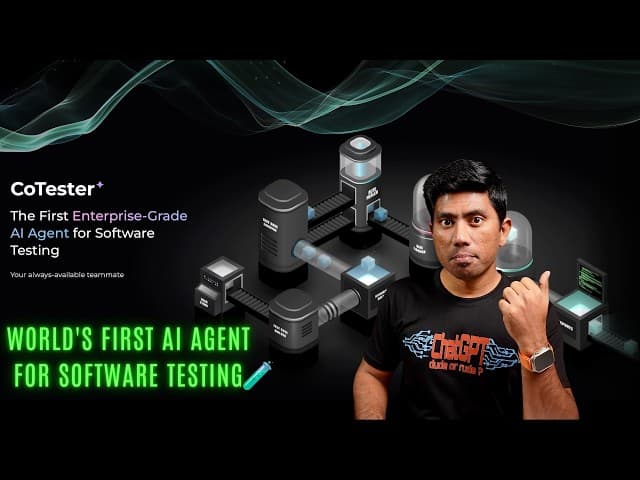
- **"CoTester by TestGrid"**: demonstrating **agent-driven testing** and **self-healing**.
These developments reaffirm that **security, governance, and strategic planning** are essential as enterprises scale autonomous agent ecosystems, ensuring sustainable innovation and operational resilience in an increasingly AI-driven world.