# Post-Presidency Legal Battles in 2026: Escalating Litigation, Transparency Battles, and Political Fallout
The legal saga surrounding former President Donald Trump has reached an unprecedented and highly volatile phase in 2026. What began as isolated investigations into classified documents, hush money payments, and civil liabilities has evolved into a sprawling web of criminal prosecutions, civil lawsuits, and fierce battles over transparency. These developments are not only shaping Trump’s personal legal landscape but are also redefining norms around presidential accountability, transparency, and the rule of law in the United States. As new revelations and court rulings emerge, the stakes for Trump’s political future and the integrity of American judicial processes are higher than ever.
---
## The Core of the Legal Turmoil: Key Cases and Recent Developments
### The Mar-a-Lago and Classified Documents Investigation
At the epicenter is the ongoing investigation into Trump’s handling of sensitive government materials. The 2024 FBI raid on Mar-a-Lago uncovered a substantial cache of classified documents, leading to federal charges related to national security breaches. Trump and his legal team have consistently contested the legality of the seizure, attempting to delay or block investigative reports under claims of national security concerns.
**Recent significant developments include:**
- **Special Counsel Jack Smith’s team has intensified efforts to disclose evidence, asserting that "transparency is vital for maintaining public trust and judicial integrity."** Smith emphasized that **"the evidence against Trump is substantial,"** with hearings revealing efforts to determine whether Trump or his associates attempted to conceal documents or submitted false statements. Testimonies suggest potential obstruction of justice, which could deepen criminal charges.
- **Judicial rulings have impacted transparency efforts.** A key decision by U.S. District Judge **Aileen M. Cannon** temporarily blocked the public release of Smith’s investigative report on the classified documents case, citing national security concerns. This order has fueled ongoing debates over the balance between transparency and confidentiality, with critics arguing that such secrecy undermines public trust.
- **Trump’s legal team has filed emergency motions to prevent the report’s disclosure**, claiming that revealing it could harm national security or influence ongoing proceedings. Courts have largely dismissed these motions, with increasing skepticism from judges about claims of irreparable harm. Several rulings suggest that the public’s right to know outweighs executive privilege in this context.
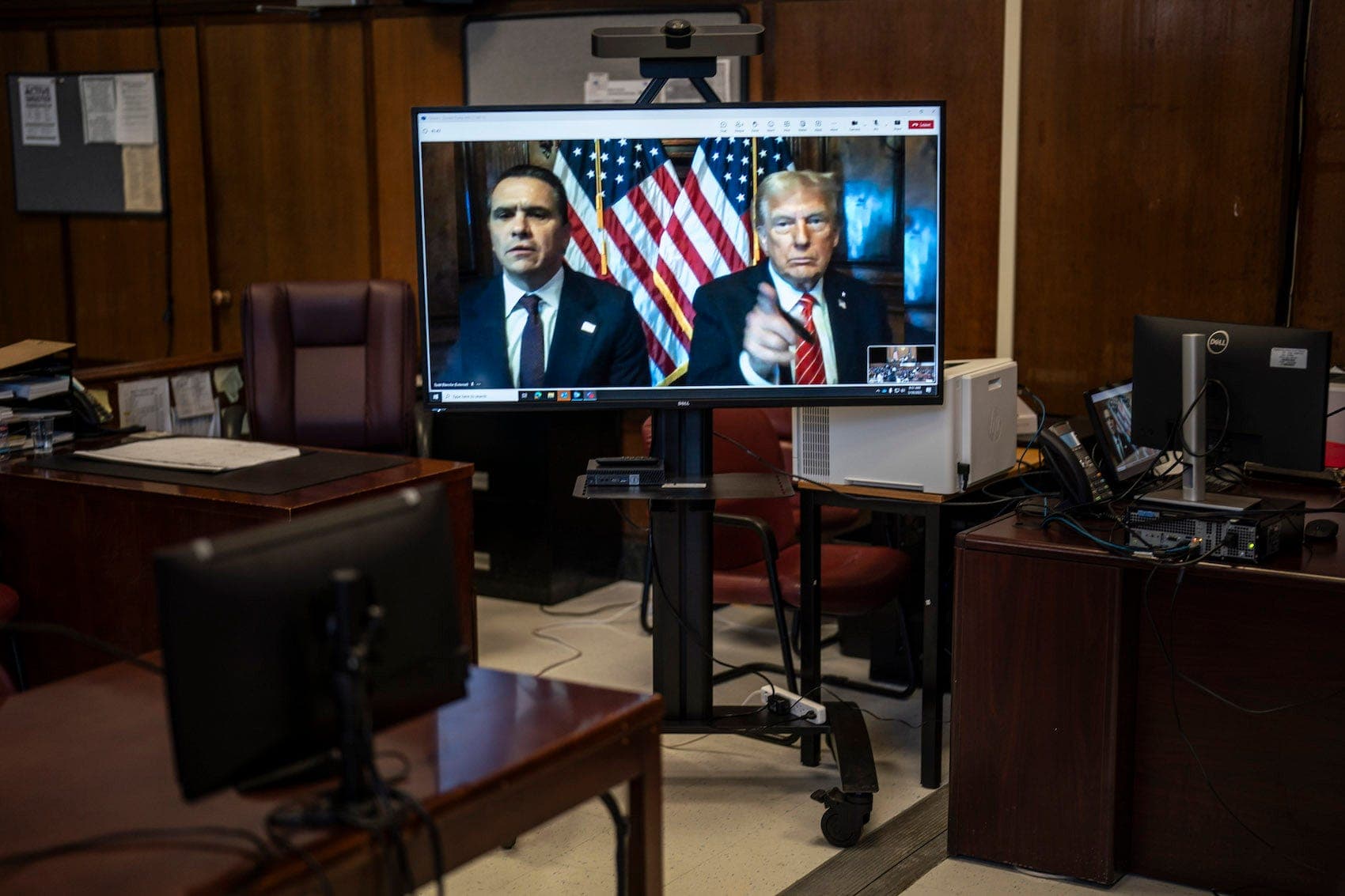
- **Upcoming hearings outside Manhattan Federal Court are expected to produce critical rulings.** These proceedings, often streamed live, could significantly impact Trump’s legal vulnerabilities, especially if evidence points to obstruction or mishandling of classified information.
### Civil and Financial Litigation: New Fronts and Escalations
Beyond criminal investigations, Trump faces a barrage of civil actions that threaten his reputation and financial standing:
- **A landmark $10 billion lawsuit filed in January against the IRS and Treasury Department** alleges that **"the leak of his tax returns was a deliberate breach of confidentiality."** Trump claims that the leak caused **irreparable harm**, damaging his reputation and political prospects, and accuses government agencies of **"politically motivated misconduct."** The suit highlights allegations that the IRS and Treasury failed to prevent unauthorized disclosures, with Trump demanding **$10 billion in damages**—a move that has sparked heated debates over government transparency versus presidential confidentiality.
- **Additional civil cases include:**
- The **$5 million verdict in E. Jean Carroll’s defamation and sexual assault case**, which is currently under review by the Supreme Court. A scheduled conference on **February 20** will determine whether the Court accepts Trump’s appeal, a decision that could set a precedent for civil liability for former presidents.
- A **$5 billion civil lawsuit targeting JPMorgan Chase and CEO Jamie Dimon** alleges that the bank’s decision to close Trump’s accounts was **"retaliatory"** and **"politically motivated,"** further complicating his financial influence and stability.
### Congressional Oversight and Public Testimony
Congressional investigations remain a critical arena for transparency and political debate:
- Special Counsel Jack Smith has testified before congressional committees, emphasizing that **"the evidence is substantial"** and defending ongoing investigations. These hearings often deepen partisan divides: supporters argue they are politically motivated, while authorities insist **"no one is above the law."**
- Notably, **Rep. Pramila Jayapal (D-Wash.)** questioned Smith about the scope of the investigations, highlighting ongoing political tensions that influence the proceedings.
---
## New Developments: Internal Agency Actions and Judicial Dynamics
### The FBI Firing of Agents Linked to Trump Investigations
A startling new development has emerged: **FBI sources report that at least 10 agents connected to Trump investigations have been fired or reassigned in recent months.** These staffers reportedly worked on the classified documents probe and other high-profile cases related to Trump.
- **AP sources indicate** that some of these agents had been involved in sensitive investigations and may have faced internal scrutiny over their handling of evidence or internal agency conduct. The firings raise questions about potential politicization within the FBI, especially given the highly charged environment surrounding Trump’s legal battles.
- **Some analysts suggest** this could reflect internal disputes or efforts to manage political fallout, but critics worry it may undermine confidence in the agency’s impartiality. The timing of these dismissals coincides with intensified efforts by Trump’s legal team to challenge investigation processes and report disclosures.
### The Fight Over the Release of Jack Smith’s Report
Adding another layer to the transparency debate, **Trump recently filed a lawsuit seeking a federal court order to block the Justice Department from releasing Smith’s special counsel report.** His team argues that **"the disclosure would irreparably harm national security"** and could influence ongoing investigations.
**Recent court rulings include:**
- A **federal judge issued a temporary order sealing Smith’s report**, citing national security concerns. This effectively prevents the public and media from accessing the document, heightening tensions over transparency.
- Conversely, other courts have appeared more inclined toward transparency. Some judges emphasize the public’s right to access judicial and investigative information, suggesting that **the report’s release is likely to proceed** despite Trump’s objections. These conflicting rulings underscore the judicial system’s ongoing balancing act between confidentiality and the public’s right to know.
### The Supreme Court’s Role and Future Rulings
The Supreme Court’s upcoming decisions could be pivotal:
- The **$5 million E. Jean Carroll case** is scheduled for a conference on **February 20**, where the Court will consider whether to accept Trump’s appeal of his civil verdict. A ruling here could have profound implications for civil liability standards for former presidents.
- The **$10 billion tax leak lawsuit** could set important precedents regarding executive confidentiality and the limits of government transparency, especially if the handling of the leak becomes central to the case.
**Additional pending legal questions include:**
- The admissibility of evidence, particularly regarding the release of Smith’s reports and how they influence criminal and civil proceedings.
- Asset seizure rulings and civil liability cases, which are expected to have significant financial and political repercussions for Trump.
---
## Broader Implications and Future Outlook
**The post-presidential legal landscape in 2026 remains highly fluid and unpredictable.** Recent developments—such as Trump’s persistent efforts to block transparency, courts’ mixed rulings on report disclosures, and a surge in civil and criminal cases—highlight a period of intense judicial scrutiny and political tension.
**Key factors shaping the future include:**
- **Judicial approaches to transparency and confidentiality.** Courts are increasingly leaning toward releasing investigative reports and scrutinizing claims of executive privilege, signaling a potential shift toward greater accountability.
- **The influence of upcoming Supreme Court decisions.** These rulings could redefine legal standards around executive confidentiality, civil liability, and the handling of sensitive investigative evidence.
- **The internal dynamics within federal agencies.** The firing of FBI agents associated with Trump investigations fuels debates over politicization and impartiality within law enforcement.
### **Implications for American Democracy**
The outcomes of these legal battles will have lasting implications:
- **If transparency is upheld**, a new standard for presidential accountability post-office could emerge—strengthening checks on executive power.
- **If political considerations sway judicial rulings**, concerns about impunity and double standards may deepen, potentially eroding public trust in institutions.
- **The evolving legal landscape could influence future presidents and high-profile officials**, setting precedents for how accountability and transparency are managed after leaving office.
---
## **Current Status and Significance**
As 2026 progresses, the convergence of criminal prosecutions, civil suits, and judicial rulings makes this a watershed year in Trump’s post-presidency saga. The recent firing of FBI agents linked to Trump investigations, combined with contentious court rulings on the release of Smith’s reports, underscores the high-stakes nature of these proceedings.
**The upcoming Supreme Court decisions and ongoing transparency disputes will likely shape the legal and political norms for years to come.** Whether these cases lead to greater accountability or embolden efforts to shield former presidents from scrutiny remains to be seen.
In sum, the unfolding legal battles are not just about Trump—they are about the very foundations of American judicial integrity, political accountability, and the rule of law in a deeply polarized era.
---
**In summary**, 2026 stands as a pivotal year where legal strategies, judicial interpretations, and political pressures collide. The decisions made over the coming months will determine the future landscape of presidential accountability and influence the broader health of American democracy for generations.