# Communities Accelerate Governance Reforms and Civic Engagement in 2026: A Year of Momentum and Transformation
As 2026 progresses, the landscape of local governance across the nation continues to evolve at an unprecedented pace. Communities are not only embracing reforms aimed at increasing democratic participation but are also innovating in transparency, resilience, and structural organization. This year stands as a testament to the collective push toward more inclusive, accountable, and resilient local democracies—driven by a wave of electoral innovations, structural reforms, grassroots activism, and strategic investments in public safety.
## Continued Momentum on Local Governance Reforms
The year has seen a remarkable expansion of electoral and structural reforms designed to empower residents and improve governance:
- **Electoral Innovations:**
- **Ranked-Choice Voting (RCV)** has gained significant traction. In **Newburgh, New York**, the adoption of RCV was bolstered by vigorous voter education campaigns utilizing digital outreach, town halls, and informational materials. Early feedback indicates that **RCV is fostering higher voter engagement** and leading to **more representative election outcomes**.
- Meanwhile, **Kingman and Wellington, Colorado**, have launched comprehensive **public education initiatives** to familiarize residents with RCV, aiming to build trust and transparency in this electoral process.
- **Charter City and Structural Reforms:**
- **Fremont, California**, achieved **Charter City** status, granting local officials broader discretion over housing, transportation, and sustainability policies—allowing for **more community-responsive policies**.
- In **Hoboken, New Jersey**, a **government reorganization** was approved to clarify leadership roles and streamline departmental functions, with the goal of **reducing bureaucratic delays** and **enhancing transparency**.
- **Bar Harbor, Maine**, is currently reviewing **town boards and committees** to better **align governance with community priorities**, while **Mount Desert** considers **regional school reorganization** to **consolidate administrative functions**, sparking discussions on **local control versus efficiency**.
- **Local Policy Debates:**
A notable legislative development involves a **state bill banning local governments from funding or promoting Diversity, Equity, and Inclusion (DEI) initiatives**. Currently pending the governor’s signature, this bill has ignited debate over **local policy authority** and **ideological scope**. Supporters argue it limits “ideological overreach,” while critics contend it **undermines efforts toward inclusivity**. Public engagement includes diverse expressions, like a **2-minute, 44-second YouTube video** that has garnered over **1,000 views and 5 likes**, exemplifying active civic discourse.
## Amplifying Transparency and Civic Participation
Communities are leveraging technology and grassroots efforts to foster **meaningful civic engagement**:
- **Accessible Government Proceedings:**
- Many local bodies, such as the **LA City Charter Reform Commission** and **Town Plan and Zoning Boards**, now **live-stream and record meetings**, making governance **more transparent** and **accessible** to residents unable to attend in person.
- **Public Forums and Budget Town Halls:**
- **Richmond’s 2027 Budget Town Halls** serve as a model for involving residents directly in fiscal decisions.
- **Fountain Hills, Arizona**, hosted a **Budget Open House** in March, inviting community input on financial planning.
- **Carroll County, Maryland**, held a **Town Hall** focused on **public safety and community concerns**, enhancing dialogue and trust between residents and officials.
- **Emergency Communication Upgrades:**
Towns are investing in **advanced alert systems** to ensure rapid dissemination of critical information:
- **Knox County, Maine**, launched **IPAWS** for swift messaging during emergencies.
- **Wellington, Colorado**, and **Northampton, Massachusetts**, upgraded their **RAVE** and **CodeRED** systems, respectively.
- **Douglas County, Colorado**, introduced a **Hi-Lo Alert system** to educate residents about **evacuation signals**. A **YouTube explainer video** about this system has exceeded **1,800 views**, indicating strong community interest in preparedness.
### Grassroots Movements and Direct Democracy
A prominent trend continues to be **petition-driven initiatives** and **public participation efforts**:
- In **Owatonna, Minnesota**, residents collected over **900 signatures** demanding a **public vote** on **controversial public safety facilities**, exemplifying a desire for **more direct democratic control**.
- **Mount Desert** maintains its tradition of providing detailed **"ON THE AGENDA"** summaries for town and school meetings, empowering residents with **comprehensive information** to participate effectively.
## Building Resilience and Addressing Community Concerns
Communities are heavily investing in **public safety** and **climate resilience** measures:
- Infrastructure upgrades are ongoing in **Gorham, Maine**, **Johnstown, Pennsylvania**, and **Sarasota County, Florida**, targeting **flood mitigation**, **fire prevention**, and **severe weather resilience**.
- **Stormwater management** projects are progressing in **Grey Sauble, Ontario**, and **Woodfin, North Carolina**, focusing on **flood risk reduction**.
- **Public safety forums**, including **Guerin’s Town Hall** in Carroll County and **Charlotte City Council retreats**, continue to foster **emergency response strategies** and **community outreach**, building **trust and preparedness**.
Additionally, **weather alerts** have become more prominent, with recent warnings emphasizing the importance of **severe storm preparedness**. For example, a **"WEATHER ALERT MONDAY"** issued recently highlighted the threat of **tornadoes and damaging winds** across the region, urging residents to stay informed and prepared—a clear indication of the ongoing focus on **climate-related hazards**.
## Near-Term Decisions and Upcoming Local Actions
Several communities are poised to make critical governance decisions in the coming weeks:
- **Week of March 16, 2026:**
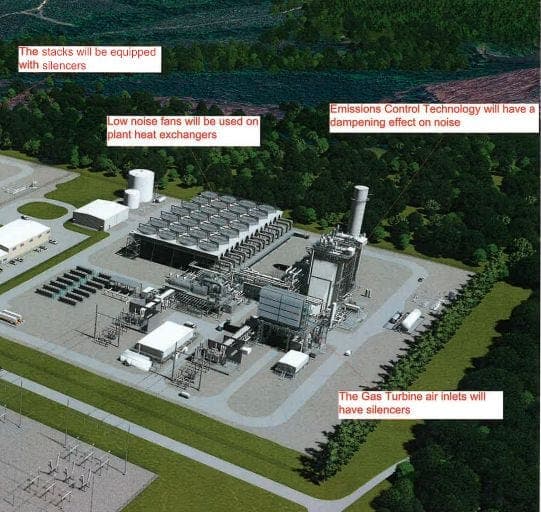
- **Fluvanna Supervisors** will consider a permit application from **Tenaska** for a **second gas-fired power plant**, a key energy infrastructure decision.
- **Charlottesville City Council** will review proposals for a **public art program**, shaping the city’s cultural and aesthetic landscape.
- **March 24, 2026:**
- **Southwest Harbor** residents will vote in a **special election** on funding for **storm-damaged shoreline repairs** and a **new garage**, directly impacting local resilience efforts.
- Other notable upcoming actions include:
- **Sarasota** planning to gather feedback on a **proposed 324-unit apartment complex** on Fruitville Road, reflecting ongoing urban development debates.
- **Appleton’s City Council** examining **verbiage for a new historical marker**, with the **Historic Preservation Committee** ensuring community representation.
## Continued Investment in Resilience and Public Safety
Community resilience remains a central focus, with ongoing projects such as:
- Upgraded **stormwater infrastructure** in **Gorham, Maine**, and flood mitigation initiatives in **Sarasota County** to combat climate-related hazards.
- Enhanced **emergency communication systems**, including **IPAWS**, **RAVE**, and **CodeRED**, to ensure rapid alerts during crises.
- Deployment of **severe storm alerts**, as exemplified by recent warnings emphasizing tornado and wind risks, underscores the importance of **preparedness**.
## Implications: Toward a More Participatory, Transparent, and Resilient Governance Framework
The breadth of these initiatives underscores a **transformative year** in local governance. Communities are increasingly adopting **more inclusive electoral systems** like RCV, **structuring governments for clarity and responsiveness**, and **investing in resilience** against climate and safety threats. Simultaneously, they are **fostering public participation** through **technology**, **grassroots activism**, and **transparent communication**.
The upcoming votes and decisions—ranging from infrastructure permits to urban development—will shape the trajectory of this reform movement. The collective momentum suggests a **lasting shift** toward **more participatory democracy**, where **every voice** influences local policies and priorities. This **renewed commitment to civic engagement** and **public safety** positions communities not only to respond effectively to current challenges but also to **build a resilient foundation** for the future.
**Current developments indicate that 2026 is poised to be a pivotal year**, setting new standards for **inclusive, transparent, and community-led governance** at the local level—fueling a movement that promises to redefine democracy in communities across the nation.