# The Evolution of Practical Agent Tooling and Orchestration in 2026: Toward Resilient, Trustworthy, and Secure AI Ecosystems
The enterprise AI landscape of 2026 is transforming at an unprecedented pace, driven by breakthroughs in tooling, orchestration, architecture design, and security. This evolution is not merely about incremental improvements but signals a fundamental shift toward **more resilient, transparent, and trustworthy AI ecosystems** capable of supporting enterprise-scale needs with agility and confidence.
Building upon earlier milestones—such as remote control capabilities and schema-driven frameworks—recent developments now focus on **multi-device, real-time management**, **advanced context engineering**, and **security fortification**. These innovations are empowering organizations to deploy **complex multi-agent workflows** with increased reliability, regulatory compliance, and operational efficiency.
---
## Platform Support: Multi-Device Control, Real-Time Multimodal Agents, and Persistent Sessions
A defining feature of 2026 is the proliferation of **platform capabilities** that enable seamless, **multi-device, real-time control** over AI agents, substantially enhancing operational flexibility.
### Multi-Device Remote Management and Instant Interaction
- **Enhanced remote control features** have become standard, allowing users to **monitor, steer, and modify AI workflows from any device**—smartphones, tablets, or desktops.
- **Anthropic’s Remote Control for Claude Code** exemplifies this trend by enabling **dynamic session management and task adjustments via mobile interfaces**. This allows users to **perform terminal operations**, **coordinate multiple agents**, and **adjust workflows on the fly**, directly outside traditional desktop environments—**eliminating tethered workflows**.
### Real-Time Multimodal Agents and Persistent State
- The release of **gpt-realtime-1.5 by OpenAI** marks a milestone in **enhanced instruction adherence** and **multi-sensory interaction**. Its **Realtime API** strengthens voice and visual workflows, facilitating **live customer engagement**, **on-the-fly data analysis**, and **multi-modal AI assistants**.
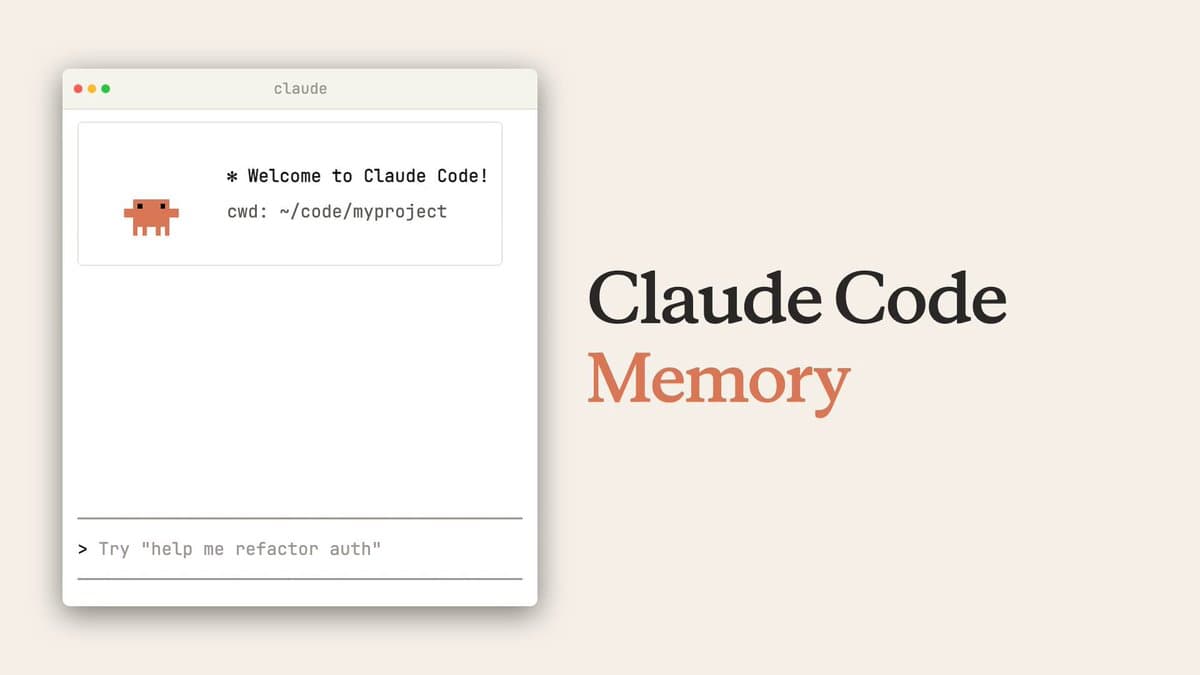
- The latest advancements include **Claude Code’s support for auto-memory**, a feature recently highlighted by @omarsar0. This **huge step** allows **stateful sessions** where **context is maintained automatically**, enabling **long-term interactions** that are **more coherent** and **less manual** to manage.
**Impact in Practice**:
- Organizations now **operate AI systems from anywhere**, with **instant responses** critical during time-sensitive events.
- **Multi-device, multimodal coordination** ensures workflows are **flexible, scalable**, and **adaptable** to diverse operational contexts.
- The ability to **maintain persistent sessions** **enhances continuity**, **reduces manual overhead**, and **improves resilience**.
> *"Anthropic’s Remote Control allows users to seamlessly manage Claude Code tasks across devices, facilitating dynamic adjustments and multi-agent coordination."*
This shift **empowers enterprises to respond swiftly**, **support distributed teams**, and **streamline complex multi-agent orchestration**.
---
## Architectures Shift: Schema-First, Context Engineering, and Prompt Chaining
The old paradigm of **prompt engineering** is giving way to **formal, schema-based frameworks** that embed **structure, validation, and compliance** into AI workflows.
### Embracing Schema-Driven Design
- Enterprises are increasingly adopting **schema-first approaches**, where **machine-readable, formal schemas** serve as **primitives** in prompt templates and workflows.
- These schemas **ensure behavioral consistency**, **enable validation**, and support **auditability**, crucial in regulated sectors.
- Moving away from manual prompt tuning, organizations are favoring **structured, predictable, and auditable systems** that **simplify compliance** and **enhance reliability**.
### Advanced Orchestration Patterns
- **Prompt chaining**—linking multiple prompts to form **multi-stage workflows**—has become standard practice.
- As explained in the recent tutorial **"Prompt Chaining Explained in 7 Minutes,"** this pattern **enables complex reasoning** and **task decomposition**, transforming AI outputs into **multi-step, dependable processes**.
- **Multi-agent collaboration** leverages **formal schemas** combined with **context engineering** techniques, dynamically incorporating **external data sources** such as recent communications, regulatory updates, or document repositories.
### Context Engineering and External Data Integration
- Techniques like **context augmentation**—adding relevant external information at each step—result in **more reliable, interpretable workflows** that **adapt to external changes**.
- This ensures **regulatory compliance**, **operational accuracy**, and **robustness** against external variability.
**Benefits**:
- **Resilience** through **validation and formal schemas**.
- **Dynamic reasoning** powered by **context augmentation**.
- **Reduced manual effort** and **greater robustness**.
- Embedded **compliance** and **auditability** for sensitive environments.
---
## Implicit Multi-Stage Reasoning and Self-Critique: Enhancing Workflow Robustness
Recent research underscores that **large language models (LLMs)** can **internally simulate multi-step reasoning** even without explicit prompts, leading to **more coherent, adaptable workflows**.
### Implicit Planning and Self-Improvement
- The paper **"What's the Plan: Implicit Planning Mechanisms in Large Language Models"** demonstrates that **LLMs** can **generate multi-stage plans internally**, effectively **self-organizing** complex tasks.
- The technique of **self-critique**, discussed in **"AI’s Self-Critiquing Technique Boosts Problem-Solving Ability with Iterative Refinement,"**, enables models to **evaluate, critique, and refine their outputs iteratively**.
- This **iterative self-improvement** **reduces errors**, **enhances problem-solving**, and **strengthens multi-agent coordination**.
### Practical Workflow Implications
- **Implicit reasoning** allows **multi-stage workflows** to be **more resilient** to unexpected inputs or errors.
- **Self-critique mechanisms** facilitate **automatic correction** and **continuous learning**, reducing manual oversight.
- When integrated with **schema-driven architectures** and **context engineering**, these techniques **significantly bolster the robustness and adaptability** of AI orchestration.
---
## Accelerating Deployment: Platform-Level Democratization and Toolkits
The democratization of AI deployment accelerates with **platform tools** that **empower non-technical users** and **streamline complex workflows**.
### No-Code and Low-Code Platforms
- **Microsoft Foundry** now integrates **OpenAI’s GPT-5.3-Codex**, offering **powerful code generation**, **multi-turn reasoning**, and **multi-modal outputs**—enabling **automation pipelines** without extensive coding.
- **Google’s Opal platform**, utilizing **Gemini 3 Flash**, features **visual workflow builders**, **automatic tool selection**, and **collections**, making **large-scale orchestration accessible** to a broader audience.
### Practical Benefits
- **Rapid prototyping**, **deployment**, and **iteration** are **more accessible**.
- **Non-technical users** can **design, manage**, and **optimize workflows** via intuitive interfaces.
- These tools **speed up time-to-value**, **reduce dependency** on specialized AI engineers, and **expand enterprise AI adoption**.
---
## Security, Governance, and Trustworthiness: Fortifying Lifecycle and Defenses
As AI ecosystems grow, **formal governance and security protocols** are critical.
### Model Grounding and Versioning
- **Model Context Protocols (MCPs)** now **incorporate versioned schemas**, **behavioral verification**, and **grounding methods** such as **Retrieval-Augmented Generation (RAG)**.
- These **standardizations** embed **ethical principles**, **regulatory compliance**, and **factual grounding**, fostering **trust**.
### Security and Attack Simulation
- Tools like **SecureClaw** and **BlackIce** facilitate **adversarial attack simulations**, **prompt vulnerability detection**, and **system resilience assessments**.
- In light of **malicious actors**—including groups like **DeepSeek**, **Moonshot**, and **MiniMax**—exploiting prompt and **distillation attacks**, these security measures are **vital for proactive defense**.
### Best Practices for Trustworthy AI
- **Formal verification** ensures **behavioral correctness**.
- **Version-controlled schemas** and **grounded schemas** support **traceability**.
- **Continuous security monitoring** and **attack testing** safeguard systems.
---
## Current Resources Supporting Adoption and Governance
To facilitate widespread, responsible AI deployment, numerous **guides, tutorials, and tools** are available:
- **"Prompt Engineering for Large Models"** (Springer) offers **methodologies for prompt design**.
- **"Master Generative Orchestration in Copilot Studio"** provides **workflow deployment techniques**.
- Visualization tools like **LangGraph** enable **drag-and-drop reasoning chains** and **multi-agent interactions**.
- Deployment guides such as **"How to Set Up Clawdbot"** and **"Prompt to Design in Figma using Claude"** support **iterative, collaborative development**.
- Industry blueprints—like **"Top 10 AI Agentic Workflow Patterns"**—distill **best practices** into **actionable templates**.
- The recent **"How to use MCP in Claude Code? | Complete Tutorial on MCP in Claude Code"** exemplifies **schema standardization**, **governance**, and **lifecycle management**.
---
## The Road Ahead: Towards Autonomous Optimization and Trustworthy Ecosystems
Emerging research points toward **autonomous prompt optimization systems** that **self-improve** and **adapt** over time, minimizing human intervention. When combined with **schema-driven design**, **implicit reasoning**, and **security protocols**, these innovations underpin **trustworthy, scalable AI ecosystems** capable of **operating reliably in mission-critical contexts**.
---
## **Current Status and Broader Implications**
By 2026, **enterprise AI systems** are deeply integrated, characterized by **version-controlled artifacts**, **formal schemas**, **groundings**, and **security layers**—all working synergistically to ensure **trustworthiness**, **resilience**, and **regulatory compliance**.
- **Remote control capabilities** make management more flexible.
- **Schema-first architectures** promote **predictability** and **auditability**.
- **Implicit reasoning** enhances **workflow robustness** and **multi-agent coordination**.
Organizations leveraging these innovations are **better positioned** to **maximize AI’s transformative potential** while **upholding ethical standards, security, and trust**.
---
## **In Summary**
The landscape of **practical agent tooling and orchestration** in 2026 has transitioned from **manual prompt engineering** toward **structured, schema-driven, and secure ecosystems**. **Multi-device remote control**, **prompt chaining**, **implicit multi-stage reasoning**, and **advanced security practices** are converging to create **trustworthy, resilient AI systems** that are essential for enterprise success.
This evolution **redefines how organizations orchestrate, govern, and trust AI**, laying a foundation for **future-proof, scalable, and ethical AI ecosystems** capable of unlocking unprecedented levels of productivity, innovation, and operational resilience.
**The future of enterprise AI in 2026 is one of orchestrated trust**—where systems are not only powerful but also transparent, secure, and aligned with organizational values.