The hyperscale AI infrastructure landscape continues to accelerate into an era defined by **unprecedented capital intensity, strategic integration, and technological innovation**. As hyperscalers marshal multihundred-billion-dollar investments, they are reshaping compute architectures, semiconductor supply chains, energy systems, sovereign cluster deployments, and financing models with a level of coordination and scale unseen in prior technology waves. Recent developments, including Meta’s $100 billion pact with AMD, Nvidia’s record-breaking GPU performance, and Microsoft’s rising AI infrastructure prominence, crystallize a new industry paradigm where **capital alignment, geopolitical resilience, and sustainable energy innovation** are as critical as silicon performance.
---
### Meta–AMD $100 Billion Pact: The Definitive Blueprint for Capital-Aligned AI Compute
Meta’s ongoing $100 billion alliance with AMD remains the flagship example of how hyperscalers are architecting **fully integrated AI compute ecosystems** that extend well beyond chip procurement to encompass wafer equity, sovereign infrastructure, and energy co-design.
Key evolutions in the pact include:
- **Equity-backed wafer supply guarantees** securing AMD’s bespoke AI chips at a scale targeting 6 gigawatts of capacity through 2030, effectively transforming wafer supply from a volatile commodity into a strategic, durable asset.
- Expansion into **sovereign AI clusters**, designed to insulate Meta’s compute infrastructure from geopolitical disruption and export control volatility. The Indiana data center project embodies this approach, combining sovereign resilience with next-generation cooling and energy sources.
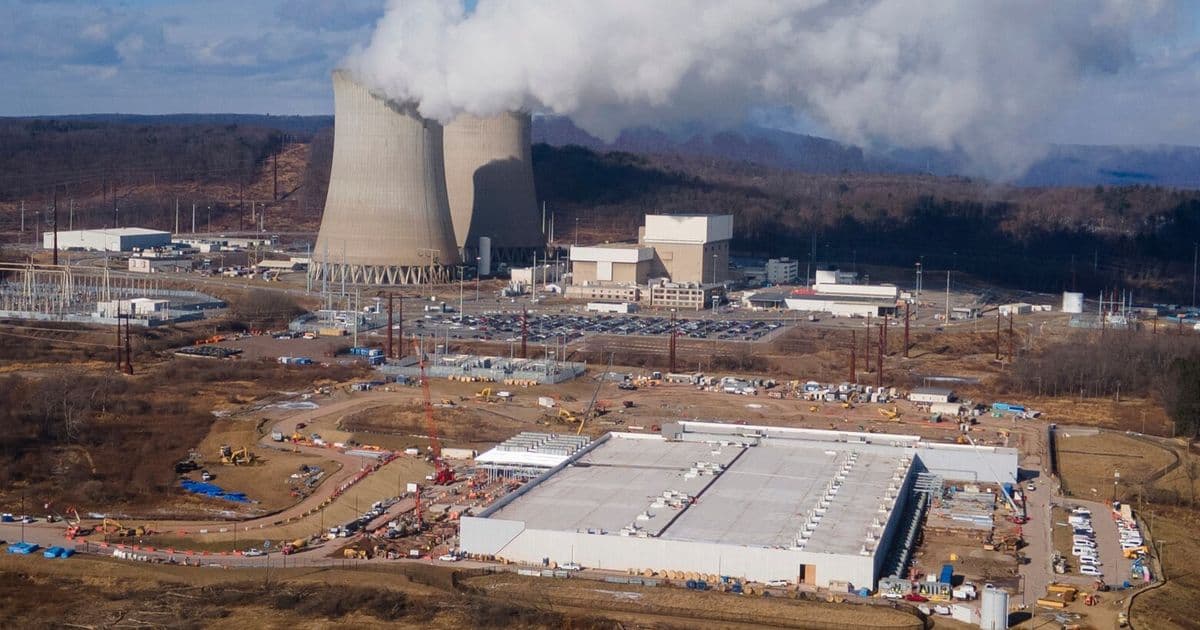
- Leadership in **energy and thermal co-design**, integrating **advanced liquid immersion cooling** with pioneering clean energy solutions such as **small modular reactors (SMRs)** and **hydrogen fuel cells**. This hybrid energy model has driven the Indiana site to achieve **35% reductions in energy intensity** compared with traditional data centers.
Mark Zuckerberg emphasized this strategic breadth in a recent statement:
> *“Our partnership with AMD is not just about chips; it’s a commitment to building a scalable, energy-efficient AI compute platform that meets both our ambitions and global needs.”*
By tightly coupling silicon supply security, equity alignment, sovereign infrastructure, and energy innovation, Meta’s pact sets an **industry gold standard for capital-aligned AI compute infrastructure**—a model now widely emulated across hyperscalers.
---
### Nvidia’s Record-Breaking Quarters and the Dual-Path Compute Market
Nvidia’s recent earnings reaffirm its dominant position as the **GPU ecosystem leader**, powered by surging demand for its latest Blackwell and Vera Rubin GPU families. Despite macroeconomic headwinds, Nvidia has maintained:
- **Pricing power and margin expansion**, underscoring the high value placed on its flexible, broadly supported AI compute platform.
- Robust demand across both AI training and inference workloads, reinforcing Nvidia GPUs as the **go-to solution for general-purpose AI compute** with unmatched developer ecosystem maturity.
However, Nvidia’s stock experienced a modest **1% dip post-earnings**, reflecting investor concerns about near-term growth amid rising competitive pressures.
The competitive landscape has crystallized into a **dual-path compute market**:
- On one side, **bespoke silicon partnerships**, exemplified by Meta–AMD’s wafer equity model and Microsoft’s Maia 200 chip program, focus on wafer supply security, energy efficiency, and thermal innovation.
- On the other, Nvidia’s GPU ecosystem offers unmatched software maturity, workload versatility, and a vast developer base.
Supply constraints—particularly in high-end GPU availability—remain a bottleneck, intensifying pressure from bespoke solutions and forcing Nvidia to double down on software and ecosystem investments to defend its moat.
---
### Microsoft’s Quiet Ascendance: The Silent Coup in AI Infrastructure
Adding a new dimension to the narrative, Microsoft’s **Maia 200 chip program** is rapidly gaining recognition as a critical element in the hyperscale AI compute arms race. Though less publicly heralded than Meta–AMD or Nvidia, Microsoft’s approach exemplifies:
- **Advanced thermal co-design innovations** delivering approximately **30% inference efficiency gains** compared to competing GPU architectures.
- Strategic integration with Azure’s sovereign cluster initiatives, reinforcing Microsoft’s competitive positioning in regionalized AI infrastructure.
- A balanced compute model that complements Nvidia GPUs with bespoke silicon, hedging supply chain risk and optimizing energy profiles.
This “silent coup” reflects a more nuanced scoreboard where **compute performance, energy efficiency, sovereign compliance, and capital alignment** define leadership beyond headline market shares.
---
### Semiconductor Supply Constraints Intensify, Driving Strategic Equity and Innovation
Semiconductor manufacturing capacity remains the most acute bottleneck shaping AI infrastructure deployment:
- **TSMC’s leading-edge 3nm and emerging 2nm capacity is fully booked through 2028**, largely allocated to flagship hyperscaler deals including Meta–AMD and Microsoft Maia.
- The **ASML EUV lithography tool backlog now exceeds five years**, severely limiting foundry expansion and intensifying supply chain rigidity.
- Persistent **High Bandwidth Memory (HBM) shortages** at Micron and SK Hynix constrain memory subsystem availability, pushing hyperscalers to innovate around memory architectures and chiplet modularity.
- Geopolitical export controls have tightened wafer supply risks, prompting hyperscalers to secure **strategic equity stakes in foundries, memory suppliers, and packaging vendors**, thus locking in production priority and strengthening competitive moats.
Meta’s equity-backed AMD wafer supply contract exemplifies this strategic shift from transactional procurement to **durable, capital-aligned partnerships** that insulate hyperscalers from spot-market volatility.
Chiplet architectures have surged in importance, enabling modular, scalable silicon designs that maximize scarce wafer utilization and improve supply flexibility.
---
### Energy and Thermal Co-Design: A Core Strategic Imperative
Energy procurement and thermal management have ascended from operational considerations to **primary strategic capital fronts** in AI infrastructure:
- Meta and AMD’s pioneering **liquid immersion cooling** enables **up to 40% higher accelerator densities** than traditional air cooling, dramatically lowering Power Usage Effectiveness (PUE).
- The Indiana data center’s hybrid power model—integrating **small modular nuclear reactors (SMRs)** and **hydrogen fuel cells**—has set new standards in sustainable AI compute, achieving a **35% reduction in energy intensity**.
- Microsoft’s Maia 200 chip incorporates advanced thermal innovations that yield **30% inference efficiency gains**, while Alphabet’s TPU v7 sovereign clusters leverage extensive **renewable PPAs and battery storage**, underscoring energy’s strategic role.
- Emerging power electronics technologies such as **Gallium Nitride (GaN)** and experimental **high-temperature superconductors (HTS)** promise future breakthroughs in power conversion efficiency and thermal density.
Hyperscalers now view energy co-design as a **capital allocation priority equal to semiconductor investments**, reshaping AI infrastructure economics and sustainability.
---
### Sovereign Clusters: Regionalization as a Geopolitical and Regulatory Imperative
The geopolitical landscape is driving an accelerated expansion of **sovereign AI clusters**, enabling hyperscalers to comply with export controls, regulatory regimes, and regional market demands:
- AWS leads with commitments exceeding **$230 billion** toward sovereign cluster development, including a $12 billion Louisiana expansion featuring cutting-edge **Oklo modular nuclear microreactors** and immersion cooling.
- Alphabet is rapidly scaling TPU v7 sovereign clusters across India, Europe, and North America, backed by **ultra-long-duration bond issuances exceeding $60 billion**—capital aligned to sovereign cluster lifecycles.
- Oracle and other cloud providers are intensifying sovereign cluster investments, heightening regional competition.
- Qualcomm CEO Cristiano Amon highlights the growing importance of **regionally optimized AI models** designed for compliance and localization, reflecting sovereign clusters’ operational relevance.
These sovereign clusters are critical for hyperscalers to maintain global market access amid frameworks like the **EU AI Act** and U.S.-China export restrictions, ensuring operational continuity and regulatory alignment.
---
### Financing Innovations: Navigating the GPU Debt Wall and Multi-Decade Infrastructure Cycles
The immense capital intensity and longevity of AI infrastructure have spurred innovative financing approaches:
- The “GPU debt wall,” spotlighted by CoreWeave’s recent financial challenges, exposes the fragility of providers overly reliant on GPU-backed debt.
- Alphabet’s issuance of **$30+ billion ultra-long-duration century bonds** sets a new benchmark, aligning financing with the decades-long lifecycle of sovereign clusters and AI infrastructure assets, thereby reducing refinancing risk.
- Hyperscalers are diversifying investor syndicates to include semiconductor suppliers (Micron), foundries (TSMC), networking vendors (Arista, Cisco), data center operators (Vertiv, SMCI), and energy infrastructure firms (MTAR Technologies).
- Meta’s combination of **AMD equity stakes with clean energy PPAs** exemplifies the fusion of technology, energy security, and capital markets.
- Institutional investors like Bill Ackman have allocated billions into Meta’s AI pivot, signaling robust confidence, while cautious voices such as Michael Burry urge capital discipline amid margin compression risks.
These financing innovations underpin a **multi-decade, capital-aligned infrastructure cycle** essential for sustainable hyperscale AI expansion.
---
### Near-Term Watchpoints: Execution, Supply, and Energy Trials
The next several quarters will be pivotal in validating these intertwined trends:
- **Nvidia and Micron earnings** reports will offer critical insights into GPU and memory supply tightness, pricing dynamics, and margin sustainability.
- **AMD’s wafer allocation execution and bespoke silicon scaling** will test its ability to challenge Nvidia’s entrenched ecosystem dominance.
- The operational rollout and performance of **sovereign clusters by AWS, Alphabet, and Oracle** will reveal real-world regulatory, geopolitical, and technical execution challenges.
- The economic viability and scalability of **Meta’s nuclear PPAs and Microsoft’s hydrogen fuel cell deployments** will be closely scrutinized as clean energy emerges as a strategic AI enabler.
- Investor sentiment is expected to reward companies demonstrating **transparency, operational excellence, and sustainability leadership**, intensifying competition for scarce capital.
---
### Integrated Outlook: The Emergence of a Multidisciplinary, Capital-Aligned AI Ecosystem
Looking beyond 2026, the hyperscale AI supercycle is coalescing into a **complex, capital-aligned ecosystem** where:
- Semiconductor scarcity drives widespread adoption of **chiplet architectures** and **equity-backed wafer allocations**.
- Hybrid compute platforms blend **bespoke AMD silicon and Nvidia GPUs**, tightly integrated with advanced cooling and thermal co-design to optimize performance per watt.
- Energy innovation—including **GaN power electronics, modular nuclear reactors, hydrogen fuel cells, and superconductors**—forms the backbone of sustainable AI compute.
- Sovereign clusters balance geopolitical risk with regulatory compliance, enabling agile, regionally tailored AI model deployment.
- Financing models evolve into **ultra-long-duration capital instruments**, mitigating the GPU debt wall and supporting decades-long infrastructure lifecycles.
- Investor demand spans the entire AI infrastructure value chain, from semiconductors and networking to data centers and energy systems.
At the heart of this transformation stands Meta’s $100 billion AMD pact, a **paradigm of integrated partnerships that combine silicon, energy, and finance** to define leadership in the AI era. Hyperscalers and partners that master this multidisciplinary, capital-aligned landscape will build the resilient, efficient, and sustainable AI platforms underpinning the next wave of AI-driven innovation and global economic growth.
---
This evolving synthesis highlights how **technology, energy, finance, and geopolitics converge** to shape the competitive moats and growth trajectories of hyperscale AI infrastructure over the coming decade—setting the stage for an AI supercycle unlike any before.