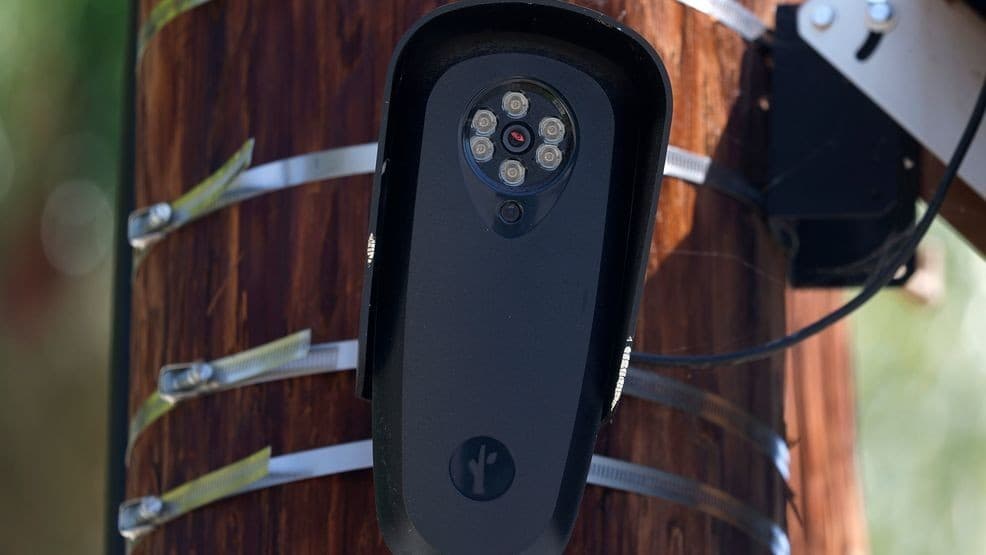
In the fast-evolving nexus of consumer surveillance, AI security vulnerabilities, and law enforcement transparency, recent developments reveal deepening complexities and urgent demands for accountability, privacy protections, and ethical governance. From expanding community surveillance tools and new public safety apps to troubling misuse of police technology and critical AI flaws, the landscape underscores a pivotal moment where technological innovation collides with civil liberties and democratic oversight.
---
### Expanding Consumer Surveillance: New Tools and Growing Concerns Over Privacy, Consent, and Data Governance
Amazon Ring’s **Search Party** feature continues to amplify community-powered surveillance by enabling users to share and search video footage across neighborhoods to locate missing persons and pets. This expansion dovetails with new consumer-facing safety applications, such as **WPI Safe**, a campus safety app launched in early 2026, designed to provide real-time alerts and communication channels for students and staff.
Simultaneously, platforms like **Ring Neighbors** have become focal points for grassroots information sharing about sensitive events, illustrated by community-organized exchanges about **ICE and police raids**, highlighting how these apps have evolved into hubs for social-political awareness but also raised fresh questions about surveillance boundaries.
Key concerns include:
- **Normalization of Ubiquitous Surveillance:** These tools embed continuous video monitoring into daily life, potentially creating pervasive informal surveillance networks. Critics warn this could exacerbate surveillance of marginalized communities and chill social and civic interactions.
- **Opaque Data Governance:** Despite user benefits, Amazon’s and other platforms’ policies around data storage, sharing, retention duration, and third-party or law enforcement access remain insufficiently transparent. Questions linger about:
- How video footage and metadata are managed
- The duration of data retention
- Safeguards against unauthorized access or breaches
- **Community Consent and Social Dynamics:** Many users appreciate enhanced safety, but privacy advocates emphasize the need for explicit, informed consent mechanisms for neighbors captured on cameras. The lack of clear opt-in/opt-out options and limited community engagement risks eroding trust.
- **New Safety Apps and Surveillance Creep:** The rollout of apps like **WPI Safe** reflects an institutional embrace of digital surveillance tools under the guise of safety. While promising improved responsiveness, these apps raise additional questions about data handling, user control, and potential mission creep beyond stated safety purposes.
Together, these developments illustrate the expanding footprint of consumer surveillance technologies and the intricate balance between collective security and individual privacy rights.
---
### Law Enforcement Surveillance Misuse and Transparency Challenges
The criminal charges against a **Milwaukee police officer for unauthorized use of Flock Safety’s license plate reader (LPR) system** have brought renewed focus to governance gaps in law enforcement surveillance:
- The officer is accused of conducting improper searches, spotlighting **risks of abuse** when internal controls, audit trails, and accountability mechanisms are weak or unenforced.
- This incident has galvanized calls from civil rights groups for **transparent policies, independent audits, and strict access controls** to prevent surveillance misuse and restore public confidence.
- **Encrypted Police Communications:** In parallel, shifts such as the encryption of police radio scanners in Metro Detroit raise concerns about a transparency trade-off. While encryption enhances officer safety and operational security, it also **limits community oversight**, complicating watchdog efforts and potentially eroding trust.
- **Community Impact:** These dynamics reveal the tension between operational security for law enforcement and the public’s right to transparency and accountability. Without clear frameworks balancing these priorities, the risk of unchecked surveillance and diminished civil liberties grows.
---
### AI-Powered Policing and Public Safety: Efficiency Gains Shadowed by Opacity and Bias Risks
Law enforcement agencies are increasingly integrating AI tools to enhance responsiveness and investigative capacity, but these advances carry embedded challenges:
- **Chicopee, Massachusetts’ AI-Powered Response Center** has introduced AI-driven real-time data analysis that can resolve cases within minutes, demonstrating significant efficiency gains. However, concerns remain about:
- The **opacity** of AI decision-making algorithms
- Potential **biases entrenched in training data and models**
- The adequacy of oversight, data retention policies, and community engagement
- **UK Police Use of AI:** UK forces have leveraged AI in complex investigations, such as dismantling an international fraud operation involving the “Fuck the Police” gang, which pilfered £800,000. Officials describe AI as an “efficiency multiplier” rather than a substitute for human judgment. Still, ethical questions about AI fairness, accountability, and transparency persist.
- These examples highlight the **delicate balance** between leveraging AI’s power to improve public safety and guarding against unintended harms such as racial or socio-economic bias, lack of explainability, and erosion of due process.
---
### AI Security Vulnerabilities: The Anthropic Claude Zero-Click RCE Incident
The discovery of a **zero-click remote code execution (RCE) vulnerability** in Anthropic’s Claude AI model has intensified scrutiny of AI security:
- The flaw allows attackers to execute arbitrary code remotely, without any user interaction, risking:
- Silent compromise of AI systems
- Unauthorized data access or exfiltration
- Tampering with AI outputs
- Potential cascading effects on critical infrastructure relying on AI
- Anthropic’s rapid response—issuing patches and advisories—reflects emerging best practices in AI vulnerability management, yet the episode underscores the urgent need for:
- Continuous, specialized security audits tailored to AI architectures
- Automated tools for detecting AI-specific vulnerabilities
- Transparent disclosure policies to maintain stakeholder trust
- This event is a stark reminder that **securing AI systems is foundational** to their responsible deployment, especially as these models increasingly influence sensitive decisions in public safety, healthcare, finance, and governance.
---
### Policy and Governance Imperatives: Toward Balanced, Inclusive, and Secure Surveillance Ecosystems
The convergence of expanding consumer surveillance, law enforcement technology misuse, AI security risks, and encrypted policing communications demands comprehensive policy and governance responses:
- **Updated Regulatory Frameworks:** Policymakers must craft nuanced laws that:
- Define clear data governance and privacy standards for platforms like Amazon Ring and emerging campus safety apps
- Mandate enforceable AI ethics and security guidelines for developers and vendors
- Require transparency, community consultation, and accountability in law enforcement technology adoption
- **Robust Independent Oversight:** Empowering independent bodies with civil society participation is critical to monitor surveillance and AI deployments, ensuring:
- Ethical compliance and bias mitigation
- Transparent reporting and accountability mechanisms
- Public engagement in surveillance governance decisions
- **Security-First Development and Operations:** Vendors and agencies should embed privacy and security protections across the product lifecycle by:
- Implementing proactive vulnerability scanning and rapid patching protocols
- Providing transparent data handling policies and user control tools
- Designing AI systems to prevent discrimination and misuse
- **Community Engagement and Consent:** Meaningful involvement of affected communities fosters trust and legitimacy, ensuring surveillance technologies serve public safety without compromising rights.
---
### Conclusion
The expanding reach of consumer surveillance tools like Amazon Ring’s Search Party, new safety apps such as WPI Safe, and the politicized use of platforms like Ring Neighbors illustrate the growing ubiquity of surveillance in daily life. Meanwhile, the Milwaukee police misuse scandal and encrypted police communications highlight persistent governance and transparency challenges. AI’s increasing role in policing—exemplified by Chicopee’s command center and UK investigative successes—demonstrates both promise and peril, further complicated by critical security vulnerabilities like Anthropic Claude’s zero-click RCE flaw.
**These intertwined developments emphasize that technological progress alone cannot guarantee safer or fairer societies.** Instead, deliberate, inclusive governance frameworks, rigorous security practices, and ongoing community engagement are essential to safeguard privacy, civil liberties, and public trust in the digital age.
As the surveillance and AI landscapes evolve, the stakes could not be higher. The choices made now by developers, policymakers, law enforcement, and civil society will shape whether these powerful tools become forces for collective good or instruments of unchecked control and vulnerability.