# The Evolving Landscape of Caribbean and Rioplatense Spanish: Innovations, Resources, and Cultural Resilience
Spanish continues to be a living, breathing tapestry of regional dialects, rich histories, and cultural expressions. Among its most vibrant variants are **Caribbean Spanish** and **Rioplatense Spanish**, each embodying distinct phonetic features, grammatical structures, and deep-rooted identities. Recent technological advancements, multimedia proliferation, and innovative educational tools are revolutionizing how learners, linguists, and cultural enthusiasts engage with these dialects—making authentic communication and immersive cultural understanding more accessible than ever before.
## Celebrating Dialectal Distinctiveness: Core Features and Cultural Significance
### Caribbean Spanish: The Rhythms of Speed, Consonant Dynamics, and Cultural Roots
Renowned for its **musicality**, **rapid tempo**, and **lively intonation**, Caribbean Spanish reflects a vibrant blend of **African**, **indigenous**, and **colonial** influences. Its distinctive traits include:
- **Aspirated or Dropped “s”**: A hallmark trait involves the aspiration or omission of the final “s,” leading to pronunciations like *estás* becoming *etá* or *los amigos* transforming into *lo amigo*. Recent innovations include **AI pronunciation applications** that provide **real-time feedback** and **interactive exercises**, simulating street speech. These tools enable learners to practice authentic pronunciation in conversational contexts, bridging the gap between classroom theory and real-world usage.
- **R~L Variations and Softening**: The merging or softening of “r” and “l” sounds—such as pronouncing *puerto* as *puert’o*—adds regional flavor. Multimedia resources like street interviews, music videos, and colloquial dialogues serve as vital references for internalizing these phonetic nuances.
- **Elision and Rapid Speech**: The energetic tempo, combined with consonant elision, results in speech that is **fast-paced and lively**. Authentic street dialogues, music, and telenovelas incorporated into curricula enhance immersive practice. The advent of **graded listening series** and **interactive pronunciation exercises** has significantly improved comprehension and conversational fluency, particularly in understanding rapid speech.
### Rioplatense Spanish: The Melodic Accent, European Influences, and Cultural Heritage
Centered mainly in **Uruguay** and **Argentina**, Rioplatense Spanish is distinguished by:
- **Voseo**: The widespread use of **“vos”** instead of “tú,” with conjugations like *vos tenés* and *vos sos*, remains a defining feature. Recent educational resources include **comprehensive conjugation guides**, **dialogue exercises**, and **native speaker audio**, aiding learners in confidently adopting voseo in everyday interactions.
- **Yeísmo Rehilado**: This phonetic trait involves pronouncing **“ll”** and **“y”** as **[ʃ]** (“sh”) or **[ʒ]** (“zh”), making *playa* sound like *plasha*. Influenced by Italian immigration, yeísmo rehilado shapes both speech and social identity. Updated guides, videos, and dialogues now emphasize mastery of this feature, illustrating its pervasive influence on music, idioms, and social interactions.
- **Cultural Practices**: The dialect intertwines with customs such as **mate drinking**, social rituals, and idiomatic expressions rooted in European traditions. Recent media vividly showcase these cultural elements—through stories, idioms, and social contexts—adding depth to language mastery and regional pride.
---
## Recent Innovations in Resources, Media, and Cultural Content
The digital age has democratized access to authentic dialects, leading to an explosion of **specialized learning tools** that bridge classroom theory with real-world usage. Notable recent developments include:
### Enhanced Phonetic and Grammatical Guides
- **Pronunciation Tools**: Interactive tutorials now emphasize features like **aspirated/dropped “s”**, **voseo**, and **yeísmo rehilado**. These include **full conjugation tables**, **pronunciation exercises**, and **contextual practice sessions**. Cutting-edge **voice recognition technology** analyzes learner pronunciation, providing **targeted corrections**—a game-changer for mastering regional accents.
- **Graded Listening Series**: Platforms such as **YouTube** host series like **"Aprende español escuchando: 10 diálogos auténticos"**, which progressively challenge learners with genuine street slang, idioms, and pronunciation cues. Features such as subtitles and cultural annotations deepen understanding and contextual awareness.
### Authentic Media and Cultural Content
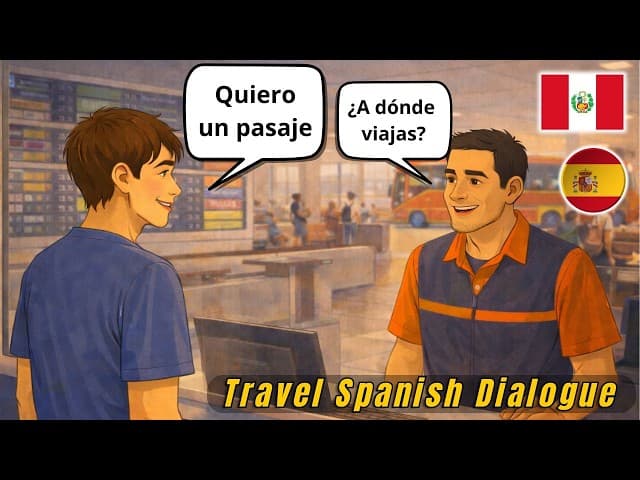
- **Dialogues and Situational Videos**: Content such as **"No pierdas el bus: Español de la calle (A1/A2)"** and **"Cómo afrontar problemas en un viaje"** showcase real-life interactions, street expressions, travel phrases, and idiomatic language—enabling learners to simulate genuine conversations.
- **Cultural and Festive Content**: Videos like **"Tradiciones de Año Nuevo en LATAM"** and **"Aprende español hablando sobre la vida diaria"** immerse learners in customs, idioms, and social practices—fostering regional pride and cultural understanding.
### Newly Published Practical Resources
Recent publications further support effective language acquisition:
- **Vocabulary and Conversation Guides**: Titles such as **"Cómo presentarse en español"** and **"Aprende 3 palabras de transporte en español"** expand regional vocabulary, often including idiomatic expressions specific to Caribbean and Rioplatense dialects.
- **Listening and Practice Materials**:
- **"10 diálogos simples en español para viajar"**—rich in idioms and pronunciation cues tailored for travelers.
- **"Aprende español comprando con imágenes"**—visual vocabulary reinforcement.
- **"Aprende 300+ preguntas importantes en español"**—crucial for real-world interactions.
- **Authentic Dialogue Resources**: The **"Diálogos y frases útiles en español con pronunciación perfecta"** segment on YouTube (18:54 mins) combines authentic conversations with pronunciation tips, emphasizing features like aspirated “s,” voseo, and yeísmo rehilado, helping learners develop regional fluency.
### Expanded Practice and Narrative Resources
New content includes:
- **"Aprende ESPAÑOL RÁPIDO: 100 frases básicas en español"** (14 mins), offering essential regional expressions.
- **"❤️Me casé con un joven"** (35:36 mins), an engaging story embedding regional vocabulary and idioms for contextual learning.
- **"Domina los pronombres en español rápidamente"** (56 mins), an intensive course focusing on complex pronoun structures like **“Me lo / Te lo / Nos lo / Se lo”**, crucial for grammatical mastery and regional expression.
### Practical Resources for Beginners and Immigrants
To support newcomers, recent videos such as **"Practice Daily Spanish | Common Objects Sentences"** (26:52 mins) and conjugation tools like **"Ella Verbs App"** facilitate foundational vocabulary and verb forms, emphasizing regional pronunciation features to build confidence early on.
Additional resources include:
- **"🎥 Learn Spanish Visiting the Doctor | Beginners A1-A2"** (5:54 mins) for medical vocabulary.
- **"Spanish Dialogues for New Immigrants | Survival Conversations (A1–A2)"** (15:14 mins) for navigating social and healthcare situations.
### Visual and PDF Resources
- **"Learn BODY PARTS in Spanish"** (4:46 mins): A visual vocabulary lesson ideal for visual learners.
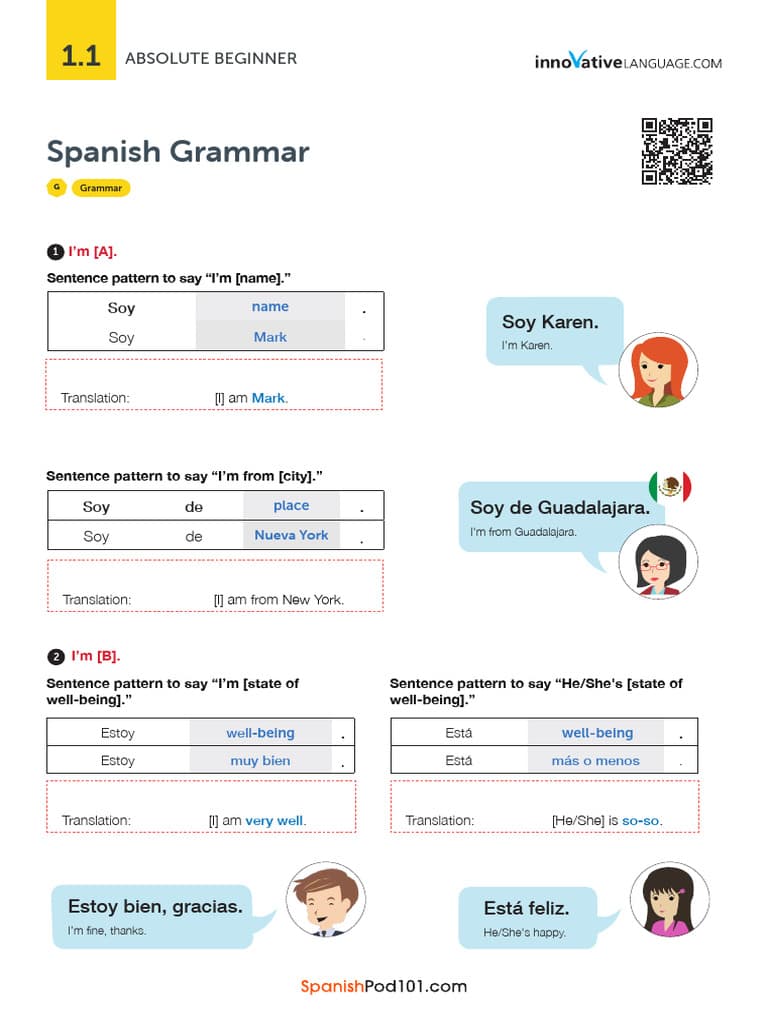
- **"Spanish For Dummies" (PDF)**: An introductory guide covering greetings, basic phrases, and grammar—perfect for beginners seeking foundational knowledge.
### Focused Listening and Speaking Practice
The surge of **short podcasts** and **drill videos** enhances **practical fluency**:
- **"Spanish Podcast for Beginners | How to Think in Spanish"** (6:45 mins): Promotes internalizing idiomatic expressions and pronunciation cues.
- **"7 Minute Spanish Drills+ 690"** (7:25 mins): Offers quick exercises reinforcing vocabulary, pronunciation, and grammatical features like aspirated “s” and voseo.
A recent addition, **"Slow Spanish Listening & Speaking Practice LIVE"** (54 mins), explicitly designed for beginners, emphasizes **slow, clear speech with authentic dialectal features**—vital for building spontaneous conversational confidence.
### New Authentic Listening Resource: "Español Práctico Podcast: Hablar del Tiempo"
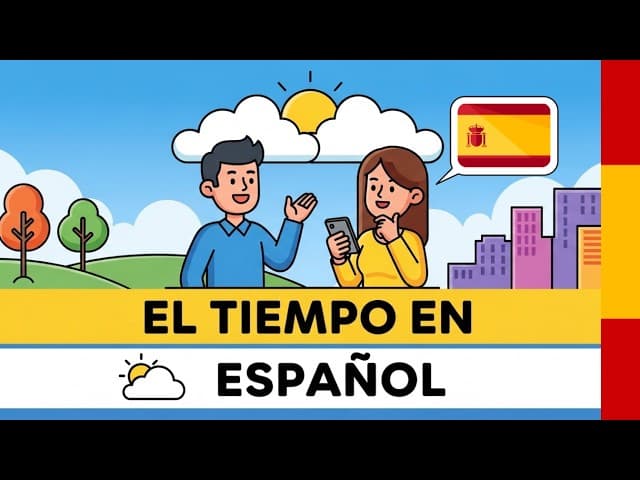
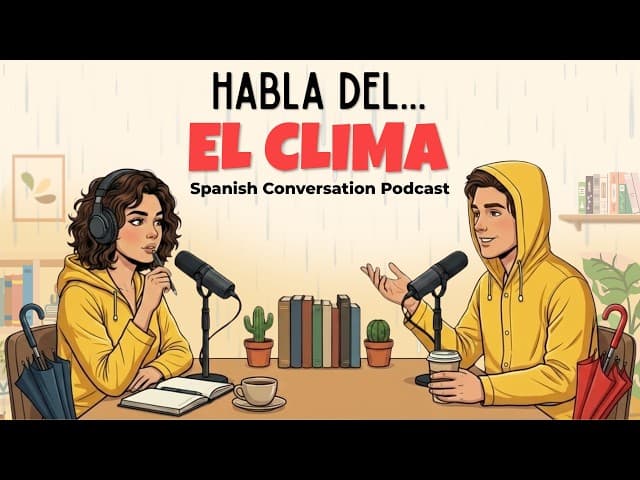
Adding to the suite of listening tools, the **"Español Práctico Podcast: Hablar del Tiempo en Español como un Nativo"** (YouTube, 19:47 mins) offers learners an engaging, authentic listening experience. This episode focuses on weather-related vocabulary and expressions, employing regional intonation patterns typical of Caribbean and Rioplatense speech. It is an ideal resource for practicing **everyday phrases**, understanding **regional pronunciation**, and gaining confidence in natural speech flow.
---
## Incorporating Focused Listening and Speaking Practice
The rise of **short podcasts** and **drill videos** underscores the importance of **practical, real-time fluency**:
- **"Spanish Podcast for Beginners | How to Think in Spanish"** helps learners internalize idiomatic expressions and regional pronunciation cues.
- **"7 Minute Spanish Drills+ 690"** provides rapid reinforcement of vocabulary and pronunciation, perfect for busy schedules.
Furthermore, **live practice sessions** like **"Slow Spanish Listening & Speaking Practice LIVE"** foster spontaneous dialogue, promoting authentic regional pronunciation and conversational ease.
## Cultural Inspiration and Authentic Engagement
Authentic media continues to motivate learners. A notable success story features a woman who immersed herself in regional music, street interviews, and social media content—augmented by AI pronunciation tools—and achieved **remarkable fluency** in regional accent and cultural nuance.
Audiobooks such as **"🐯 El Tigre"** by Horacio Quiroga further deepen immersion, exposing learners to idiomatic expressions, vocabulary, and regional intonations in authentic contexts.
---
## Technological Innovations and the Future of Dialect Mastery
The future of mastering Caribbean and Rioplatense Spanish is promising, driven by **advanced AI** and **virtual reality (VR)**:
- **AI and Speech Recognition**: New tools now offer **real-time correction** for features like aspirated “s,” voseo, and yeísmo rehilado, enabling learners to refine pronunciation with high precision.
- **VR and Virtual Exchanges**: Platforms facilitating **live conversations with native speakers** and **virtual environments**—such as Caribbean street markets or Argentine cafés—simulate authentic social settings, crucial for pragmatic fluency and cultural immersion.
- **Digital Preservation Projects**: Initiatives documenting and celebrating dialectal diversity help preserve these vibrant varieties amid globalization, fostering regional pride and linguistic resilience.
### Projected Innovations
Looking ahead, we anticipate:
- **Immersive VR environments** replicating regional settings for experiential learning.
- **AI-powered personalized learning pathways** that adapt to individual dialectal challenges.
- **Community-driven digital archives** capturing evolving slang, idioms, and social expressions—ensuring dialects remain dynamic and relevant.
## Addressing Digital Inequality: Challenges and Solutions
While technological progress offers unprecedented opportunities, **digital inequality** remains a significant barrier. A recent podcast titled **"Learn Spanish: Digital Inequality & Tech Access"** (8:52 mins) highlights disparities in access to devices, high-speed internet, and quality educational resources. Key points include:
- **Socioeconomic factors** can limit access to dialect-specific learning tools.
- **Community initiatives** and **public policies** are vital to bridge these gaps, such as providing free or subsidized internet, devices, and digital literacy programs.
- **Open-access resources**, including free tutorials, public media content, and language exchange platforms, are crucial for democratizing dialect learning.
Ensuring **inclusive access** is essential for preserving linguistic diversity and fostering global proficiency in Caribbean and Rioplatense Spanish.
---
## Broader Regional Depth: Spotlight on Dominican Spanish
To deepen regional understanding, recent resources focus on **Dominican Spanish**, highlighting its unique phonetic traits, vocabulary, and cultural expressions. For instance, an article titled **"Dominican Republic Language Unveiled: Understanding Spanish in the Caribbean"** explores:
- The **aspirated “s”** and **elision tendencies** prevalent in Dominican speech.
- Vocabulary specific to the island, such as **"quillao"** (a state of annoyance) or **"tiguere"** (a street-smart individual).
- Cultural expressions embedded in genres like **bachata** and **merengue**, which serve as authentic sources for linguistic and cultural immersion.
This regional focus underscores that **each island’s speech** reflects its unique history, migration patterns, and social fabric, illustrating the rich diversity within Caribbean dialects.
---
## Practical Strategies for Effective Mastery
To navigate this complex linguistic landscape, learners should:
- **Immerse in authentic media**: Regularly listen to regional music, watch street interviews, and follow local social media accounts to familiarize themselves with natural speech patterns.
- **Prioritize phonetics**: Use targeted pronunciation guides and exercises to master features like aspirated “s,” voseo, and yeísmo rehilado.
- **Progress gradually**: Begin with survival phrases and simple dialogues, then advance to authentic content and media.
- **Engage native speakers**: Participate in online language exchanges, virtual meetups, or VR conversations to develop pragmatic skills and cultural awareness.
## Current Status and Broader Implications
Today, **the dialectal diversity of Spanish** is **more accessible and vibrant than ever**. The proliferation of authentic media, AI-driven pronunciation correction, and virtual exchange platforms has democratized dialect mastery worldwide. This not only enhances **linguistic proficiency** and **cultural appreciation** but also **preserves regional identities** amid globalization.
As Caribbean, Rioplatense, and Dominican Spanish continue to evolve through digital media and technological innovation, they serve as **living embodiments of regional history, social customs, and cultural pride**. These dialects foster **intercultural dialogue**, reinforce community bonds, and celebrate linguistic diversity within the broader Spanish-speaking world.
---
## Final Reflections
The ongoing evolution of educational resources—ranging from **visual vocabulary videos** and **comprehensive PDFs like "Spanish For Dummies"** to **themed dialogues** and **interactive practice modules**—makes mastering Caribbean, Rioplatense, and Dominican Spanish **more engaging and achievable**. By immersing in authentic media, leveraging technological tools, and embracing cultural practices, learners can confidently navigate and celebrate the richness of these dialects.
This approach not only enhances individual language skills but also **ensures the vitality, relevance, and continued evolution** of these regional varieties in an interconnected world.
---
### **In summary:**
- **Caribbean Spanish** features **speed**, **consonant elision**, and lively slang rooted in African and indigenous influences.
- **Rioplatense Spanish** is distinguished by **voseo**, **yeísmo rehilado**, and European immigrant influences that shape its phonetics and social fabric.
- **Dominican Spanish** adds a vibrant layer, with unique pronunciation and vocabulary reflecting island identity.
- Recent resources—from **travel dialogues** and **emergency phrases** to **street-level conversations** and **pronunciation drills**—support learners at all levels, fostering regional fluency.
- **Technological innovations** like **AI pronunciation correction**, **interactive tutorials**, **podcasts**, and **virtual exchanges** have democratized dialect learning, making it more immersive and practical.
- The **future** promises further integration of **VR environments**, **AI personalization**, and **digital preservation efforts** to sustain dialect vitality and cultural relevance.
**The vibrant evolution of Caribbean, Rioplatense, and Dominican Spanish reflects both their deep cultural roots and their adaptive resilience in a digital age. Embracing these developments empowers learners to participate fully in the linguistic and cultural tapestry of the Spanish-speaking world, ensuring these dialects remain lively, relevant, and celebrated for generations to come.**