# Urban Drivers Still Spend Up to 15 Minutes Searching for Parking Despite Technological Advancements
Urban centers worldwide continue to grapple with a stubborn challenge: despite decades of technological innovation and policy efforts, **approximately two-thirds of city drivers** still spend **up to 15 minutes** searching for parking during peak hours. This persistent issue contributes significantly to **traffic congestion**, **vehicle emissions**, and **driver stress**, undermining urban livability and economic productivity.
While the landscape of parking management is evolving rapidly—with breakthroughs in real-time data, smart infrastructure, and integrated mobility solutions—the reality remains that many cities are yet to fully realize the potential of these innovations to substantially reduce search times. Recent developments, however, signal a promising shift toward smarter, more resilient, and more sustainable parking ecosystems.
---
## The Ongoing Parking Search Problem and Its Urban Impact
Data from parking-mobility.org underscores that **average parking search times hover around 15 minutes**, with some drivers experiencing even longer delays, especially during rush hours or adverse weather conditions. This inefficiency fosters a cascade of urban problems:
- **Traffic gridlock** caused by vehicles circling in search of parking spots
- **Increased vehicle emissions**, contributing to urban air pollution
- **Reduced mobility and productivity** for commuters and visitors
- **Heightened driver stress and frustration**
In response, stakeholders—municipal governments, private tech firms, and urban planners—have deployed various solutions aimed at **streamlining parking management** and **alleviating congestion**.
---
## Recent Innovations and Strategic Deployments
### Expansion of Real-Time Parking Data: INRIX and Beyond
A major recent milestone is **INRIX’s expansion** of its **Real-Time Occupancy service**, now covering **multiple metropolitan areas worldwide**. The company announced:
> **"INRIX has extended its coverage of real-time parking and loading occupancy data across numerous cities, providing drivers with up-to-date information on available parking spots and loading zones."**
This enhancement enables drivers to **access live parking conditions via navigation apps**, markedly **reducing search times**. Municipalities integrating this data can **offer more accurate and accessible parking information**, directly improving traffic flow and user experience.
### Adoption of Parking Apps and Venue-Specific Systems
Beyond INRIX, **dedicated parking management apps** leveraging **sensor networks**, **machine learning**, and **continuous data feeds** are becoming more prevalent:
- **Incheon Airport**, South Korea, recently launched **real-time parking status updates** for travelers, allowing them to **plan arrivals better** and **avoid unnecessary circling** around the airport premises.
- The **University of Kentucky (EKU)** has partnered with **ParkZen**, becoming **Kentucky’s first campus** to adopt the platform. An EKU spokesperson highlighted:
> **"Circling parking lots in search of an open space is a common frustration. With ParkZen, students and visitors can view real-time parking availability, saving time and reducing campus congestion."**
These examples demonstrate how **smart parking apps** are increasingly integrated into institutional and municipal settings to **streamline parking operations** and **enhance user convenience**.
### Parking Visibility Technologies and Revenue Optimization
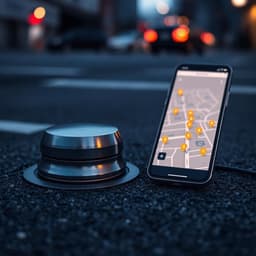
Emerging **parking visibility systems** utilize **sensor networks, cameras, and data analytics** to monitor occupancy **in real-time**. These innovations:
- **Transform traditional garages into dynamic revenue engines**
- **Optimize space utilization**
- **Improve customer satisfaction**
Industry expert Sarah Lin notes:
> **"Parking visibility technology is turning garages into revenue streams. Operators can better manage occupancy, reduce idle time, and provide reliable information to drivers."**
This approach benefits **drivers**, by **reducing search times**, and **parking operators**, by **maximizing revenue in high-demand zones**—further fostering **more sustainable business models**.
### Broader Trends: Dynamic Pricing and Multimodal Integration
Many cities are adopting **demand-based pricing models** to encourage turnover and alleviate congestion. Investments in **sensor-equipped parking bays**, **connected street infrastructure**, and **advanced data collection systems** are becoming more widespread. These technological strides aim to **minimize search times**, **improve traffic flow**, and **reduce emissions**.
An example of multimodal integration is the **Washington Metropolitan Area Transit Authority (WMATA)**, which now provides **real-time parking availability and costs** alongside transit schedules:
> **"Explore DC, Maryland, and Virginia via Metro—where parking availability and costs are accessible in real time. This synergy encourages commuters to **use transit options** instead of circling for parking."**
Such integrated systems help **distribute travel demand more evenly**, easing urban congestion and supporting sustainable mobility strategies.
---
## New Challenges: Weather, Privacy, and Equity
Despite technological progress, **weather and seasonal disruptions** remain significant hurdles:
- **Winter storms, snow, and ice** can dramatically **reduce parking availability** and **increase hazards**.
- Recent reports indicate that **freezing temperatures** make many parking spots inaccessible or unsafe, **exacerbating congestion and frustration**. An article titled **"Student parking concerns freeze over as parking availability decreases due to ice and freezing temperatures"** highlights these issues.
Additionally, the deployment of **surveillance technologies** like **Automated License Plate Reader (ALPR)** systems—used by cities such as **Redwood City** to improve enforcement and revenue—raises **privacy** and **equity concerns**. Communities are increasingly cautious about ensuring such systems **respect individual rights** and **do not disproportionately impact vulnerable populations**.
---
## Market Growth and the Path Forward
The **parking management market** is projected to experience significant growth, driven by **smart city initiatives** and **urban mobility innovations**. Industry reports, such as **"Parking Management Market Outlook: Smart City Development and Mobility Growth Opportunities,"**, highlight:
> **"The integration of sensor-enabled infrastructure, demand-responsive pricing, and data analytics is accelerating the transformation of urban parking systems, fostering more sustainable, accessible, and efficient environments."**
Looking ahead, the focus is on developing **resilient, privacy-conscious, multimodal systems** that further **reduce search times** and **cut emissions**. Projects like **ParkWiser**, an AI-powered platform, exemplify this trajectory:
> **"ParkWiser is an AI-powered smart parking platform designed to optimize parking management through advanced data analytics and automation."**
---
## Current Status and Implications
In sum, the combination of **technological innovations**—from expanded real-time data to smart infrastructure and integrated transit systems—is **fundamentally transforming urban parking**. Although **many drivers still face lengthy search times**, ongoing developments **hold promise** for **significantly reducing these delays**.
Cities and private entities are increasingly recognizing that **efficient parking management** not only **improves driver experience** but also **reduces congestion**, **lowers emissions**, and **enhances urban resilience**. With **market growth forecasts** and **innovative pilot projects**, the future points toward **smarter, more sustainable mobility ecosystems** where **finding parking is faster, easier, and less stressful** for all urban travelers.