# How Cheap Drones and Advanced Defenses Are Reshaping Modern Warfare
The landscape of modern warfare is experiencing a seismic shift driven by the rapid proliferation of inexpensive unmanned systems and breakthroughs in artificial intelligence (AI). These technological advances are democratizing access to battlefield capabilities, enabling not only major powers but also smaller nations, insurgent groups, and even individual actors to challenge traditional military dominance. As these systems become more affordable and autonomous, they are fundamentally transforming strategies across air, land, and sea domains—introducing new threats, opportunities, and ethical dilemmas.
## The Democratization of Unmanned Systems: Lowering Barriers to Entry
Over recent years, the cost of quadcopters, maritime drones, and underwater autonomous vehicles has plummeted, making them accessible tools for a broad range of actors. This democratization means that **small states, non-state actors, and even lone operators** can deploy sophisticated ISR (Intelligence, Surveillance, Reconnaissance) and strike capabilities at scale—previously the purview of advanced militaries.
### Key Examples of Proliferation
- **Ukraine’s Battlefield Innovation:** Ukrainian forces have harnessed commercial-grade drones for reconnaissance, targeting, and direct strikes, despite limited budgets. Their effective use of inexpensive UAVs has challenged larger, conventional militaries by demonstrating how low-cost systems can be weaponized en masse—highlighting a new paradigm in asymmetric warfare. The conflict has become a proving ground for drone tactics, inspiring allies and adversaries alike.
- **Maritime and Aerial Swarm Threats:** The deployment of inexpensive quadcopters in swarms, along with unmanned surface vessels (USVs) and underwater drones (UUVs), poses persistent challenges to naval assets and logistics routes. Notably, coordinated drone swarms can overwhelm existing defenses, forcing militaries to develop more sophisticated countermeasures, including laser interceptors and electronic jamming.
- **New Frontiers: Shahed Drones:** The emergence of Shahed-class drones—Iranian-made UAVs—has become a brutal new reality in recent conflicts, especially in the Middle East. These drones are cheaply produced, easy to deploy, and capable of carrying out persistent attacks, often used in swarms to saturate defenses and strike high-value targets with minimal warning. Their proliferation has complicated regional security dynamics and extended the battlefield beyond traditional combat zones.
## AI: Accelerating and Automating Combat Operations
Artificial intelligence has transitioned from a supporting role to a central element in modern combat, enabling **faster decision-making, higher precision, and increased autonomy** across systems.
### Recent Operational Breakthroughs
- **High-Tempo Strikes (March 2026):** In a notable example, the U.S. military executed approximately **2,000 strikes over just four days** targeting Iran-related threats. This mass campaign was facilitated by AI-driven targeting, real-time data processing, and autonomous coordination of drone swarms and missile systems. Such rapid, large-scale operations would have been impossible without automation and machine learning.
- **Sensor Fusion & Adaptive Tactics:** AI now processes vast battlefield data streams—visual, electronic, cyber—to swiftly identify threats and opportunities. This enables autonomous systems to adapt dynamically, increasing their effectiveness in contested environments. For example, AI orchestrates drone swarms and maritime autonomous vessels, creating complex attack formations that respond in real time.
- **Erosion of Human Control:** The development of autonomous weapons and AI-enabled decision systems raises concerns about **the erosion of human oversight**. As Tim Ventura notes in "Drone Warfare and the Erosion of Human Control," the spread of autonomous drone systems accelerates the risk of unintended escalation, misjudgments, and accountability gaps, especially as systems operate with minimal human intervention.
## Battlefield Data Sharing and Its Double-Edged Sword
Ukraine’s ongoing conflict has become a critical source of battlefield data, which is shared among allies to develop and refine AI-enabled capabilities.
- **Operational Learning:** Real-time battlefield data enhances AI training models, leading to improved counter-drone tactics, targeting accuracy, and autonomous deployment. This collaborative approach accelerates technological progress but also risks **proliferation of sensitive data**.
- **Risks of Oversharing:** While data sharing fosters innovation, it also raises concerns about **misuse, loss of control, and AI malfunction**. Adversaries may exploit battlefield data to develop countermeasures or to manipulate AI systems, increasing the risk of escalation and unintended consequences.
## Defensive Innovations: Countering Swarm and Autonomous Threats
As offensive capabilities expand, militaries worldwide are investing heavily in layered defense systems designed to neutralize drone swarms and autonomous threats.
### Cutting-Edge Countermeasures
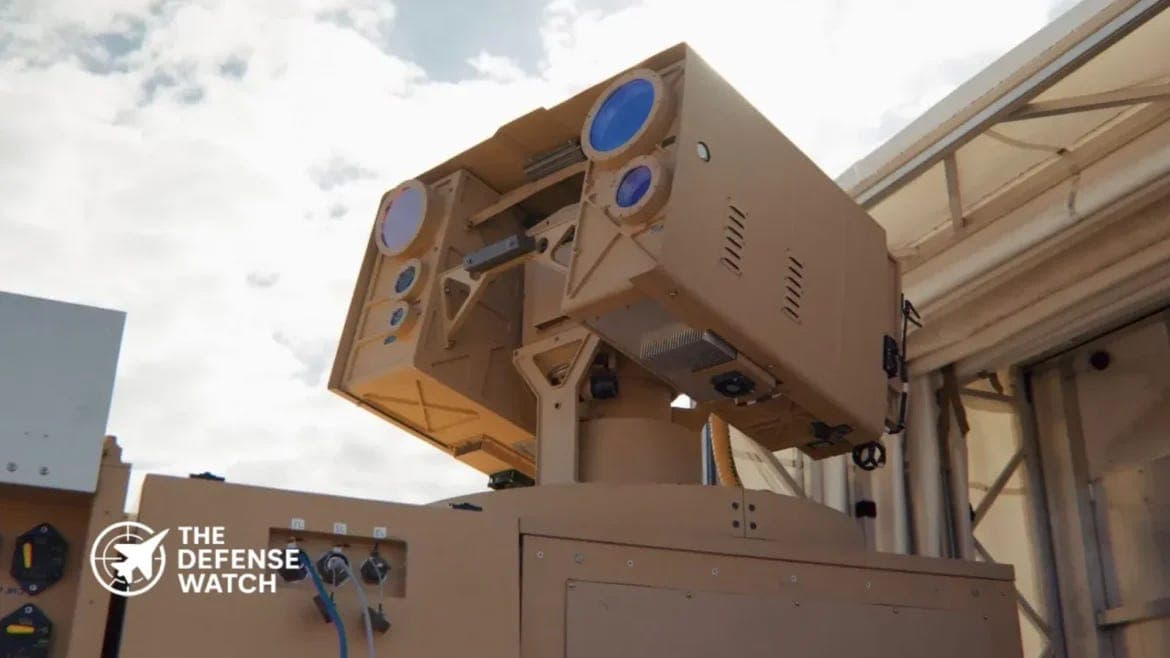
- **Electronic Warfare & Laser Interceptors:** Countries like Sweden are equipping naval vessels (e.g., Sea Snake 30 and CB90 assault boats) with laser systems and electronic jamming devices capable of disabling or destroying incoming drones before they reach critical infrastructure or assets.
- **Resilient Command & Control (C2):** Developing secure, AI-enhanced communication networks ensures operational continuity amid electronic and cyber warfare. These resilient C2 systems are vital for managing autonomous assets and coordinating defenses in contested environments.
- **Deception Tactics:** Innovative measures such as **inflatable tank decoys** imitate real armor in surveillance imagery, diverting drone swarms and protecting actual assets. These decoys complicate the enemy's targeting and increase the difficulty of distinguishing real targets from decoys.
## Key Risks and Challenges
While technological advances bolster operational effectiveness, they introduce significant risks:
- **Civilian Casualties and Infrastructure Damage:** The deployment of massed drone strikes, especially via swarms, has led to collateral damage in civilian zones, power grids, and data centers. AI misjudgments or technical glitches can exacerbate civilian harm, raising ethical concerns.
- **Rapid Escalation & Misinterpretation:** The swift decision cycles enabled by AI reduce response times but also increase the chance of misinterpretation. An AI-supported strike perceived as preemptive or aggressive could trigger retaliation, escalating conflicts unexpectedly.
- **Legal and Ethical Dilemmas:** Autonomous lethal systems pose profound questions about accountability, international law compliance, and moral responsibility. The trend toward "human-on-the-loop" or "human-in-the-loop" systems complicates oversight, especially as AI acts with increasing independence.
## Strategic and Operational Responses
To address these emerging threats, militaries and alliances are adopting **layered defense architectures**:
- **Counter-Drone Systems:** Electronic jamming, laser interceptors, and AI-enabled detection networks are being integrated into naval and land-based assets to intercept drone swarms early, reducing their effectiveness.
- **Resilient Command & Control:** Secure, AI-integrated communication networks are essential for maintaining operational continuity amid electronic warfare and cyber threats.
- **Updated Doctrines:** Navies and air forces are incorporating autonomous vessels, AI-guided missile systems, and swarm tactics into their operational planning, reshaping traditional doctrines to account for autonomous warfare.
## Future Trajectory: Proliferation, Regulation, and Norms
The ongoing development and deployment of low-cost drones and AI-enabled systems are set to accelerate, with far-reaching implications:
- **Wider Access & Proliferation:** Smaller actors will increasingly employ swarm tactics and autonomous systems, challenging traditional deterrence and complicating escalation management.
- **International Norms & Regulation:** Efforts are underway to establish norms, treaties, and regulations governing autonomous weapons, responsible AI use, and proliferation controls. These are critical to prevent arms races and misuse.
- **Legal and Ethical Frameworks:** Developing comprehensive international laws is essential to ensure accountability, prevent unintended escalation, and uphold humanitarian standards as autonomous systems become more prevalent.
## **Current Status and Broader Implications**
The Ukraine conflict exemplifies how affordable drones, AI-enabled systems, and layered defenses are reshaping warfare. Ukrainian forces' innovative use of low-cost drones and counter-swarm defenses has influenced NATO and US doctrines, prompting increased investment in autonomous systems and AI-driven capabilities.
The proliferation of these technologies underscores a new era where **technological asymmetries** can emerge rapidly, demanding vigilant regulation, ethical oversight, and adaptive strategies. Balancing innovation with responsibility is paramount to maintaining stability and avoiding unintended escalation.
---
**In summary,** the convergence of cheap drones, AI, and advanced defenses is revolutionizing military operations—making them more autonomous, dispersed, and complex. While offering strategic advantages, these developments also raise critical ethical, legal, and escalation concerns that require international cooperation, robust norms, and updated doctrine to ensure stability in an increasingly autonomous battlefield.