# Colorado 2024: Navigating Federal Funding Cuts, Environmental Crises, Technological Expansion, and Policy Challenges
As Colorado advances through 2024, the state finds itself at a critical juncture, balancing ambitious growth initiatives with mounting challenges. From federal funding reductions and environmental emergencies to rapid technological development and evolving political landscapes, Colorado’s resilience is being tested on multiple fronts. Recent developments reveal a complex picture of strategic responses, community tensions, and environmental urgency shaping the state's trajectory.
---
## Federal Funding Shortfalls and Legal Efforts to Recover Resources
Colorado’s economic and infrastructure ambitions are increasingly constrained by federal budget cuts that threaten essential programs:
- **Energy and Research Grants**: The state experienced a significant loss of approximately **$600 million in federal energy research grants**, which jeopardizes ongoing renewable energy projects and economic diversification efforts. In response, **Attorney General Phil Weiser** has spearheaded a **lawsuit to recover these funds**, asserting that *"these legal efforts are vital for Colorado to sustain its investments, protect jobs, and continue making strides in sustainable energy."*
- **Healthcare Cost Pressures**: The projected **$776 million increase in Medicaid costs** for 2025–2026 underscores the fiscal pressures on Colorado’s healthcare system amid rising housing, utility, and transportation expenses. Federal courts are currently involved in disputes over unclaimed property, diverting resources from vital health and social programs.
- **Trade and Tariff Shifts**: Recent federal decisions, such as the **Supreme Court’s reversal of Trump-era tariffs**, have temporarily reduced import costs, providing some relief to local industries. However, these shifts introduce **supply chain uncertainties** that Colorado businesses must navigate swiftly. Politicians like **Senator John Hickenlooper** emphasize resilience and sustainability in their campaigns, with support from groups like **Planned Parenthood** and **NRDC** highlighting the interconnectedness of economic and environmental policies.
---
## State-Level Responses: Infrastructure, Healthcare, Housing, and Local Development
Amid federal uncertainties, Colorado has accelerated a suite of initiatives aimed at strengthening community resilience:
- **Healthcare Infrastructure**: The **new surgery center in Pueblo**, led by Dr. Vinh Chung, aims to **reduce patient travel distances** and **expand rural healthcare capacity**, directly addressing disparities worsened by economic hardship and population shifts.
- **Support for Households**:
- The **Family Tax Credit** continues to provide **direct tax relief**, funded through **reallocated business tax breaks**, a strategic move to **reduce income inequality**.
- The **Renter Cash-Back Initiative** offers **immediate financial assistance** to tenants, crucial as the state faces a **shortage of approximately 105,000 affordable housing units** and rising housing costs threaten displacement.
- **Housing and Development Projects**:
- The **Harvest Workforce-Housing Project** near Roaring Fork Valley aims to deliver **1,500 residential units**, alleviating **workforce housing shortages** vital for local economic stability.
- In Greeley, a **special election** resulted in **rejecting zoning reforms** tied to the **Cascadia development**, which includes a hockey arena and a Mattel-themed water park. This vote underscores **community resistance** to rapid growth and concerns over **urban sprawl** and **infrastructure strain**.
- Conversely, **Fort Collins** has purchased **two additional acres** for affordable housing, demonstrating ongoing commitment to **address housing shortages** amid soaring prices.
Recent community tensions include:
- **Greeley voters’ rejection** of zoning reforms related to Cascadia, reflecting **caution and resistance** to unchecked expansion.
- **Fort Collins’ land purchase** signals persistent efforts to bolster affordable housing options despite demographic pressures.
---
## Escalating Environmental and Water Crises
Colorado continues to face urgent environmental emergencies exacerbated by climate change:
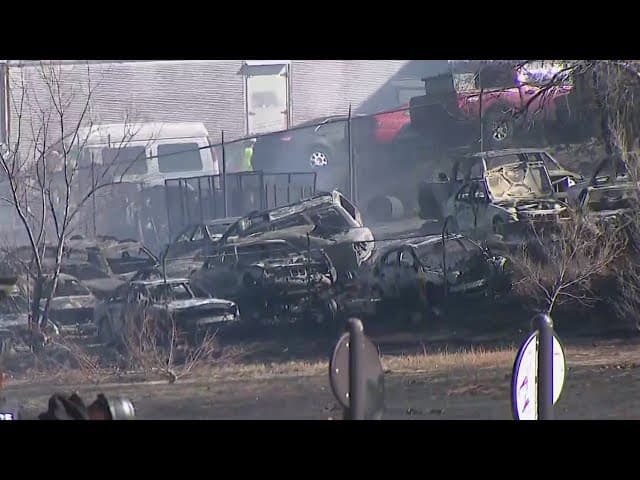
- **Western Drought and Early Wildfire Season**: Persistent drought conditions have led to **declining snowpack levels**, threatening reservoirs, agriculture, and ecosystems. A recent report titled *"Western drought fuels early wildfire season: See the impact"* highlights how **drought-driven fire risks are intensifying** earlier than typical seasons, with notable fires already igniting across the state.
- **Colorado River Negotiations**: Deadlines for basin-wide water agreements have been missed, heightening fears of **severe water restrictions** that could **devastate agriculture and urban supplies**. Environmental advocates warn that **"dire impacts are imminent"** unless swift and sustainable solutions are adopted.
- **Recent Wildfires**:
- The **Dahlberg Fire** in Douglas County burned over **1,000 acres**, prompting evacuations that have since been lifted.
- A **fire in Thornton** caused evacuations and temporarily closed **I-25**, which has now been reopened after containment.
- Eastern Colorado has seen grass fires and urban wildfires, driven by **record warmth**, **Red Flag Warnings**, and dry conditions, illustrating a **persistent wildfire threat** that strains emergency services and infrastructure.
- **Biodiversity Threats**:
- The *"Uncovering Sagebrush Ecosystems"* report emphasizes the **accelerated risk of extinction among sagebrush habitats** due to habitat loss and climate pressures.
- **Beaver populations**, essential for wetlands and water retention, face threats from habitat encroachment and development conflicts, prompting **active management efforts** by **Colorado Parks and Wildlife**.
- Additionally, a **petition** has been filed to **ban the sale, barter, and trade of wildlife fur**, aiming to **protect vulnerable species** but also challenging traditional hunting and trapping practices.
---
## Regulation, Enforcement, and Environmental Safeguards
Colorado has responded to environmental concerns with **stricter regulations**:
- **Regulation 7** has been **updated** to **tighten methane leak detection and emission controls** for oil and gas operations. The **Chevron blowout at the Bishop Well in Galeton** resulted in potential fines of **$1.5 million**, marking a significant enforcement action.
- Recent studies suggest that **methane emissions are substantially underestimated**, underscoring the need for **enhanced monitoring and reporting** protocols. Utilities like **Xcel Energy** are investing in **resilient energy systems** capable of withstanding storms and wildfires, while **Colorado Springs Utilities** advances a **comprehensive water management plan** to mitigate drought impacts.
---
## Rapid Technological Expansion and Community Concerns
Colorado’s booming **AI and data center sector** continues to reshape its technological landscape, triggering community debates:
- **Community Opposition**: Developments such as **CoreSite** in Denver’s Elyria Swansea neighborhood face resistance from residents concerned about **water consumption**, **noise**, and **traffic congestion**, especially amid ongoing drought conditions and environmental pressures.
- **Data Security and Espionage Risks**: Investigations reveal that **Chinese AI laboratories** have illicitly mined data through **24,000 fake accounts** to train systems like **Claude AI**. These activities raise alarms over **espionage**, **data theft**, and **intellectual property vulnerabilities**, prompting calls for **stricter oversight** and **regulatory action**.
- **Tax Incentives and Industry Growth**: Colorado is actively debating **tax incentives for data centers** to support economic development while balancing **environmental sustainability**. Federal policies on **AI chip exports** and **technology transfer** further complicate the landscape, as the state seeks to **foster innovation** without compromising **security**.
- **Environmental Safeguards**: The **Colorado Public Utilities Commission** faces increasing pressure to **tighten leak standards** and **regulate environmental impacts** of energy infrastructure, especially in light of recent **climate litigation** and court rulings.
---
## Transportation and Infrastructure Enhancements
Recent infrastructure projects include the **new Airport Road overpass at Powers Boulevard in Colorado Springs**, now **fully operational**. This development enhances **traffic flow and connectivity**, accommodating the state's growing population and economic activity.
---
## Political and Policy Implications
Colorado’s political landscape remains vibrant and multifaceted:
- **Rural Representation**: Following conflicts over policies like **wolf reintroduction**, **Governor Polis** has appointed residents from **Grand Junction** and other rural areas to influential boards, striving for **more balanced policymaking** that reflects diverse regional interests.
- **Electoral Messaging**: **Senator Hickenlooper’s** campaign emphasizes **climate action** and **social justice**, aligning with the state's broader priorities on **environmental resilience** and **equitable development**.
- **Legal and Trade Dynamics**: Recent **Supreme Court decisions** on tariffs and trade influence Colorado’s economic strategies, impacting **import costs**, **industry competitiveness**, and **trade relations**.
---
## Broader Analysis and Future Outlook
Colorado’s landscape in 2024 is marked by resilience amid adversity. The state is actively **pursuing legal avenues** to recover lost federal funds, **investing in infrastructure and social programs**, and **strengthening environmental safeguards**. However, community resistance to rapid development and environmental crises like droughts and wildfires underscore the importance of **balanced, sustainable growth policies**.
### **Housing Affordability and Federal Policy Shifts**
**Recent reports** highlight how shifting federal policies influence Colorado’s housing market. With efforts to stabilize rents and promote affordable housing, the state continues to grapple with a **shortage of roughly 105,000 affordable units**. Initiatives like **Fort Collins’ land purchases** and local housing projects aim to address affordability, but overall **market pressures remain intense**.
### **Environmental Urgency: Drought and Wildfire Risks**
The **early wildfire season** driven by **persistent drought conditions** exemplifies the urgency of climate action. The combination of **declining snowpack**, **water scarcity**, and **record warmth** fuels a cycle of increasingly destructive fires, threatening communities, ecosystems, and water supplies well into the future.
---
**In conclusion**, Colorado’s trajectory in 2024 reflects a state actively confronting its challenges while leveraging opportunities for innovation and community resilience. Its ability to **integrate environmental stewardship, technological oversight, and inclusive growth** will be pivotal in shaping a sustainable future amid the ongoing pressures of federal policy shifts, climate change, and demographic change. The coming months will be critical in determining whether Colorado can sustain its momentum or if these converging crises will redefine its path forward.