# Designing Robust, Enterprise-Ready Agentic AI Workflows in 2026: The Industry Standard of Trustworthiness, Resilience, and Safety
As we advance further into 2026, the landscape of enterprise artificial intelligence (AI) has evolved from experimental prototypes to mission-critical infrastructure. Today, AI systems underpin vital sectors such as healthcare, finance, legal, and government operations, demanding unprecedented levels of **trustworthiness, operational resilience, safety, and regulatory compliance**. The industry has responded by establishing **robust architectures**, **layered safety controls**, and **advanced retrieval and memory systems**, setting a new standard for enterprise-grade AI workflows that are inherently reliable, transparent, and scalable.
This shift has been driven by technological breakthroughs, a collective focus on safety, open-source initiatives, and lessons learned from operational incidents. The result is an ecosystem where **trustworthy AI** is not an aspiration but an industry norm—**built on resilient, explainable, and controllable workflows**.
---
## Foundations of Trustworthy Enterprise AI in 2026
### Fault-Tolerant, Modular Retrieval-Augmented Generation (RAG)
A central pillar of modern enterprise AI is the **maturation of fault-tolerant, modular RAG architectures**. Researchers like **Muhammad Fiaz** have pioneered systems emphasizing **component modularity**, enabling **fail gracefully** and facilitating **seamless maintenance**. These architectures ensure **continuous operation** even when individual modules face issues, thus avoiding systemic failures that could impact mission-critical functions.
**Key features include:**
- **Data freshness, compliance, and retrieval accuracy**—ensuring that outputs are **up-to-date** and adhere to regulatory standards.
- **Operational optimizations** such as **caching**, **incremental updates**, and **cost-aware routing**—reducing latency and operational costs for scalable deployment.
- **Enhanced security measures** like **encryption**, **granular access controls**, and **comprehensive audit logs** to meet enterprise security demands.
A notable innovation is **GraphRAG**, which integrates **knowledge graphs** built with **Neo4j** into vector retrieval pipelines. As **Yogender Pal** notes, **"This approach enhances **context-awareness** and **reasoning** within interconnected datasets,"** leading to **more explainable and trustworthy outputs**—a critical component for regulatory compliance and stakeholder confidence.
### Processing Multi-Modal, Complex Enterprise Documents
By late 2025, **Dharmendra Pratap Singh** introduced architectures capable of interpreting **diverse data types**—including **structured data, embedded visuals, scanned images, and diagrams**. These systems employ **robust OCR**, **advanced PDF parsing**, and **multi-modal analysis** to support tasks such as **summarization**, **question answering**, and **decision support** across complex datasets.
**Core capabilities include:**
- **High-volume, scalable parsing pipelines** that maintain **reliability** amidst heterogeneous data sources.
- **Content normalization and indexing strategies** to **uphold data integrity**.
- **Agent-driven reasoning** that synthesizes **textual and visual insights** effectively.
By emphasizing **error handling**, **content normalization**, and **continuous system monitoring**, these architectures **ensure trustworthy operation** even under challenging enterprise conditions.
### Layered Evaluation and Self-Verification Frameworks
To meet stringent regulatory standards, **layered validation frameworks** have become the norm. The **AI Agent Evaluation & Self-Verification Framework** now incorporates:
- **Autonomous runtime self-checks** to proactively detect anomalies.
- **Automated CI/CD pipelines** for continuous validation.
- Use of benchmarking tools such as **DeepEval**, **RAGAS**, and **StealthEval** to **measure performance**, **detect bias**, and **ensure fairness**.
- **Cross-agent validation** to guarantee **consistency**.
- **Human-in-the-loop oversight** to maintain accountability and transparency.
These practices safeguard **performance stability**, **security**, and **regulatory compliance**, making AI deployment **trustworthy in mission-critical environments**.
---
## The Emergence of **Ctrl**: An Open-Source Execution Control Plane
A transformative development this year is **Ctrl**, an **open-source execution control plane** designed specifically for **high-stakes agentic AI systems**. As detailed in *"I Built Ctrl: Execution Control Plane for High-Stakes Agentic Systems,"* Ctrl provides **real-time supervision** of agent actions, embedding **safety and reliability controls** directly into autonomous workflows.
**Key functionalities include:**
- **Real-time oversight** of agent decisions and actions.
- Embedded **safety mechanisms** that **prevent harmful or unintended behaviors**.
- **Comprehensive audit logs** to ensure **regulatory accountability**.
- **Intervention capabilities**, both manual and automated, to **halt or modify** agent actions instantly.
This **embedded safety infrastructure** significantly **raises trustworthiness**, especially in sectors like **healthcare, finance, and legal**, where **regulatory compliance** and **risk mitigation** are critical.
### Scaling and Indexing Strategies for Massive Datasets
Handling datasets with **billions of vectors** remains a core challenge. Recent innovations advocate for **hybrid indexing strategies** combining:
- **HNSW (Hierarchical Navigable Small World graphs)**
- **Inverted Files (IVF)**
- **Product Quantization (PQ)**
Implementing **optimized sharding** and **adaptive reindexing** within **distributed systems** ensures **low latency** and **high retrieval accuracy** at scale. For example, the article **"Scaling Vector Search Performance: From Millions to Billions"** discusses **tuning HNSW parameters** and hybrid schemes that maintain efficiency in enormous datasets.
---
## Incorporating State-of-the-Art Embeddings: Perplexity’s pplx-embed
A significant recent advancement is **Perplexity’s release of pplx-embed**, a collection of **multilingual, state-of-the-art Qwen3 bidirectional embedding models** designed specifically for **web-scale retrieval tasks**. These embeddings **outperform previous models** in terms of **semantic accuracy**, **robustness**, and **scalability**, enabling **more precise retrieval** across vast and diverse datasets.
**Implications include:**
- **Enhanced retrieval quality** in hybrid search pipelines.
- **Improved cross-lingual understanding**, critical for global enterprises.
- **Reduced latency** and **costs** in large-scale embedding-based retrieval systems.
By integrating **pplx-embed** with **hybrid indexing schemes**, organizations can **significantly improve** the **accuracy, trustworthiness, and scalability** of their retrieval workflows.
---
## Learning from Incidents: Hardening for Resilience
Operational mishaps in 2025 underscored the importance of **system hardening**, **early incident detection**, and **resilient procedures**:
- The incident **"$47,000 Burned in 3 Days — A Single Agent Bug"** highlighted the necessity for **comprehensive, real-time monitoring**, **automated incident responses**, and safety controls like **Ctrl** to **prevent unintended actions**. Developing **predictive incident intelligence** based on detailed logs has become standard.
- The scenario **"Production Failed at 11:47 PM — How We Saved a $60,000 Deployment"** demonstrated that **rapid mitigation**, **postmortem analysis**, and **system hardening** are essential for resilience. These lessons have given rise to **predictive incident detection** and **automated rollback procedures**.
### Recent Contributions in Safety and Monitoring
- **"Building a Self-Correcting RAG System: Real-World Challenges (and Practical Fixes)"** by **Roja Damerla** discusses strategies for **self-correction** to address **error propagation** and **bias**.
- **"Evaluating our AI Guard application to improve quality and control cost"** from **Datadog** describes **runtime protection** that **secures enterprise AI agents**, manages **operational costs**, and maintains **output quality**.
- **"Advanced RAG Evaluation and Observability"** by **Google ADK + Arize AX** emphasizes **comprehensive observability tools**—for **performance diagnostics**, **bias detection**, and **system health monitoring**—integral to **trustworthy deployment**.
---
## Emerging Architectures and Best Practices: Memory, Hybrid Search, and Safe Tool Use
### Memory-Driven Architectures Challenging RAG
The advent of **Memory Operating Systems (EverMemOS)** is redefining AI reasoning paradigms. Unlike traditional RAG that retrieves information **on demand**, **Memory OS frameworks**:
- Maintain **persistent, long-term memory** of interactions.
- Enable **long-horizon reasoning** and **stateful workflows**.
- Support **strategic planning** and **regulatory audits**.
**Yogender Pal** notes, **"Memory OS fundamentally changes agent reasoning,"** fostering systems capable of **extended, context-aware decision-making**, vital in **regulated sectors**.
### Building Intelligent, Safe Retrieval Pipelines
In early 2026, **Ulises Gonzalez** detailed **"Building an Intelligent RAG System: Architecture, Decisions, and Lessons Learned,"** which offers practical guidance:
- **SLO-driven routing** to optimize **latency**, **cost**, and **retrieval quality**.
- **Claim-level grounding** to enhance **explainability**.
- Integration of **knowledge graphs**, **multi-modal retrieval**, and **safety controls** to **build controllable, trustworthy workflows**.
This evolution supports **controllable, explainable AI**—a necessity for enterprise adoption in highly regulated contexts.
### Operational Playbooks and Incident Response
The incident **"How We Saved a $60,000 Deployment"** underscores the importance of **comprehensive operational playbooks**, **real-time monitoring**, and **safety controls** like **Ctrl**. These practices **enable early incident detection**, **predictive analytics**, and **timely mitigation**, fostering **long-term operational resilience**.
---
## Best Practices for Safe Tool Use and Retrieval Robustness
Building on current initiatives, enterprises now emphasize **explicit safe tool-use practices** such as:
- **Multi-Chain Prompting (MCP)**: Structuring prompts to **minimize risks**.
- **Sandboxing**: Isolating agent actions to **prevent unintended harm**.
- **Idempotency**: Designing operations for **safe retries**.
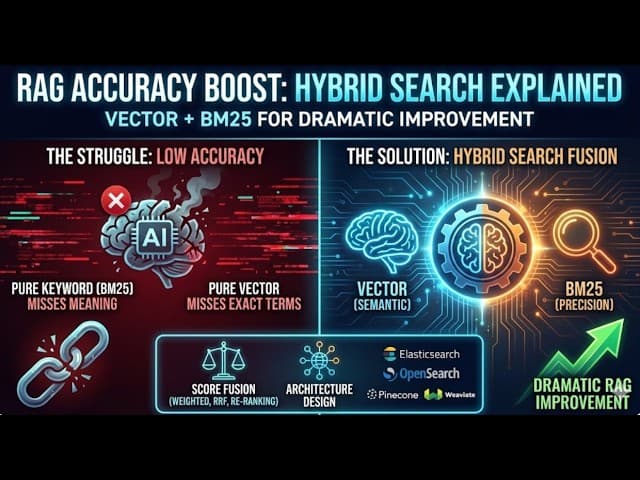
In retrieval pipelines, techniques like **HyDE** (Hypothetical Document Embeddings), **hybrid search** (lexical + semantic), and **reranking** significantly **enhance claim-level grounding**, which is critical for **regulatory compliance** and **explainability**.
---
## Recent Innovations in Hybrid Frameworks and Memory Architectures
### Vectorless Tree Indexing: The Rise of PageIndex
A breakthrough outlined in **"This Tree Search Framework Hits 98.7% on Documents Where Vector Search Fails"** introduces **PageIndex**, a **hybrid framework** combining **structured tree search** with **semantic retrieval**. It **overcomes limitations** of purely vector-based methods, achieving **98.7% accuracy** on challenging unstructured documents, **dramatically improving retrieval robustness** and **dependability** in enterprise workflows.
### Multi-Model AI Memory Systems
Complementing this is **"I Built a 13-Model AI Memory System in Rust (Because RAG is Broken),"** which describes a **multi-model, memory-driven architecture** orchestrated in **Rust**. This system:
- Maintains **long-term, persistent memory**,
- Supports **long-horizon reasoning**,
- Enables **more reliable, explainable, and compliant workflows**.
This **hybrid memory approach** directly addresses RAG’s limitations, empowering enterprise AI to **operate with greater confidence**.
---
## A New Era of Embeddings: Perplexity’s pplx-embed
A noteworthy addition is **Perplexity’s release of pplx-embed**, a collection of **multilingual, state-of-the-art Qwen3 bidirectional embedding models** optimized for **web-scale retrieval tasks**. These embeddings **offer superior semantic accuracy**, **robustness**, and **scalability**, making them ideal for **large-scale, hybrid retrieval pipelines**.
**Impacts include:**
- **Enhanced retrieval quality** for complex, multi-lingual datasets.
- **Integration with hybrid indexing schemes** to boost **accuracy** and **trustworthiness**.
- **Lower latency and costs** in enterprise embedding workflows.
By combining **pplx-embed** with **hybrid indexing** (like **PageIndex**) and **memory architectures**, organizations can **build highly dependable retrieval systems** suitable for sensitive, regulated environments.
---
## Industry Implications and the Path Forward
Today, **enterprise AI workflows** exemplify **unprecedented resilience, safety, and regulatory compliance**. The integration of **fault-tolerant architectures**, **long-term memory systems**, **open-source safety frameworks such as Ctrl**, and **high-performance retrieval engines like Exa Instant** has **raised the industry bar**.
The shift toward **hybrid retrieval and memory architectures** addresses RAG’s inherent limitations—**supporting long-horizon reasoning**, **enhancing explainability**, and **building stakeholder trust**—all vital for **regulated applications**. Operational lessons from incidents have reinforced the necessity for **system hardening**, **continuous monitoring**, and **embedded safety controls**.
### Strategic Recommendations for Enterprises:
- **Adopt hybrid retrieval + memory architectures** for robustness.
- **Embed safety, auditability, and compliance controls** such as **Ctrl** into workflows.
- **Implement layered evaluation frameworks** (e.g., **DeepEval**, **RAGAS**, **StealthEval**) for ongoing validation.
- **Follow safe tool-use practices** like **multi-chain prompting**, **sandboxing**, and **idempotency**.
- **Leverage recent innovations** like **PageIndex** and **multi-model memory systems** to **enhance reliability and explainability**.
Embracing these principles ensures **trustworthy AI deployment**, fostering **regulatory compliance**, **stakeholder confidence**, and **long-term operational resilience**.
---
## The Road Ahead: Continuous Innovation and Vigilance
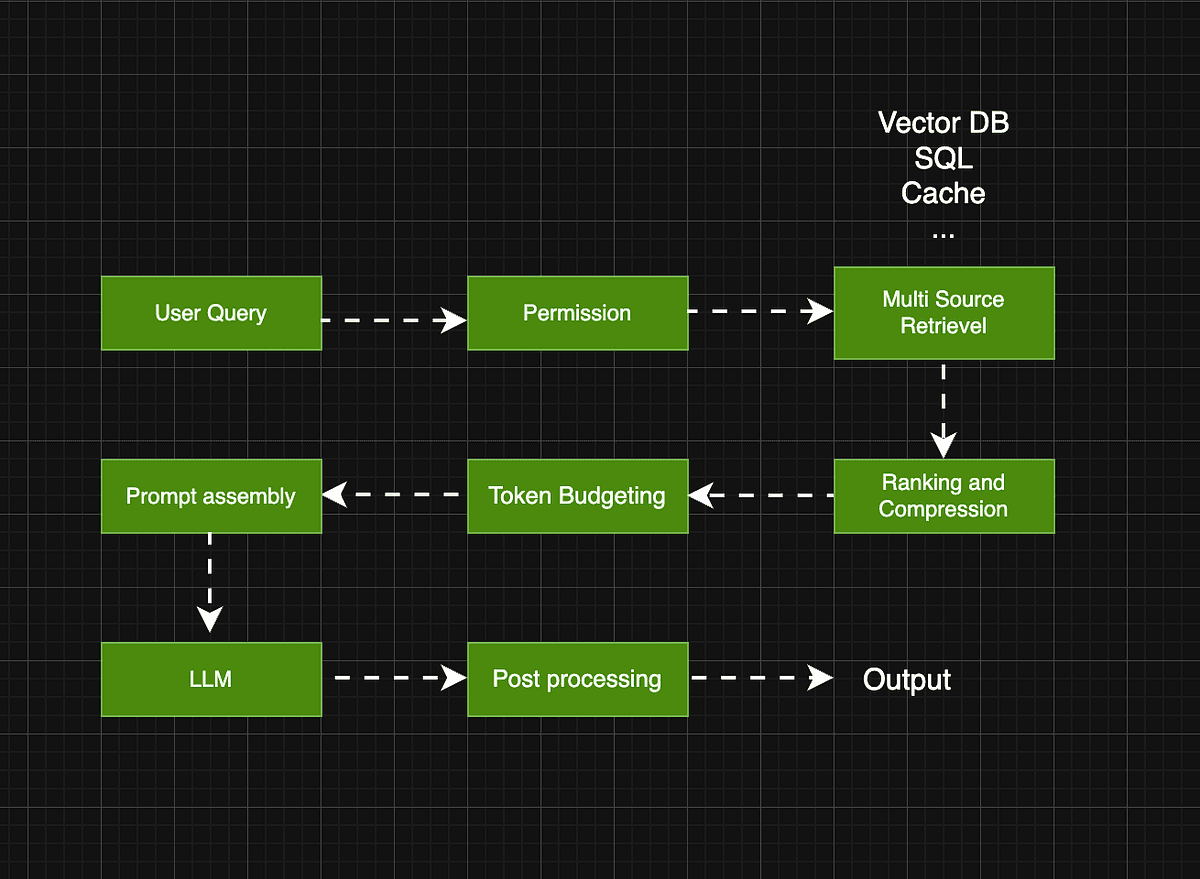
The trajectory of enterprise AI in 2026 underscores a steadfast commitment to **trustworthiness, safety, and resilience**. Driven by **cutting-edge architectures**, **open-source safety frameworks like Ctrl**, and **best operational practices**, organizations are well-positioned to navigate the complexities of deploying AI in high-stakes environments.
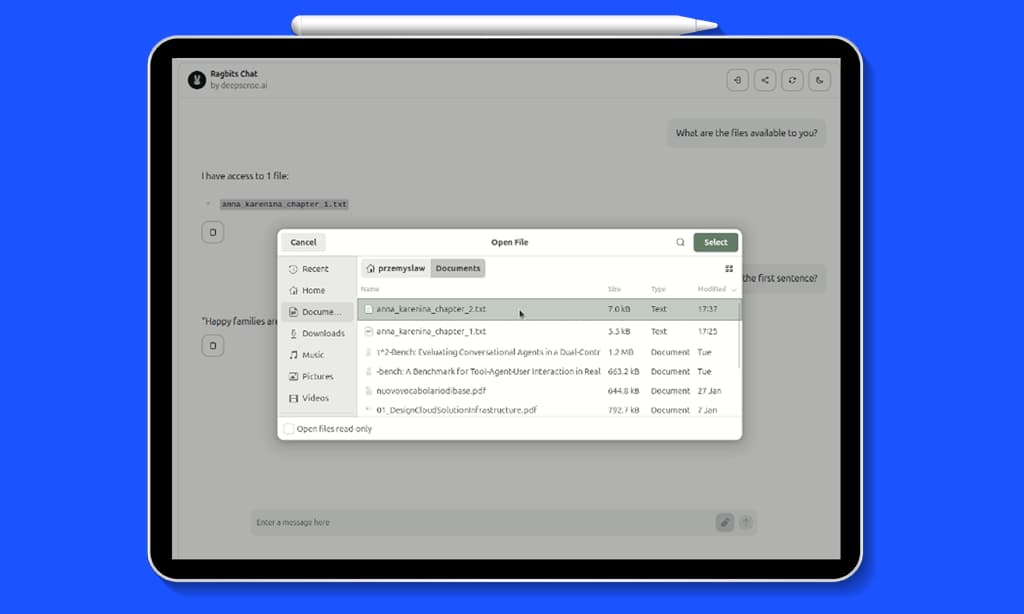
Emerging developments include **context pipelines replacing traditional RAG** (as discussed by **Harsh Singh** in February 2026), **production-grade tooling improvements** such as **OAuth2**, **extensible API schemas**, and **file handling enhancements** in **ragbits 1.4** by **deepsense.ai**. These innovations reflect an industry-wide shift toward **more controllable, explainable, and safe AI workflows**.
### Final Reflection
Building **trustworthy AI** remains an ongoing strategic effort—merging **technological innovation**, **rigorous governance**, and **system hardening**. Enterprises that **integrate these principles** will not only meet regulatory standards but will also **earn stakeholder trust** and **maintain operational resilience** amid an increasingly AI-driven world. Success hinges on **continuous adaptation**, **vigilant monitoring**, and leveraging the latest tools and architectures—ensuring AI systems are **safe, transparent, and dependable** at scale.
---
## Additional Resource: Why RAG Fails in Production — And How To Actually Fix It
A recent comprehensive article and video titled **"Why RAG Fails in Production — And How To Actually Fix It"** offers valuable insights into persistent real-world challenges. The **20-minute video** discusses issues like **retrieval inaccuracies**, **data staleness**, **scalability hurdles**, and **system robustness**.
**Practical fixes include:**
- **Implementing hybrid indexing strategies**.
- **Layered verification and safety controls**.
- **Integrating long-term memory**.
- **Ensuring continuous operational monitoring** and **incident response**.
This resource emphasizes **moving beyond simplistic retrieval models** toward **holistic, resilient, and trustworthy AI workflows**—principles now embedded industry-wide.
---
## **Conclusion**
In 2026, **enterprise AI workflows** exemplify **trustworthiness, resilience, and safety** at an unprecedented scale. Through **advanced architectures**, **open-source safety frameworks like Ctrl**, and **best operational practices**, organizations are deploying **regulatory-compliant**, **explainable**, and **robust** AI solutions—ready to meet the demands of high-stakes environments worldwide. The continuous integration of **innovative embeddings**, **hybrid retrieval systems**, and **long-term memory architectures** cements this new industry standard, ensuring AI remains a dependable partner in critical sectors for years to come.