# The 2026 Evolution of Autonomous AI Ecosystems: From Vibe Coding to Enterprise-Grade Orchestration
The landscape of AI-driven autonomous development in 2026 has undergone a profound transformation. What once relied on informal, rapid "vibe coding" practices—prompt engineering driven by intuition and ad hoc experimentation—is now anchored in **formal, specification-driven ecosystems** that prioritize **governance, observability, security, and scalability**. This shift marks a new era where **long-lived, hierarchical agents** operate within **orchestrated workflows**, enabling organizations to deploy resilient, transparent, and compliant AI systems at scale.
---
## From Informal "Vibe Coding" to Formal, Specification-Driven Development
In the early days, AI development was characterized by **"vibe coding"**, an agile and creative approach where developers rapidly iterated through prompt modifications and quick tests. While this fostered innovation, it often led to **fragile systems** with **poor transparency** and **limited compliance**, especially as AI models became embedded in mission-critical sectors such as healthcare, finance, and autonomous transportation.
By 2026, the industry has embraced **formal specifications**, **prompt contracts**, and **testable `/spec` files**. These tools serve as **behavioral blueprints**, ensuring systems behave predictably and safely. For instance, **spec kits** now help reduce the misalignment between user requests and AI outputs, leading to **higher-quality, safer AI artifacts** that are easier to audit and regulate. This paradigm shift ensures that AI systems are **not only creative but also controllable and compliant**.
---
## Deep Embedding of Long-Lived, Hierarchical Agents
A defining development of 2026 is the **deep integration of persistent, hierarchical agents** within development environments and command-line workflows:
- **IDEs such as Visual Studio Code, Cortex Code (CoCo), Zed, and Antigravity** now host **long-lived autonomous agents**, such as **Claude**, functioning as **continuous collaborators**. These agents support **debugging, refactoring, strategic planning**, and **project management**, effectively becoming **integrated team members**.
- On the CLI front, tools like **Claude CLI, Mato, and Playwright-CLI** extend autonomous capabilities into **terminal workflows**, managing **design, testing, deployment, and monitoring** over weeks or months. Notably, **Mato**, a **tmux-like multi-agent terminal workspace**, exemplifies how **multi-agent orchestration** can support **long-term projects with persistent context**.
A breakthrough feature is **Claude Code's new auto-memory support**, which now allows agents to **recall previous interactions, decisions, and project nuances** over extended periods. As **@omarsar0** highlights, "Claude Code now supports auto-memory. This is huge!" This feature dramatically enhances **context continuity**, **reduces manual state management**, and **accelerates multi-stage workflows**.
Recent demonstrations such as **"From Zero to Your First Agentic AI Workflow in 26 Minutes"** showcase how individuals can **rapidly set up autonomous, multi-stage pipelines**, significantly **reducing development cycles** and **empowering broader adoption**.
---
## Multi-Agency Ecosystems with Persistent Memory and Self-Management
Building on individual agents, the ecosystem now features **robust, hierarchical structures** capable of **self-management over extended periods**:
- These ecosystems leverage **long-term memory systems** like **Claude Cowork** and **Pi Coding Agent** to **recall past interactions, decisions, and project state**, ensuring **context continuity**.
- **Always-on agents** actively **monitor system health**, **apply security patches**, and **dynamically adapt**, resulting in **resilient, autonomous workflows** that require minimal human oversight. The **Pi Coding Agent**, for example, has demonstrated **autonomous project management** over **multi-week cycles**, competing strongly with Claude Code in enterprise settings.
---
## Specification-Driven and Orchestrated Workflows
The shift to **specification-driven development** underpins these advancements. **Detailed, formal specifications** now **direct agent behavior**, **project outcomes**, and **validation processes**. For instance:
- The **"Spec Kit"** reduces the gap between **user requests and AI outputs**, fostering **clarity, safety, and control**.
- **Validation, testing, and security** are seamlessly integrated into **CI/CD pipelines**, leveraging tools such as **LangSmith**, **LangWatch**, and **Evals SDK**. These platforms provide **deep observability**, **runtime monitoring**, and **security assessments** vital for **enterprise deployment**.
---
## Enhanced Observability, Control, and Safety Measures
As autonomous agents take on operational responsibilities, **transparency and control** are more critical than ever:
- **Visual dashboards** like **AetherLang** offer **interpretable workflows**, **decision logs**, and **project health metrics**, fostering **trust** through **auditability**.
- Recent updates, such as **Claude Code’s Remote Control**, enable **terminal operations from mobile devices**, supporting **offline workflows** and **cross-device management**. **Anthropic** has extended these capabilities to allow **seamless session management across smartphones, tablets, and desktops**, greatly enhancing **workflow flexibility**.
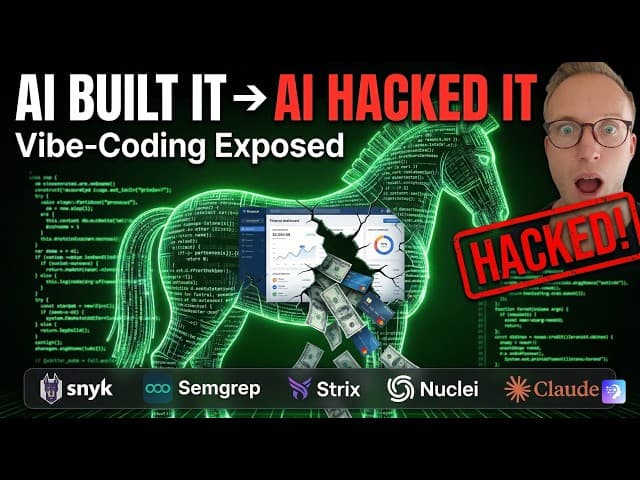
- **Security and safety** are reinforced through **formal verification**, **trust scoring systems** like **Agent GPA**, and **vulnerability benchmarking**. The question "Is Vibe Coding Safe?" underscores the importance of **automated security assessments** to **detect vulnerabilities** in **agent-generated code** proactively.
---
## Practical Resources, Ecosystem Expansion, and Industry Adoption
The ecosystem’s maturity is reflected in a growing suite of **tutorials, open-source tools, and enterprise integrations**:
- Tutorials such as **"Building an AI SaaS with Cursor & Supabase"** showcase **enterprise-grade autonomous SaaS development**.
- **"AI Agent Debugging"** lessons provide **best practices** for maintaining **production agents**.
- **Offline development environments** like **LM Studio** and **VS Code** facilitate **sandboxed, secure local experimentation**, reducing dependence on cloud infrastructure for sensitive projects.
- **Trigger-based automation** tools like **Trigger.dev** and **cloud deployment frameworks** ensure **24/7 operation**, enabling **event-driven workflows** and **continuous deployment**.
Recent innovations include **building UIs with Codex and Figma**, enabled by **Figma MCP servers**, making **design-to-code workflows** more seamless and accessible. The **"[SBS 2026] Demo: Spec Driven AI Development"** further illustrates how enterprises are adopting these methodologies at scale.
---
## Governance, Permissions, and Safety Frameworks
With increased autonomy, **governance and permissioning** become paramount. Thought leaders like **Heather Downing** presented at **NDC London 2026** on **"AI Agents Need Permission Slips"**, emphasizing the need for **formalized permission protocols** to **regulate agent actions** and **prevent misuse**.
These frameworks aim to establish **trustworthy, auditable, and compliant AI ecosystems**, ensuring **long-term accountability** and **regulatory adherence**.
---
## Current Status and Future Implications
Today, **long-lived, hierarchical, spec-driven autonomous ecosystems** are **integrated into enterprise workflows**, supporting **multi-phase, multi-provider pipelines** that are **resilient, transparent, and secure**. The integration of **persistent memory**, **orchestration layers like Velocity**, and **deep observability tools** heralds a future where **AI systems are self-managing, adaptable, and trustworthy**.
As organizations increasingly adopt these technologies, we can expect a **significant acceleration** in **software development cycles**, **improved safety and compliance**, and **greater trust** in AI-driven systems—paving the way for **self-sufficient AI enterprises** that **scale safely and efficiently**.
---
**In conclusion**, 2026 marks a **new epoch** in AI development—one characterized by **specification-driven, agentic ecosystems** that are **orchestrated, governed, and observable** at an enterprise level. These advancements not only **transform software engineering** but also set the foundation for **trustworthy, resilient AI infrastructure** capable of supporting the most critical applications across industries.