The AI agent ecosystem in 2028–2029 continues its rapid and multifaceted evolution, driven by breakthroughs that deepen integration across devices, democratize agent creation, accelerate multimodal content production, and expand AI’s role in real-time physical environments. Simultaneously, maturing edge runtimes, hardware innovations, security tooling, and governance frameworks ensure this growth is balanced by privacy, safety, and accountability concerns. Together, these trends are forging an AI landscape where persistent, platform-native, domain-specialized agents become ever more capable, personalized, and trustworthy collaborators.
---
### Persistent, Platform-Native Agents Further Embed Across Devices and Domains
Building on prior momentum, persistent AI agents are embedding more deeply into native platforms and physical hardware, expanding both their reach and utility:
- **Replit’s Agent 4** remains at the forefront of autonomous software creation, buoyed by its recent $400 million Series D funding round that valued the company at $9 billion. CEO Amjad Masad highlights Agent 4’s unique ability to **“vibe code a startup from scratch,”** autonomously managing ideation, coding, testing, and deployment. This unprecedented level of agency significantly lowers barriers for non-technical users, democratizing complex software innovation and signaling a shift toward AI-driven entrepreneurship.
- **Perplexity’s Personal Computer platform** has matured its hybrid cloud-edge architecture by running persistent agents natively on Apple’s Mac mini hardware. This model leverages **cloud-scale reasoning while maintaining direct, secure local access to personal files and applications**, addressing historical challenges around latency and data privacy. This approach is setting a new standard for platform-native agents that operate seamlessly within user-owned devices.
- Domain-specific agent deployments continue to expand robustly:
- **HotelPlanner’s AI-powered booking agents** exemplify how persistent agents streamline complex travel logistics, from detailed itinerary planning to dynamic reservation management.
- **Hilton’s AI Concierge** and **CVS’s forthcoming AI health assistant app** showcase persistent agents delivering personalized, mission-critical services in hospitality and healthcare.
- New consumer tools like **TripPup** for iPhone provide integrated itinerary management, real-time navigation, multilingual support, and discovery features, highlighting the maturation and diversification of travel-focused AI assistants.
- Consumer reliance on AI travel planners is striking: a recent global survey found that **91% of travelers routinely use AI travel assistants**, underscoring widespread trust and adoption. However, this also highlights ongoing challenges related to transparency, data governance, and user accountability.
Collectively, these developments underscore a clear trajectory: **persistent, privacy-conscious AI assistants embedded within native platforms and edge devices are reshaping user experiences across industries and daily life.**
---
### Democratization of Agent Creation Expands with No-Code, Low-Code, and Local-First Frameworks
Lowering technical barriers and infrastructure costs remains a key enabler of AI agent proliferation:
- **Replit** has broadened its Agent 4 tutorials to target users with little or no coding experience, enabling them to build autonomous workflows for software development and project management via intuitive, agentic interfaces.
- Automation platforms **n8n** and **Zapier** have expanded their AI agent orchestration tutorials, empowering users to create **custom multi-agent workflows that integrate AI with APIs, databases, and external services—all without writing code**. This widespread accessibility accelerates AI-enabled process automation across enterprises and personal productivity.
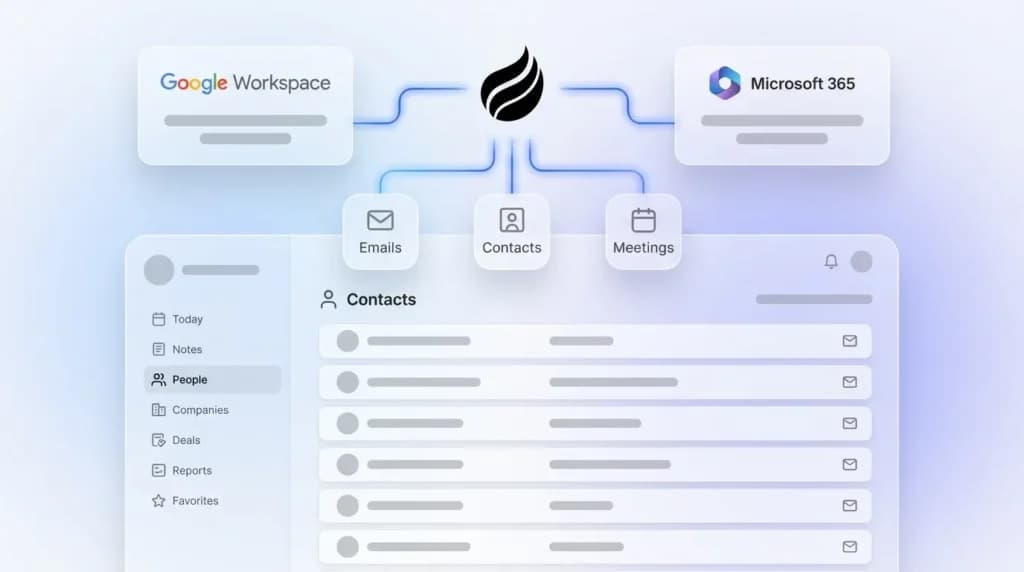
- Google’s **Gemini AI agents** deepen integration within Workspace apps, supported by practical tutorials like **“How to Connect Gemini to Google Keep & Automate Your Note-Taking.”** This drives smoother adoption of agent-augmented workflows in business environments.
- A significant new entrant, **Stanford’s OpenJarvis**, introduces a **local-first framework for building on-device personal AI agents** equipped with tools, memory, and continual learning capabilities. OpenJarvis emphasizes privacy and responsiveness by running fully on-device, allowing users to create customizable agents that learn and act without cloud dependency.
- Efficiency and privacy gains are exemplified by tools like **Vexp**, which pre-index user codebases and dependencies locally. Vexp reports up to **58% reductions in AI coding costs** and improved responsiveness by operating on these pre-indexed graphs rather than relying on repeated cloud queries.
- The rise of specialized communication tools is marked by several new **AgentMail alternatives**, expanding options for AI-augmented email workflows and reflecting increasing specialization within agent tooling.
This wave of innovation marks a pivotal moment where **agentified workflows become accessible through no-code orchestration powered by local context engines**, democratizing AI creation while reducing infrastructure overhead and enhancing user privacy.
---
### Multimodal and Collaborative Content Creation Accelerates with New AI Video and Media Tools
AI-driven content creation is reaching new heights through platform-native agents and multimodal innovations:
- OpenAI’s **Sora video generation tool** approaches full integration with ChatGPT, heralding **native conversational AI-powered video creation**. This will enable users to produce dynamic videos alongside text and images in a unified flow, vastly enriching multimodal storytelling and communication.
- The **Mosaic video editing API** has been democratized and opened to all AI agents, facilitating effortless embedding of advanced video editing and generation capabilities within agent workflows. Industry voices like @Scobleizer praise this as transformative for agent-driven multimedia production.
- New tools such as **ImageToVideo AI** and platforms like **Freebeat** combine multiple AI models to transform static photos or songs into vivid video experiences, creating all-in-one studios for image, video, and music generation.
- Creative suites such as **CapCut’s Seedream 5.0** and **Seedance 2.0** provide no-code access to unlimited, high-quality AI-generated images and videos, lowering barriers for creators across skill levels.
- Collaborative editing advances are exemplified by **Proof**, which introduces AI agents with their own cursors, enabling **real-time, multi-agent synchronous editing** within shared documents. This innovation enables fluid human-AI co-creation with granular coordination.
- Meta’s acquisition of immersive multi-agent web platform **Moltbook** signals strategic investment in rich, interactive digital environments supporting simultaneous collaboration among multiple agents and users.
- Google continues to intensify competition with Microsoft by deeply embedding Gemini AI agents within Workspace apps, broadening platform-native agent footprints in enterprise productivity.
Together, these developments illustrate a converging ecosystem where **multimodal AI, platform-native agents, and collaborative no-code tools merge to redefine creativity, communication, and productivity.**
---
### Real-Time, Physical-World AI Assistants Expand Across Travel, Commerce, Accessibility, and Dating
AI agents are increasingly stepping beyond digital confines, gaining traction as real-time collaborators in physical and domain-specific environments:
- **EmpathIQ** launched a real-time conversational AI assistant designed for live settings such as customer service desks, events, and workplace interactions. This agent enhances human-AI collaboration on the ground, improving engagement and operational efficiency.
- The travel sector continues to innovate with AI agents like **TripPup** and **HotelPlanner**, which support itinerary planning, navigation, booking, and fulfillment logistics in real time. HotelPlanner’s persistent agents exemplify AI’s ability to simplify complex hospitality operations and elevate user experiences.
- A new wave of AI shopping assistants is reshaping commerce, influencing supply chain strategies, personalized recommendations, and fulfillment logistics. Recent analyses show AI agents are increasingly integrated into retail ecosystems, heralding a shift toward AI-augmented commerce.
- Accessibility-focused applications like **FormWise** leverage AI agents to improve interaction and data entry for persons with disabilities, underscoring AI’s expanding role in inclusive technology.
- Notably, **dating app Tinder** is experimenting with an AI matchmaking feature called **“Chemistry”**, which uses artificial intelligence to enhance compatibility matching and user experience, highlighting AI’s growing role in personal and social domains.
This expanding presence in **real-time, physical-world contexts** signals a future where AI assistants evolve into indispensable companions supporting decisions and interactions beyond screens.
---
### Edge Runtimes, AI Hardware, Security Tools, and Governance Frameworks Mature Rapidly
Robust infrastructure and governance mechanisms are critical to scaling persistent AI agents securely and responsibly:
- **Nvidia** and a consortium of startups continue to improve **OpenClaw**, an open-source AI runtime for personal agents, focusing on enhanced security, extensibility, and community-driven innovation. These efforts aim to break proprietary barriers and accelerate safe edge AI deployment.
- **AMD’s Ryzen AI NPUs** have achieved production-grade maturity, now fully supported on Linux for on-device large language model (LLM) and agent workloads. This advancement empowers powerful local AI inference, reducing cloud dependency and enhancing user privacy.
- Security tooling evolves alongside agent proliferation:
- OpenAI’s **Promptfoo** defends against adversarial prompt injections.
- Enkrypt AI’s **Skill Sentinel** monitors and mitigates malicious plugin behavior.
Such tools are essential as AI agents increase attack surfaces and the complexity of threat vectors.
- Provenance metadata standards for AI-generated content gain wider adoption, improving transparency, traceability, and accountability—cornerstones of ethical AI deployment.
- The high-profile **Amazon vs. Perplexity** legal dispute continues to shape regulatory frameworks around intellectual property, platform liability, and AI-driven commerce. Its outcomes are anticipated to set important precedents balancing innovation with accountability.
- Security remains a top priority, as evidenced by **Anthropic’s rapid patching** of a remote code execution vulnerability in Claude Code, underscoring the industry’s vigilance in maintaining secure and trustworthy AI agent environments.
---
### Emerging Risks Highlight the Need for Safety, Transparency, and Accountability
As AI agents become more embedded and autonomous, new challenges surface:
- Recent reports reveal AI’s difficulty in accurately reading human emotions in physical toys and interactive devices, raising concerns about **misinterpretation and unintended behavioral effects** in sensitive contexts.
- The pervasive use of AI travel planners and real-time assistants also spotlights the ongoing tension between **user convenience, data privacy, and transparency**, emphasizing the need for clear governance and responsible design.
These emerging issues reinforce that alongside technological advances, **ethical frameworks, user education, and safety protocols** must evolve in tandem to maintain public trust.
---
### Outlook: Toward a Richer Ecosystem of Capable, Specialized, and Privacy-Conscious AI Agents
The AI agent landscape in 2029 is unmistakably richer and more nuanced, characterized by:
- Autonomous software creation and orchestration exemplified by Replit Agent 4’s startup-level autonomy.
- Privacy-aware hybrid cloud-edge assistants like Perplexity’s Mac mini platform enabling intimate local data interaction.
- Democratized no-code and low-code agent workflow creation via platforms like n8n, Zapier, and Stanford’s OpenJarvis.
- Rapidly advancing multimodal content creation tools including OpenAI’s Sora, Mosaic video APIs, Freebeat, and collaborative editors like Proof.
- Real-time physical-world assistants growing across travel, commerce, accessibility, and social domains, including new AI matchmaking experiments by Tinder.
- Maturing edge runtimes, specialized AI hardware, sophisticated security tooling, provenance standards, and evolving legal frameworks ensuring responsible, secure, and privacy-preserving deployments.
This vibrant ecosystem empowers users with AI assistants that are **more responsive, personalized, secure, and context-aware than ever before**. At the same time, governance, security, and legal structures are evolving to uphold **accountability, safety, and ethical stewardship**. The result is a future where AI is not merely a tool but a **seamless, trusted, and responsible partner woven into the fabric of everyday life and work**.
---
### Selected Recent Highlights
- **Replit secures $400 million Series D funding**, advancing Agent 4’s autonomous startup-level coding capabilities.
- **Perplexity’s Personal Computer platform** deploys hybrid cloud-edge agents on Apple Mac mini hardware, blending local data privacy with cloud AI scale.
- **Stanford researchers release OpenJarvis**, a local-first framework for on-device personal AI agents with tools, memory, and continual learning.
- **HotelPlanner’s agentified booking capabilities**, **Hilton’s AI Concierge**, and **CVS’s AI health assistant app** expand AI adoption in hospitality and healthcare.
- A global survey finds **91% of travelers use AI travel planners**, emphasizing broad adoption and trust-building needs.
- No-code AI agent orchestration tutorials from **n8n** and **Zapier** facilitate multi-agent workflow creation.
- Google’s Gemini AI agents deepen Workspace integration, supported by tutorials linking Gemini to Google Keep.
- OpenAI’s **Sora video generator** nears ChatGPT integration, enabling seamless multimodal content creation.
- The **Mosaic video editing API** opens to all AI agents, facilitating effortless video manipulation.
- Collaborative editor **Proof** introduces AI agents with dedicated cursors for synchronous multi-agent editing.
- Hardware advances include **Nvidia’s OpenClaw safety initiatives** and **AMD Ryzen AI NPU Linux support**, enabling efficient and secure edge AI.
- Security tools like **Promptfoo** and **Skill Sentinel** protect against adversarial threats; the **Amazon vs. Perplexity** legal battle shapes platform liability precedents.
- **EmpathIQ launches** as a real-time conversational AI assistant for physical-world collaboration.
- New **AgentMail alternatives** broaden AI-assisted email workflows.
- **Vexp’s local-first codebase indexing engine** reduces AI coding costs by 58%, enhancing efficiency and privacy.
- AI-driven commerce innovations and **Tinder’s AI matchmaking “Chemistry” feature** highlight expanding domain-specific agent applications.
---
The AI agent ecosystem is evolving into a rich environment of **persistent, platform-native, domain-specialized collaborators** that empower users across creativity, productivity, commerce, and daily life—firmly grounded by **rigorous governance, security, and ethical standards**. This ongoing transformation heralds a future where AI is not just a tool, but an integral, trusted partner shaping the fabric of everyday existence.