August 7, 2026
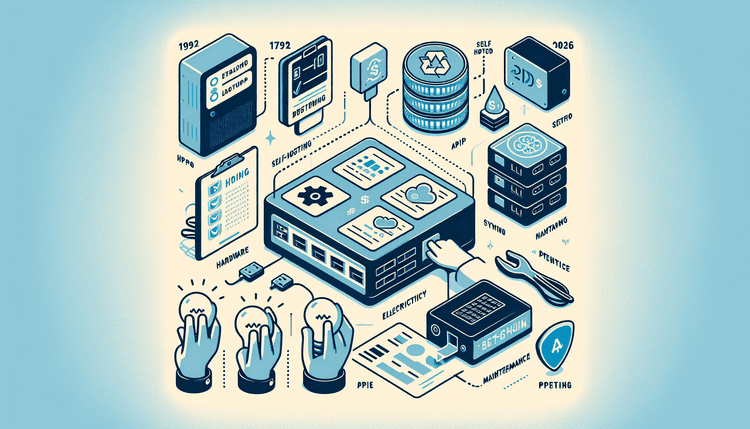
TCO Breakdown: Self-Host vs Cloud APIs 2026
Self-hosting crosses into savings only after medium usage, but ops overhead often erodes the edge.
- Light tier (<1M tokens/day): APIs run...

Created by Dexter Psychedelic
Technical briefs on LLM scaling, serving, latency, cost, agentic orchestration, and tooling
Explore the latest content tracked by LLM Ops Digest
Self-hosting crosses into savings only after medium usage, but ops overhead often erodes the edge.
AWS and NVIDIA tackle inference optimization from distinct layers.
Turbopuffer achieves 95% cost reduction for vector search by storing embeddings in S3 object storage instead of DRAM, leveraging clustering algorithms...
Ethernet is replacing proprietary fabrics as the foundation for large-scale AI training and inference because it alone supports clusters spanning...
Netflix built LLM coding agents that consume production profiling data to detect bottlenecks, generate fixes, and validate via canary deployments.
-...
Test-time scaling spans three distinct regimes—single-trajectory reasoning, sampling with aggregation, and partial-state search—each carrying...
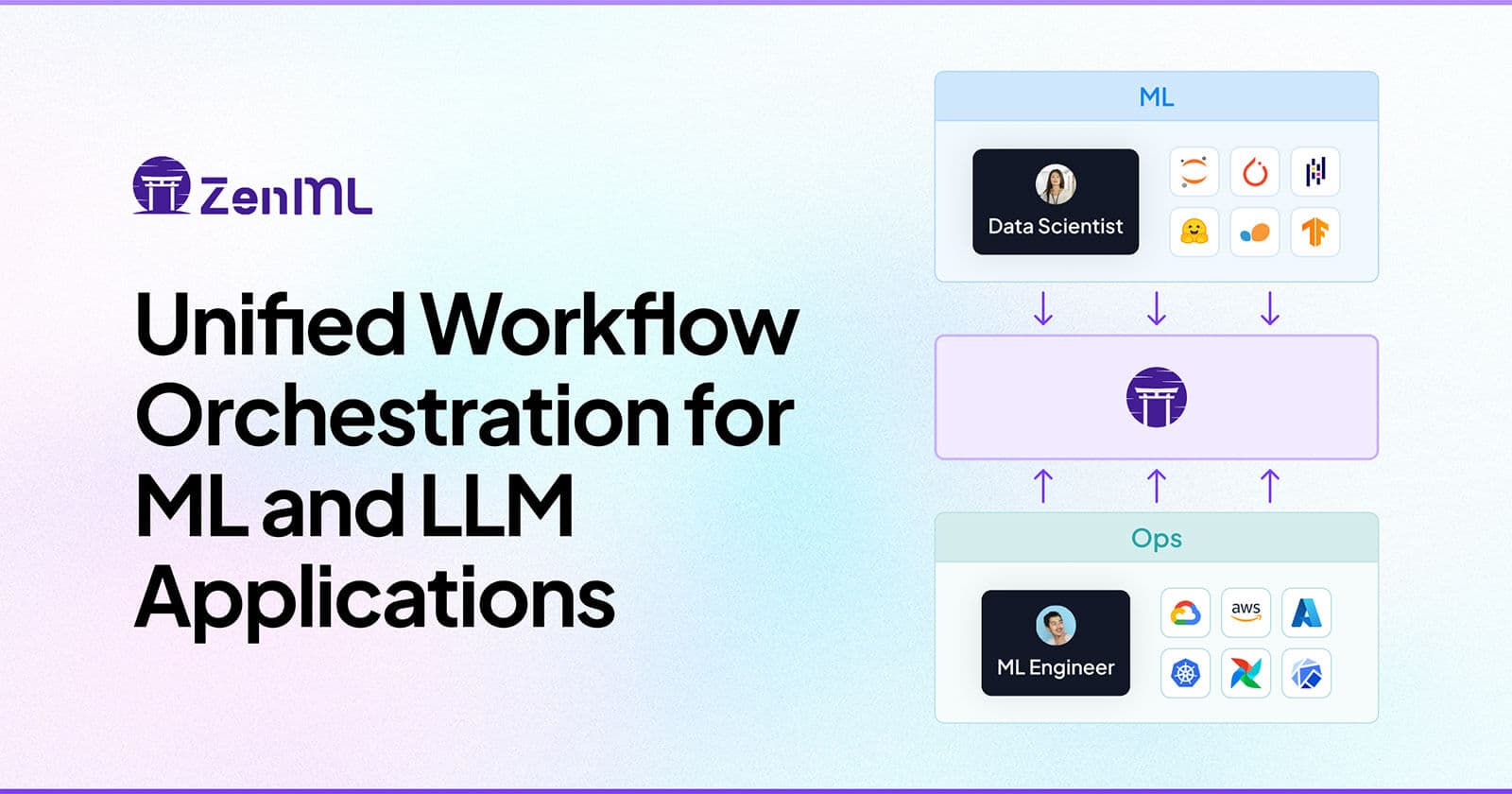
Three complementary angles on production agent infrastructure:
Practitioners are trimming LLM spend at three distinct layers, from hardware choices to runtime governance to data exposure.
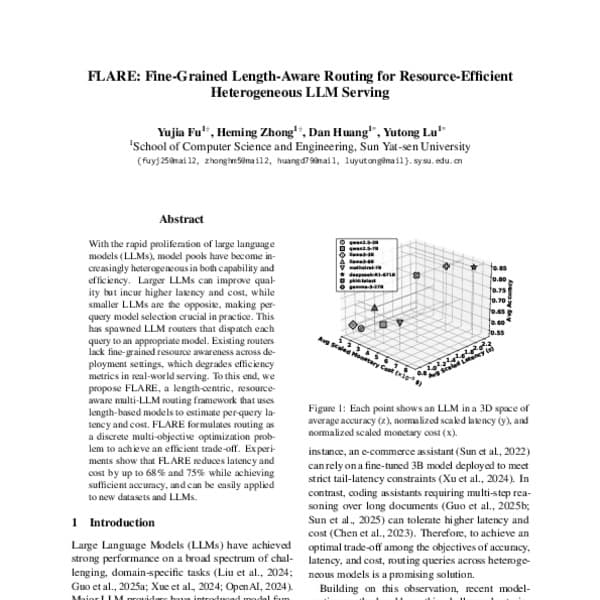
FLARE routes queries across heterogeneous LLMs by estimating per-query latency and cost from input length, then solves a discrete multi-objective...
Sakana AI has shipped Namazu, a ~1T-parameter model powered by Modal for live web search and code execution. This marks a notable deployment of massive-scale inference with real-time tool use on serverless infrastructure.
Practitioners optimizing LLM serving should start with precise metrics before applying latency techniques.
Production teams are shifting from manual API management to gateways and model routing for real cost control.
Meta doubled GEM end-to-end training efficiency through targeted hardware/software co-design on a hybrid model at LLM scale.
Successful enterprise agentic deployments share three infrastructure patterns that address the 87% pilot failure rate.
Real-time AI cost visibility directly enables the highest-impact reduction tactics without quality tradeoffs.
Research and industry now converge on multi-tier memory as essential for mixed-length LLM inference.
A mid-2026 guide ranks the five most production-ready open-source LLM runtimes specifically on Kubernetes performance, giving self-hosted teams a direct way to match runtime choice to their serving and scaling needs.
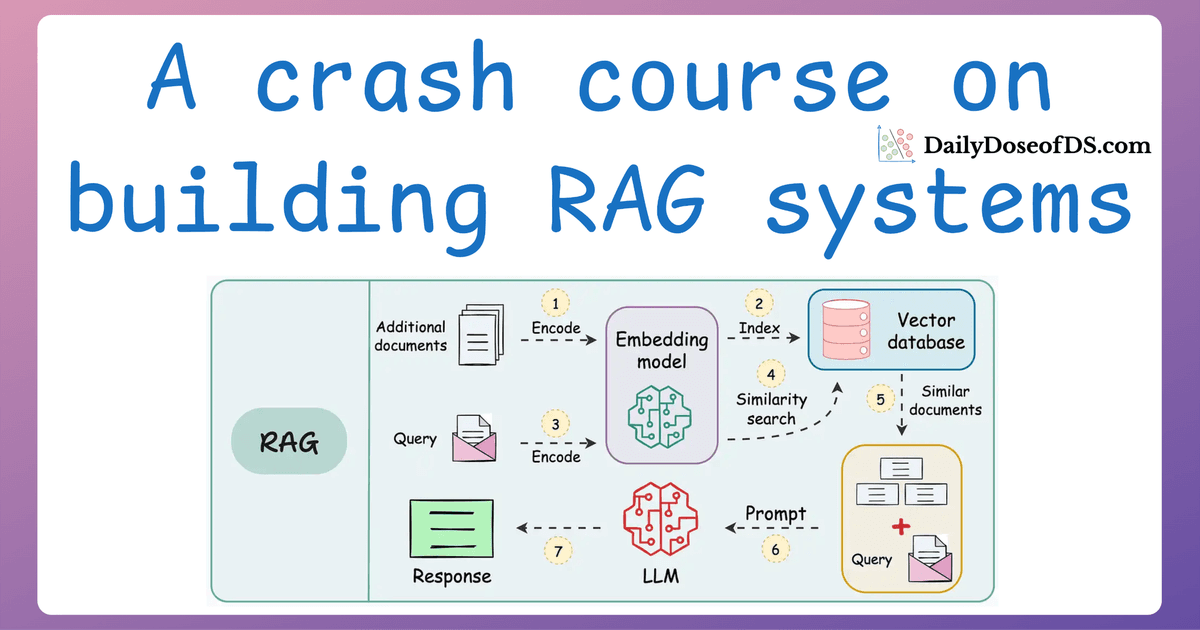
In RAG pipelines, prefill dominates latency because processing 4k–16k retrieved tokens triggers quadratic attention costs, often exceeding 5 seconds...