# How Climate Change and Pollution Are Reshaping Ecosystems, Resources, and Power in 2026
The year 2026 marks a pivotal point in humanity’s ongoing environmental crisis. The convergence of accelerating climate change, relentless pollution, and invasive species is not only destabilizing Earth's ecological balance but also transforming geopolitical landscapes and resource access. From melting polar ice to collapsing marine ecosystems, the planet is undergoing rapid, often irreversible changes that demand urgent and coordinated global responses. This year’s developments highlight both the severity of current challenges and the innovative pathways emerging to address them.
---
## Accelerating Climate Impacts: Melting Ice, Rising Seas, and Extreme Events
### Polar Meltdown and Geopolitical Competition
The polar regions are at the forefront of climate upheaval. **The Arctic’s sea ice has plummeted to record lows**, opening new shipping routes like the Northern Sea Route. While these passages promise economic benefits by reducing transcontinental travel time, they have also intensified geopolitical tensions. Major powers—including the United States, China, and European nations—are increasingly vying for sovereignty over Arctic territories and access to mineral-rich areas, such as Greenland’s vast subsoil resources. Experts warn that this competition could escalate into new conflicts over sovereignty and resource rights, complicating international diplomacy.
Meanwhile, **Antarctica’s ice sheets are retreating at an accelerating rate**, contributing approximately **0.5 centimeters annually** to global sea level rise. The loss of ice diminishes Earth's albedo effect, creating a feedback loop that accelerates warming. Ecologically, this results in the disruption of habitats for species like Emperor penguins, which are now experiencing breeding failures, and threatens entire ecosystems that rely on stable ice conditions.
### Extreme Climatic Events and Ecosystem Disruption
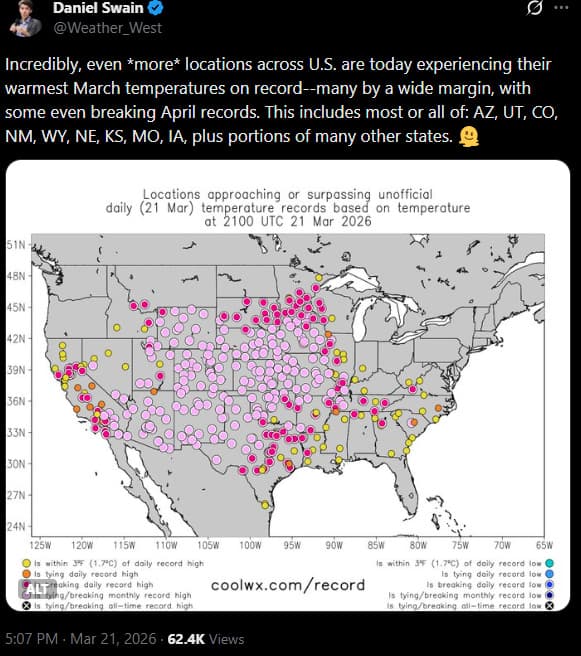
2026 has seen an unprecedented surge in **extreme climatic events (ECEs)**—devastating floods, prolonged droughts, and record-breaking heatwaves—disrupting societies and habitats alike. Notable incidents include:
- **Intense heatwaves across Europe and Asia**, shattering temperature records, causing crop failures, and triggering water shortages.
- **Severe flooding in Nigeria’s Kainji Lake region**, leading to sediment disturbances that threaten water security and regional stability.
- **Mega-droughts in Africa and Asia**, affecting major river systems like the Mekong and Nile, jeopardizing agriculture, fisheries, and freshwater ecosystems.
These cascading impacts threaten biodiversity and human livelihoods, underscoring the urgent need for resilient infrastructure, adaptive management, and proactive policies.
### Deep Sea Discoveries and Threats
Despite ongoing crises, recent deep-sea explorations have unveiled astonishing biodiversity. In the **Clarion-Clipperton Zone**, a largely unexplored marine area rich in polymetallic nodules, scientists have identified nearly **800 new species** over the past two years. Yet, this oceanic treasure trove faces imminent threats from **deep-sea mining**, driven by soaring demand for rare earth metals crucial for electronics and renewable energy technologies.
While the **High Seas Treaty**, adopted by over 80 nations, aims to regulate seabed activities, enforcement remains inconsistent. Experts warn that **over 80% of deep-sea ecosystems** could suffer irreversible damage if mining proceeds unchecked, risking biodiversity collapse and vital climate-buffering functions. Illegal fishing targeting species such as rays and sharks persists, exerting additional pressure on marine ecosystems and complicating conservation efforts.
### Marine Megafauna: Declines and Conservation Efforts
A critical concern involves **marine megafauna**, notably sharks and rays, which are essential for maintaining healthy oceanic food webs. Recent data reveal steep declines in species such as **silky sharks, mako sharks, blue sharks**, and **shorttail yellownose rays**, mainly due to overfishing, bycatch, and habitat degradation. Initiatives like expanding marine protected areas and enacting stricter fishing regulations are gaining momentum, recognizing that **restoring these populations is vital for ocean resilience**.
---
## Pollution, Chemical Hazards, and Biological Threats
### Chemical Pollution and Soil Degradation
Chemical pollutants, especially pesticides, continue to devastate terrestrial and aquatic biodiversity. The **overuse of pesticides** has led to significant declines in soil microbiota, impairing nutrient cycling and reducing agricultural productivity. Scientists warn that **“the pervasive use of pesticides is creating cascading effects that threaten biodiversity and human food security,”** urging a transition toward sustainable pest management practices.
Pollinator populations—including bees and butterflies—are experiencing sharp declines, threatening global food security. Conservation strategies such as habitat restoration and integrated pest management are increasingly recognized as essential to reversing these declines.
### Rising Biological Hazards
Warmer waters foster the proliferation of pathogenic organisms, raising public health concerns. Notably:
- **Vibrio bacteria**, linked to cholera and other waterborne infections, are thriving in increasingly warm coastal waters.
- Scientists warn that **“certain dangerous organisms are flourishing due to climate warming,”** increasing the risk of outbreaks if monitoring and response systems are not strengthened.
### Plastic and Industrial Pollution
Environmental contamination remains pervasive. Incidents like the **2025 Odesa spill**, caused by missile strikes amid ongoing conflicts, inflicted significant damage on Black Sea ecosystems. Widespread **plastic pollution** continues choking waterways, endangering marine life and coastal communities. Oil spills, microplastics, and industrial discharges have become endemic, necessitating urgent regulatory reforms and cleanup initiatives.
---
## Biodiversity Trends and Conservation Progress
### Persistent Losses and Policy Wins
Illegal resource extraction and unregulated fishing continue to threaten ecosystems. For example, **illegal logging persists in Nigeria’s Ekuri Forest**, undermining conservation efforts. Conversely, targeted policies have demonstrated success:
- The **Yangtze River’s 2023 fishing ban** led to a resurgence of native fish populations, illustrating that **decisive policy action can reverse biodiversity declines**.
- Expansion of protected areas in key biodiversity hotspots remains essential for safeguarding vulnerable species and habitats.
### Emerging Data on Bird Declines
A new study uncovers **hotspots of accelerated bird decline linked to agricultural activity**. Intensive farming practices, habitat fragmentation, and pesticide use have severely impacted bird populations, especially in grasslands and wetlands. These declines threaten ecosystem services such as pest control and seed dispersal, vital for maintaining ecological balance.
---
## Monitoring, Governance, and Technological Advances
### Enhanced Monitoring and Enforcement Gaps
Technological innovations—like satellite imagery and AI analysis—are revolutionizing environmental monitoring. However, gaps persist. The **GAO’s recent report** highlights that NOAA officials do not actively monitor unreported weather modification activities, including controversial atmospheric interventions.
### Weather Modification and Electromagnetic Atmospheric Intervention
Emerging concerns surround **electromagnetic atmospheric interventions**, which involve manipulating atmospheric physics through fields, waveguides, and ionization. Recent research warns that if unregulated, such technologies could exacerbate climate volatility or be weaponized, underscoring the pressing need for **international governance, transparency, and oversight**.
### International Governance Challenges
Gaps in treaties like the **High Seas Treaty** hinder effective regulation of seabed mining, Arctic resource extraction, and pollution control. Strengthening enforcement mechanisms and establishing accountability are vital to prevent ecological degradation and geopolitical conflicts. Additionally, infrastructure resilience—particularly in Arctic regions vulnerable to storms and permafrost melt—is crucial for regional stability and energy security.
---
## Financial Strategies and the Business Case for Nature
### Emerging Financial Tools and Corporate Strategies
The rise of **biodiversity bonds** and **nature-positive corporate strategies** reflects a growing recognition that ecological health directly impacts economic stability. Many companies now integrate **nature-based risk assessments** into their operations, fostering a shift toward **sustainable development**.
### The Business Case for Biodiversity
In 2026, an increasing number of businesses recognize that **biodiversity loss** poses tangible financial risks, threatening supply chains, increasing regulatory costs, and damaging reputations. Embracing **nature-positive strategies** not only mitigates risks but also creates new market opportunities—making ecological resilience a core component of economic growth.
---
## Outlook: Urgency and Opportunities
The developments of 2026 serve as a stark reminder that **urgent, coordinated global action** is essential. While technological advances—such as satellite monitoring, AI, and innovative financial instruments—offer hope, the **window for meaningful change is narrowing**. Without stronger international cooperation, enforceable regulations, and political will, ecological and geopolitical upheavals will intensify.
**Restoring ecosystems, regulating resource extraction, and embedding sustainability into policies are not optional—they are imperative for safeguarding Earth's future.** Implementing nature-based resilience solutions, enhancing governance, and fostering public-private partnerships are critical steps forward. The path ahead demands swift, decisive action to preserve our planet’s ecological integrity and resource security amid ongoing crises. Only through unified effort can humanity hope to stabilize and restore the delicate balance of Earth's ecosystems in the face of relentless change.