Nvidia’s latest earnings and CEO Jensen Huang’s recent commentary reaffirm the company’s central role in an unprecedented AI infrastructure supercycle, underscoring both extraordinary growth opportunities and mounting structural challenges shaping the global semiconductor landscape through 2026 and beyond.
---
### Nvidia’s Record Quarter and Jensen Huang’s Market Commentary Reinforce AI Capex Surge
Nvidia reported a **staggering $68.1 billion in quarterly revenue**, marking a **73% year-over-year increase**, driven primarily by its AI-focused GPU portfolio. CEO Jensen Huang emphasized that the AI infrastructure supercycle is still accelerating, not peaking, citing the Vera Rubin platform’s impact on enhancing GPU density, power efficiency, and multi-accelerator orchestration. These technological advances are critical for scaling AI workloads across hyperscalers and enterprise customers.
In a recent interview, Huang addressed market skepticism about AI’s impact on software companies, stating that the markets have “got it wrong” by underestimating AI’s transformative potential and Nvidia’s role as the foundational “compute utility” powering much of the AI economy. He reiterated Nvidia’s strategic positioning as the indispensable backbone of AI compute infrastructure, with demand continuing to outpace supply.
---
### Persistent GPU Supply Constraints Cloud Consumer and Edge AI Adoption
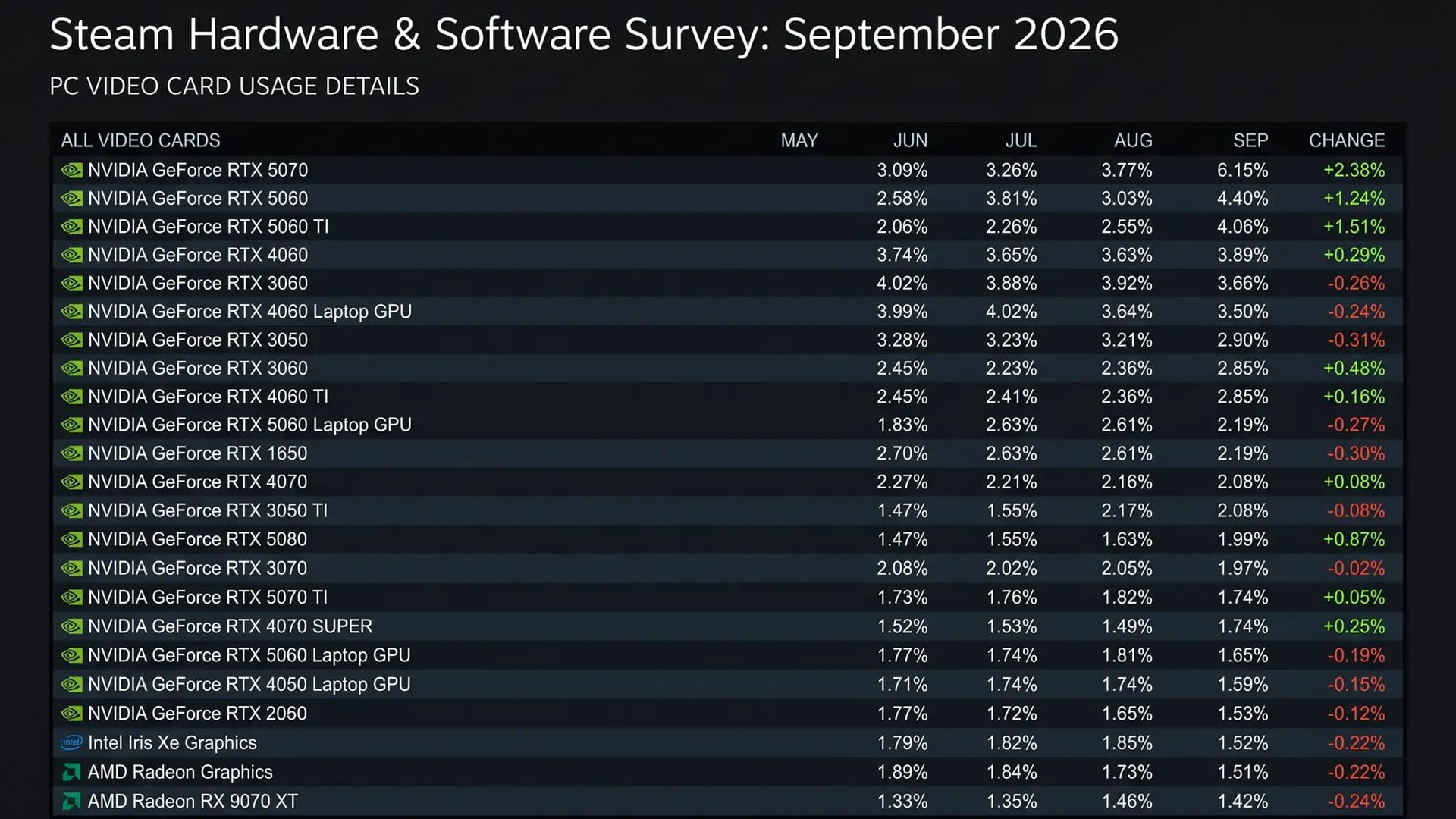
Despite record revenues, Nvidia confirmed that **GPU supply chains remain under intense strain**, with shortages stretching well into 2026. Notably, the **GeForce RTX 50-series GPUs are expected to be in acute shortage through 2026**, constraining the PC gaming ecosystem and edge AI device manufacturers. This sustained scarcity risks slowing AI adoption outside hyperscalers and large enterprises, which continue to accelerate investments in next-generation AI compute.
The shortage extends beyond ultra-high-end H100 data center GPUs, affecting a broad range of segments. This supply bottleneck reinforces an enterprise-led AI growth pattern, as consumer and edge markets face delayed access to cutting-edge hardware.
---
### Hyperscaler AI Spending Surpasses $700 Billion, Amid Energy, Regulatory, and Market Challenges
Hyperscale cloud providers have now committed over **$700 billion in AI infrastructure investments for 2026 alone**, encompassing GPUs, CPUs, memory, storage, and fab expansions. Meta’s headline-grabbing **$100 billion AI infrastructure deal with AMD**, which includes a massive **6-gigawatt power allocation**, exemplifies the scale of capital flowing into AI compute.
Other major hyperscaler developments include:
- **Amazon’s launch of Trainium 3** at AWS Invent, a next-gen AI training chip designed to challenge Nvidia’s dominance by offering cost-effective, scalable AI training options.
- Accelerated data center construction by Microsoft, Google, and others to keep pace with surging AI compute demand.
- Nvidia’s networking business hitting an annualized revenue run rate of **$31 billion**, highlighting the strategic importance of high-performance interconnects for distributed AI workloads.
- Rising regulatory and operational pressures, including U.S. government efforts to have Big Tech internalize increasing electricity costs due to energy security concerns.
- Municipal moratoria on new data center projects (e.g., Denver) driven by environmental and infrastructure impact concerns.
- A **collapsed secondary market for premium AI GPUs**, with Nvidia’s H100 resale prices plunging to roughly 15% of retail (~$6,000 vs. $40,000 new), signaling saturation risks and evolving workload profiles.
- Growing financialization of AI hardware assets, such as AMD-backed **$300 million loan facilities** for AI startups, increasing systemic credit risk.
These trends depict a hyperscaler AI investment landscape that is massive yet increasingly complex, constrained by sustainability, regulatory, and cost pressures.
---
### Intensifying Competition and Ecosystem Expansion Complicate Market Dynamics
Nvidia’s AI hardware dominance faces growing challenges from an expanding competitive field:
- **Amazon’s Trainium 3 chip** intensifies AWS’s drive for proprietary AI silicon, targeting cost-efficient, scalable training workloads as an alternative to Nvidia GPUs.
- **Intel’s expanded AI inference initiatives**, including a multiyear partnership with SambaNova Systems, aim to capture a larger slice of AI inference workloads, complementing Nvidia’s training focus.
- Nvidia is broadening its portfolio by integrating CPUs alongside GPUs to meet heterogeneous compute demands in AI inference and agent applications.
- AMD is ramping competition with its Meta-backed MI400 GPU series and the forthcoming Helios AI rack system, supported by the growing ROCm AI Developer Hub ecosystem.
- Cloud leaders Google and AWS continue investing in proprietary AI accelerators, such as Google’s TPU Ironwood and Habana Labs chips, diversifying the AI chip vendor ecosystem.
- Chinese AI chip startups like LightGen press forward with indigenous accelerator development despite export controls and geopolitical challenges; Nvidia’s revenue recognition from China’s H200 chips remains delayed amid regulatory probes.
This multipolar competitive environment fuels innovation but adds complexity for customers and investors seeking clarity on long-term market leadership.
---
### Advances in Memory, Storage, Systems, and Fab Investments Cement AI Infrastructure Maturation
Beyond GPUs, the AI boom is driving rapid innovation across memory, storage, and semiconductor fabrication:
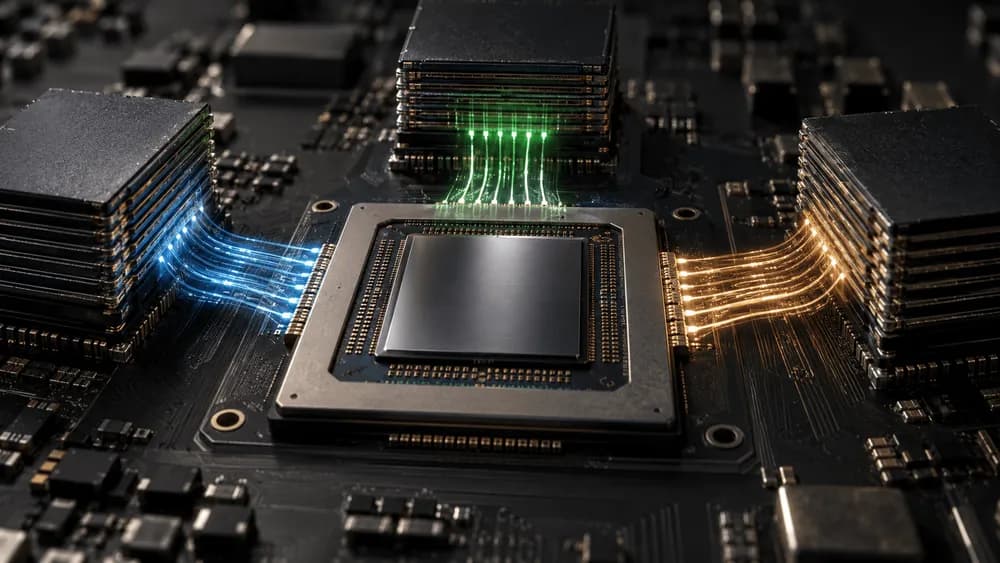
- **Micron’s GDDR7 memory roadmap** introduces a new 36Gbps speed tier, promising substantial GPU performance and density gains.
- Micron is aggressively ramping **HBM4 memory production** to mitigate Samsung’s HBM3E yield challenges, crucial for next-gen AI accelerators requiring ultra-high bandwidth.
- The launch of Micron’s **9650 PCIe 6.0 NVMe SSD**, delivering breakthrough **28 GBps throughput**, targets AI inference workloads limited by I/O bottlenecks.
- **Western Digital’s complete sellout of 2026 HDD capacity** underscores hyperscalers’ insatiable demand for cold storage to manage massive AI datasets.
- Infrastructure innovators like **VAST Data** have rolled out fully accelerated AI data stacks integrating Nvidia libraries, optimizing storage and compute for emerging AI use cases such as retrieval-augmented generation (RAG) and vector search.
- Super Micro Computer’s **CNode-X platform**, combining Nvidia GPUs with VAST Data storage, has gained strong market traction, boosting SMCI shares nearly 8%.
- Fab equipment demand remains robust, with **Applied Materials (AMAT) reporting record chip equipment orders**, shares up 11%, signaling solid fab investment momentum.
- Broadcom leverages AI to enhance fab automation and production efficiency.
- **TSMC’s $100 billion U.S. fab project** progresses steadily, aligning with strategic efforts to localize semiconductor supply chains amid geopolitical tensions.
- India is emerging as a significant AI infrastructure hub, with the **India AI Impact Summit 2026 mobilizing over $200 billion in commitments**, including Blackstone’s $2 billion AI data center fundraise, highlighting the country’s growing role in the global AI ecosystem.
These developments reflect an increasingly integrated and mature AI infrastructure ecosystem, expanding Nvidia’s influence beyond GPUs into memory, storage, and fab equipment domains.
---
### Market Structure Risks: Collapsing Secondary GPU Market, Financialization, and Geopolitical/Regulatory Headwinds
Despite booming demand, structural risks and geopolitical uncertainties are mounting:
- The **secondary market for premium AI GPUs, notably Nvidia’s H100, has collapsed**, with resale prices falling to roughly 15% of new retail, eroding asset liquidity and raising impairment risks for enterprises relying on GPU resale or leasing.
- Increasing financialization of AI hardware assets, such as AMD-backed large loan facilities for AI startups, escalates systemic credit exposure amid volatile market conditions.
- Regulatory probes like the **DeepSeek investigation** into Nvidia’s Blackwell chips and operations in China spotlight heightened government scrutiny that could disrupt supply chains and market access.
- Continued **U.S. export controls** restrict technology transfers to China and other countries, complicating strategic planning for Nvidia and competitors.
- Nvidia’s revenue recognition delays from China’s H200 chips underscore the tangible impact of geopolitical tensions.
- Local data center moratoria, rising energy costs, and new regulatory mandates force hyperscalers and vendors to carefully balance growth ambitions with compliance and sustainability imperatives.
These factors introduce significant near-term uncertainty into the AI infrastructure growth trajectory despite robust overall spending trends.
---
### Outlook: Nvidia at the Epicenter of a Complex, High-Stakes AI Infrastructure Supercycle
Nvidia and AMD maintain premium valuations as the leading pure-play AI chipmakers, while broader semiconductor firms face muted investor enthusiasm. Persistent **GeForce RTX 50-series GPU shortages through 2026** may hinder consumer and edge AI adoption, reinforcing an enterprise-centric AI growth pattern.
The collapse of the secondary GPU market, intensifying regulatory scrutiny, and geopolitical risks represent material headwinds. The trajectory of hyperscaler spending, Nvidia’s supply chain management, and evolving geopolitical dynamics will be decisive in shaping the sustainability and evolution of the AI infrastructure supercycle.
Jensen Huang’s recent statements underscore Nvidia’s positioning not merely as a chipmaker but as a “compute utility” underpinning the global AI economy—its success pivotal to the broader semiconductor sector’s transformation amid a complex and high-stakes growth phase.
---
### Key Takeaways
- Nvidia posted a record **$68.1 billion quarterly revenue**, up **73% YoY**, reaffirming the massive AI capex supercycle.
- Persistent **GeForce RTX 50-series GPU shortages will continue through 2026**, constraining consumer and edge AI markets.
- Hyperscaler AI infrastructure investments exceed **$700 billion**, amid rising energy costs, regulatory scrutiny, and data center moratoria.
- Amazon’s **Trainium 3 chip** and Intel’s expanded AI inference push intensify competition; Nvidia’s networking arm hits **$31 billion in revenue**, becoming a strategic growth pillar.
- Memory and subsystem innovation accelerates: **Micron’s GDDR7 roadmap**, **HBM4 ramp**, and breakthrough SSD throughput reshape AI compute infrastructure.
- The secondary GPU market collapse, along with growing financialization, increase systemic risk.
- Fab equipment demand surges, supported by **Applied Materials’ record orders**, TSMC’s U.S. fab project, and India’s emerging AI infrastructure commitments exceeding **$200 billion**.
- Regulatory and geopolitical risks—including the **DeepSeek probe**, export controls, and delayed China revenues—remain critical uncertainties.
- Jensen Huang’s recent market commentary reinforces Nvidia’s strategic role as the essential “compute utility” driving AI demand.
- Nvidia’s supply chain agility, competitive positioning, and hyperscaler spending trends will be pivotal in defining the AI infrastructure supercycle’s future.
---
As Nvidia navigates soaring demand, supply constraints, intensifying competition, and geopolitical complexities, it stands at the fulcrum of a defining phase in technology and capital markets—one that will shape the semiconductor sector and the global AI economy for years to come.