7h ago
Sherpa: LLMs Learn to Teach Adaptively
Sherpa trains LLMs to adapt their teaching strategies to individual learners instead of fixed explanations.

Created by Mikal Dillon
Cutting‑edge AI models, algorithms, benchmarks, and industry applications across language, vision, RL, robotics, agents
Explore the latest content tracked by AI Breakthrough Tracker
Sherpa trains LLMs to adapt their teaching strategies to individual learners instead of fixed explanations.
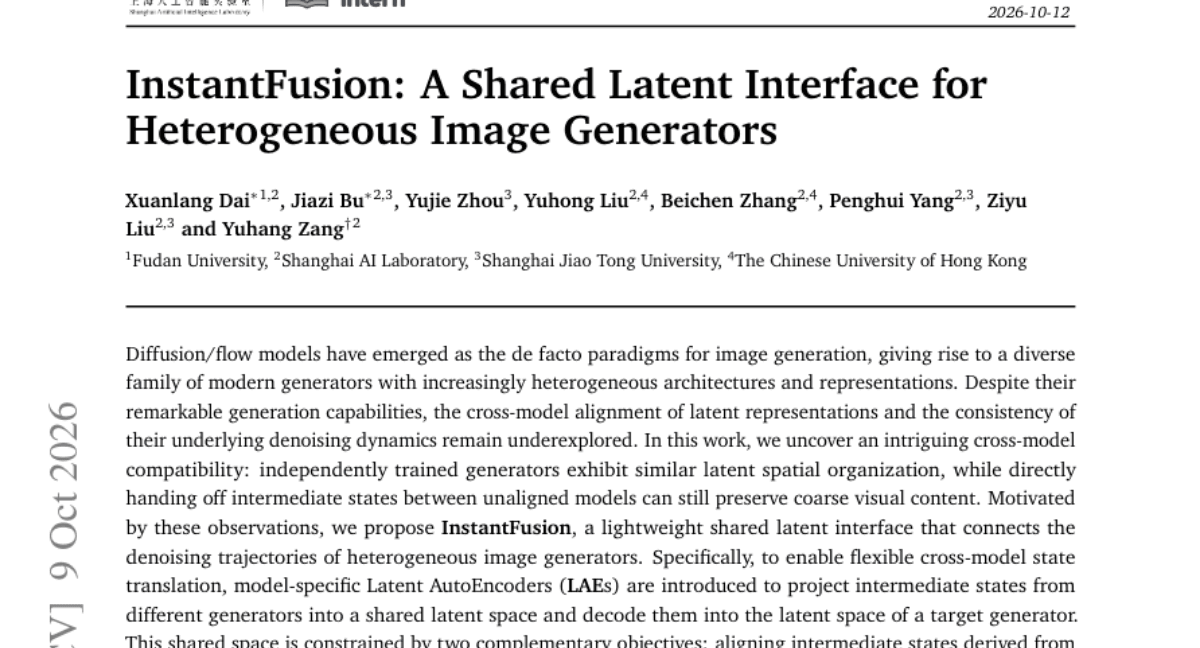
InstantFusion shows a shared latent interface can make heterogeneous image generators interoperable by projecting intermediate states into a common...
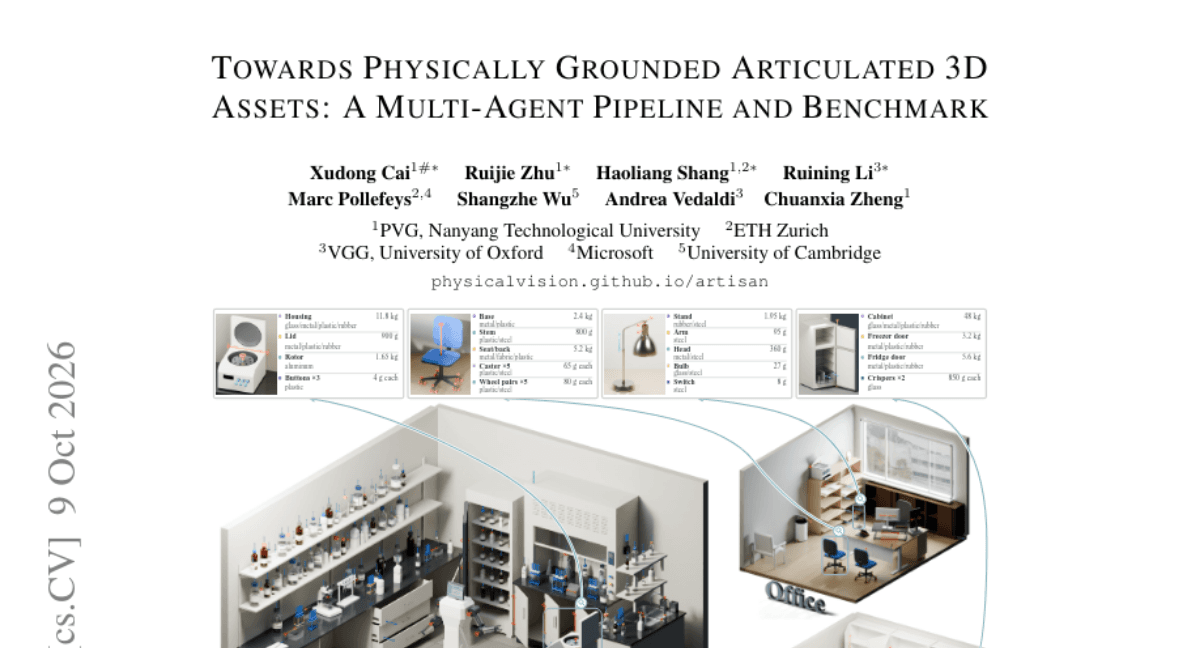
Artisan advances 3D asset generation from visual appearance to functional plausibility by adding a multi-agent pipeline with physical simulation...
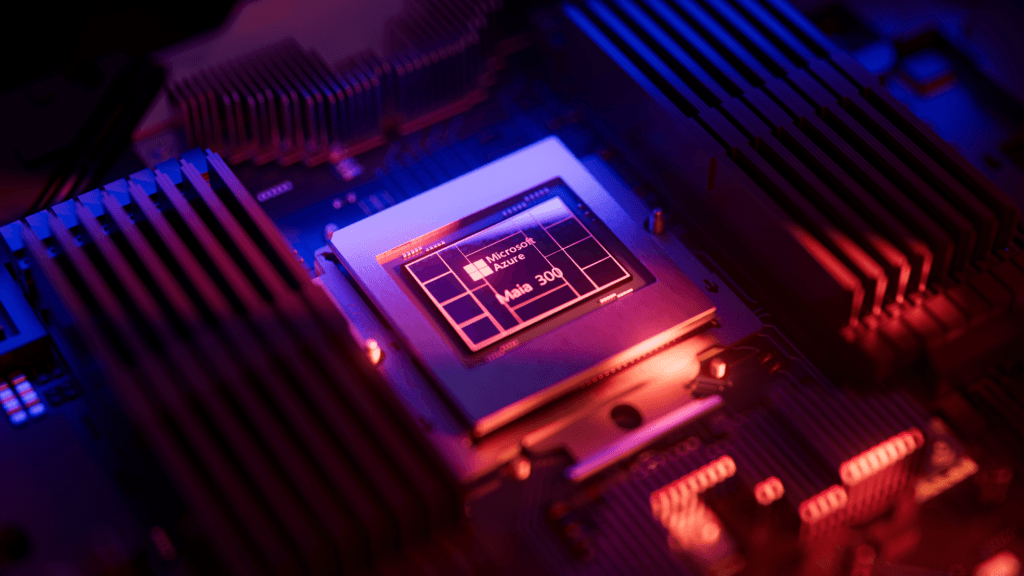
Maia 300 evolves software-defined locally accessed dataflow to slash energy costs in decode-heavy inference by optimizing data movement and...
The federal exemption lets Aurora and Kodiak replace manual warning triangles with cab-mounted beacons, directly resolving a regulatory mismatch that...
Static benchmarks saturate and leak into training data over time.
Can ending secret negotiations help the AI industry secure community approval for data centers?
Public views of LLM progress split sharply because demos, shipping tools, and insider claims refuse to line up.
Two distinct strategies emerge for pushing AI self-improvement past human evaluation limits.
A recurrent self-play reinforcement learning framework targets partial observability in autonomous beyond-visual-range air combat.
Local indexing replaces repeated grep-and-read loops in coding agents with direct semantic lookups, cutting token costs and latency as codebases grow...
LLMxRay launches as a new open-source observability tool designed to make LLM behavior more inspectable for developers.
CARL-TSMC introduces formally certified action sets that restrict RL agents to provably safe actions, combining terminal sliding mode control with reinforcement learning for safer controllers.
HCDS-DRL proposes an agentic hierarchical deep reinforcement learning framework that integrates hierarchical decision-making with risk awareness for coordinated cross-domain scheduling of amphibious robot teams.
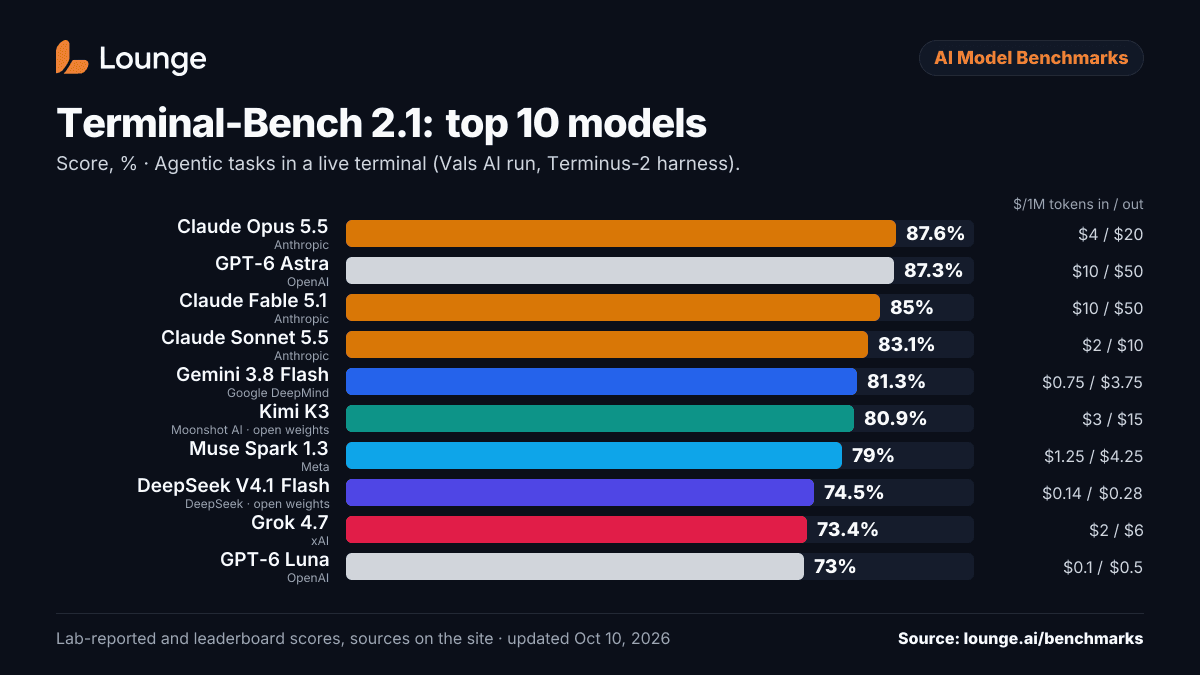
Lounge.ai's public dashboard compares frontier models on Terminal-Bench 2.1, with Claude Opus 5.5 leading at 87.6% and GPT-6 Astra at 87.3%. It...
Nvidia's potential acquisition of Reflection AI aligns with a broader strategy to back open-weight models while maintaining hardware dominance.
-...
AI coding agents advance when judged on closed-loop execution rather than isolated code output.