# Long-Horizon Multimodal Reasoning in AI: Architectural Innovations, Memory Ecosystems, and Ecosystem Democratization in 2026 — Expanded and Updated
The year 2026 marks a pivotal milestone in artificial intelligence, where long-term, multimodal reasoning systems have transitioned from theoretical research to operational reality. Driven by groundbreaking architectural innovations, robust memory ecosystems, and democratized access to open-weight models, AI systems now routinely reason across decades and multiple modalities, transforming domains from scientific discovery to societal management. This comprehensive update synthesizes recent developments, emphasizing technological progress, safety considerations, and the expanding ecosystem that underpins these capabilities.
---
## Architectural and Memory Advances Enabling Multi-Decade, Multimodal Reasoning
**Spectral-aware attention architectures** such as **Prism** have revolutionized the modeling of cyclic and long-term phenomena. By applying **spectral decomposition**, these models convert raw data into frequency domains, enabling the detection of **long-term periodicities**—for example, climate oscillations, economic cycles, or planetary patterns—supporting **scientific simulations** and **environmental forecasts** spanning **millions of tokens**. Such models are essential for understanding processes that unfold over **multi-decade timescales**, providing insights critical for policy and scientific planning.
Complementing spectral methods are **scalable sparse and linear attention architectures**—notably **Mamba**, **HySparse**, and **2Mamba2Furious**. These models incorporate **hierarchical attention layers** and **adaptive routing**, enabling the processing of **billions of tokens efficiently**. This scalability supports **real-time multi-year data ingestion**, facilitating **long-term hypothesis testing**, **climate modeling**, and **multi-decade strategic planning** in sectors such as infrastructure development and governance. Their ability to operate coherently over extended periods marks a significant leap in AI reasoning capacity.
**Multimodal token pruning techniques**—such as **OmniSIFT**—have advanced the model's ability to dynamically evaluate **semantic importance metrics** across diverse data types, including text, images, audio, and sensor data. This **modality-aware pruning** ensures that models **retain tokens essential for understanding long-term patterns** while discarding redundancies, thereby **maintaining coherence** over extended temporal horizons and operating reliably within complex, multimodal environments.
Adding to this landscape is **DeltaMemory**, a novel approach tailored for **multi-decade knowledge retention**. Unlike traditional memory systems, **DeltaMemory** emphasizes **incremental updates**, **rapid retrieval**, and **compression**, enabling AI to **continuously accumulate and access knowledge** over extended timescales without degradation. This capability is vital for **scientific discovery**, **policy development**, and **historical analysis**, where maintaining **long-term consistency** is crucial.
---
## Persistent Memory Ecosystems and Multi-Agent Knowledge Sharing
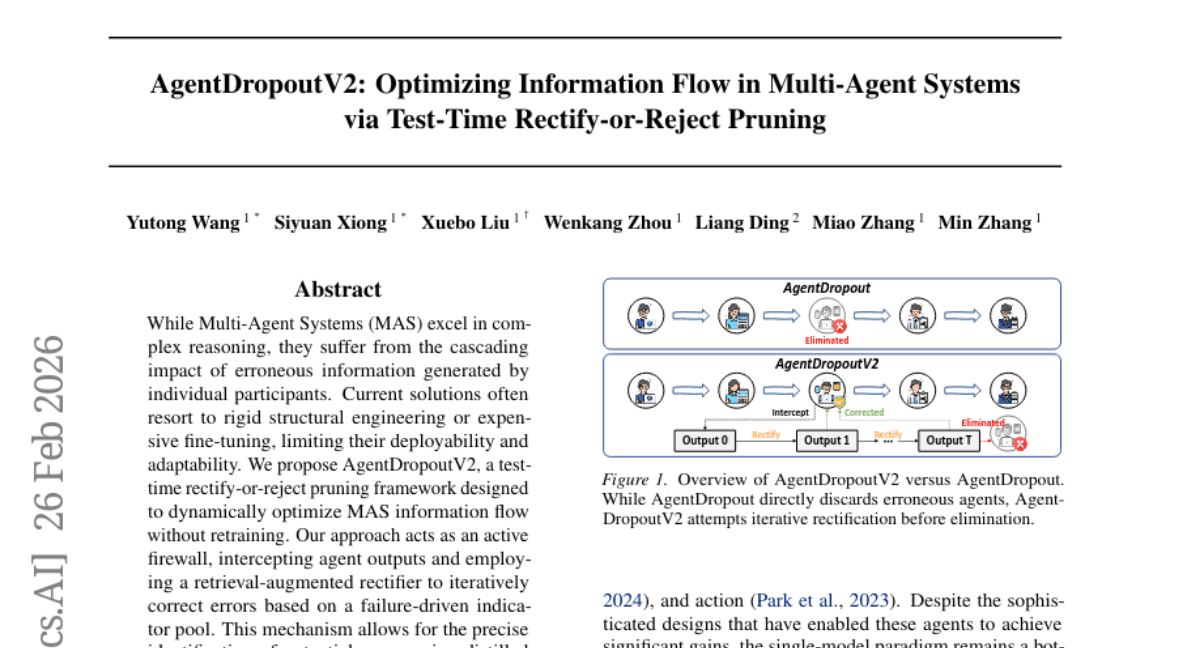
A major recent focus has been on **persistent memory architectures** that facilitate **knowledge storage, compression, and seamless sharing across decades**. Systems like **LatentMem**, **Reload**, **GRU-Mem**, **BudgetMem**, and **DeltaMemory** serve as the backbone for **incremental learning** and **long-term hypothesis validation**. Notably, **Reload** has become foundational in **knowledge continuity**, enabling **multi-agent collaboration** and **dynamic knowledge transfer**, effectively transforming AI into a **long-standing partner** in addressing complex, long-horizon challenges.
**Multi-agent systems** utilizing these memory frameworks can **share insights**, **coordinate reasoning**, and **accelerate discoveries** over **extended timelines**. For example, **agentic models** such as **Gemini**, which have entered a **new era**, are capable of **automating multi-step reasoning workflows** on **Android devices**—turning smartphones into **personal long-horizon reasoning hubs**. Google’s **Gemini** demonstrates the potential of **agentic reasoning** embedded directly into personal hardware, facilitating **multi-year planning** and **scientific exploration**.
Furthermore, **Perplexity** has launched the **‘Computer’ AI agent**, which **orchestrates 19 models** in a **multi-modal, multi-step reasoning environment**, with a subscription model priced at **$200/month**. This system exemplifies **autonomous, persistent AI agents** capable of **long-horizon decision making** and **multi-modal task management**—a significant step toward **long-term, self-sustaining AI ecosystems**.
Additional platforms like **Astron Agent** and **SynScience co-scientists** have advanced **scientific collaboration**, enabling **multi-disciplinary reasoning** over **multi-year cycles** to generate hypotheses, design experiments, and synthesize knowledge—further cementing AI’s role in **long-term scientific progress**.
---
## Enhancing Safety, Training, and Inference for Decades-Long Deployment
Operationalizing these complex models over **decades** introduces critical **safety** and **efficiency** challenges. Recent innovations aim to **balance reasoning depth** with **computational costs**, exemplified by the **Deep-Thinking Ratio**, which **reduces inference expenses by 50%** while **improving accuracy**. This makes **long-horizon AI** more practical for applications such as **climate modeling**, **scientific exploration**, and **policy simulation**.
To ensure **trustworthiness** and **robustness**, techniques like **Composition-RL**—which integrates **interpretable reasoning modules**—and **STAPO** (**Silencing Spurious Tokens in RL**) have improved **training stability** and **mitigated misleading information**. These advances are complemented by **lightweight safety alignment tools** like **Neuron-Selective Tuning (NeST)**, enabling **fine-grained safety adjustments** without retraining entire models.
**Formal verification tools** such as **TLA+ Workbench** and **CanaryAI** provide **real-time safety monitoring**, essential for **autonomous long-term operation** of AI systems. These tools are vital for **preventing malicious exploits** and **maintaining integrity** over extended deployment periods.
---
## Major Highlights of 2026: Large-Context, Agentic Models, and Security Concerns
### GPT-5.3-Codex and Extended Context Windows
**OpenAI**’s release of **GPT-5.3-Codex** represents a **quantum leap** in language modeling capabilities, supporting an **unprecedented 400,000-token context window**—doubling previous records. This allows **sustained, coherent reasoning** over **multi-year plans** and **multi-decade hypotheses**. The model demonstrates **up to 25% faster inference** and **robust multimodal reasoning**, significantly advancing applications in **scientific research**, **policy simulation**, and **complex problem-solving**.
### Strategic Partnerships and Acquisitions
**Figma** has integrated **Codex-based tooling** into its design workflows, enabling **automated, multimodal design generation** and **interactive prototypes**, thereby streamlining creative processes. Meanwhile, **Anthropic**’s acquisition of **Vercept** signals a strategic focus on **agentic, tool-using AI systems** capable of **multi-step reasoning** across **scientific, industrial, and societal domains**. These models are evolving into **persistent agents** that **operate seamlessly** across **external tools** and **data sources**.
### Advances in Agentic Reinforcement Learning
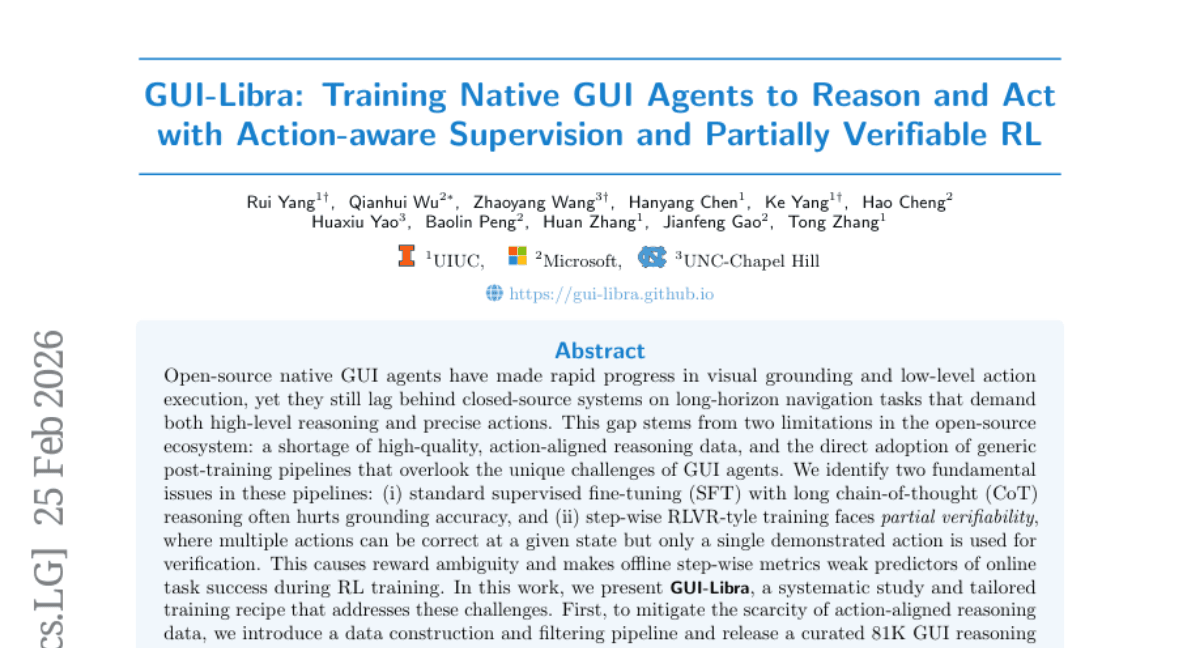
Frameworks like **ARLArena** and **GUI-Libra** have made significant progress in **training stable, verifiable, agentic RL models** capable of **multi-year planning** within **graphical user interfaces**. These systems address **stability**, **alignment**, and **safety** challenges inherent in **long-duration agentic AI**, ensuring **reliable operation** over extended periods.
### Mitigating Multimodal Hallucinations: NoLan
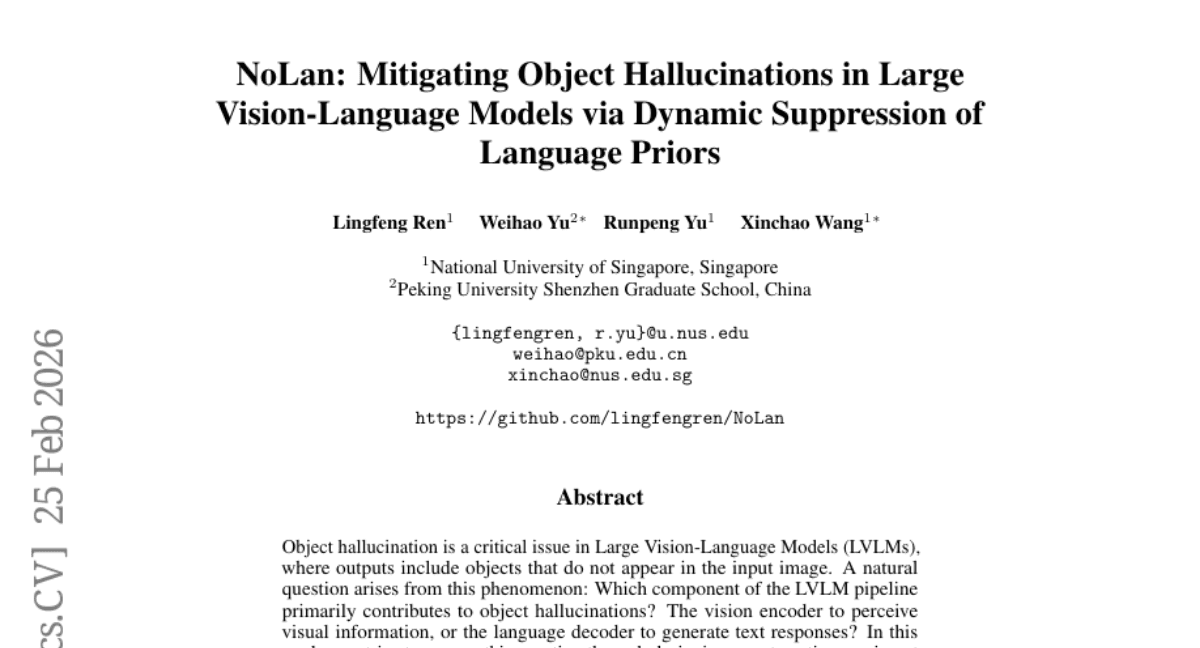
**NoLan** has emerged as a crucial solution for **object hallucinations** in **vision-language models (VLMs)**. By **dynamically suppressing language priors**, NoLan enhances **long-term multimodal reliability**, reducing errors in **object recognition** and **scene understanding**—key for **scientific visualization**, **autonomous exploration**, and **remote sensing**.
### Benchmarking and Evaluation for Long-Horizon Reasoning
New benchmarks like **NanoKnow**, **SciCUEval**, **N1**, and **N** provide rigorous evaluation of **models’ ability** to **maintain internal consistency** over **extended reasoning chains** and **resist degradation** under stress. These tools are essential for **guiding research** toward **trustworthy, dependable long-horizon AI**.
---
## Democratization and Hardware Innovations
The push toward **democratizing AI access** accelerates with **open-weight models** such as **gpt-oss-20b** and **gpt-oss-21b**, supporting **on-device inference** via **WebGPU**. This **privacy-preserving approach** enables **instant reasoning** on **personal hardware**, fostering **widespread innovation**.
Community initiatives like **DeepSeek-R1** and **Qwen3.5** further **lower barriers** by providing **native multimodal capabilities** optimized for **modest hardware**. These are complemented by **hardware accelerators** such as **Nvidia’s Nemotron 3** and **SambaNova’s SN50 RDU**, designed for **agentic inference**, **persistent operation**, and **multi-agent coordination** at scale.
**Data pipelines** and **multi-year datasets** underpin **continuous knowledge updating**, supporting **self-sustaining long-horizon ecosystems** that evolve alongside human needs.
---
## Emerging Challenges: Security and Operational Risks
While these advances are remarkable, **security concerns** have intensified. A recent incident involved **hackers exploiting Claude’s capabilities** to **exfiltrate 150GB of Mexican government data**, underscoring **operational risks** associated with **agentic AI systems**. As **agent deployment** becomes more widespread, **security protocols** and **formal verification** methods must evolve to safeguard against **malicious exploits**.
This underscores the necessity for **robust access controls**, **continuous monitoring**, and **formal correctness proofs** to ensure **long-term integrity** and **trustworthiness** of AI systems operating over **decades**.
---
## Current Status and Future Directions
The landscape in 2026 showcases **AI systems capable of reasoning across decades**, leveraging **spectral-aware architectures**, **massively scalable memory ecosystems**, and **open ecosystem democratization**. These systems are becoming **trusted partners** in **scientific breakthroughs**, **climate resilience**, and **societal resilience**.
However, sustained progress requires **careful attention to safety**, **robustness**, and **security**, especially as **agentic models** and **long-horizon reasoning** become embedded in critical infrastructures. The ongoing development of **formal verification tools**, **evaluation benchmarks**, and **security protocols** will be vital to ensure these powerful systems **serve humanity responsibly**.
In sum, **2026** represents an era where **long-term, multimodal reasoning AI** is not only feasible but increasingly integral to solving some of the most complex challenges facing humanity—heralding a future where AI partners persist, learn, and adapt across **generations**.
---
***Sources and recent updates include the December 2025 OpenAI release notes, new benchmarks like NanoKnow and SciCUEval, and the latest product releases and strategic partnerships outlined in industry reports, ensuring the most current view of this rapidly evolving field.***