# The 2026 Revolution in Multi-Agent Ecosystems: Advanced Tooling, Architectures, and Developer Experiences
The year 2026 marks a transformative milestone in the evolution of multi-agent systems, driven by groundbreaking advancements in tooling, architectural patterns, and developer user experiences (UX). These innovations have propelled multi-agent ecosystems from experimental prototypes into mature, enterprise-ready platforms capable of autonomous, long-term operations. As organizations increasingly adopt these systems, they benefit from enhanced scalability, resilience, security, and usability—fundamentally reshaping how AI-driven workflows are designed, deployed, and managed.
---
## The Maturation of Developer Tooling: From Specialized Editors to Full-Fledged IDEs
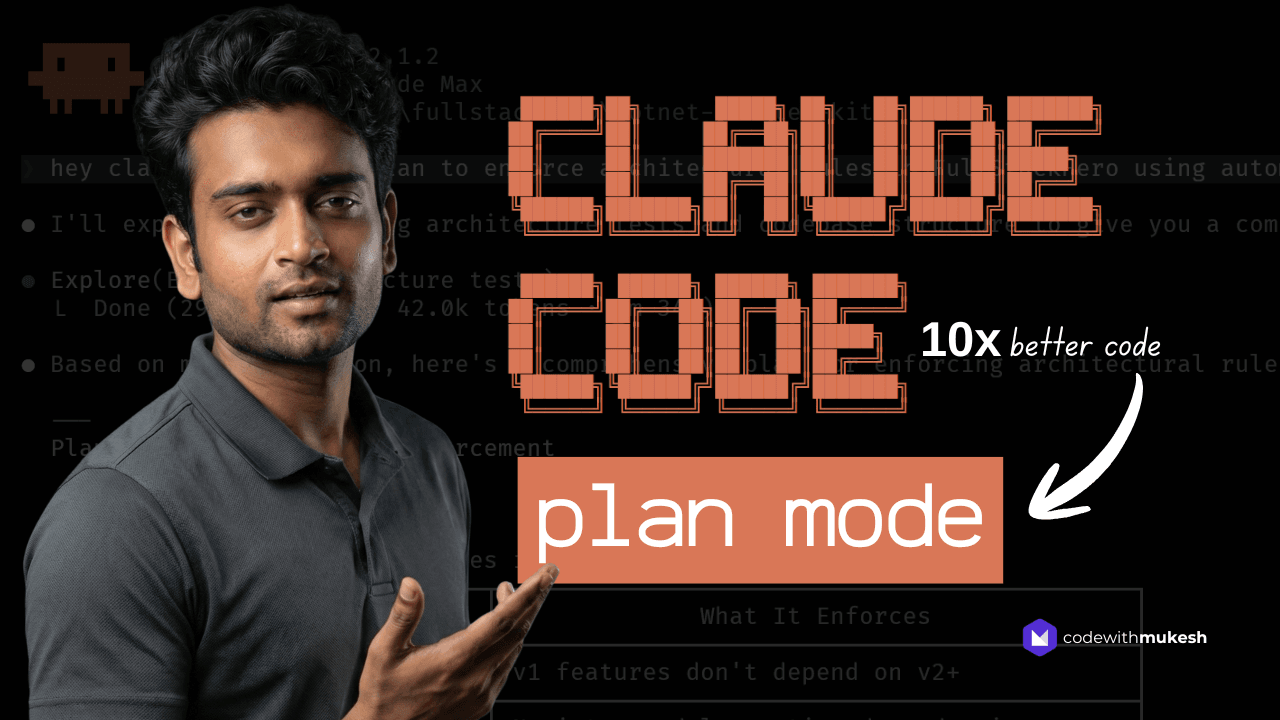
One of the most prominent developments in 2026 is the evolution of developer tooling into comprehensive Integrated Development Environments (IDEs). Building on earlier innovations, **Claude Code** has now **become a full-featured IDE**, significantly streamlining multi-agent programming:
- **Claude Code as a complete IDE:**
The recent release, highlighted in a popular YouTube video titled *"Claude Code Just Became a Full IDE"*, demonstrates an environment integrating code editing, debugging, plugin management, and deployment workflows. This unification reduces complexity, accelerates iteration cycles, and enhances code quality for multi-agent systems.
- **Rich plugin ecosystem and agent-team services:**
Developers can **create and deploy plugins** to extend agent functionalities—such as custom reasoning modules, dynamic UI components, or integration points with external systems. For instance, a developer detailed **"building a plugin and service for Claude Code Agent Teams,"** leveraging **Swarm mode** to orchestrate multiple agents into coordinated services. This modular approach promotes reusability and scalability, fostering enterprise adoption.
- **Enhanced TDD and debugging with Superpowers plugin:**
The **Claude Code Superpowers plugin** has become a cornerstone for **test-driven development (TDD)** and **debugging workflows**. Its features include **TDD gates**—which enforce quality checkpoints—and **visual debugging flows** that map reasoning chains and session states. These tools **dramatically reduce debugging time** and **increase trust in autonomous agents**, especially in complex multi-agent scenarios. A recent review praised how this plugin **"streamlines complex multi-agent testing,"** making it easier for developers to ensure correctness.
- **Remote and mobile control:**
Additional features enable **workflow management from smartphones**, facilitating **on-the-go debugging**, **quick adjustments**, and **monitoring**, thus integrating multi-agent system management into daily enterprise workflows.
---
## Architectural and Orchestration Patterns: Scaling with Hierarchies, Swarms, and Event-Driven Primitives
The ecosystem’s architecture now supports **robust, scalable, and resilient multi-agent configurations** through innovative patterns:
- **Hierarchies and Swarm Architectures:**
Self-organizing **agent hierarchies** and **swarm models** empower teams to **divide tasks**, **share context**, and **coordinate** toward overarching goals. These structures support **up to 16 agents working in concert**, each with specialized functions like data retrieval, security enforcement, or code generation. The result is **parallel processing**, **fault tolerance**, and **dynamic scalability**.
- **Scheduled Tasks and Event-Driven Primitives:**
The introduction of **native scheduling capabilities**, exemplified by **Claude Cowork**'s feature that allows **self-scheduling of recurring tasks**, marks a significant step toward autonomous operation. Tasks such as **daily summaries**, **monitoring routines**, or **complex workflows** now run **without manual intervention**.
Concurrently, **event-driven primitives**—notably **`/invoke`**, **`/hooks`**, and **`/teleport`**—have matured to support **reactive, distributed execution**:
- **`/invoke`** initiates remote processes while **preserving context**.
- **Hooks** enable **inter-agent communication** triggered by specific events.
- **Teleport** allows **transferring context and state** across workflows, crucial for **fault recovery** and **elastic scaling**.
- **Long-term memory and knowledge versioning:**
The integration of **hierarchical, persistent memory layers** via tools like **OneContext** and **Claude Synapse** has **revolutionized reasoning over extended periods**. These systems **store organizational policies, decisions, and contextual knowledge** spanning months or years, enabling **multi-year project management** and **refined reasoning**.
Additionally, **knowledge versioning**—through **filesystem storage**, **Git repositories**, or **graph databases**—ensures **auditability**, **traceability**, and **knowledge evolution**, which are vital for enterprise compliance and continuous improvement.
---
## Enhanced Developer UX and Observability
Transparency, control, and debugging ease have been prioritized:
- **Visual debugging and HUDs:**
The **Claude Heads-Up Display (HUD)** now **maps agent interactions**, **reasoning chains**, and **session states** visually, making **complex workflows more understandable**. This **trust-building tool** accelerates troubleshooting, tuning, and validation.
- **Extended context windows:**
Agents now support **context windows exceeding 1 million tokens**, allowing them to **maintain organizational policies**, **historical decisions**, and **visual inputs** like Figma mockups. This capability ensures **workflow continuity** and **robust knowledge retention** over extended periods.
- **Remote management and mobile control:**
Features like **Claude Code Remote Control** enable **workflow oversight from smartphones**, facilitating **rapid debugging** and **on-the-fly adjustments**—a crucial feature for dynamic enterprise environments.
---
## Security, Cost Optimization, and Performance Improvements
As multi-agent ecosystems grow in complexity, **security** and **cost efficiency** have become central:
- **Claude Code security initiatives:**
Following the discovery of **over 500 vulnerabilities** in Claude Code, a dedicated **Claude Code Security** program now offers **mitigation strategies**, **security best practices**, and **timely updates**—ensuring **enterprise trust and integrity**.
- **AgentReady proxies for cost and speed:**
The **AgentReady** proxy, a **drop-in replacement** for standard API calls, has **reduced token costs by 40-60%** and **speeded up processing by up to 10x**. These improvements make **large-scale deployment** more **cost-effective** and **responsive**, essential for enterprise use cases.
- **Mobile and scheduled automation:**
The combination of **mobile workflow management** and **scheduled recurring routines**—such as **monitoring reports** or **automated data collection**—further enhances **operational flexibility** and **efficiency**.
---
## Recent Innovations and Competitive Landscape
The rapid growth of multi-agent systems has spurred new tools, strategies, and market competition:
- **OpenClaw vs Claude Code: Remote Control Agents**
Recently, two prominent tools, **OpenClaw** and **Claude Code**, have emerged as leaders in **remote-control agent capabilities**. On February 25, **Anthropic** announced **OpenClaw**, emphasizing **flexible remote management** and **agent orchestration**. The competition centers on **features like real-time control**, **security**, and **ease of integration**, with each platform striving to outdo the other in **performance and usability**.
- **Claude Cowork Enterprise Plugins and Automation**
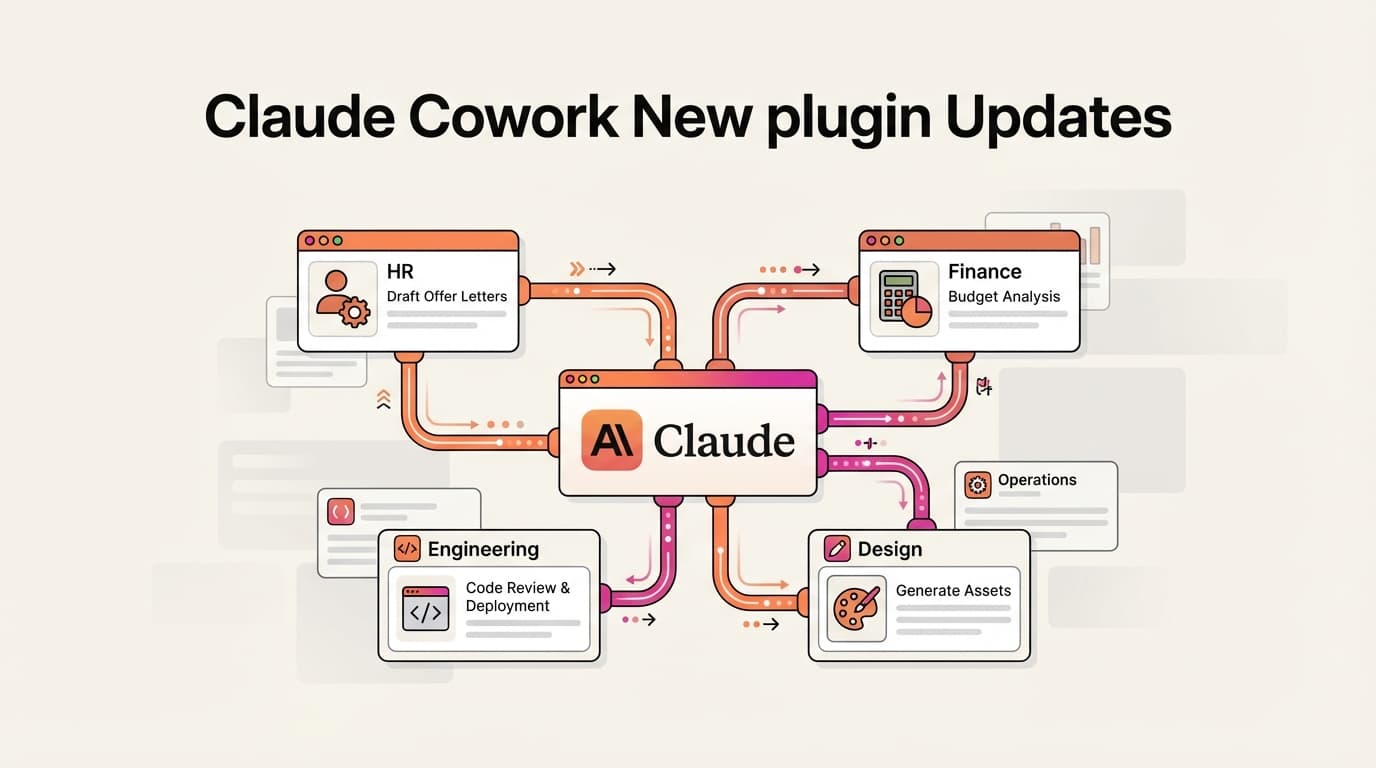
**Claude Cowork** has been **rebuilding and extending** its plugin ecosystem to support **enterprise-specific workflows**. Recent articles highlight **new plugins**—including **Brand Voice analyzers** and **custom scheduler integrations**—that facilitate **scaled automation** and **enterprise customization**.
- **Scheduled Tasks and Plugin Updates**
The **addition of scheduled task support** in Cowork enables **automated, timed workflows**, reducing manual oversight. The latest plugin updates focus on **enhanced extensibility**, **security**, and **user experience**, affirming **the platform’s enterprise readiness**.
---
## Implications and the Path Forward
The developments of 2026 position **multi-agent ecosystems** as **central to enterprise digital transformation**. With **full IDE capabilities**, **advanced orchestration**, **long-term memory**, and **robust security**, organizations can now **design, deploy, and maintain autonomous AI workflows** with unprecedented confidence and efficiency.
Looking ahead, innovations in **multi-modal reasoning**, **self-optimization**, and **more intuitive interfaces** are expected to further **blur the line between human and AI collaboration**. As governance, security, and interoperability efforts mature, these systems will become **integral to daily operations**, enabling **self-healing**, **adaptive**, and **ethically aligned** AI ecosystems.
In conclusion, **2026** has firmly established **multi-agent systems** as **transformative tools**—not just for experimentation but as **enterprise-grade solutions** that are **scalable, secure, and user-friendly**, paving the way for **next-generation AI-driven workflows** across industries.