# The 2026 Landscape of Autonomous Multi-Agent AI: A New Era of Deployment, Capabilities, and Trustworthiness
The year 2026 marks a pivotal milestone in the evolution of autonomous multi-agent AI systems, transforming from experimental prototypes into integral societal infrastructure. This transformation is driven by foundational breakthroughs in models, hardware, and tooling, alongside an intensified focus on safety, governance, and trust. The convergence of these advancements has unlocked unprecedented scalability, robustness, and real-world applicability across industries, heralding a new era of intelligent, collaborative, and trustworthy AI ecosystems.
## Widespread Industry Adoption and Ecosystem Maturation
**2026 is characterized by the massive-scale deployment of multi-agent systems across sectors such as logistics, healthcare, manufacturing, and urban management.** Major cloud providers like **AWS** have expanded orchestration platforms that enable **self-organizing, resilient agent networks** capable of tackling complex decision-making tasks. Swami Sivasubram from AWS emphasizes this shift: *"We are enabling organizations to build resilient, scalable agent ecosystems that can adapt in real time."*
These ecosystems increasingly display **emergent social behaviors**—such as protocol sharing, cooperation, and strategic negotiation—crucial for applications like **autonomous vehicles**, **healthcare systems**, and **industrial automation**. Such social dynamics allow agents to coordinate effectively, ensuring **robustness, adaptability, and safety** in dynamic environments.
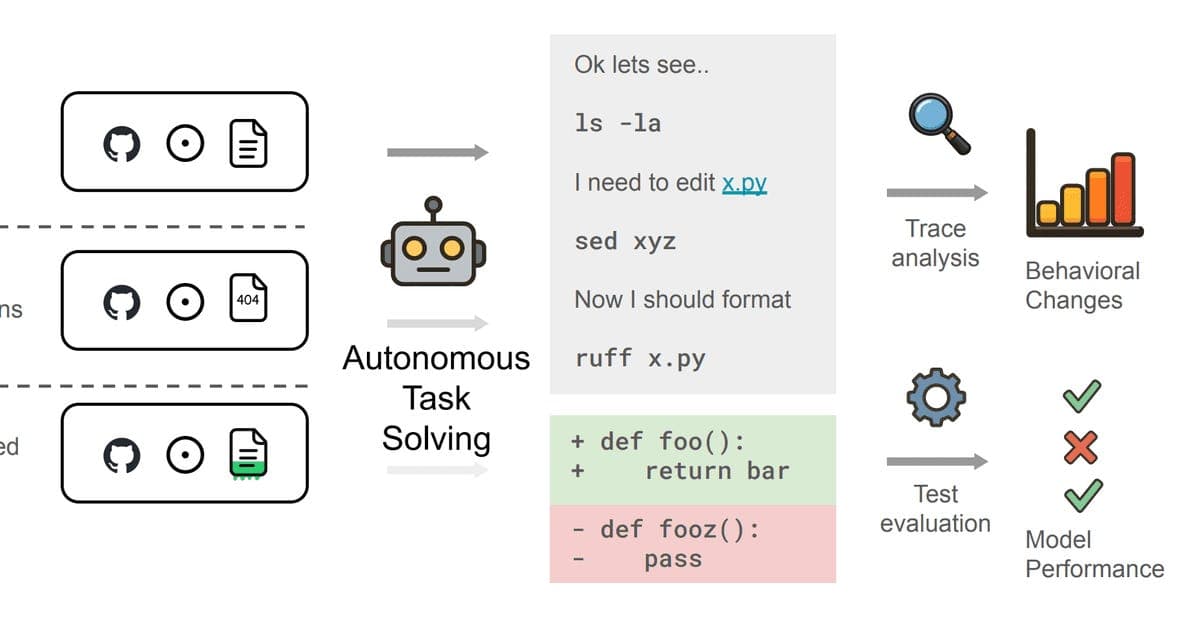
**Developer tooling** has evolved dramatically. Solutions like **Notion’s Custom Agents** are now mainstream, allowing users to create **task-specific agents** with minimal effort and integrate them seamlessly into existing workflows. Automated documentation tools like **Tag Promptless** generate and update safety-critical documentation directly from **GitHub pull requests and issues**, significantly improving compliance and safety oversight at scale.
Moreover, **AI-assisted development frameworks**—such as rapid code rebuilds enabled by AI code generation—are lowering barriers for developers. For example, a **next-generation rebuild of Next.js** was completed in just a week, showcasing how tooling accelerates innovation. These developments facilitate **emergent social behaviors among agents**, fostering **complex, adaptive decision-making** that is vital for real-world deployment.
## Foundation Models: The Engines of Reliability, Flexibility, and Multimodality
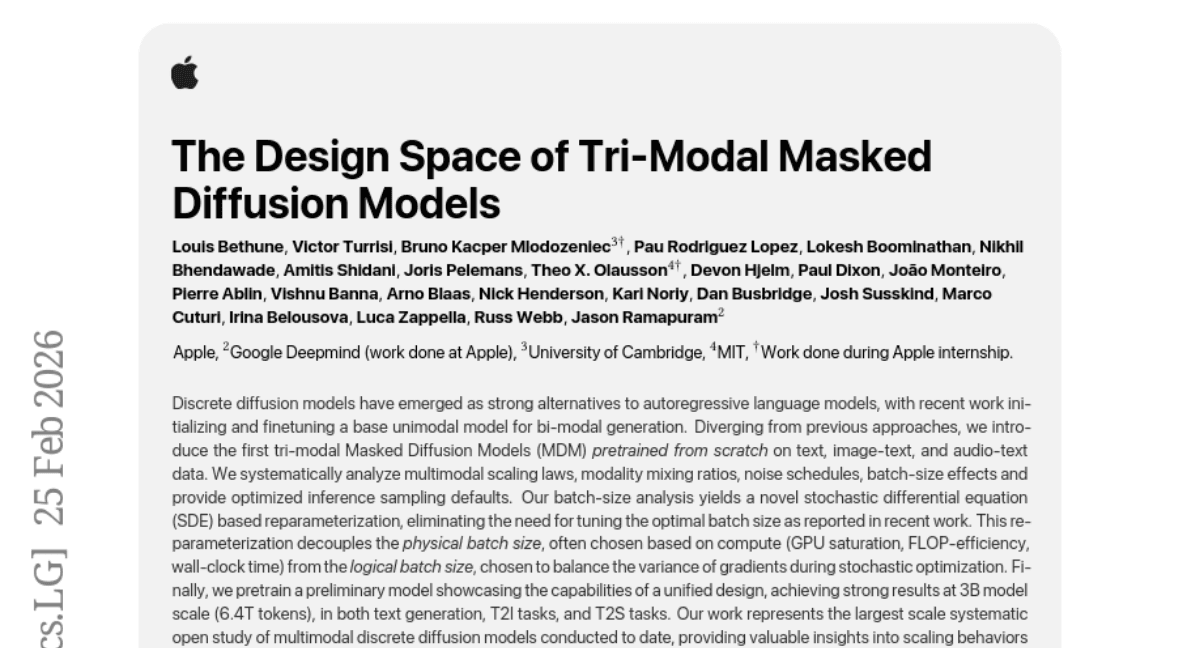
At the core of this AI revolution are **foundation models** like **Qwen3.5-397B-A17B**, which now dominate platforms such as **Hugging Face’s trending models**. These models serve as the backbone for **agent reasoning, perception, and domain adaptation**, supporting **multi-modal perception**—processing text, images, and audio simultaneously—crucial for **autonomous systems** operating in diverse environments.
**Domain-specific training initiatives** have flourished. In healthcare, **virtual hospital simulators** powered by foundation models enhance professional training and decision support, emphasizing **trustworthiness, provenance, and verification**. Recent research highlights ongoing challenges and opportunities:
- A **notable ETH Zurich study** titled *"Your AI Coding Agents are Failing Because Your AGENTS.md Files are too Detailed"* underscores the importance of **context engineering**. Excessively detailed **AGENTS.md** files can hinder agent performance, prompting a re-evaluation of documentation practices.
- **Long-horizon reasoning** remains a focus, with frameworks like **LongCLI-Bench** addressing the difficulty of maintaining coherent reasoning over extended interactions.
- The concept of **Implicit Intelligence** explores how agents interpret **implicit cues** and **unspoken user intents**, vital for natural human-agent interactions.
- The **DREAM (Deep Research Evaluation with Agentic Metrics)** framework provides comprehensive assessment tools, guiding safer and more reliable deployment.
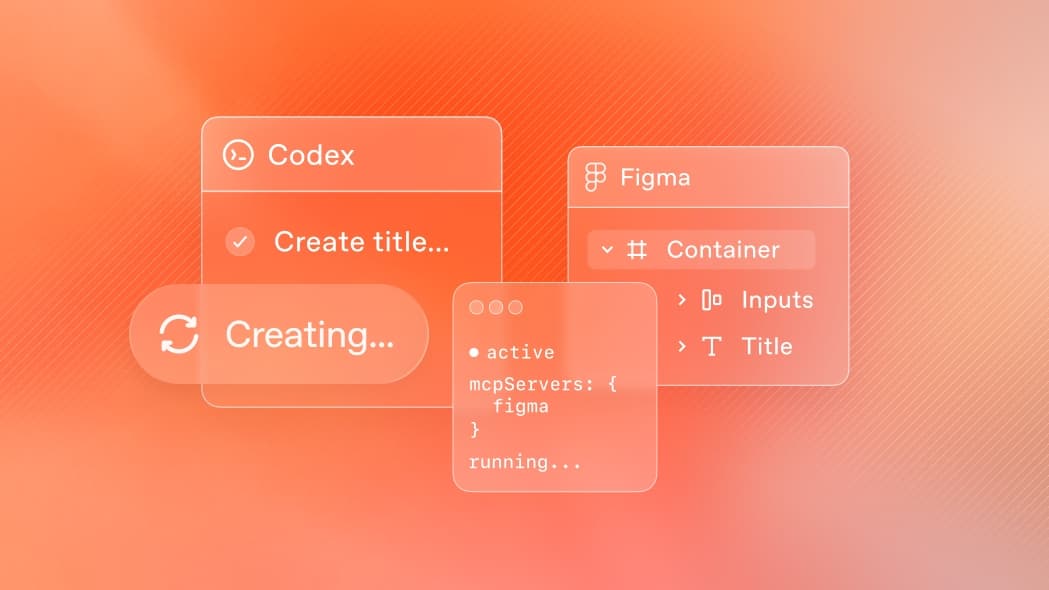
**Breakthroughs in agentic coding** include **Codex 5.3**, which **surpassed Opus 4.6** in **autonomous coding, debugging, and reasoning tasks**. As **@bindureddy** notes, *"Codex 5.3 is blazing new trails in agentic programming,"* significantly advancing **software automation** capabilities.
In **mathematical reasoning**, **Aletheia agents powered by Gemini 3** have achieved **state-of-the-art results**, reinforcing foundation models’ role in **research and knowledge discovery**.
## Hardware and Infrastructure: Enabling Real-Time, Edge, and Private Deployment
Hardware innovations are integral to scaling autonomous multi-agent systems. Companies such as **SambaNova** have secured **$350 million in funding** and partnered with **Intel** to develop **specialized inference hardware** optimized for large models like **Llama 3.1 70B**. Their chips support **inference on single GPUs** such as **RTX 3090**, **reducing infrastructure costs** and **making local inference feasible for small to medium enterprises**.
**Taalas’ HC1 chips** push inference speeds to **17,000 tokens/sec**, enabling **real-time reasoning** in applications like **health diagnostics** and **industrial automation**. **Edge devices**—such as **ESP32-based zclaw systems**—demonstrate **autonomous operation on tiny hardware**, expanding deployment in **privacy-sensitive sectors** and **resource-limited environments**.
These hardware advancements **lower barriers to deployment**, promoting **resilient, scalable, and private systems** that operate **at the edge**, reducing dependence on cloud infrastructure, **enhancing privacy**, and **minimizing latency and costs**.
## Industry Movements and Real-World Deployments
The transition to **full-scale operational systems** accelerates, exemplified by:
- **Anthropic**’s acquisition of **@Vercept_ai**, aiming to **advance Claude’s multi-modal and desktop interaction capabilities**, emphasizing **professional productivity tools**.
- **OpenAI**’s rollout of **GPT-5.3-Codex** and **multi-modal models** on **Microsoft Foundry**, expanding **agentic, multi-modal AI** into **coding, speech, perception**, and **decision-making domains**.
- **Alibaba**’s release of **Qwen3.5-Medium**, an **open-source, high-performance foundation model** enabling **local inference** on consumer devices, democratizing access and empowering smaller organizations to deploy autonomous agents without heavy reliance on cloud infrastructure.
Across sectors such as **healthcare, manufacturing, legal, and logistics**, organizations are adopting **multi-agent architectures** for **decision support, automation, and autonomous operations**. Case studies report **significant efficiency gains** and **robustness improvements**, guided by frameworks like the **8-layer production AI architecture**, which helps organizations **scale safely and manage complexity**.
## Ensuring Trust: Safety, Evaluation, and Governance
As autonomous multi-agent systems become woven into societal functions, **trustworthiness remains paramount**. Recent initiatives include:
- **Failure mode analyses** and **long-horizon reasoning benchmarks** that identify and address decision robustness issues.
- The integration of **provenance tracking** and **formal verification frameworks** (e.g., **TLA+**) into development pipelines to enhance **correctness and transparency**.
- Techniques like **watermarking** are employed to **verify AI-generated content**, combating misinformation and malicious use.
- Industry consortia such as **SABER** are working toward **formal safety guarantees** for multi-agent systems, fostering **public and regulatory trust**.
**Regulatory frameworks**, notably the **AI Act**, are guiding the industry toward **greater transparency**, **accountability**, and **public safety**. Companies are aligning development practices with **strict governance protocols** to ensure **ethical deployment**.
## Current Status and Future Outlook
By 2026, **autonomous multi-agent AI systems** are **more capable, scalable, and trustworthy** than ever before. The **synergy of powerful foundation models**, **specialized hardware**, **developer-friendly tooling**, and **rigorous safety frameworks** has enabled **broad deployment across critical sectors**. These systems **collaborate socially**, **reason over extended horizons**, and **operate seamlessly within complex ecosystems**, marking a substantial shift toward **self-organizing, adaptive AI environments** integrated into daily life.
While challenges in **robustness**, **safety**, and **ethical governance** persist, ongoing research and industry efforts are making **significant strides**. The emphasis on **provenance, formal verification**, and **regulatory compliance** underscores a collective commitment to **trustworthy AI**.
**In essence**, 2026 exemplifies a new epoch where **autonomous multi-agent AI** is not just a tool but a **collaborative partner** in societal progress—driving **innovation, efficiency, and transformation** while emphasizing **safety, transparency, and ethical responsibility**. The continued evolution promises a future where AI agents are **trusted collaborators**, shaping a more intelligent and resilient world.