# War, Trauma, and Human Rights Concerns in Sudan: Escalating Risks Amid Global Power Competition
The ongoing crisis in Sudan has long been a tragic humanitarian calamity rooted in internal conflict. However, recent developments have dramatically transformed it into a critical geopolitical flashpoint, with far-reaching implications for regional stability and global security. As violence intensifies and external powers deepen their involvement, Sudan has become a nexus of regional instability, proliferation risks, and human rights violations—threatening not only African peace but also the broader international order.
## The Humanitarian Catastrophe Deepens
Sudan’s conflict persists across multiple regions, including Darfur, Blue Nile, and South Kordofan, with civilians bearing the brunt of relentless violence. Recent reports reveal **systematic atrocities**—including **mass killings, sexual violence, targeted attacks, and the complete destruction of villages**—often committed with near-impunity. The human toll remains staggering:
- Over **4 million displaced persons**, comprising **internally displaced persons (IDPs)** and refugees fleeing to neighboring countries such as Chad, Ethiopia, and the Central African Republic.
- Vulnerable groups—**women, children, and the elderly**—face disproportionate suffering, with healthcare and sanitation infrastructure severely compromised.
- Entire communities are **raided, razed, and burned**, leaving civilians **murdered or trapped amid ongoing crossfire**. Displacement is exacerbated by **blockades and access restrictions**, which hinder humanitarian aid delivery. Overcrowded camps are now hotspots for **disease outbreaks** such as cholera and COVID-19, with health systems overwhelmed and unable to meet basic needs.
### Humanitarian Efforts Under Siege
Despite intermittent ceasefires and diplomatic negotiations, **little tangible progress** has been achieved in establishing durable peace or facilitating aid access. Humanitarian agencies face **attacks, bureaucratic hurdles, and blockades**, severely hampering their ability to deliver vital assistance. The destruction of health infrastructure has led to unchecked **disease outbreaks** and a surge in **sexual violence**, inflicting profound trauma on the affected populations. The international community’s response remains hamstrung, with efforts impeded by hostile conditions and geopolitical complexities.
## Justice, Impunity, and the Struggle for Accountability
The International Criminal Court (ICC) has launched investigations into war crimes and crimes against humanity in Sudan; yet, **perpetrators largely operate with near-total impunity**. This persistent lack of accountability:
- **Undermines public trust** in legal mechanisms.
- Reinforces **societal divisions and sectarian violence**.
- Leaves victims without redress, **fueling cycles of unrest and violence**.
The failure to enforce accountability hampers prospects for reconciliation and sustainable peace, and international efforts continue to pressure for **strengthened justice initiatives** and **victim support**.
## External Interference and Proxy Battles: A Geopolitical Quagmire
Sudan’s strategic location and abundant mineral resources have attracted intense external interest, turning it into a **proxy battleground** for regional and global powers vying for influence and economic advantage. Key actors include:
- **Regional players**: Saudi Arabia, the UAE, Egypt, and Ethiopia, pursuing interests related to maritime access, regional dominance, and resource control.
- **Great powers**: Russia, China, and Iran, whose expanding footprints are significantly **prolonging conflict** and complicating diplomatic efforts.
### Russia, China, and Iran’s Growing Roles
- **Russia’s military engagement** in Sudan and across Africa has reshaped regional security dynamics. Recent statements by **Vladimir Putin** highlight efforts to **“strengthen nuclear forces,”** raising concerns over escalation amid Russia’s ongoing conflict in Ukraine. Moscow reportedly **arms factions, provides strategic military training, and deploys personnel**, actions that hinder peace prospects and heighten regional volatility.
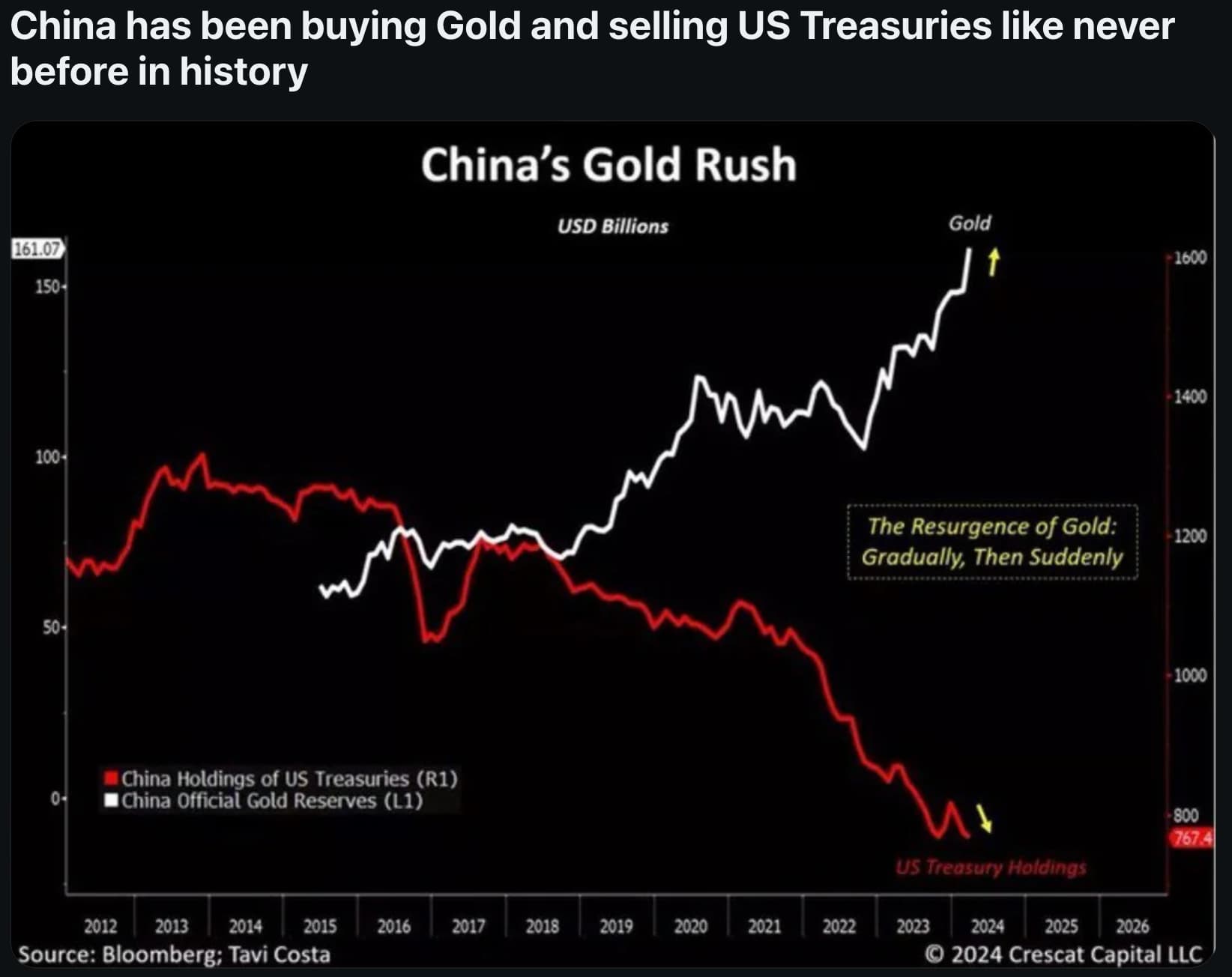
- **China’s involvement** has deepened into **resource extraction—particularly uranium, gold, and rare-earth elements—and clandestine nuclear activities**. Investigations suggest Chinese entities are implicated in **secret nuclear testing** and proliferation efforts, potentially breaching **international nonproliferation norms**. Investment in Sudan’s mineral wealth raises fears of **resource-driven proliferation** and **shadow nuclear programs**.
- **Iran’s regional ambitions** persist, with Tehran’s **nuclear pursuits** fueling **destabilization efforts**. Statements such as **“Iran says strength lies in defying great powers”** underline Tehran’s push to **expand nuclear capabilities**, further heightening proliferation risks—especially if clandestine testing or smuggling occurs within Sudan’s resource-rich environment.
## Proliferation and Resource Risks: A Shadow Crisis
Sudan’s **vast mineral deposits**, notably **uranium, gold, and rare-earth elements**, have become magnets for clandestine activity. Recent reports reveal **Chinese entities involved in secret nuclear testing**, potentially violating nonproliferation treaties. The discovery of **uranium deposits** and ongoing **shadow nuclear programs** heighten fears that Sudan could become a **nuclear proliferation hotspot**.
The convergence of **Iranian ambitions**, **sanctions evasion**, and **illicit networks** suggests Sudan might serve as a **transit or testing ground for nuclear materials**, with **smuggling routes** exploiting **weak governance, corruption, and porous borders**. These illicit operations threaten to escalate proliferation risks regionally and globally.
### Erosion of Arms Control and Verification Frameworks
A major development heightening proliferation concerns is the **end of the New START treaty**, the last significant arms control agreement between the U.S. and Russia. Its expiration signifies a **diplomatic vacuum**, weakening **monitoring and verification capabilities**:
- **Verification mechanisms** like **inspection protocols** are no longer active.
- **Russian nuclear signaling**, including **strategic deployments and disinformation**, further **heightens escalation risks**.
- Recent rhetoric from Moscow, such as **“Russia stands firmly with Iran in defending its nuclear rights,”**, underscores **Moscow’s stance on nuclear sovereignty**, undermining international efforts to contain proliferation.
## Hybrid Warfare and Geopolitical Competition
Sudan is increasingly affected by **hybrid threats**—disinformation campaigns, cyber operations, satellite and communications interception, and shadow fleets—aimed at **destabilizing governments and undermining verification efforts**.
- **Russian covert networks** facilitate **shadow logistics**, smuggling nuclear materials, weapons, and strategic minerals, exploiting **weak governance and corruption**.
- **Cyberattacks and disinformation campaigns** disrupt **intelligence gathering** and **international resolve**.
- **Chinese technological advances** and resource diplomacy further **obscure monitoring efforts**.
### Recent Strategic Signals and Developments
- A recent report emphasizes **renewed efforts to revive nuclear arms control negotiations** among the U.S., Russia, and China. However, the **end of New START** hampers progress, increasing fears of unchecked nuclear development.
- **Russian nuclear signaling**, especially amid setbacks in Ukraine, appears designed to **deter Western intervention** but risks **miscalculation and escalation**.
- The proliferation of **shadow logistics networks** continues to facilitate **smuggling nuclear materials and rare-earth elements**, vital for **military technology** and **renewable energy sectors**. Control over Sudan’s mineral wealth has become a **strategic priority** for both China and Western powers.
## Recent Strategic Signals and Analyses
A notable recent publication, **"The Geopolitics of Denial"** by Jens Sorensen (2026), explores how **Putin weaponizes uncertainty** by **denying or obscuring nuclear threats**, thereby **manipulating international perceptions** to serve Russia’s strategic aims. The article emphasizes how **Putin’s narrative** aims to **deter Western military action** while **bolstering Russia’s nuclear posture**, especially in volatile environments like Sudan.
Simultaneously, intelligence reports point to **China’s increasing preparations for military assertiveness**, including **secondary indicators of war readiness**—such as **military modernization, strategic exercises**, and **enhanced nuclear signaling**—particularly within the context of the **"Davidson Window,"** which refers to the narrow timeframe in which China perceives opportunities for **military expansion** before facing **heightened international resistance**.
These signals underscore the **urgent need to strengthen verification, impose targeted sanctions on illicit networks**, **scale up humanitarian response**, and **revive arms-control diplomacy** to curb proliferation risks and prevent escalation.
## Current Status and Broader Implications
Sudan remains embroiled in **internal chaos intertwined with external interference**, creating a **highly volatile environment**—potentially a **nuclear flashpoint**. The **erosion of arms control regimes**, **Russian nuclear signaling**, and **Iranian nuclear pursuits** collectively elevate the risk of **proliferation-driven escalation**.
This convergence threatens **regional and global security architectures**, with **far-reaching consequences** if unaddressed. The possibility of Sudan transforming into a **nuclear crisis** underscores the **urgency for coordinated international intervention**.
## Conclusion: An Urgent Call for Global Unity
The escalating conflict in Sudan exemplifies the dangerous intersection of **war, trauma, and geopolitical rivalry** with **proliferation risks** that could have **catastrophic consequences worldwide**. Immediate, **coordinated international action** is essential to **deliver humanitarian relief**, **strengthen verification and intelligence sharing**, **revive arms control agreements**, and **disrupt illicit proliferation networks**.
Failure to act risks transforming Sudan into a **nuclear flashpoint**, with **devastating repercussions for peace and stability** globally. The **window for effective intervention narrows rapidly**, and **delayed action could lead to irreversible consequences**. Upholding **global nonproliferation norms** and **regional stability** demands **bold, unified responses now** to prevent catastrophe.