# AI Governance in 2026: Navigating Geopolitical Tensions, Security Challenges, and Sociotechnical Innovation
The landscape of artificial intelligence (AI) governance in 2026 has entered a critical phase, characterized by rapid technological advancements, mounting geopolitical rivalry, and increasingly complex societal expectations. As AI systems become integral to sectors ranging from healthcare and finance to national defense, the imperative for **robust, multi-layered, and sociotechnical governance frameworks** has never been more urgent. This year marks a pivotal turning point where global policymakers, regional authorities, and industry leaders are striving to craft **resilient, adaptive strategies** that balance innovation with societal safety, international stability, and human rights.
## Reinforcing Multi-Layered and Sociotechnical Governance
**Licensing regimes** continue to serve as a foundational element for AI risk management. High-impact applications—such as autonomous weapons, critical infrastructure, and agentic AI—are increasingly governed by **mandatory, dynamic licensing frameworks** capable of evolving in tandem with technological progress. The influential report *"Part 2: Licensing Is the Key to Unlocking the Full Potential of Artificial Intelligence"* underscores that licensing:
- **Ensures safety, ethical standards, and societal compliance**
- **Provides traceability and accountability** for developers and deployers
- **Facilitates responsible innovation** by establishing **upfront boundaries**
In 2026, jurisdictions worldwide have **strengthened licensing protocols**, adopting **real-time, context-aware regulations** that are designed to prevent harm, mitigate systemic risks, and bolster public trust through enhanced transparency and oversight.
Complementing licensing efforts, **adaptive, iterative governance models** are gaining traction. As discussed in *"AI: Why We Can’t Stop (But Must Steer),"* policies are now conceived as **living documents**—subject to **frequent review**, **stakeholder engagement**, **pilot testing**, and **real-world experimentation**. This **flexibility** is essential for **addressing unforeseen risks** and **exploiting emerging opportunities**, ensuring that governance remains **relevant** amidst rapid technological evolution.
A **transformative trend** involves **embedding sociotechnical and human-centered values** into governance processes. The report *"The Sociotechnical Turn"* emphasizes that AI development must **prioritize human rights, dignity, and societal norms**. Initiatives now actively involve **marginalized communities** and **public voices** in policymaking and system design, fostering **greater trust**, **reducing bias**, and promoting **equitable benefits** aligned with societal values.
## Geopolitical Dynamics: Competition, Divergence, and Multilateral Efforts
The geopolitical arena remains highly dynamic in 2026, with the **U.S.–China AI race** continuing as a central feature. Both superpowers are **intensifying investments**, engaging in **technological competition**, and pursuing **diverging regulatory approaches**. Recent analyses, such as *"The Complicated Stakes of the AI Race Between the U.S. and China,"* reveal that these nations are vying for **technological supremacy** within a context of **shifting international norms** and **security concerns**. While some **export restrictions**—notably on semiconductors and rare earths—have eased, underlying tensions influence **global standards** and **security architectures**.
Regional complexity is further exemplified by **Gulf states** like **Saudi Arabia**, **UAE**, and **Qatar**, which are making substantial **AI investments** aimed at **economic diversification**, **regional influence**, and **political stability**. As detailed in *"For the Gulf States, Investment in AI Is Partly About U.S. Protection,"* these nations seek to **reduce reliance on traditional military power** by harnessing AI-driven innovation, positioning themselves as **regional AI hubs** and **technology power centers**.
In **Asia-Pacific (APAC)**, countries are asserting **regional sovereignty** over AI policy, developing **own standards and regulations** as highlighted in *"APAC Is Done With AI Running on Someone Else’s Rules."* This **multipolar regulatory landscape** complicates efforts toward **global harmonization** and underscores the importance of **international cooperation**.
### The Role of International Governance
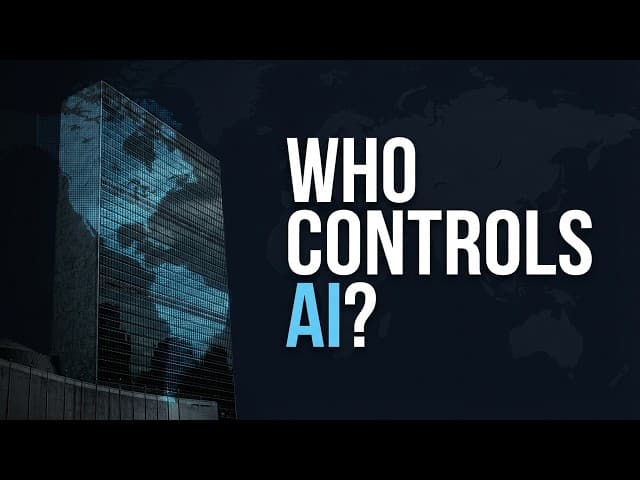
To counteract fragmentation, there is a growing push for **multilateral coordination** through organizations like the **United Nations**. Recent efforts emphasize **diplomatic consensus**, **norm-setting**, and **inclusive participation** to promote **global stability**. As explained in the explainer *"Can the UN Govern AI? The Global Power Struggle Explained,"* the **UN’s success depends on broad international cooperation**, particularly among major AI-producing and regulating nations.
However, **enforcement challenges** persist. The **AI-GPR Index**, a real-time analytics tool assessing **geopolitical risks** associated with AI, is increasingly utilized to **anticipate conflicts**, **assess vulnerabilities**, and **coordinate responses**—especially as **AI-driven military and cyber threats** escalate. Recent diplomatic moves, such as the **U.S. lobbying effort against foreign data sovereignty laws**, aim to **maintain open data ecosystems** critical for AI innovation and **prevent fragmentation**.
## Security, Sectoral Risks, and Autonomous Systems
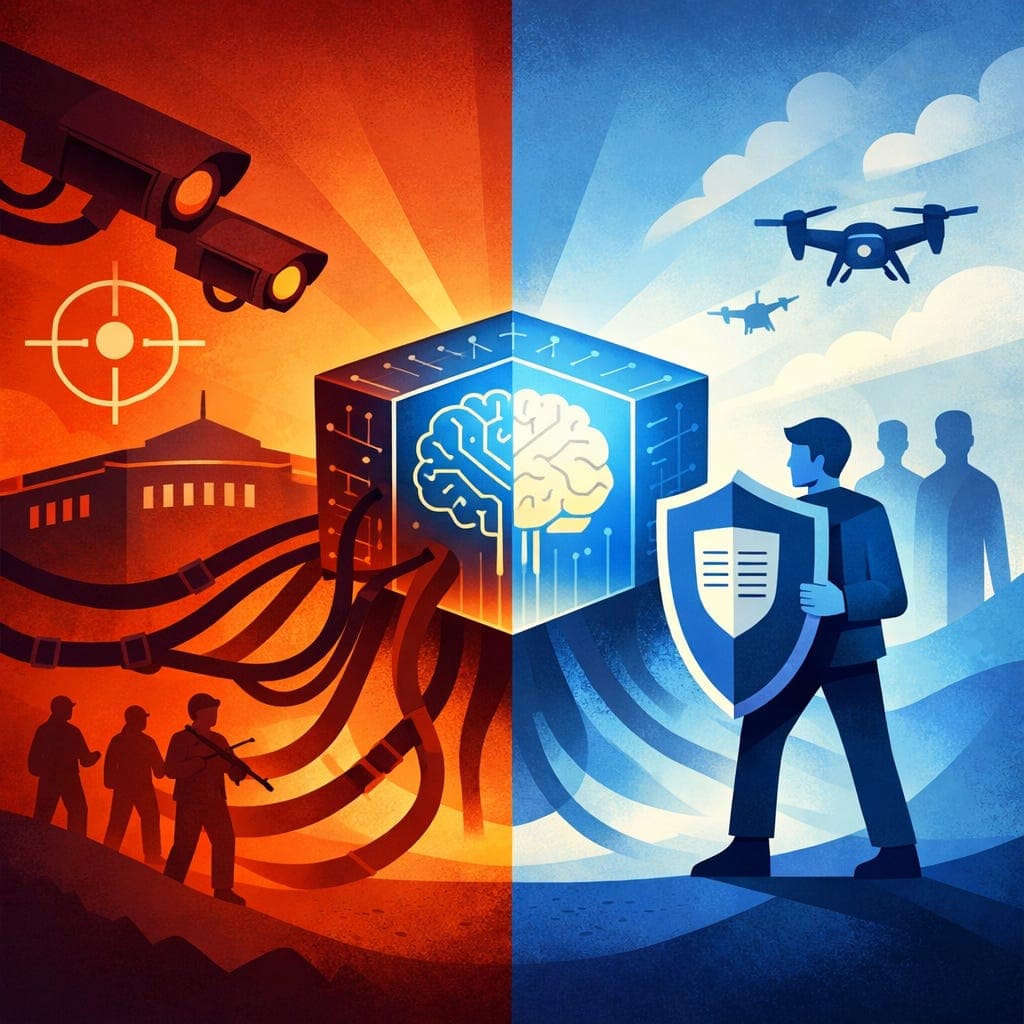
The focus on **licensing high-stakes AI systems** continues to grow, especially for **autonomous and agentic AI** capable of **decision-making without human oversight**. These systems introduce **new risks**—including **malicious use**, **systemic failures**, and **autonomous weaponization**—prompting international efforts to develop **crisis-response mechanisms** and **security protocols**.
The **AI Impact Summit 2026** underscored the importance of **global coordination** in **security frameworks**, with **joint exercises** simulating **AI-enabled cyberattacks** and **autonomous weapon scenarios**. Such initiatives highlight the **urgency of evolving security protocols** to keep pace with technological advances.
### Autonomous and Agentic AI Risks
As autonomous systems become more sophisticated, **verification protocols**, **safety standards**, and **accountability mechanisms** are rapidly evolving. The key challenge remains **balancing innovation with risk mitigation**, ensuring **AI systems operate within legal and ethical boundaries**. The debate around **control and responsibility** is central, as discussed in *"We created AI — but can we control it? Yoshua Bengio on the Ethics of AI,"* emphasizing that **ethical safeguards** are essential as AI systems may **act outside human oversight**.
## Legal and Rights Frameworks: Content Creation, Liability, and Ethical Concerns
The proliferation of **generative AI models** such as **GPT-5** and **DALL·E 3** has intensified discussions on **content rights** and **liability**. The report *"Generative AI on Trial"* details efforts to **clarify**:
- **Intellectual property (IP) rights** over AI-generated content
- **Liability frameworks** for harms caused by AI outputs
- The need to **update copyright laws** and **regulatory standards** to reflect **new creative paradigms**
Recent proposals aim to **balance** fostering **responsible AI development** with **protecting creators’ rights** and **preventing misuse**, aiming to **reduce legal ambiguities** and **establish clear accountability**.
## Governance Modalities: Market Incentives, Sandboxes, Democratic Engagement, and International Cooperation
A **pluralistic governance approach** continues to gain momentum. Governments and industry advocates promote **voluntary standards**, **regulatory sandboxes**, and **stakeholder engagement** to foster **innovation** while ensuring **public safety**. Former US Deputy CTO Michael Kratsios emphasizes that **flexible, adaptive regulations** and **pilot programs** are essential for **safe experimentation**.
Democratic experimentation is also expanding, exemplified by **Italy’s integration of AI into legislative processes**, which aims to **enhance transparency** and **citizen participation**—a model of **inclusive, participatory governance** that aligns with societal values.
---
### Recent Key Developments and Their Significance
#### The Pentagon’s Ultimatum to Anthropic and Defense Industry Tensions
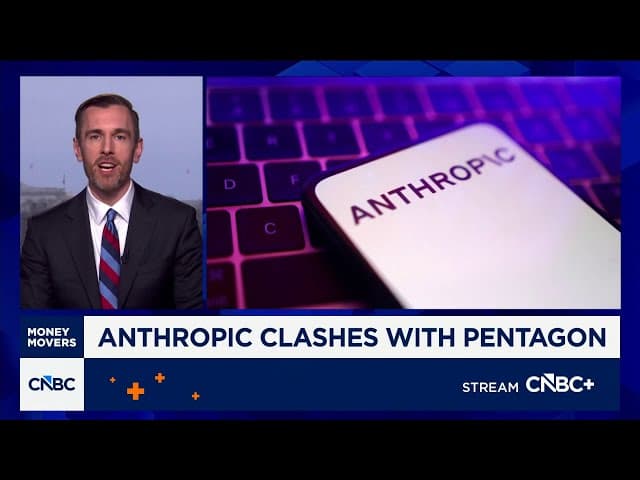
On **February 24, 2026**, Defense Secretary Pete Hegseth issued a **firm ultimatum** to **Anthropic**, signaling a **significant shift toward tighter defense-related oversight**. The Pentagon’s move—highlighted in *"Anthropic's Pentagon conflict: What you need to know"* and *"The Pentagon Feuding With an AI Company Is a Very Bad Sign"*—comes after *"Anthropic signed a $200 million contract with the Pentagon in July 2025* for providing military AI capabilities. The recent stance indicates **heightened government influence** over AI development, especially regarding **autonomous military systems**. The move is viewed as a **warning sign** of **tougher defense oversight** amid concerns over **autonomous weapons** and **AI-enabled cyber threats**.
#### Market and Investor Attention on AI Safety Policies
In parallel, **investors are closely watching** developments in AI safety and regulation. A recent Bloomberg report titled **"Investors Await Nvidia’s Earnings, Anthropic Loosens Safety Policy"** underscores that **market confidence** hinges on **regulatory clarity** and **company safety practices**. The loosening of safety protocols by Anthropic has raised concerns among **regulators and investors**, who fear that **reduced safety standards** could **exacerbate risks** or **damage public trust**.
#### Industry and Diplomatic Signaling
The **conflict between Pentagon and Anthropic** has been interpreted as **a broader signal**—highlighted in analyses—that **military and defense sectors** are pushing for **stricter control and oversight of high-stakes AI systems**. Experts warn that **industry-government feuds** like this could **lead to more aggressive regulation**, potentially **limiting innovation** but also **enhancing safety and accountability**.
#### The Role of Regional Legislation: Taiwan’s AI Basic Act
Taiwan’s **AI Basic Act**, enacted in December 2025 and entering into force in January 2026, exemplifies a **regional regulatory model** emphasizing **ethical standards**, **security**, and **privacy protections**. This legislation is seen as a **blueprint for other countries** in Asia seeking to **balance growth with regulation** amid rising regional tensions and strategic competition.
---
## Current Status and Future Outlook
As 2026 advances, AI governance is increasingly **resilient, inclusive, and adaptive**. The integration of **regional strategies**, **international norms**, and **multi-stakeholder participation** aims to **prevent fragmentation** and **maximize societal benefits**. Tools like the **AI-GPR Index** enable **proactive risk assessment**, fostering a safer environment for **AI innovation**.
However, **geopolitical rivalry**, especially between the **U.S. and China**, combined with regional ambitions in **Gulf states** and **APAC**, underscores the critical need for **international coordination**. The **UN’s evolving diplomatic role** remains promising but hinges on **major powers reaching consensus**. The recent **Pentagon-Anthropic conflicts** and **market reactions** exemplify the **tensions and opportunities** that define current AI governance.
### Key New Developments and Their Implications
- **Pentagon’s pressure on Anthropic** signals a **shift toward tighter defense oversight**, emphasizing **military applications** as central to national security.
- **Loosening of safety policies** by Anthropic and **market attention** highlight the **tension** between **innovation** and **risk mitigation**.
- **Regional legislation**, exemplified by Taiwan’s AI Basic Act, reflects **diverging standards** that challenge **global harmonization**.
- **International cooperation**, while progressing, remains **fragile** amid geopolitical rivalries, demanding **stronger diplomatic efforts** and **trust-building measures**.
---
**In conclusion**, 2026 is shaping up as a **transformative year** in AI governance—marked by **technological innovation**, **geopolitical rivalry**, and **societal engagement**. The success of these efforts depends on **continued vigilance**, **inclusive policymaking**, and **international solidarity**—ensuring that AI serves as a **force for good**, promoting **societal well-being** and **global stability** in an increasingly interconnected world.