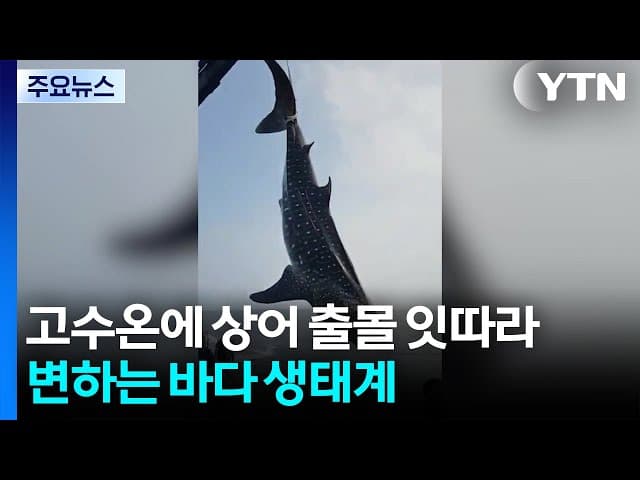
Across the world’s oceans, sharks and rays continue to embody both the fragility and resilience of marine ecosystems. As keystone species, their health directly influences ocean biodiversity, fisheries sustainability, and coral reef resilience. Building on the momentum from the landmark **COP15 Biodiversity Conference** in December 2024, recent developments in policy, science, technology, and community engagement reveal a complex, evolving picture of shark and ray conservation—one marked by notable progress, persistent challenges, and emerging opportunities.
---
### COP15 and Global Governance: From Policy Landmark to Actionable Frameworks
The **COP15 conference** fundamentally reshaped the international conservation agenda by explicitly integrating sharks and rays within the **Post-2020 Global Biodiversity Framework (GBF)**. This inclusion enshrines:
- **Dedicated targets for habitat protection, sustainable fisheries practices, and stringent trade regulations**, elevating these species from peripheral concern to central conservation priorities.
- The anticipated entry into force of the **Biodiversity Beyond National Jurisdiction (BBNJ) treaty**, empowering the establishment of **Marine Protected Areas (MPAs) in high seas**—crucial for protecting migratory corridors and aggregation sites beyond national control.
- Strengthened alignment across major governance instruments, including **CITES**, the **CMS Sharks MoU**, and regional frameworks, creating a more cohesive and enforceable legal architecture.
Marine policy expert Dr. Maria Lopez aptly summarized the breakthrough:
*“COP15 has transformed sharks and rays from overlooked species to central pillars of marine biodiversity conservation, fostering unprecedented cross-sectoral coherence and enforcement potential.”*
Regional leadership, particularly from Pacific island nations via the **Secretariat of the Pacific Regional Environment Programme (SPREP)**, exemplifies how biodiversity conservation is increasingly integrated with climate resilience and indigenous stewardship, offering scalable models of inclusive ocean governance.
---
### Enforcement Gaps and the Ongoing Battle Against Illegal Trade
Despite strengthened legal frameworks, enforcement remains a critical bottleneck:
- A **recent exposé uncovered the persistent illegal trade of gulper shark products in Singapore’s seafood markets**, highlighting how major transshipment hubs exploit regulatory loopholes to facilitate illicit trafficking.
- Experts emphasize the urgency of deploying **integrated Vessel Monitoring Systems (VMS)** and **Automatic Identification Systems (AIS)** with near real-time capability, especially in remote, high-risk ocean areas, to close monitoring gaps.
- Advances in **DNA forensic technologies and species barcoding** have enhanced authorities’ ability to detect mislabeled products, trace trafficking routes, and prosecute offenders more effectively.
- There is growing consensus on the need for **harmonized international legal frameworks and standardized penalties** to deter transnational illegal activities, addressing enforcement gaps that undermine global conservation goals.
---
### National Policy Dilemmas: Navigating Conservation, Livelihoods, and Public Safety
At the national and local levels, complex socio-economic and cultural factors shape policy responses:
- The **Maldives’ recent decision to reopen commercial gulper shark fisheries**—despite the species’ vulnerable status under CITES—reflects persistent economic pressures threatening regional conservation gains in the Western Indian Ocean.
- In **New Caledonia**, the reinstatement of a controversial shark cull following a fatal attack has intensified debates balancing ecosystem protection with human safety, illustrating the tensions between conservation ideals and immediate risk management.
- A **fatal shark attack off New South Wales (NSW), Australia in early 2026**, alongside a recent incident near **Destin, Florida**, has renewed discussions on public safety, scientific understanding, and management strategies that reconcile human-shark coexistence.
- In the **United States**, legislative efforts such as Florida’s proposed “Safe Seas Act” aim to ban shark feeding in federal waters, seeking a balance between minimizing dangerous encounters and supporting shark ecotourism.
These events underscore the pressing need for **evidence-based, socially inclusive policies** that integrate ecological science with community livelihoods, cultural values, and safety concerns.
---
### Technological and Fisheries Innovations: Cutting Bycatch and Enhancing Monitoring
Technology continues to offer promising tools to reduce bycatch and improve enforcement:
- **Integrated VMS and AIS systems** now enable near real-time vessel tracking in previously under-monitored zones, allowing faster intervention against illegal activities.
- **DNA barcoding and forensic analyses** have revolutionized traceability, empowering regulatory agencies to dismantle illicit shark product supply chains.
- Bycatch mitigation technologies are advancing, including:
- **Zinc-graphite coated fishing hooks**, which repel sharks without reducing target catch rates.
- **LED lights affixed to nets and hooks**, validated by recent global studies led by Arizona State University, demonstrate significant reductions in shark bycatch.
- **Electric repellent devices (ERDs)** have gained fresh validation: a groundbreaking study from the University of Western Australia revealed that electrical shark deterrents can reduce fisheries losses, offering dual benefits for conservation and fishery economics.
- **Implantable telemetry and deterrent devices**, developed by Florida Atlantic University, provide real-time behavioral data on species like blacktip sharks, enabling adaptive management.
- NOAA’s experimental **dynamic fisheries management tools**, such as real-time catch limits and seasonal closures targeting vulnerable shark populations, showcase flexible, responsive conservation measures.
Despite these advances, high costs and limited mandates impede widespread adoption, especially among small-scale fishers. Stakeholders advocate for policy incentives, cooperative funding models, and fisher education to scale these innovations globally.
---
### Telemetry-Driven Habitat Protection: Progress and Persistent Geographic Inequities
Satellite telemetry and acoustic tracking remain at the forefront of habitat conservation:
- The global identification of **816 Important Shark and Ray Areas (ISRAs)** offers a spatial blueprint for targeted protection, yet stark geographic inequities persist. For instance, the **Western Indian Ocean protects less than 1% of its critical shark habitats**, leaving key populations vulnerable.
- Success stories include:
- The **Bahamas’ oceanic whitetip shark recovery program**, which integrates satellite telemetry with local stewardship to monitor movement and inform conservation outcomes.
- **Canada’s Hudson Bay adaptive MPAs**, incorporating climate-responsive measures addressing shifting cold-water shark distributions due to ocean warming.
- Capacity-building efforts at the **Galápagos Biocenter**, enhanced by international partnerships, strengthen enforcement and research in biodiversity hotspots.
- Emerging research highlights the importance of **shallow-water and riverine habitats for rays**, advocating for protection strategies that encompass full life cycles, from nursery to feeding grounds.
- Telemetry data increasingly inform the design of MPA networks by identifying migration corridors, feeding hotspots, and seasonal aggregation sites—enhancing ecological connectivity and resilience.
- A recent *Economic Times* feature emphasized how satellite technology is unveiling secret animal migrations worldwide, offering unprecedented opportunities to map and protect elusive sharks and rays across jurisdictional boundaries, advancing climate-proof and ecologically coherent conservation areas.
---
### Emerging Ecological Threats and Notable Range Shifts
New scientific insights reveal underappreciated threats and remarkable ecological phenomena affecting sharks and rays:
- A **landmark study from the University of Miami Rosenstiel School** demonstrated that increasing vessel traffic induces **avoidance behaviors in sharks and rays**, restricting access to critical feeding and breeding grounds. Chronic stress resulting from these disturbances compromises immune function and reproductive success, accelerating population declines.
- The study recommends integrating **vessel traffic management measures**—including speed limits, rerouted shipping lanes, and designated no-go zones—into conservation strategies to mitigate these impacts.
- Parallel research has detected **plastic pollution contamination in shark embryos prior to hatching**, highlighting early-life developmental threats and emphasizing pollution abatement as an urgent priority.
- In a striking ecological shift, researchers captured the **first confirmed footage of a shark off the Antarctic Peninsula in February 2026**, signaling a **southern range expansion** likely driven by climate-induced ocean warming. This challenges previous biogeographic assumptions and underscores the need for vigilant monitoring of shifting species distributions.
- Similarly, a **rare great white shark sighting off Spain’s eastern coast** in early 2026 confirmed that populations locally presumed extinct still persist, offering hope and identifying knowledge gaps.
- Additional high-profile sightings include:
- A massive **8-foot 10-inch, 456-pound great white shark near South Carolina’s coast**, documented just 42 miles from Myrtle Beach, which is vital for understanding habitat use along the US East Coast.
- The discovery of a **hidden shark nursery off California’s Southern Bight**, revealing critical juvenile habitats previously unrecognized and opening avenues for targeted protection.
- These ecological insights coincide with troubling human-wildlife conflict incidents, including the fatal NSW shark attack and recent Florida incident, underscoring the complex interplay between conservation, safety, and public perception.
- Complementing these findings, a new **YouTube study titled “Ecosystem Impacts of White Shark Loss”** presents compelling evidence of cascading ecosystem effects following apex predator declines, emphasizing sharks’ keystone role in marine ecosystems.
---
### Community Engagement, Scientific Innovation, and Capacity Building: Cornerstones of Adaptive Conservation
Effective shark and ray conservation increasingly depends on meaningful community involvement and cutting-edge science:
- Citizen science initiatives like the **North Carolina Shark Stranding Network** engage the public in monitoring and education, generating valuable data and fostering stewardship.
- Outreach programs such as *SHARK TAGGING | ONE FIN FORWARD* and initiatives documenting endangered species like the **smalltooth sawfish** deepen public awareness and support.
- The **“Beyond the Exhibit: Empowering Coastal Guardians of the Sea”** initiative exemplifies community-led conservation that empowers local leadership beyond traditional captive display paradigms.
- Long-term research, including a 12-year Flinders University project on white shark behavioral responses to orca predation risk, refines migration models and informs MPA design.
- Novel scientific discoveries, such as a shark species capable of **natural light manipulation for near invisibility**, open new frontiers in ecological understanding and public engagement.
- Platforms like the **Polymath World interview with Dr. Kim Holland** highlight advances in marine biology and conservation technologies.
- Capacity-building efforts at the **Galápagos Biocenter**, supported by international partnerships, expand enforcement and research capabilities in critical biodiversity hotspots.
---
### Monitoring Paradoxes and the Imperative for Robust Science
Recent media reports reveal paradoxical trends where **increased shark sightings coincide with overall population declines** in some regions. This paradox arises from:
- Enhanced monitoring efforts and improved detection technologies.
- Behavioral shifts in shark movements and habitat use.
- Environmental changes altering habitat availability.
This complexity reinforces the critical need for **standardized monitoring protocols**, rigorous scientific capacity, and integration of behavioral ecology insights to accurately interpret population dynamics and guide adaptive management.
---
### Sharks as Keystone Regulators: Pillars of Coral Reef Resilience
Ecological research increasingly confirms sharks’ role as **keystone regulators** maintaining coral reef health by controlling mesopredator populations and sustaining trophic balance. This function is especially vital as coral reefs face escalating climate stressors.
Recognizing sharks as foundational to reef resilience underscores the importance of embedding their conservation within broader coral reef protection and climate adaptation frameworks, safeguarding ecosystem services critical to coastal communities and global biodiversity.
---
### Charting the Path Forward: Integrated, Inclusive, and Science-Driven Conservation
The evolving landscape of shark and ray conservation demands bold, multidimensional strategies that harmonize governance, science, technology, and society:
- **Accelerate and rigorously enforce legal protections**, prioritizing critically endangered species such as the gulper shark and addressing underprotected regions like the Western Indian Ocean.
- **Mandate and finance bycatch mitigation technologies**, including deterrent devices and dynamic fisheries management, coupled with fisher education and sustainable funding models.
- **Harmonize international trade controls** and expand multinational intelligence sharing to dismantle illicit trafficking networks effectively.
- **Expand telemetry-informed habitat protections** across marine, coastal, and freshwater ecosystems critical to shark and ray life cycles.
- **Integrate pollution abatement and vessel traffic management** into comprehensive conservation strategies to address emerging ecological threats.
- **Strengthen community stewardship and foster public-private partnerships** that align conservation with local livelihoods, cultural values, and socioeconomic needs.
- **Incorporate behavioral ecology insights**, such as natural camouflage and predator-prey dynamics, to inform adaptive MPA design and responsive management.
The proactive leadership of Pacific island nations, combined with the imminent ratification of the BBNJ treaty, signals promising progress toward cohesive ocean governance. Yet, enduring challenges—including the Maldives’ gulper shark fishery reopening, enforcement lapses exemplified by illegal trade in Singapore, and socio-political tensions such as New Caledonia’s shark cull—highlight the persistent need for vigilance, international cooperation, and innovative, inclusive solutions.
By championing **science-driven, socially inclusive, and globally coordinated conservation frameworks**, the international community can better safeguard sharks and rays—keystone species whose survival underpins ocean ecosystem resilience and humanity’s shared future.